Ha Giang
Ha Giang lies in the far north of Vietnam, where mountain roads climb through deep valleys, limestone plateaus and small communities close to the Chinese border. The journey is as important as the places along the way, with stops at mountain passes, local markets, Hmong villages and remote towns such as Dong Van and Meo Vac. Travelling by private vehicle allows time to enjoy the scenery without rushing, while short walks and village visits offer a closer look at life in one of Vietnam’s most culturally diverse regions. For travellers willing to go further, Ha Giang offers one of the most rewarding journeys in Northern Vietnam.

The Character of Ha Giang
Life along Vietnam’s high mountain roads
Ha Giang is not a destination centered around one town or attraction. Much of its character is found on the road, travelling between mountain communities, crossing high passes and watching the landscape change from broad valleys to steep limestone cliffs.
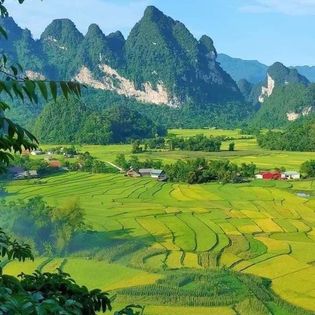
The Dong Van Karst Plateau covers much of the region and gives northern Ha Giang its distinctive scenery. Roads wind through mountains towards Quan Ba, Yen Minh, Dong Van and Meo Vac, passing fields cultivated on steep slopes and villages built among the rocks.
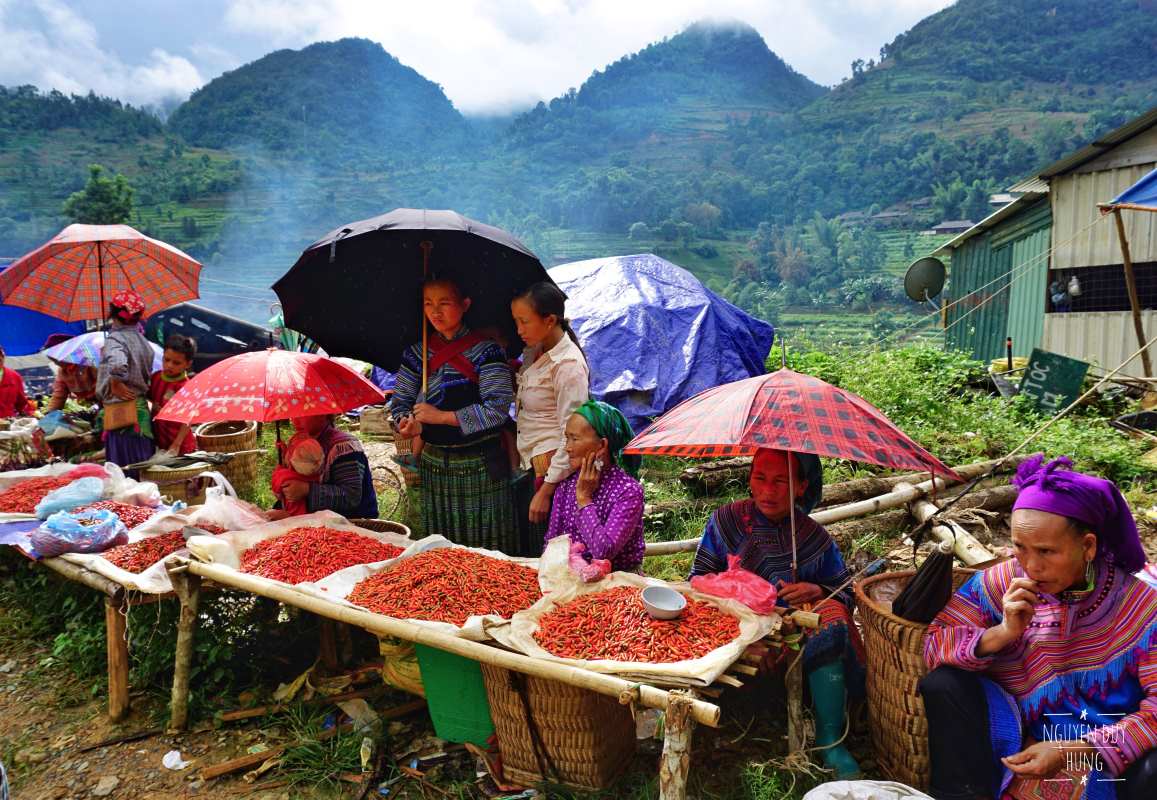
The region is also home to Hmong, Dao, Tay, Lo Lo and many other ethnic communities. Traditional houses, local markets, farming and family life remain part of what travelers see along the journey. Some villages are easy to reach by road, while others are best explored with a short walk away from the main routes.
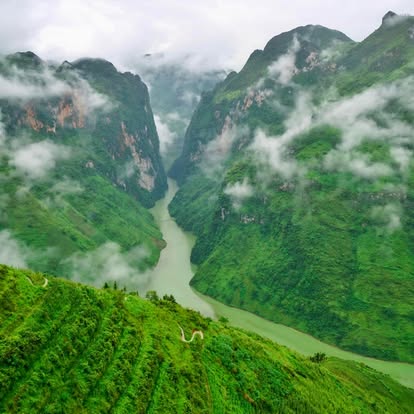
One of the most memorable sections runs between Dong Van and Meo Vac across Ma Pi Leng Pass. From the mountain road, views open towards the Nho Que River far below and the surrounding limestone peaks. It is a remarkable stretch of scenery, but Ha Giang is about more than viewpoints. Small roadside stops, village encounters and quiet moments between the better known sights often become just as memorable.
Distances can look short on a map, but mountain roads require time. We prefer to travel Ha Giang slowly, with a private vehicle and enough flexibility to stop when something catches your attention rather than treating the route as a race around the loop.
Why Visit Ha Giang
Travel through Vietnam’s northern mountains
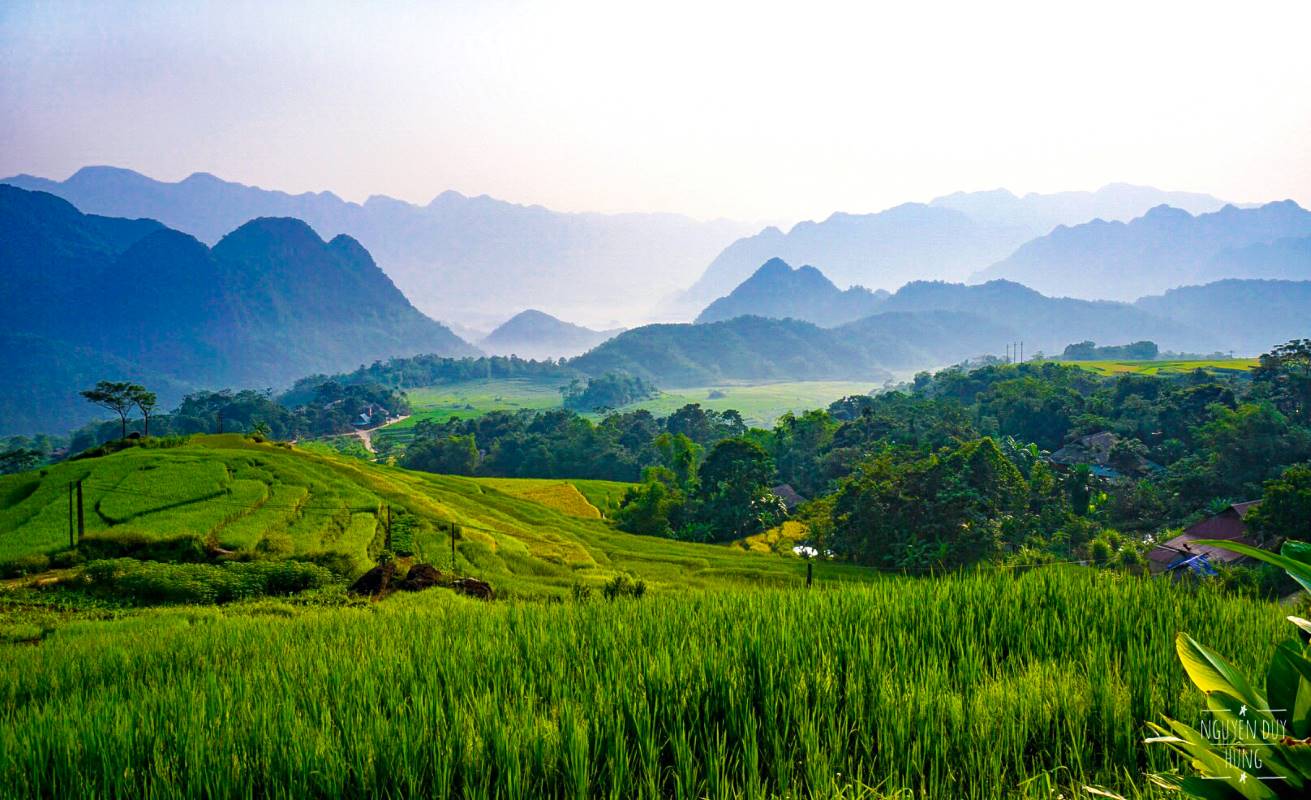
Ha Giang has some of the most dramatic mountain roads in the country, with deep valleys, limestone peaks and high passes appearing throughout the journey.
Experience the Dong Van Karst Plateau
The plateau is one of the defining landscapes of northern Ha Giang, with villages, farmland and roads set among vast limestone formations.
Meet the communities of the far north
The province is home to many ethnic groups, including Hmong, Dao, Tay and Lo Lo communities. Travelling with a knowledgeable local guide adds context to the villages, markets, houses and traditions encountered along the route.
Drive across Ma Pi Leng Pass
The road between Dong Van and Meo Vac is one of the highlights of a Ha Giang journey, with wide views across the mountains and the Nho Que River canyon.
Go beyond Vietnam’s usual travel route
Ha Giang requires more time and effort to reach than Sapa or Ninh Binh, but this is also part of its appeal. The journey feels more remote and offers a very different experience of Northern Vietnam.
Experiences We Love in Ha Giang
• Travel the mountain road from Quan Ba towards Dong Van, stopping at viewpoints and villages along the way.
• Walk through a Hmong village and learn more about farming and everyday life in the highlands.
• Explore the old streets of Dong Van in the early morning before continuing deeper into the mountains.
• Cross Ma Pi Leng Pass and stop for views across the Nho Que River and surrounding limestone peaks.
• Take a boat journey along the Nho Que River when conditions and the itinerary allow.
• Visit a traditional Lo Lo village in the mountains around northern Ha Giang.
• Spend time at a local market if your travel dates coincide with one of the region’s weekly gatherings.
• Make short countryside walks part of the journey rather than seeing the landscape only through the vehicle window.
Exploring the Ha Giang Loop
The Ha Giang Loop is the name commonly given to the mountain route through Quan Ba, Yen Minh, Dong Van and Meo Vac.
It has become increasingly popular with travelers riding motorbikes, but riding the loop is not the only way to experience Ha Giang.
For many LuxeTravel Asia guests, we recommend travelling by private SUV with a driver and local guide. This gives you the freedom to enjoy the mountain scenery, stop for photographs, visit villages and walk selected sections without spending long hours concentrating on difficult roads.
A private journey is also particularly suitable for couples, families and mature travellers who want to experience Ha Giang comfortably while retaining the sense of discovery that makes the region special.
The route can be adapted according to the number of days available, weather conditions and how much walking or local interaction you would like to include.
Dong Van and Meo Vac
Dong Van and Meo Vac are two of the main stops on a journey through northern Ha Giang.
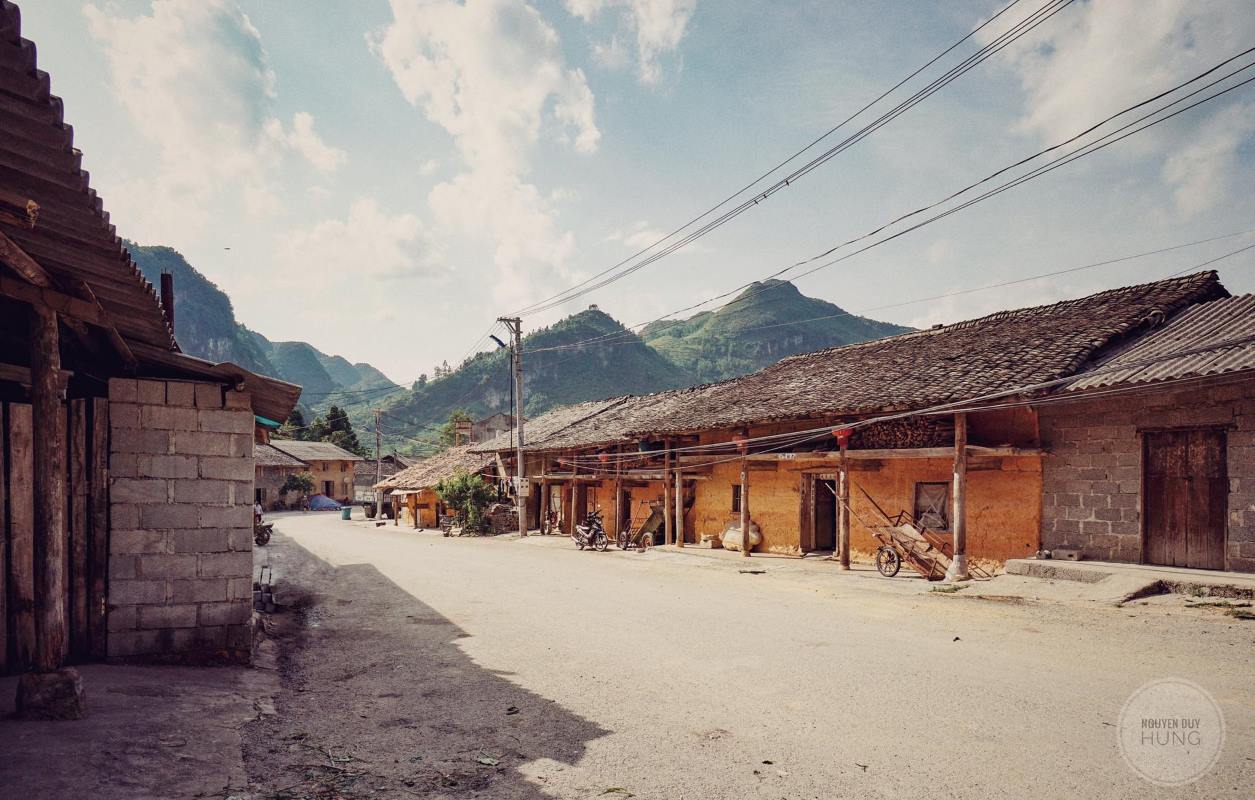
Dong Van sits within the limestone plateau and makes a useful base for exploring the surrounding villages and mountains. Its small old quarter becomes particularly atmospheric in the evening and early morning, when the day traffic has eased.
Meo Vac lies beyond Ma Pi Leng Pass and feels more closely connected to the high mountain communities around it. The journey between the two towns is short in distance but deserves plenty of time because of the scenery along the road.
When local market days coincide with your itinerary, both areas can also offer an opportunity to see people from surrounding villages gathering to trade food, livestock and household goods.
Villages and Local Life
Ha Giang is one of Vietnam’s most ethnically diverse provinces, and village life is an important part of travelling through the region.
Hmong communities are found throughout the Dong Van Plateau, while Dao, Tay, Lo Lo and other groups live in different valleys and mountain areas across the province.
Architecture, clothing, farming practices and local traditions can vary considerably between communities. In some areas, houses are built from compacted earth or stone to cope with the mountain climate, while small fields are cultivated wherever the terrain allows.
We prefer village visits that are simple and respectful. Rather than arriving only for photographs, travelling with a local guide creates more opportunity to understand what you are seeing and how communities continue to adapt to changes in the region.
Best Time to Visit Ha Giang
Ha Giang can be visited throughout much of the year, although weather and scenery vary considerably between seasons.
March to May usually brings warmer temperatures and good conditions for travelling through the mountains. Spring also brings flowers and new growth to many parts of the region.
June to August is warmer and wetter. The mountains are very green, but heavy rain can occasionally affect road conditions and visibility.
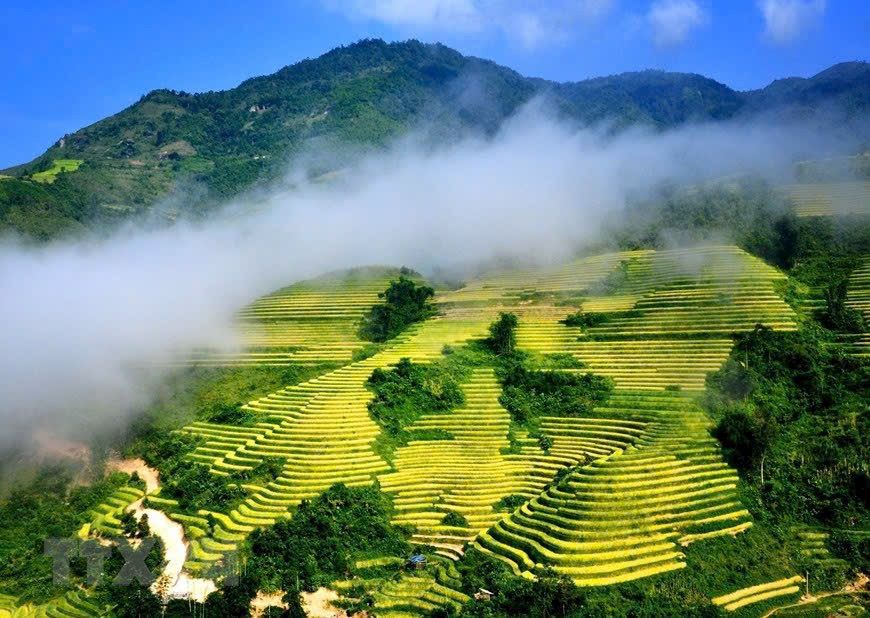
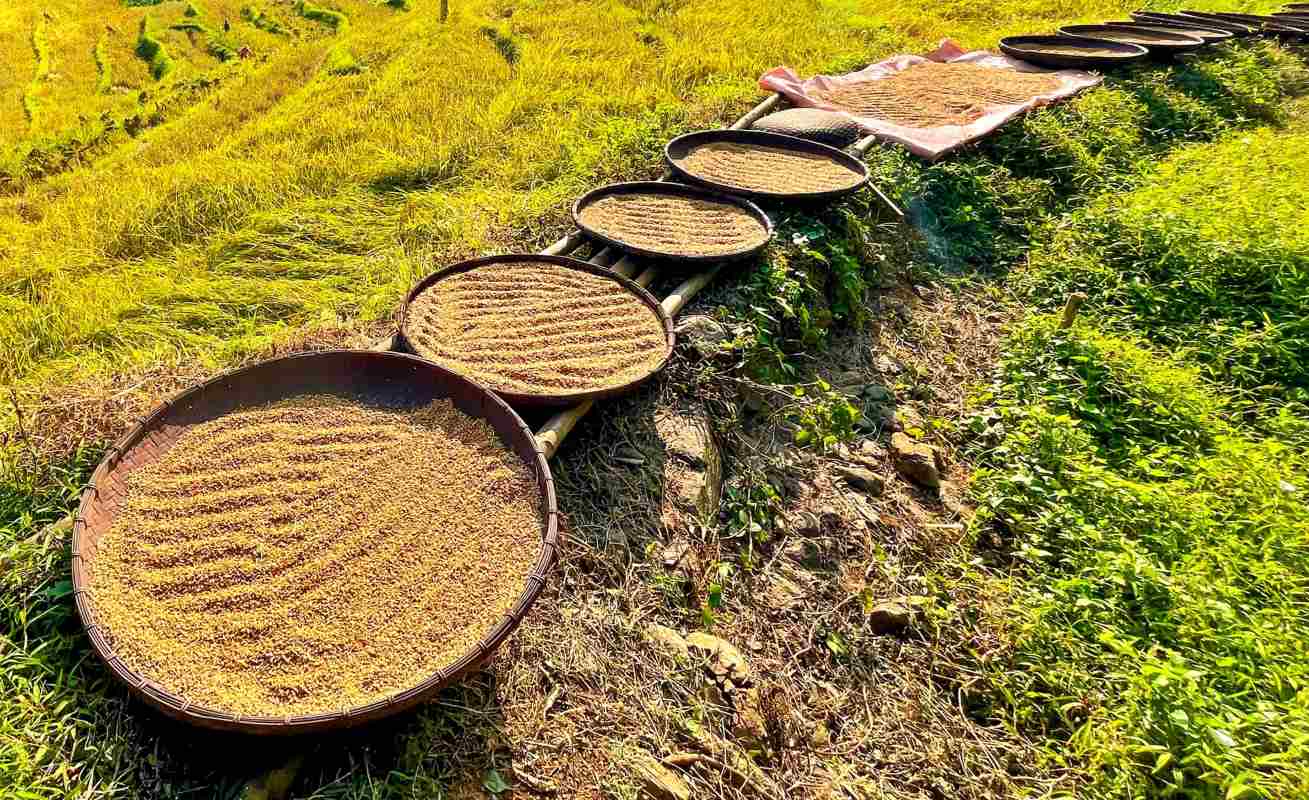
September and October are particularly attractive in areas with terraced rice fields, as the landscape changes towards harvest season.
October and November are also associated with buckwheat flowers in parts of the Dong Van Plateau, although flowering times vary each year.
December to February can be cold, especially around Dong Van and Meo Vac. Mist and low cloud are common, and temperatures in the mountains can be considerably lower than in Hanoi.
Because Ha Giang is a mountain region, weather can change quickly. We always allow some flexibility in the daily program and avoid promising specific views or seasonal conditions in advance.
How Long to Stay in Ha Giang
We recommend at least three nights, although four to five nights provides a much better experience.
With three nights, it is possible to travel through the main northern route, but days can involve longer periods on the road.
Four nights allows more time for village visits, short walks and stops along the mountain passes without constantly watching the clock.
Five nights or more is ideal for travelers who want to explore beyond the classic loop, including areas such as Bao Lac or quieter communities further from the main road.
In Ha Giang, an extra day often adds more to the experience than trying to cover the same route more quickly.
Where to Stay
Accommodation in Ha Giang is generally smaller and simpler than in Hanoi, Sapa or Halong Bay.
In towns such as Ha Giang, Dong Van and Meo Vac, options range from locally run hotels and homestays to a growing number of comfortable boutique properties.
In more remote areas, the choice can be limited, so we prioritize cleanliness, location, reliable service and the best available comfort rather than star ratings.
Where suitable, locally owned lodges and small properties can also add character to the journey and make it easier to stay closer to the communities and landscapes you have travelled to experience.
Ha Giang With LuxeTravel Asia
Ha Giang is one of those destinations where good planning makes a real difference.
Mountain roads, changing weather and long travel times mean that an itinerary that looks simple on a map can feel tiring if too much is included in one day.
We prefer to travel by private SUV with an experienced driver and local guide, allowing the route to remain flexible. Stops can be made for viewpoints, villages, short walks or local markets without having to follow a fixed group schedule.
We also pay particular attention to where each night is spent. Choosing the right overnight stops reduces unnecessary driving and gives more time to experience the mountains during the best parts of the day.
For some travelers, Ha Giang may be a three or four day mountain journey. For others, it can continue through Bao Lac towards Cao Bang and Ban Gioc, creating a longer exploration of Vietnam’s far north.
Either way, we believe Ha Giang deserves time. The road is not simply how you get from one place to another. It is a large part of why you come.
Continue Your Journey
Most Ha Giang journeys begin from Hanoi, travelling north through the mountains before returning to the capital.
For travelers with more time, Ha Giang can continue east towards Bao Lac, Cao Bang and Ban Gioc Waterfall, creating one of the most rewarding overland journeys in Northern Vietnam.
It can also be combined with Ba Be National Park before returning to Hanoi, adding lakes, forests and a gentler landscape after the high mountains of Ha Giang.
Explore All Our Tours
Discover inspiring ways to experience Vietnam, from short escapes to in depth journeys across the country.