Hue At A Glance
Hue was Vietnam’s imperial capital for more than a century, and its royal past remains visible throughout the city. The Citadel stands at its historic centre, while emperors’ tombs, pagodas and traditional garden houses are scattered along both sides of the Perfume River. Yet Hue is more than its monuments. Local markets, family restaurants, quiet neighbourhoods and a distinctive Central Vietnamese cuisine reveal a city that still moves at a gentler pace. Spend two or three days here and there is time to explore its history, travel along the river, taste dishes found nowhere else in quite the same way and discover a side of Vietnam that feels noticeably different from Hanoi or Hoi An.
The Character of Hue
A city where the imperial past remains part of everyday life
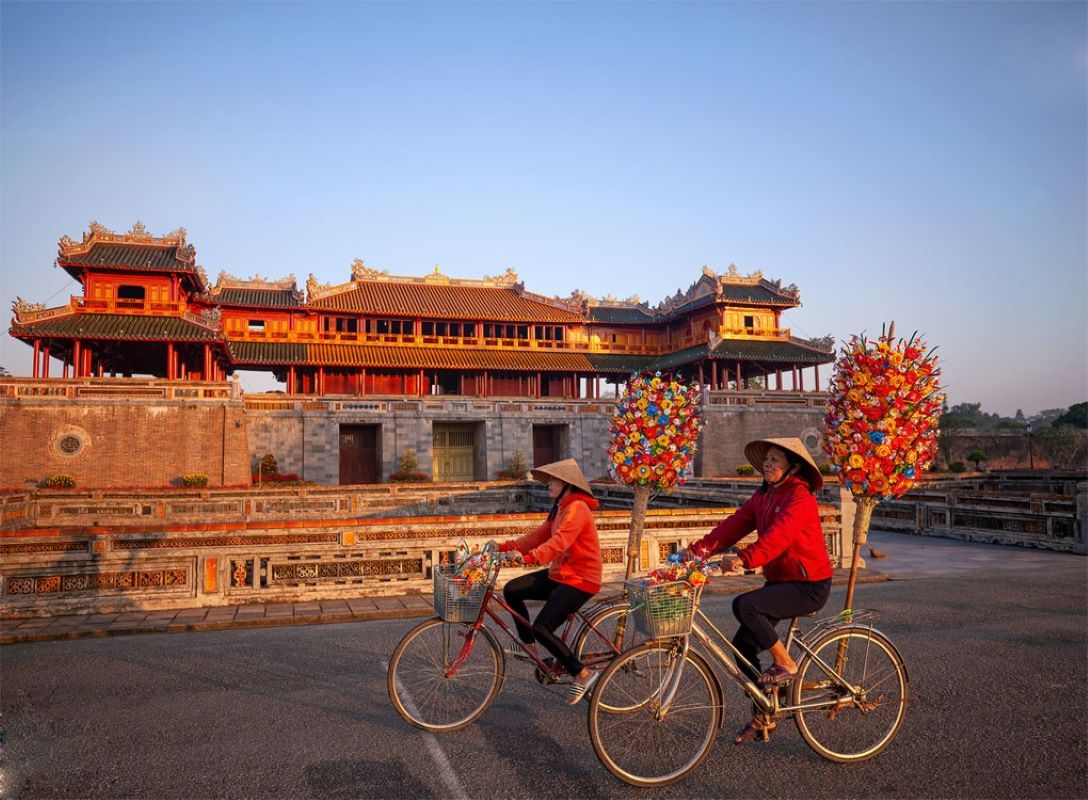
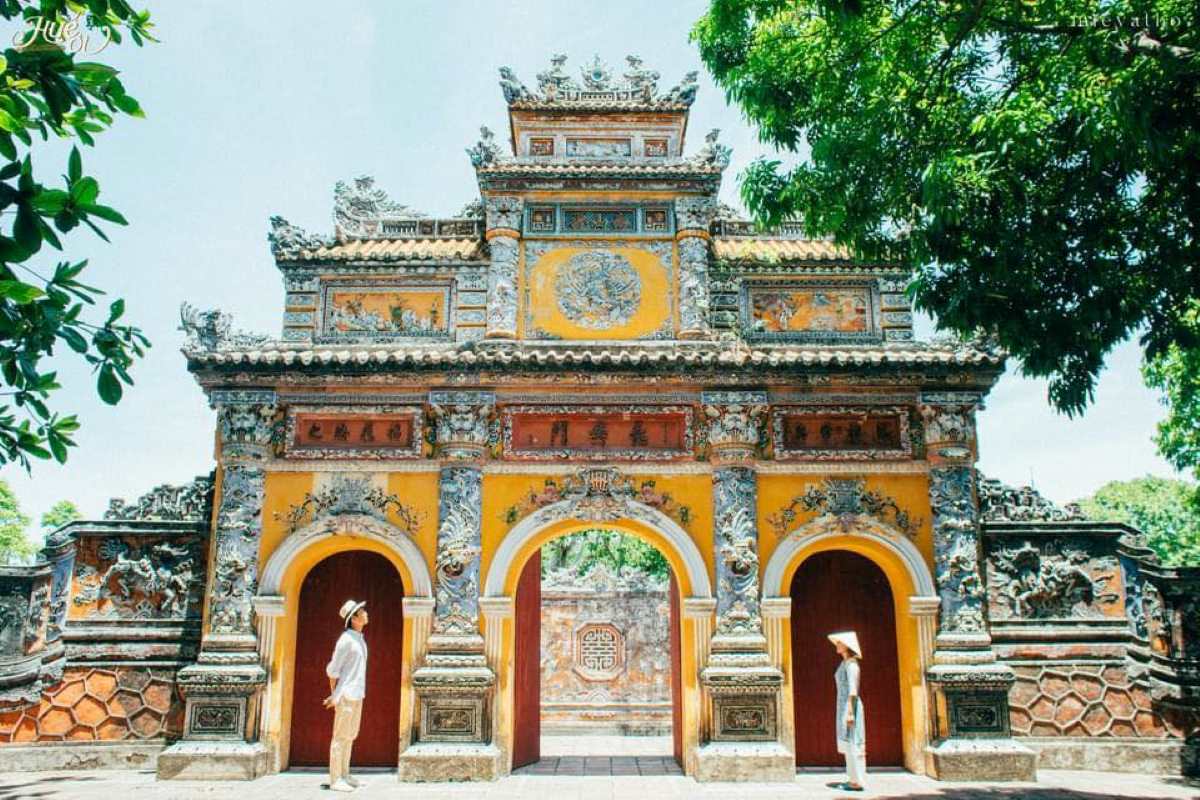
Hue served as the capital of Vietnam under the Nguyen Dynasty from 1802 until 1945. That history is still present across the city, from the walls and gates of the Imperial City to royal tombs, temples and old residences along the Perfume River.
The Citadel is the natural place to begin. Within its walls once stood the palaces, courtyards and ceremonial spaces of the Nguyen emperors. Parts of the complex were badly damaged during periods of conflict, but continuing restoration allows visitors to understand both the scale of the former imperial capital and the rituals of court life.
Beyond the Citadel, Hue becomes more open and relaxed. The Perfume River divides the city and leads towards Thien Mu Pagoda and the royal tombs of emperors including Minh Mang and Khai Dinh. Each tomb reflects a different period and personality, from landscaped gardens and lakes to elaborate architecture influenced by both Vietnamese and European design.
Food is another important part of Hue. The former imperial court influenced the city’s culinary traditions, while everyday dishes developed their own strong local identity. Small portions, careful presentation and a balance of flavors remain characteristic of many Hue dishes today.
What we enjoy most about Hue, however, is the space between its major sights. A boat ride along the river, lunch in a garden house, a walk through a local market or an afternoon cycling beyond the city gives a better sense of Hue than visiting monuments alone.
Why Visit Hue
Understand Vietnam’s imperial history
Hue was the political and cultural center of the Nguyen Dynasty. The Imperial City, royal tombs and historic temples offer one of the clearest introductions to Vietnam’s last imperial period.
Explore architecture beyond the Citadel
Each royal tomb has its own character. Minh Mang is known for its balanced gardens and lakes, while Khai Dinh combines Vietnamese traditions with decorative influences from Europe.
Discover one of Vietnam’s great food cities
Hue has a cuisine quite distinct from Hanoi, Hoi An or Ho Chi Minh City. From bun bo Hue to delicate rice cakes and small local snacks, food is an essential part of experiencing the city.
Experience life along the Perfume River
The river is closely connected to Hue’s identity. Pagodas, villages, gardens and royal sites sit along its banks, making a boat journey a natural part of exploring the area.
Enjoy a quieter pace
Hue feels calmer than many of Vietnam’s major visitor destinations. With enough time, it is a particularly rewarding place for travelers interested in history, food and local culture.
Experiences We Love in Hue
• Explore the Imperial City with a local guide who can bring the history of the Nguyen Dynasty into context.
• Travel along the Perfume River by boat to Thien Mu Pagoda.
• Visit the tombs of Minh Mang and Khai Dinh and compare their very different architectural styles.
• Have lunch in a traditional Hue garden house.
• Taste bun bo Hue, banh beo, banh nam and other dishes associated with the city.
• Walk through Dong Ba Market and discover ingredients used in Central Vietnamese cooking.
• Cycle into the countryside beyond central Hue, passing villages, rice fields and traditional homes.
• Take an evening walk beside the Perfume River when the temperature begins to cool.
Exploring Hue’s Imperial Heritage
Hue’s historic monuments are spread across the city and surrounding countryside, so it is worth being selective rather than trying to visit everything in one day.
The Imperial City
The Imperial City was the administrative and ceremonial center of the Nguyen Dynasty.
Within its fortified walls are gates, courtyards, temples and restored palace buildings that provide an insight into life at the Vietnamese imperial court.
A local guide is particularly worthwhile here. Without context, it can be difficult to understand the original purpose of the different areas or the events that took place within them.
Minh Mang Tomb
The tomb of Emperor Minh Mang is set within a carefully planned landscape of lakes, gardens, bridges and traditional buildings.
Rather than one monumental structure, the complex unfolds gradually along a central axis and is particularly enjoyable to explore on foot.
Khai Dinh Tomb
Khai Dinh’s tomb is much smaller but entirely different in character.
The exterior rises dramatically against the hillside, while the interior is richly decorated with mosaics, ceramics and European influenced details.
Visiting Minh Mang and Khai Dinh together provides an interesting contrast between two periods of Nguyen royal architecture.
The Flavors of Hue
Hue deserves to be explored through its food as much as through its monuments.
Bun bo Hue is perhaps the city’s best known dish, with rice noodles served in a rich, aromatic broth with beef and herbs.
Smaller dishes such as banh beo, banh nam and banh loc are commonly served together and reflect Hue’s preference for delicate portions and varied textures.
Com hen, made with rice and small clams, is another local favorite with roots in everyday riverside cooking.
Hue also has a tradition of vegetarian cuisine connected to the city’s Buddhist communities, making it an excellent place to explore meat free Vietnamese food.
Rather than trying everything in a single organized tasting, we like to mix local restaurants, markets and carefully chosen stops into the wider stay.
Beyond the Imperial City
There is good reason to spend some time outside Hue’s main monuments.
Traditional garden houses can still be found in quieter neighborhoods, particularly around Kim Long. These homes combine architecture, courtyards and gardens in a style closely associated with the former imperial city.
The countryside surrounding Hue is also easy to reach. Small roads lead through villages, fields and lagoons, offering opportunities for cycling and local visits.
For travelers with additional time, the Tam Giang Lagoon area provides yet another side of the province, particularly around late afternoon when fishing communities return to the water.
These experiences help balance a day of historic sightseeing and show that modern Hue is not confined within the walls of its Citadel.
Best Time to Visit Hue
Hue has a different climate from both Northern and Southern Vietnam, and rainfall can be significant during part of the year.
February to April is one of the most comfortable periods for visiting, with generally pleasant temperatures and good conditions for walking and cycling.
May to August is warmer and can become very hot around midday. Sightseeing is often more comfortable when major outdoor visits are planned earlier in the morning.
September to December is the wetter period in Central Vietnam. Heavy rain can occur and occasionally affect outdoor activities or transportation.
January is usually cooler, with a mixture of dry and cloudy days.
Weather varies from year to year, so we prefer to plan each day with some flexibility, particularly during the wetter months.
How Long to Stay in Hue
For most travelers, two nights is enough for a good introduction to Hue.
This allows time for the Imperial City, selected royal tombs, Thien Mu Pagoda and some local food experiences without making the program too busy.
Three nights works particularly well for travelers interested in history, cuisine or countryside experiences. The extra day can include cycling, a garden house visit, Tam Giang Lagoon or simply more time to explore the city at a slower pace.
Hue is sometimes treated as a short stop between Hoi An and Northern Vietnam, but we think it deserves at least one full day rather than being reduced to a few hours of sightseeing.
Where to Stay
Central Hue has a good range of boutique hotels, luxury properties and riverside accommodation.
Around the Perfume River is convenient for first time visitors, with easy access to restaurants, the Citadel and evening walks along the waterfront.
Travellers looking for more space and privacy can also stay slightly outside the centre, where several resort style properties offer gardens, pools and quieter surroundings.
For a more distinctive experience, selected heritage inspired and boutique properties can work particularly well in Hue, where the atmosphere of the accommodation can complement the history of the city.
As always, we look at location, service, character and how the property fits the overall journey rather than relying on star ratings alone.
Hue With LuxeTravel Asia
Hue contains enough historical sites to fill several days, but seeing more does not necessarily make the experience better.
We prefer to choose the places that tell the story of the city clearly and leave enough time between them.
A day might begin inside the Imperial City with a local guide, continue by boat along the Perfume River to Thien Mu Pagoda and finish with one carefully selected royal tomb. Another day could focus on food, garden houses or the countryside rather than visiting another series of monuments.
Private transportation also gives us flexibility to change the order of visits, avoid unnecessary backtracking and adjust the day when the weather is particularly hot or wet.
For travelers interested in Vietnamese history, we can go deeper. For families or guests who prefer a lighter cultural program, we can balance the heritage sites with food, cycling and time by the river.
Hue should feel like a living city with an imperial past, not an open air museum.
Continue Your Journey
Hue connects naturally with Danang and Hoi An, with the journey south crossing the Hai Van Pass and offering views across the Central Vietnamese coastline.
Travelers arriving from the north can combine Hue with Phong Nha Ke Bang, creating a particularly good contrast between caves, countryside and imperial history.
From Hue, it is also easy to continue by air to Hanoi or Ho Chi Minh City as part of a longer journey through Vietnam.
Explore Our Tours
Sed venenatis egestas turpis vitae ullamcorper. Donec aliquet ipsum ipsum, nec sagittis augue fermentum ut
No tours found.