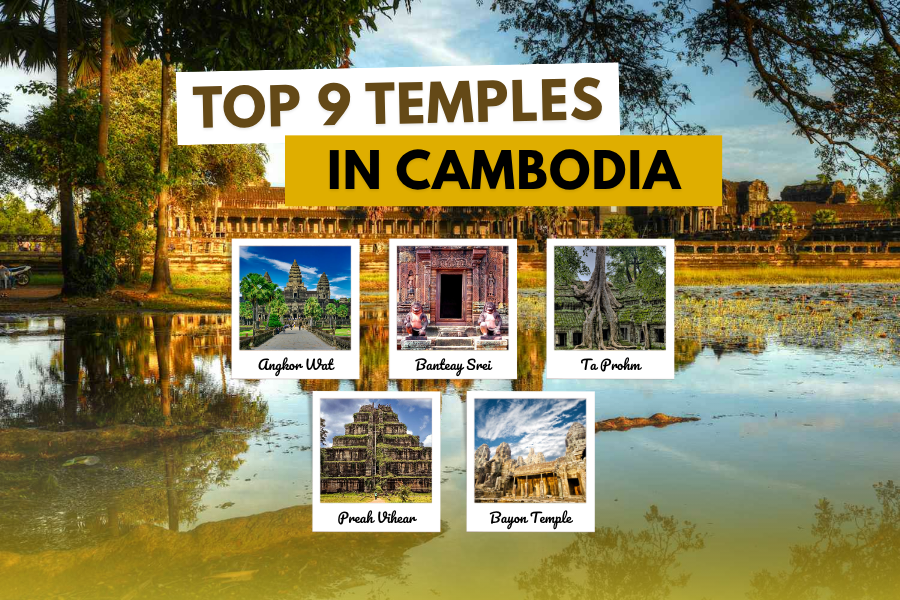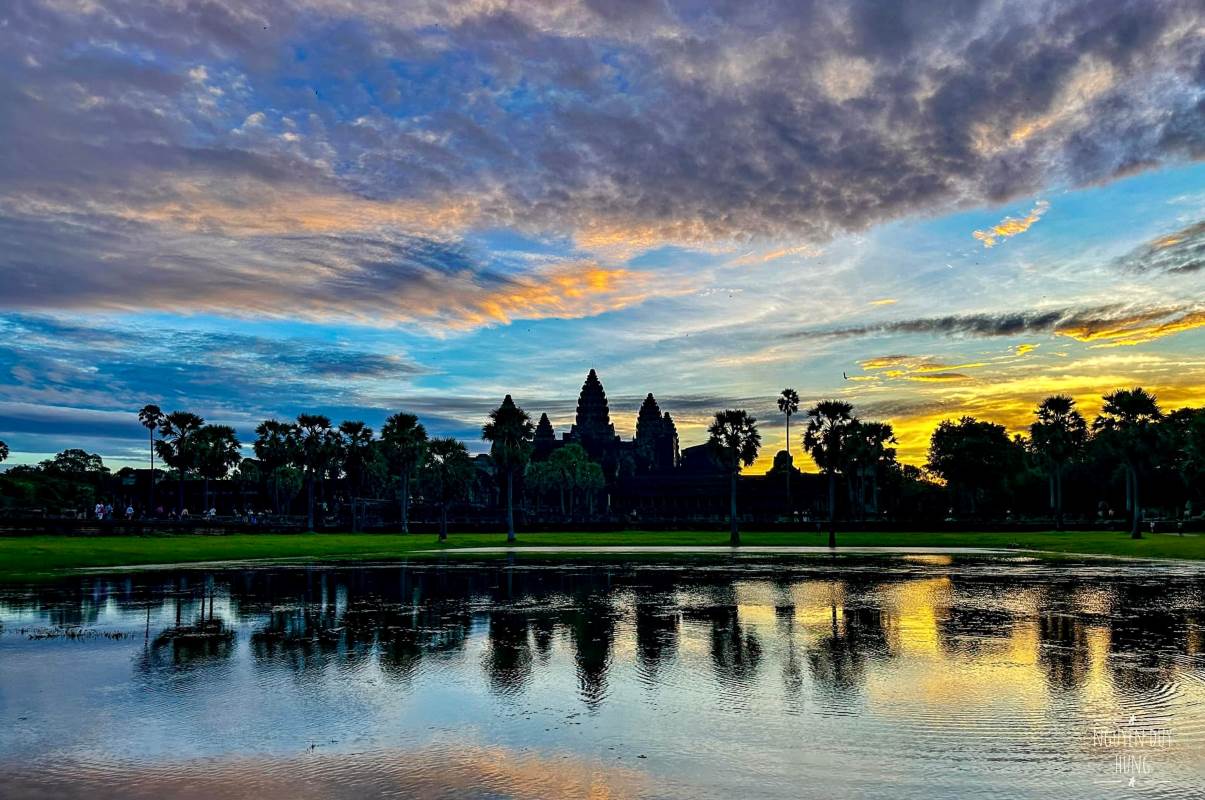
Experiencing the most captivating festivals in Cambodia offers travelers an extraordinary glimpse into the soul of the Khmer civilization, where Buddhist reverence, ancient animist rituals, and seasonal water cycles intertwine. Beyond the silent stone corridors of Angkor Wat and the evocative ruins of Ta Prohm, the country’s living culture reveals itself through its sacred calendar. Across the Kingdom, ancient temple moats transform into cultural stages, hundreds of hand-carved dragon boats slice through river currents, and incense smoke drifts above pre-dawn chanting in countryside pagodas.
For international travelers planning an immersive Vietnam and Cambodia trip, timing a journey to coincide with a traditional festival Cambodia adds a rich layer of cultural depth. Moving from Vietnam’s autumn harvest rhythms, lantern-lit streets in Hoi An, or Lunar New Year (Tet) celebrations into Cambodia’s water blessings, illuminated river barges, and sacred ancestral offerings creates an unforgettable trans-border narrative.
Here is your comprehensive, experience-based guide to the most significant Cambodia festivals, complete with cultural context, logistical advice, and practical tips for attending.
Planning Around the Khmer Lunar Calendar: What Travelers Need to Know
Navigating festival dates and seasonal celebrations across Cambodia requires an understanding of how traditional timekeeping operates alongside modern tourism infrastructure.
The Khmer Lunar Calendar (Chhankitek) vs. Solar Calculations
Unlike the Western Gregorian calendar, most religious and cultural festivals in Cambodia follow the ancient Chhankitek, a traditional lunisolar calendar that synchronizes lunar phases with the solar year:
- The Full Moon (Thngai Sil / Pournami): Major Buddhist holy days, such as Meak Bochea, Visak Bochea, and the climactic nights of the Water Festival, are anchored to the full moon, when spiritual merit is believed to peak.
- Fixed Solar Dates: A small number of secular and civic celebrations operate on fixed solar dates. These include Cambodian Independence Day (November 9) and Khmer New Year (consistently observed from April 13 or 14 to April 16, marking the sun’s entry into Aries).
- The Leap-Month Phenomenon (Adhikamasa): To keep lunar months aligned with agricultural seasons, an intercalary leap month (an extra 30-day month, usually doubling the month of Asadh) is added to the Khmer calendar every two to three years. Consequently, festivals like Pchum Ben and the Water Festival can shift by two to four weeks from one Gregorian calendar year to the next.
Service Disruptions & Travel Infrastructure Realities
During major national celebrations, particularly Khmer New Year, Pchum Ben, and the Water Festival, travel dynamics shift noticeably across the country:
- Government Offices and Banks: Commercial banks, embassies, official visa processing counters, and corporate offices close nationwide for three to five consecutive days.
- Interprovincial Highways: Major land corridors linking Phnom Penh to Siem Reap, Battambang, and coastal Kampot experience heavy domestic traffic on the first and final days of holiday periods as families return to their home villages (Srok). Domestic flights and private helicopter charters remain fully operational.
- Tourism Monuments and Luxury Hospitality: The Angkor Archaeological Park, the National Museum, heritage boutique hotels, and five-star river cruisers continue regular daily operations. Dining rooms and private guide services function seamlessly, though booking well in advance is essential.
Sacred Temple Etiquette During Religious Holidays
Attending a festival at an active Buddhist monastery (Wat) requires adherence to traditional Khmer etiquette:
- Dress Modestly: Cover shoulders and knees completely. While clean linen or cotton clothing is acceptable, wearing a crisp white shirt or blouse, the traditional color of Buddhist purity, earns genuine appreciation from local elders.
- Entering Shrines: Remove footwear, hats, and sunglasses before stepping across the threshold of a sanctuary (Vihear). Never step directly onto the wooden or stone door threshold; step over it gracefully, as traditional belief holds that protective spirits reside within the frame.
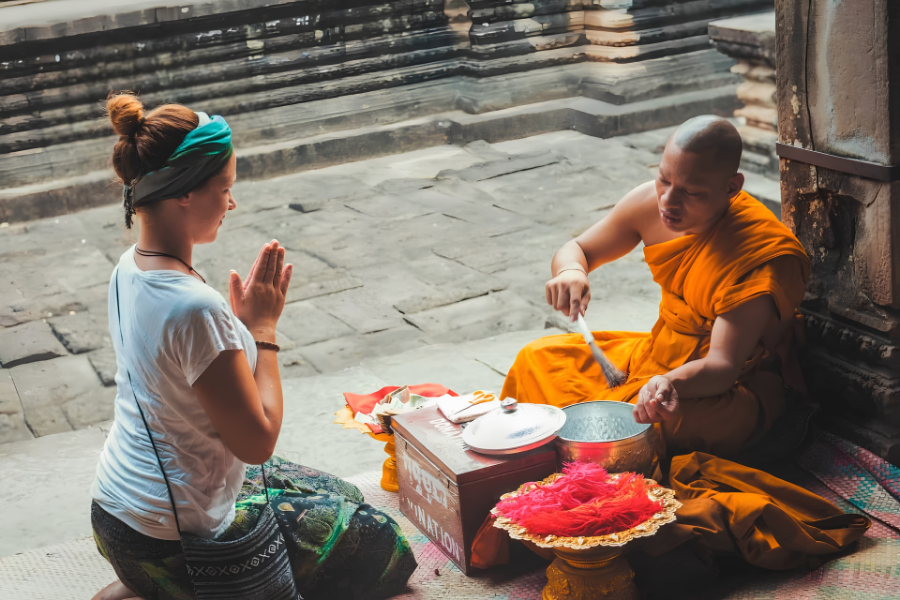
- Interactions with Monks: Do not touch a monk or their saffron robes, an absolute rule for female travelers. When presenting donations or offerings, place them on a ceremonial brass tray or a clean cloth laid out before the monk.
Aligning your itinerary with seasonal spectacles like the autumn Water Festival or the vibrant Khmer New Year requires factoring in regional weather patterns across the border. To find the ideal window that balances clear temple skies with comfortable cruising temperatures in Vietnam, explore our in-depth guide on the Best Time to Visit Cambodia and Vietnam.
Top 7 Cambodia Festivals Every Traveler Must Experience
Khmer New Year (Choul Chnam Thmey)
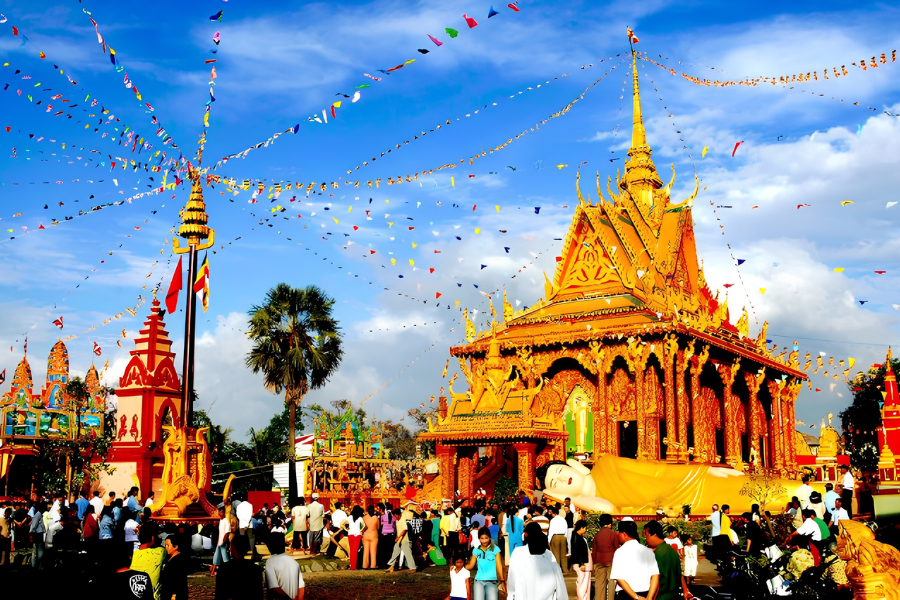
Marking the conclusion of the dry-season rice harvest before the arrival of the monsoon rains, khmer new year in Cambodia is the most celebrated holiday on the national calendar. For three full days, the entire country rejoices as families reunite, clean ancestral altars, and welcome the guardian deity of the coming year.
- Timing: Annually on April 13/14 to April 16 (Fixed solar dates).
- Duration: 3 official days (Maha Songkran, Virak Wanabat, and Vearak Loeng Sak).
- Best places to experience: Wat Phnom and the riverside promenade in Phnom Penh; Wat Bo and the ancient temples across Siem Reap.
Cultural Significance & Rituals:
- Day 1 (Maha Songkran): Families dress in formal silk garments, light candles, and burn incense to welcome the new heavenly angel (Devata).
- Day 2 (Virak Wanabat): A day of charity and family devotion, where gifts are presented to parents, grandparents, and underprivileged members of the community. Sand mounds (Valuka Chedei) representing Mount Meru are constructed in pagoda courtyards to earn spiritual merit.
- Day 3 (Vearak Loeng Sak): The ceremonial climax begins with Pithi Srang Preah, the ceremonial washing of Buddha statues and elderly family members with fragrant jasmine-infused water. By afternoon, the celebration transitions into lively, good-natured street water splashing, accompanied by traditional folk games like Teanh Prot (tug-of-war) and Chhoung (scarf-tossing).
We started the final morning of the New Year at Wat Bo in Siem Reap, joining local families in the courtyard to shape sand stupas and receive a gentle water blessing from the resident monks. By early afternoon, we stepped out onto Pokambor Street along the river, where the quiet reverence flipped into an all-out street party. We spent a couple of hours getting caught in the crossfire of water guns and friendly passersby dusting our cheeks with talcum powder, an absolute soaking, but easily the most fun and refreshing way to beat the April heat.
> > > If you want to experience the quiet autumn beauty of Hanoi’s historic quarters and the limestone wonders of Lan Ha Bay before stepping into the vibrant energy of Cambodia’s festival celebrations, our Vietnam and Cambodia Trip: 14-Day Tailor-Made Journey delivers a seamless, privately chauffeured Indochina experience tailored around your preferred dates.
Water Festival (Bon Om Touk) – The Reversal of the Sacred River
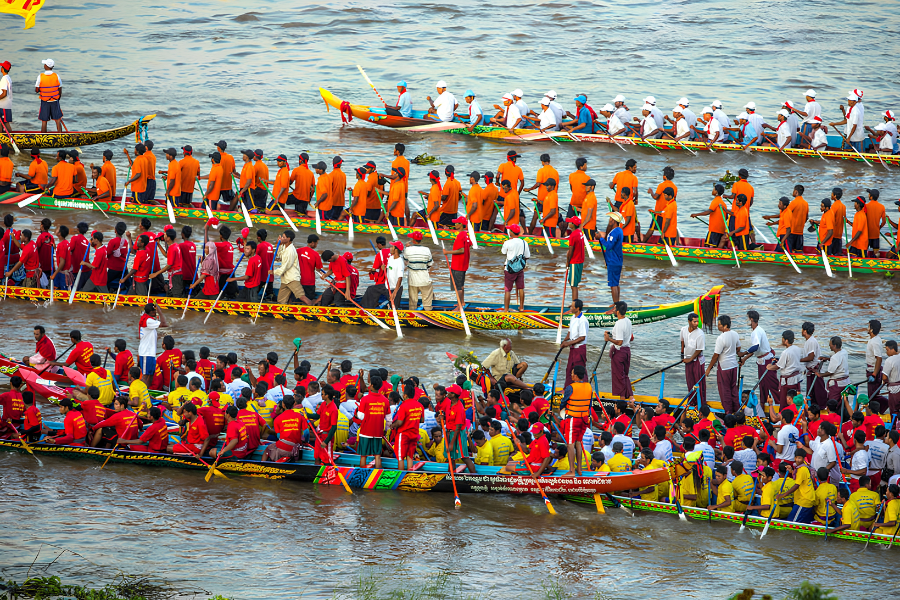
The water festival in Cambodia is a celebration centered on a unique hydrological phenomenon: the natural reversal of the Tonle Sap River. As the Mekong River swells with monsoon rains, its pressure forces the Tonle Sap River to flow backward into Tonle Sap Lake, expanding the lake to over five times its dry-season size. In late autumn, as the floodwaters recede, the river shifts its direction once again, draining into the South China Sea.
- Timing: October or November (Aligned with the full moon of the Khmer lunar month of Kadeuk).
- Duration: 3 consecutive days.
- Best places to experience: Sisowath Quay on the riverfront in Phnom Penh; the Siem Reap River promenade.
Dating back to the 12th-century Angkorian navy under King Jayavarman VII, Bon Om Touk honors the water deity (Preah Mae Ganga) for providing fish and agricultural fertility. The festival centers on traditional boat races featuring more than 400 hand-painted wooden dragon boats, each powered by up to 80 synchronized rowers representing rural villages from across Cambodia.
As twilight falls, the river transforms with the Loy Pratip parade, where illuminated royal barges decorated with colorful neon lights drift down the dark waters. The festival concludes with Sampeas Preah Khe (prayers to the full moon) and Ak Ambok, a ritual feast of freshly harvested pounded rice tossed with toasted coconut shreds and sweet bananas.
We secured a second-floor terrace table along Sisowath Quay in Phnom Penh to watch the afternoon boat races comfortably above the street crowds. Looking right over the river, we had clear sightlines as the long dragon boats surged past, their crews paddling in rapid, shouting unison to the beat of bow drums. After the races wrapped up at dusk, our guide grabbed a few banana-leaf packets of fresh coconut-and-rice flakes (Ak Ambok) for us to snack on while we watched the illuminated royal barges drift across the dark water.
Pchum Ben (Ancestors’ Day) – The Sacred Season of Compassion
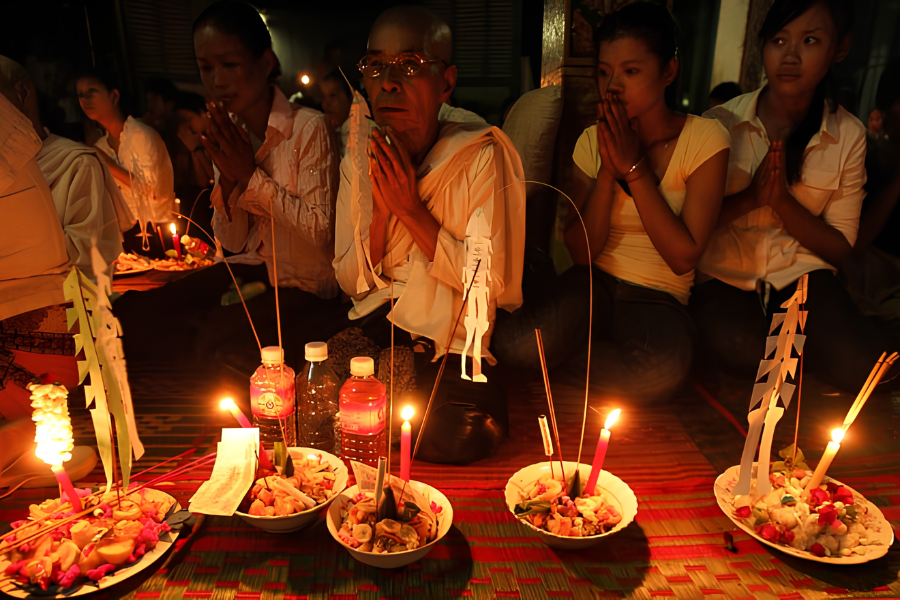
Spanning fifteen days, pchum ben in Cambodia is one of the most culturally significant and deeply felt spiritual observances in Southeast Asia. Based on Buddhist and animist beliefs, the gates of the underworld are believed to open during the waning moon of Bhadrapada, allowing the spirits of ancestors (Preta, or hungry ghosts) to wander the earth in search of spiritual sustenance.
- Timing: September or October (Observed across the final 15 days of the lunar month of Bhadrapada).
- Duration: 15 days (The first 14 days are called Dak Ben; the 15th is the primary holiday, Pchum Ben).
- Best places to experience: Wat Langka and Wat Ounalom in Phnom Penh; historic rural pagodas in Battambang and Siem Reap provinces.
The festival centers on filial piety and the accumulation of merit (Bunya) to ease the suffering of departed relatives across seven generations. Between 4:00 AM and 5:30 AM each morning, families perform Bos Bay Ben: dressed in white silk, worshippers walk clockwise three times around the pagoda sanctuary, gently tossing small balls of sticky rice mixed with black sesame onto the ground to nourish wandering souls. Later in the morning, elaborate platters of vegetarian curries, sticky rice cakes, and fresh lotus blossoms are presented to the assembly of monks, who chant blessings in ancient Pali.
Respectfully navigating active pagodas during major holidays, from offering merit to monks to understanding dress standards and festival transport calls for essential cultural groundwork. For practical travel advice, visa procedures, and local customs, check out our complete Cambodia Travel Guide before your departure.
Cambodia Independence Day – The Sacred Flame of Freedom
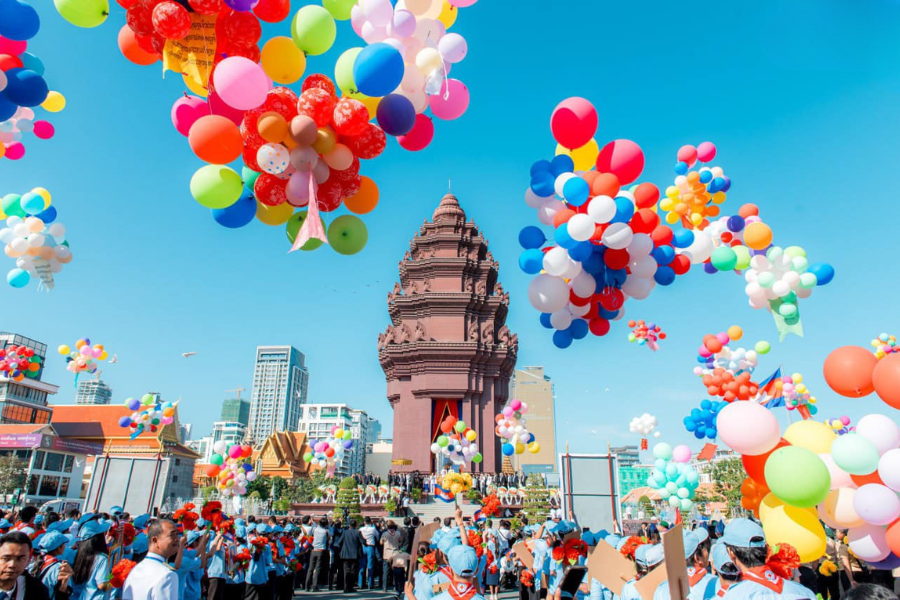
Celebrated with solemn pride and national ceremony, Independence Day commemorates Cambodia’s declaration of independence from France on November 9, 1953, achieved under the diplomatic leadership of King Father Norodom Sihanouk.
- Timing: Annually on November 9 (Fixed solar date).
- Duration: 1 official day (Ceremonial flame burns for 3 consecutive days).
- Best places to experience: The Independence Monument (Vimean Ekareach) and the intersection of Norodom and Sihanouk Boulevards in Phnom Penh.
The centerpiece of the commemoration takes place at the base of the Independence Monument, a magnificent red sandstone lotus tower designed by celebrated architect Vann Molyvann. In a morning ceremony attended by diplomats, civil leaders, and military officials, the King of Cambodia enters the base of the monument to light the Sacred Victory Flame.
The flame burns continuously for three full days, guarded by the Royal Gendarmerie. Across the capital, thousands of schoolchildren and citizens release colorful balloons and white doves into the tropical sky, while buildings along the grand boulevards are decorated with national flags and royal emblems.
Royal Ploughing Ceremony
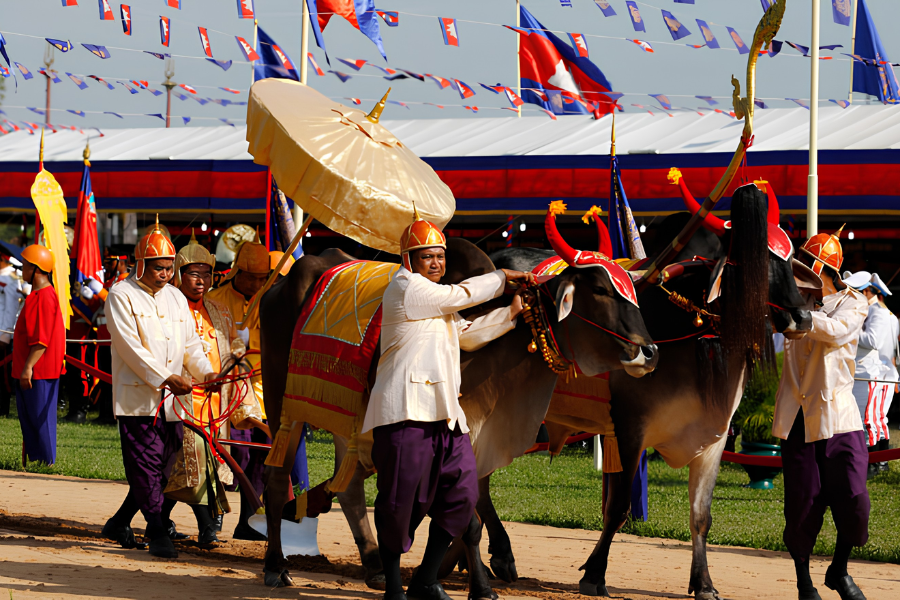
An ancient royal ritual dating back to the 13th century, the Royal Ploughing Ceremony marks the official commencement of the rice-planting season. Rooted in both Hindu and Buddhist traditions, this state occasion uses divination to forecast agricultural yields, weather patterns, and national prosperity for the coming year.
- Timing: May (Observed on the 4th day of the waning moon in the lunar month of Pisakh).
- Duration: 1 morning ceremony (Typically from 6:30 AM to 9:30 AM).
- Best places to experience: The public park facing the National Museum in Phnom Penh or the royal grounds in Siem Reap (venues rotate by year).
During the ceremony, a royal representative designated as the “Ploughing King” (King Meak) guides a pair of decorated white Royal Oxen (Usapheak Reach) across a ceremonial field, turning three ritual furrows. He is followed by the “Queen Mehua,” who scatters sacred rice seeds from silver baskets carried by royal attendants dressed in gold-threaded silk.
Following the tilling, the oxen are led to seven silver trays bearing offerings: unhusked rice, corn, green beans, sesame seeds, fresh grass, water, and rice wine. Royal astrologers observe which trays the oxen feed upon most eagerly: choosing grain signals an abundant harvest, drinking water predicts steady rainfall, grazing on grass warns of crop pests, while drinking wine forewarns civil unrest or economic hurdles.
We arrived by 7:00 AM on the lawn fronting the National Museum to catch the ceremonial furrows being plowed by the royal oxen. The real highlight for my guests was watching the divination ritual right after: the crowd leaned in quietly as the sacred oxen were led to the silver trays, and a collective cheer went up when they picked the maize and green beans over the wine. It offered my travelers an authentic window into how deeply rooted farming traditions remain in Cambodia’s national identity.
Meak Bochea & Visak Bochea – Lanterns of Enlightenment
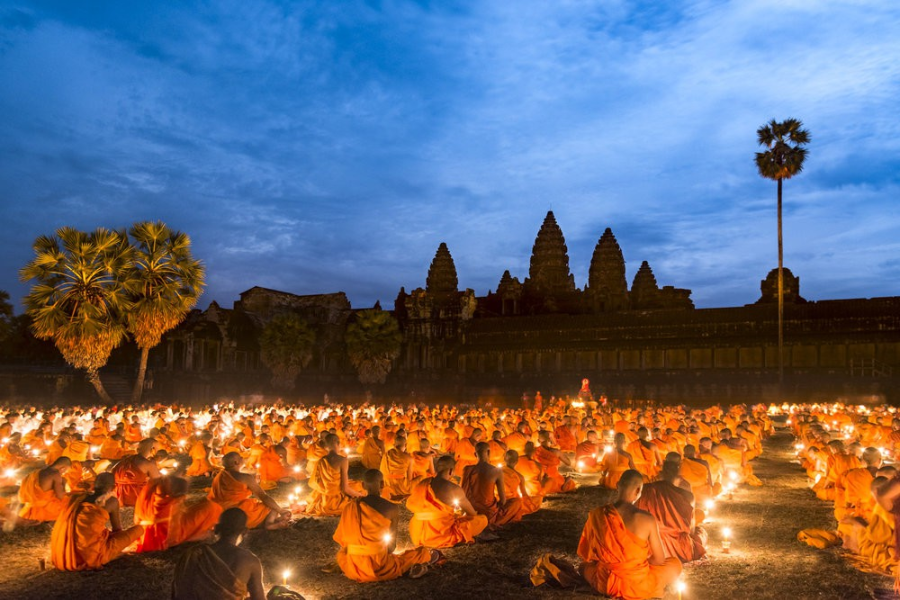
These two holy celebrations represent the spiritual heart of Cambodian Theravada Buddhism, centering on meditation, temple pilgrimages, and illuminated evening circumambulations.
- Timing:
- Meak Bochea: Full moon of the lunar month of Meak (February or March).
- Visak Bochea: Full moon of the lunar month of Pisakh (May).
- Duration: 1 full day and evening for each observance.
- Best places to experience: The sacred hill of Oudong (former royal capital, 40 km north of Phnom Penh); Angkor Wat in Siem Reap.
Cultural Significance & Rituals:
- Meak Bochea: Commemorates the spontaneous gathering of 1,250 enlightened monks (Arahants) to hear the Buddha preach the fundamental tenets of monastic discipline (Ovadapatimokkha).
- Visak Bochea: Considered the holiest day in Buddhism, celebrating the threefold miracle: the birth, enlightenment, and parinirvana (passing) of Gautama Buddha.
- The Candlelit Procession (Wian Tian): As twilight settles, hundreds of monks wrapped in saffron robes lead thousands of lay practitioners in silent walking meditation. Each person carries a single white lotus bud, three incense sticks, and a lit beeswax candle, walking three times clockwise around sacred stupas housing relics of the Buddha.
> > > If your vacation schedule is brief but you still wish to experience the spiritual heart of Cambodia during a major cultural celebration, our private 5 Days Cambodia Discovery blends iconic sunrise temple visits with traditional pagoda blessings and private sunset boat rides away from the busy festival crowds.
Sea Festival (Bon Samut) – Coastal Culture & Marine Rhythms
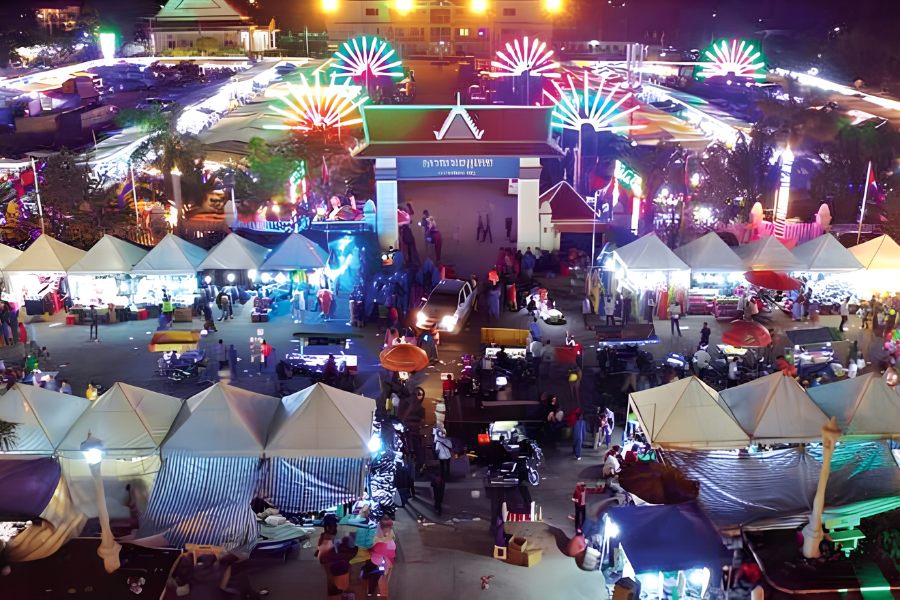
A contemporary cultural and sporting festival celebrated along the southern coastline, the Sea Festival highlights Cambodia’s seaside heritage and marine biodiversity along the Gulf of Thailand.
- Timing: December (Typically held over a selected weekend during the cool, dry season).
- Duration: 3 consecutive days.
- Best places to experience: The coastal promenades of Kep, Kampot, or Koh Kong (venues rotate annually).
Established to celebrate Cambodia’s bays being recognized among the “Most Beautiful Bays in the World,” the festival balances outdoor athletics with regional traditions. The days feature sailing regattas, traditional Khmer wrestling tournaments on the sand, and cycling races through coastal pepper plantations. In the evenings, the waterfront fills with food stalls grilling freshly caught squid and blue crab tossed in fresh green Kampot pepper, while stages host traditional Apsara dance performances alongside live music.
We spent a December afternoon in Kep strolling the coastal promenade, watching sailing catamarans race across the bay before settling into a sea-facing table at the Crab Market. We ordered blue swimmer crabs straight from the charcoal braziers, tossed in loads of fresh green Kampot peppercorns and garlic. Eating sweet crab with our hands while catching an open-air traditional dance performance right beside the evening surf made for a laid-back, quintessentially coastal night.
The Master Festival Calendar: Quick Reference Guide
|
Festival Name |
Lunar Phase / Date Rule |
Gregorian Month (Typical) |
Cultural Highlights & Signatures |
|
Meak Bochea |
Full Moon of Meak |
February / March |
Candlelit processions on Oudong Mountain |
|
Khmer New Year |
Fixed Solar (Apr 13/14–16) |
Mid-April |
Temple water blessings, street celebrations |
|
Royal Ploughing |
4th Day Waning (Pisakh) |
May |
Sacred royal oxen agricultural divination |
|
Visak Bochea |
Full Moon of Pisakh |
May |
Tributes to Buddha’s birth, enlightenment, and passing |
|
Pchum Ben |
1st–15th Waning (Bhadrapada) |
September / October |
Pre-dawn Bay Ben rice offerings, ancestral merit |
|
Water Festival |
Full Moon of Kadeuk |
October / November |
400-boat dragon races, illuminated river barges |
|
Independence Day |
Fixed Solar (Nov 9) |
Early November |
Lighting of the Sacred Victory Flame in Phnom Penh |
|
Sea Festival |
Fixed Weekend |
December |
Coastal sailing, fresh Kep pepper crab feasts |
Some Practical Tips for Attending Festivals in Cambodia
- Reserve Riverfront Balconies Months in Advance: For the Water Festival in Phnom Penh, riverfront hotels and dining venues overlooking Sisowath Quay book out three to four months ahead. Secure an elevated second- or third-story table to enjoy unobstructed views of the boat races away from the dense street crowds.
- Waterproof Your Gear During Khmer New Year: In mid-April, water splashing is everywhere on public streets. Store smartphones, passports, and camera equipment inside certified IPX8-rated waterproof dry bags whenever walking outside.
- Engage a Private Chauffeur for Regional Travel: Road traffic during major holiday periods can be congested. Having a dedicated private driver and air-conditioned limousine ensures you can bypass regional bottlenecks, with chilled water and cold towels ready between visits.
- Embrace Early Morning Starts: Traditional ceremonies, such as Bos Bay Ben during Pchum Ben and the Royal Ploughing Ceremony, take place between 4:00 AM and 7:30 AM. Rising early allows you to experience these rituals during the coolest, most serene hours of the day.
- Withdraw Cash Before Bank Holidays: Major commercial banks and exchange counters close during public holidays, and ATMs in high-traffic festival areas can run low on bills. Withdraw sufficient Cambodian Riel (KHR) and clean US Dollars (USD) several days before festivities begin.
- Maintain Respectful Boundaries Around Monks: When photographing religious processions, keep a respectful distance of at least two to three meters. Avoid using flash inside prayer halls, and remember that women should never touch a monk’s robes.
- Participate with Modesty and Sincerity: Rather than simply observing from the sidelines, participate gently: present a white lotus blossom at a temple altar, light an incense stick, or allow a local resident to sprinkle a few drops of scented water over your shoulder. Sincere participation is warmly welcomed.
- Stay Hydrated Under the Tropical Sun: Outdoor celebrations like the boat races and street parades take place during the heat of the day. Pack a wide-brimmed hat, polarized sunglasses, broad-spectrum sunscreen, and plenty of electrolyte-replenishing fluids.
Savor Indochina: Combine Cambodian Festivals with Vietnam
Designing a bespoke Vietnam and Cambodia trip offers an exceptional way to experience the cultural contrasts of Southeast Asia within a single journey:
- Complementary Cultural Rhythms: Experience the quiet elegance of autumn in Hanoi with blossoming milk flowers and freshly harvested green rice, cruise through the limestone karsts of Lan Ha Bay, and take a direct flight to Phnom Penh to immerse yourself in the high-energy spectacle of the Water Festival boat races.
- The Flagship Itinerary: Vietnam and Cambodia Trip in 14 Days: Our hand-crafted two-week itinerary seamlessly coordinates private domestic flights, boutique heritage hotels, and VIP airport fast-track services between Hanoi, Ninh Binh, Hoi An, Saigon, and Siem Reap. It aligns smoothly with regional festival dates, pairing ancient temple explorations with curated festival seating and private cultural guides.
- The Luxury of Tailor-Made Travel: Navigating regional holidays is effortless when backed by dedicated travel specialists who coordinate event access, arrange private blessings with senior pagoda abbots, and manage travel logistics across borders.
Cambodia’s festivals are far more than historic commemorations; they are expressions of a resilient culture that honors its ancestors, celebrates the changing seasons, and looks forward to the future with hope and joy. Witnessing these traditions firsthand offers memories that linger long after the music fades and the incense clears.
Ready to experience the sacred beauty of Angkor Wat alongside the colorful celebrations of Southeast Asia? Contact us today to create a custom journey aligned with the festival calendar across Vietnam and Cambodia.
Tags: cambodia, cambodia festivals, festival cambodia, festivals in Cambodia, khmer new year in cambodia, pchum ben in cambodia, vietnam and cambodia trip, water festival in cambodia