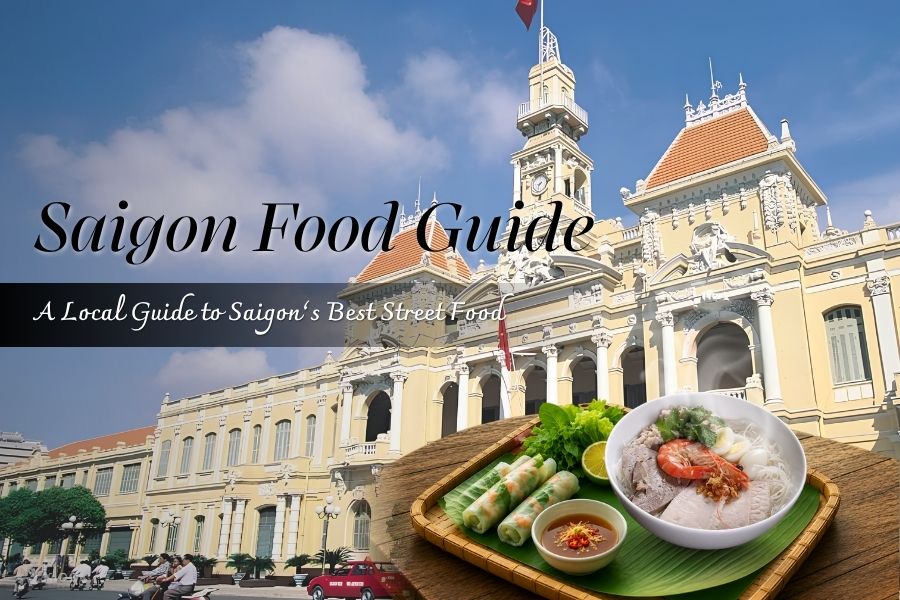
 Street food in Ho Chi Minh City is not confined to one market or one famous street. Breakfast might begin with broken rice beside a charcoal grill, lunch with a Bowl of Hu tieu, and the evening with seafood and snails served at small tables along a busy pavement.
Food here also follows the rhythm of the day. Knowing what to eat, when to eat it and where to go can make a noticeable difference to your experience. This Saigon food guide introduces ten dishes worth trying, with practical recommendations for where to find them, followed by the neighborhoods and food streets that are most useful for first-time visitors.
What Makes Saigon Food Different?
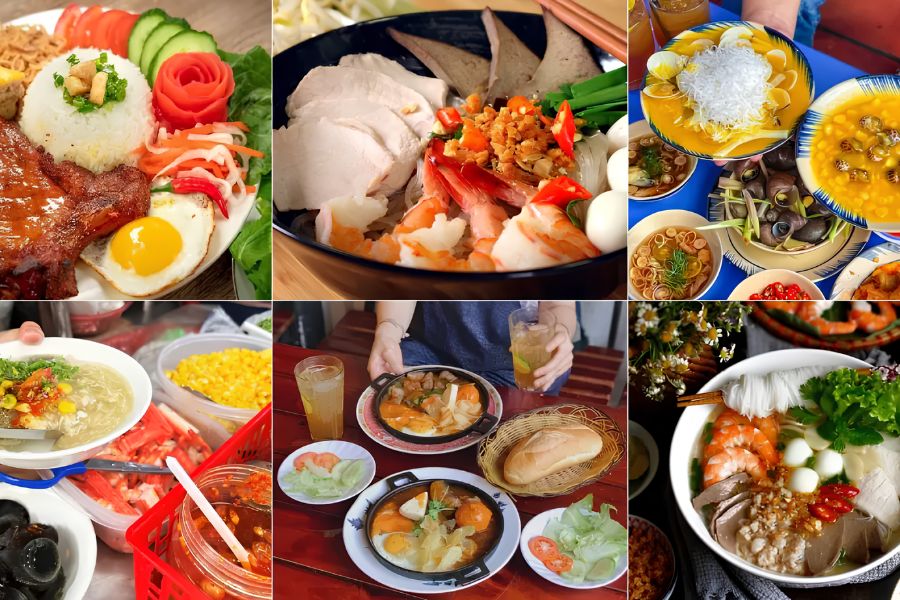
Ho Chi Minh City’s food reflects the city’s history as a southern trading centre and a meeting point for communities from across Vietnam and neighboring regions.
Southern Vietnamese cooking is often associated with generous fresh herbs, grilled meats, fish sauce, coconut and a slightly sweeter balance than many dishes in the north. But Saigon’s food is more diverse than any single flavour profile.
Cho Lon adds a strong Chinese-Vietnamese influence, particularly through noodle soups, roast meats, dumplings and desserts. The Mekong Delta contributes freshwater ingredients, tropical produce and sweeter southern flavours, while generations of migration have brought dishes from central and northern Vietnam into the city.
That is why eating in Saigon is not simply about identifying which dishes originated here. Pho, for example, has northern roots, but the southern version has developed its own recognisable character.
The city’s food culture also remains closely tied to small shops, markets and street-side dining. MICHELIN’s current Ho Chi Minh City street-food selection covers everything from Bo kho and com tam to pho, showing how important inexpensive specialist eateries remain to the city’s culinary identity.
10 Street Foods to Try in Ho Chi Minh City
Com tam – Broken Rice with Grilled Pork

- Best time: Breakfast or lunch
- Best places to eat: com tam Ba Ghien; com tam Nguyen Van Cu
Com tam is one of the dishes most closely connected with everyday eating in Saigon. Its name means “broken rice”, referring to the smaller grains that were once considered less valuable than whole rice but eventually developed into a dish in their own right.
The classic combination is broken rice with charcoal-grilled pork chop, shredded pork skin and steamed egg cake. A fried egg may be added, along with pickled vegetables and a bowl of sweet-savoury fish sauce. Treat these famous shops as places to experience particular versions of the dish rather than as a guide to what every plate of com tam should cost.
Hu tieu Nam Vang – A Saigon Morning Favourite

- Best time: Breakfast or lunch
- Best places to eat: Hu tieu Hồng Phát; Hu tieu Nam Vang Thành Đạt; Hu tieu Nam Vang Nhân Quán
Hu tieu Nam Vang is a good example of how Saigon’s food culture developed through regional exchange. The dish has Cambodian and Teochew-Chinese roots, but it became deeply embedded in southern Vietnamese eating habits.
A typical bowl combines rice noodles with clear pork broth, minced pork, sliced pork, prawns, herbs and fried garlic. Depending on the shop, you may also find quail eggs, offal or additional seafood.
There are two main ways to order it. Hu tieu arrives as a noodle soup, while the dry one serves the seasoned noodles and toppings separately with a small bowl of broth on the side. Trying the dry version is worthwhile if you have already eaten several noodle soups during your Vietnam trip. Hu tieu also makes a useful alternative to pho at breakfast, particularly if you want something strongly associated with southern Vietnam.
Breakfast changes noticeably as you travel through the country. Our guide to Vietnamese breakfast introduces 12 morning dishes from northern, central and southern Vietnam, including several worth comparing with what you eat in Saigon.
Banh mi – Saigon’s Quick Street Meal
- Best time: Breakfast, lunch or an afternoon snack
- Best places to eat: banh mi Huynh Hoa; banh mi 37 Nguyen Trai
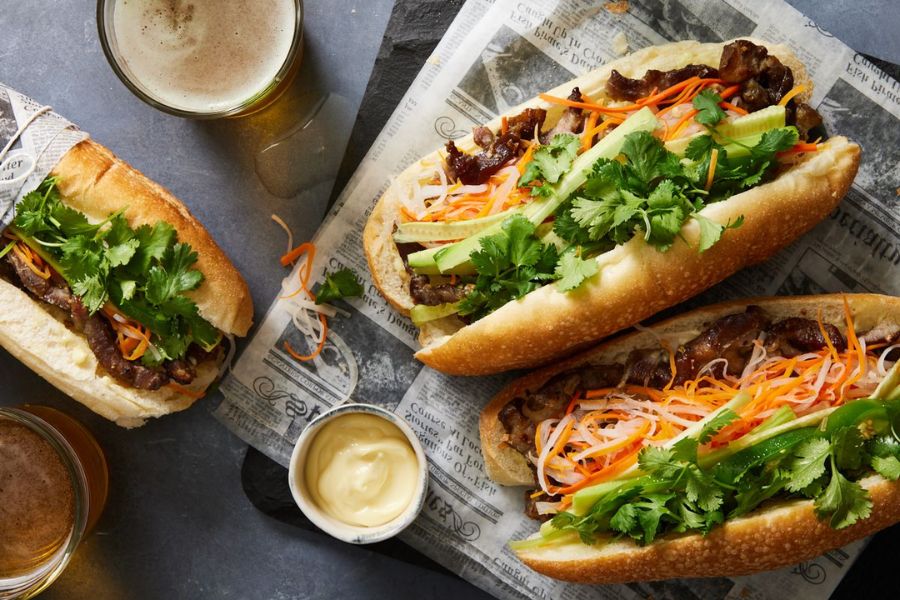
Few Vietnamese foods are as easy to encounter as banh mi, but the sandwiches served around Saigon vary enormously. The basic formula combines a crisp baguette with savoury fillings, herbs, pickled vegetables and sauces. Depending on the vendor, you might find pâté, cold cuts, roast pork, pork floss, grilled pork or meatballs inside.
If you are staying in the city for several days, try both a famous address and a busy local cart near your hotel. The contrast is part of understanding how varied banh mi can be.
Banh xeo – Crispy Southern Pancake
- Best time: Lunch or early dinner
- Best places to eat: banh xeo 46A; banh xeo Ngoc Son
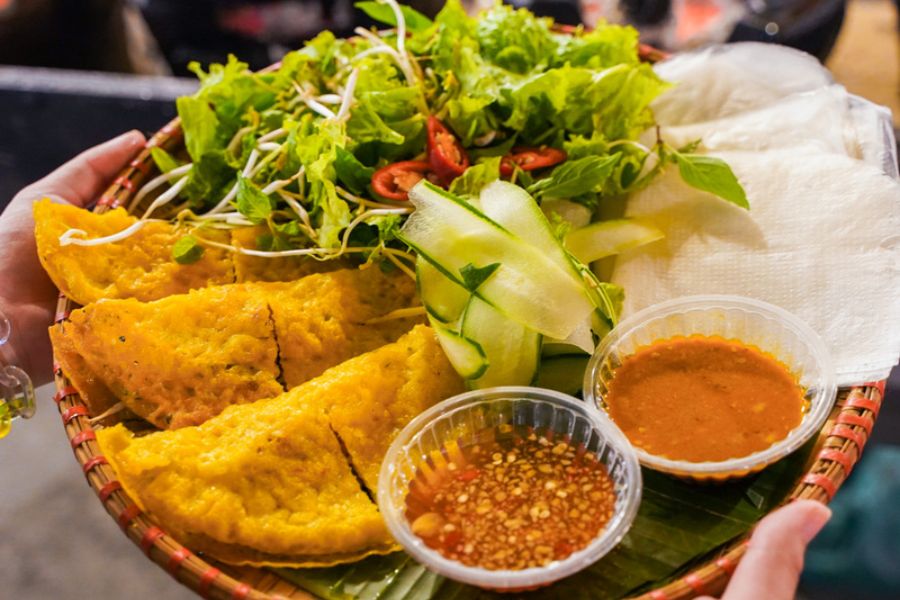
Banh xeo is as much about the way you eat it as the pancake itself. The southern version is large and thin, with a turmeric-coloured shell filled with ingredients such as pork, prawns, mung beans and bean sprouts. The edge should be crisp while the centre remains filled with hot savoury ingredients.
Rather than eating it with a knife and fork, tear off a section of the pancake and wrap it in lettuce and fresh herbs. Dip the bundle into the sauce before eating. Banh xeo is filling, so sharing works well. Ordering one pancake alongside another dish usually makes more sense than everyone ordering a whole one individually.
Pho – Southern-Style

- Best time: Breakfast, although many shops serve it throughout the day
- Best places to eat: Pho Minh; Pho Le; Pho Hoa Pasteur
Pho originated in northern Vietnam, but Saigon developed a version with its own identity. Southern-style bowls are often served with a generous plate of herbs, bean sprouts and lime. Hoisin and chilli sauce commonly appear on the table, while the broth can have a fuller and slightly sweeter profile than many northern versions.
The useful lesson here is not to search for one definitive “best pho”. Each gives a slightly different expression of Saigon-style pho. If you are comparing food between Hanoi and Ho Chi Minh City during the same trip, eating pho in both places is one of the easiest ways to notice regional differences.
Bo Kho – Vietnamese Beef Stew
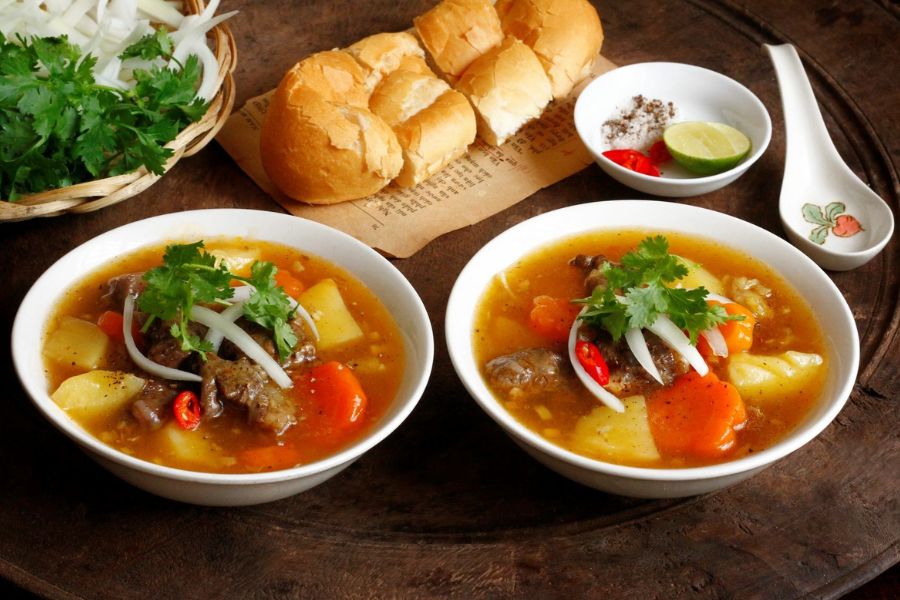
- Best time: Breakfast or lunch
- Best places to eat: Bo Kho Ganh Sai Gon; Bo Kho Co Mai; Hu tieu Bo Vien, Bo Kho 158 Nguyen Cong Tru
Bo kho is one of the most comforting dishes in this Saigon food guide, particularly if you prefer something richer than a clear noodle soup. Beef is slowly cooked with aromatics and spices until tender, producing a deeply flavoured reddish broth. Carrots are commonly included, with fresh herbs, lime and chilli added at the table.
The most satisfying decision comes next: what to eat with it. A crusty banh mi is excellent for soaking up the broth, while Hu tieu or egg noodles turn the stew into a fuller noodle meal. If you are travelling during rainy weather, this is one of the dishes I would particularly look for.
> > > Couples who enjoy discovering a destination through its food may also like our Vietnam Honeymoon Escape: 17-Day Private Tour, which combines cultural experiences, relaxed time together and opportunities to explore local flavours along the way.
Bun Thit Nuong – Vermicelli with Grilled Pork
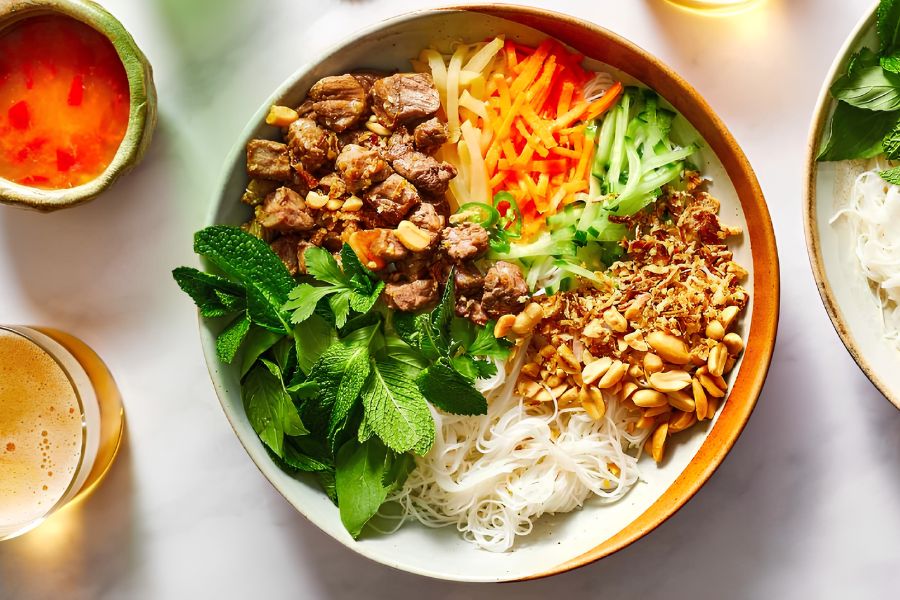
- Best time: Lunch or early dinner
- Best places to eat: Bun thit nuong chi Tuyen, bun thit nuong Hoang Van, Kieu Bao Barbecue Rice Noodles
Bun thit nuong is one of the easiest southern Vietnamese dishes for first-time visitors to enjoy. There is no heavy broth. Instead, cool rice vermicelli is layered with charcoal-grilled pork, lettuce, herbs, pickled vegetables and crushed peanuts, then mixed with the sauce.
Many shops add crisp fried spring rolls that provide another texture alongside the smoky pork. For a hot afternoon, bun thit nuong can also feel lighter than a large bowl of soup while still being substantial enough for lunch.
Snails – Saigon’s Evening Snail and Seafood Culture
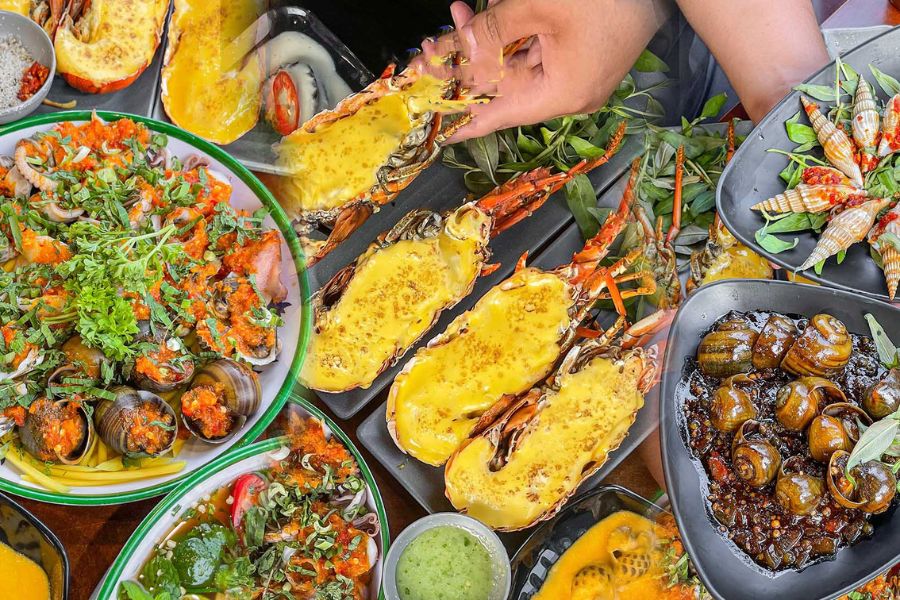
- Best time: Evening, particularly after 6:00 PM
- Best places to eat: oc Oanh; oc Dao
A Saigon snail stall is closer to a casual seafood session where friends order several small plates to share. Alongside different types of snails, you may find clams, scallops, prawns, crab and other shellfish.
Cooking styles vary almost as much as the seafood: garlic butter, tamarind, coconut milk, lemongrass, chilli, salt and pepper, grilled spring onion oil and more. Vinh Khanh Street in District 4 is the city’s best-known food street in Saigon for this kind of evening. This is not the place for a quiet, formal dinner. Expect traffic, noise, stools, smoke and plates arriving whenever they are ready. When ordering seafood, ask the price before committing to expensive crab, prawns or items priced by weight.
Goi Cuon – Fresh Rice Paper Rolls
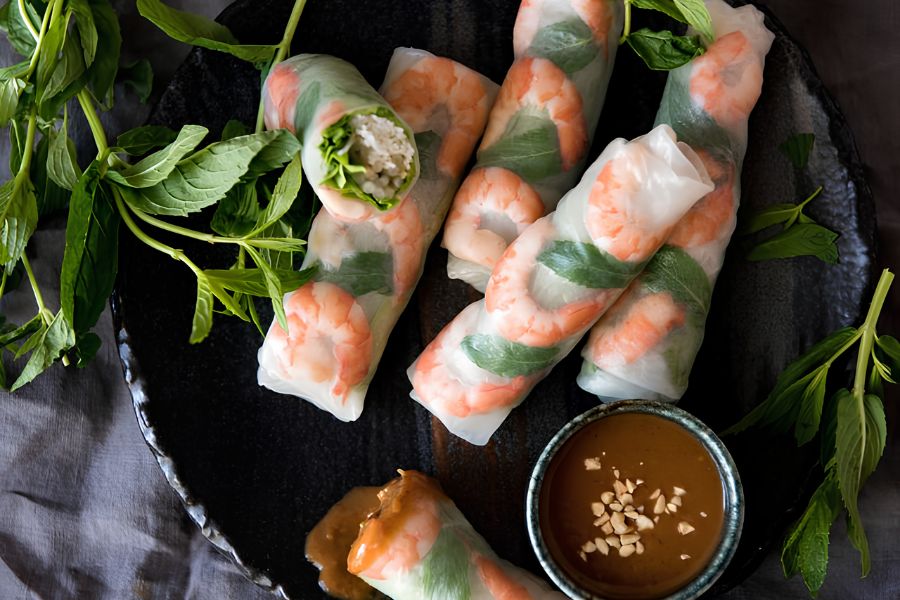
- Best time: Lunch or an afternoon snack
- Best places to eat: Bep cuon Saigon, Goi cuon tom nhay
Goi cuon provides a useful change of pace after several grilled, fried or heavily seasoned dishes. The familiar version combines soft rice paper with pork, prawns, vermicelli and fresh herbs. A good roll should feel light and fresh, with the dipping sauce adding much of the richness.
There is no single goi cuon institution that defines Saigon in the same way that certain shops are associated with com tam or banh xeo. At smaller street stalls, look for fresh herbs, soft rice paper and ingredients being assembled frequently rather than rolls that have been sitting out for long periods.
Che – Saigon’s Sweet Soup
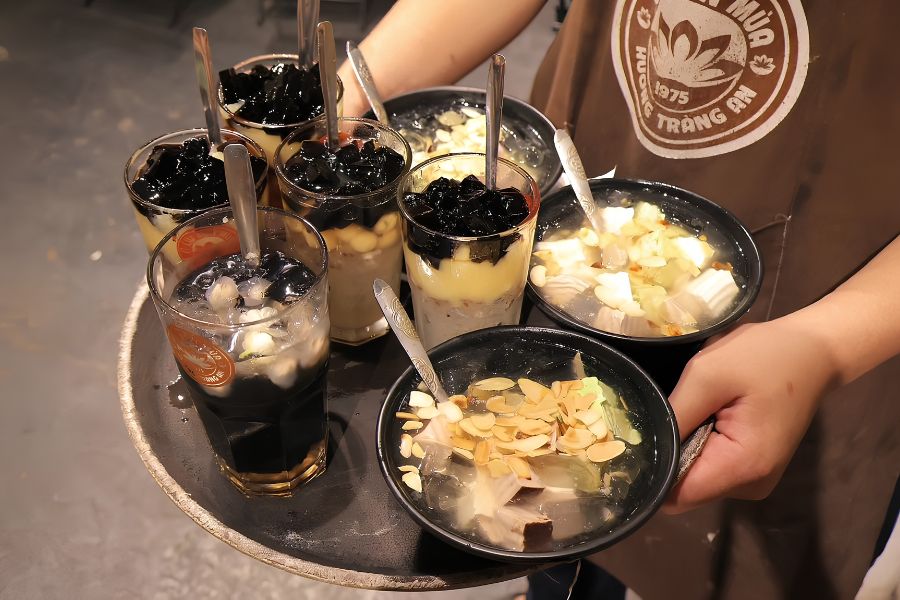
- Best time: Afternoon or after dinner
- Best places to eat: Che Hien Khanh, Ha Ky Sweet Soup Restaurant
“Che” describes a very broad family of Vietnamese desserts rather than one recipe. Some are made with beans, mung bean paste or jelly; others use fruit, coconut milk, lotus seeds, black sesame or sticky rice. They can be hot, cold, light and herbal or extremely rich.
Ending an evening with che is also a good reason to keep some room after dinner.
> > > Families who want to experience Vietnam through both food and culture can explore The Best of Vietnam for Families: 15-Day Private Tour, with a pace that leaves room for local meals, sightseeing and time to enjoy each destination together.
Where to Eat in Ho Chi Minh City: Best Food Streets and NeighBourhoods
Searching for where to eat in Ho Chi Minh City can be confusing because Saigon does not have one single food quarter that contains everything. It is more useful to think by neighborhood. We always recommend choosing districts according to what you want to eat rather than expecting one universal food street.
District 1 – Convenient for First-Time Visitors
District 1 contains many famous addresses and is the easiest area to navigate if your hotel is central. Banh mi, Hu tieu and numerous casual food shops are accessible without long transfers. Ben Thanh Market also offers an easy introduction to a broad range of Vietnamese dishes.
The trade-off is that some famous central places cost more than their neighborhood equivalents. District 1 is therefore excellent for convenience, but there is no need to eat every meal there.
District 3 and Ban Co – Everyday Saigon Food
District 3 and neighboring Ban Co are particularly rewarding for visitors prepared to walk through smaller streets and alleys. This is a strong area for pho, noodles, desserts and traditional family-run shops. The atmosphere becomes more residential as you move away from the main roads. It is also useful for travellers who want street-level food experiences without travelling far from the central museums and landmarks.
Vinh Khanh Street – The Classic Evening Experience
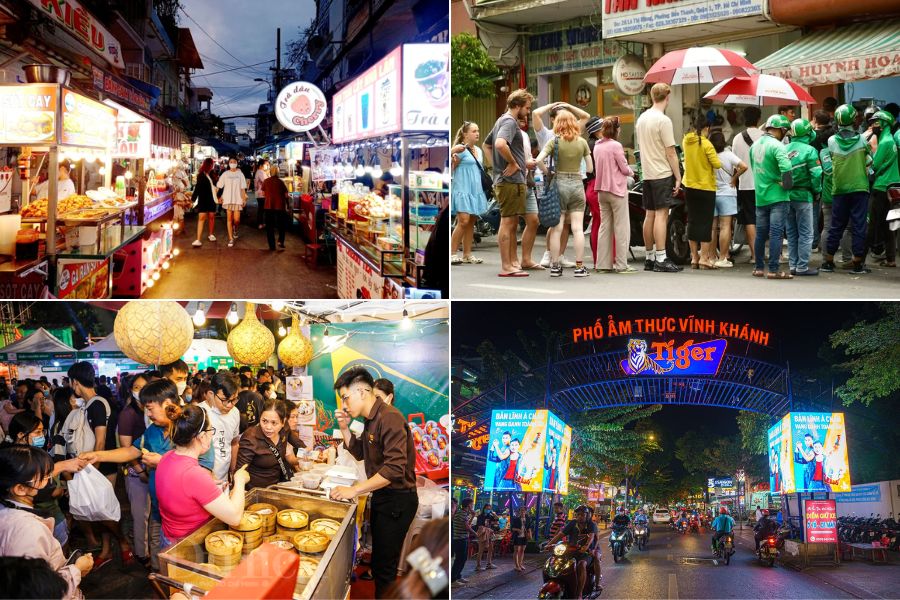
Vinh Khanh in District 4 is one of the strongest answers to the search for a food street in Saigon. After dark, restaurants and pavement tables fill with groups ordering snails, shellfish and beer. The street is noisy and lively rather than polished, which is precisely the point. If you only have one evening dedicated specifically to street dining, Vinh Khanh is worth considering.
Cho Lon – Chinese-Vietnamese Flavours
Cho Lon, centred across Districts 5 and 6, reveals another side of Saigon food. This is where Hu tieu, roast meats, dumplings, Chinese-style noodles and traditional sweet soups become particularly interesting. It is worth exploring during the morning or early evening and pairing the food with visits to local markets, temples and historic streets rather than arriving only for one restaurant.
Ho Thi Ky – Evening Snacks and a Different Night-Market Feel
The streets surrounding Ho Thi Ky Flower Market become increasingly food-focused later in the day. Visitors will find skewers, grilled snacks, noodle dishes, desserts and Cambodian-influenced foods around the area. It is more compact than exploring an entire district and can be useful for travellers who want to taste several small items in one evening.
> > > If Saigon is part of a longer journey across the country, our Inside Vietnam Tour Package 14 Days combines Ho Chi Minh City with other major destinations, giving you a chance to see how food, culture and daily life change from region to region.
How Much Does Street Food Cost in Ho Chi Minh City?
Street food remains inexpensive compared with restaurant dining in many international cities, but prices vary considerably depending on the neighborhood and how famous the vendor has become.
For planning purposes:
|
Food style |
Typical planning range |
|
Small street snack |
20,000–50,000 VND |
|
Everyday banh mi |
25,000–50,000 VND |
|
Bowl of noodles |
50,000–100,000 VND |
|
com tam |
50,000–100,000+ VND |
|
Famous speciality shop |
70,000–150,000+ VND |
|
Seafood/Snail |
Highly dependent on what you order |
These are broad planning figures rather than fixed prices. Many everyday dishes vary between roughly 25,000 and 80,000 VND, while well-known addresses such as com tam Ba Ghien and premium seafood can cost substantially more.
The useful rule is simple: famous does not always mean cheap. A banh mi sold from a residential cart and an oversized sandwich from a nationally recognized shop are technically the same category of food but may have very different prices and portion sizes.
Practical Tips for Eating Around Saigon
- Eat according to the time of day. Some of the city’s most interesting shops have surprisingly limited schedules. Breakfast specialists may finish before lunch, while ốc streets do not really come to life until evening.
- Look for steady customer turnover. A busy stall usually means ingredients are being prepared and replenished frequently. This is more useful than assuming the smallest or least polished stall must automatically be the most authentic.
- Carry cash. More businesses now accept digital payments, but small stalls and traditional shops can still be cash-only. Keep smaller Vietnamese notes available rather than relying entirely on large denominations.
- Ask seafood prices before ordering. At snail stalls, inexpensive small plates can quickly turn into a much more costly meal when larger prawns, crab or seafood sold by weight are added.
- Do not judge local food purely by price. A famous specialist may charge considerably more than a neighborhood stall. Decide whether you are paying for a particularly generous portion, established reputation, central location or simply popularity.
- Choose freshly cooked food where possible. Hot noodles, grilled meat prepared in front of you and busy stalls with frequent turnover are usually more appealing than food that has been sitting uncovered for long periods.
- Be realistic about comfort. Street dining may mean plastic stools, traffic noise, heat and limited air conditioning. That can be part of the experience, but families and older travellers do not need to eat on the pavement at every meal to appreciate Saigon’s food culture.
- Do not try to eat all ten dishes in one day. Saigon food is better experienced over several meals. Choosing two or three dishes each day also gives you room to notice the neighborhoods and people around the food rather than turning the trip into a checklist
Planning to explore local food independently? Our guide to the essential apps for traveling in Vietnam covers maps, transport, translation and other useful tools that make getting around Saigon much easier.
Frequently Asked Questions ABout Food in Ho Chi Minh City
- What is the most famous street food in Ho Chi Minh City?
Com tam, banh mi, Hu tieu, southern-style pho, bun thit nuong and snails are among the dishes most closely associated with eating in Saigon. Rather than looking for one signature dish, try several at the times of day when locals commonly eat them. - Where is the best street food in Saigon?
There is no single best area. District 1 is the easiest for first-time visitors, District 3 and Ban Co offer strong everyday neighborhood food, Vinh Khanh is known for evening seafood and snails, Cho Lon for Chinese-Vietnamese dishes, and Ho Thi Ky for evening snacks. - Is street food in Ho Chi Minh City safe to eat?
No street-food environment can be guaranteed completely risk-free. Choose busy vendors with good turnover, favour food cooked hot to order, drink bottled or properly treated water and use your judgement if ingredients appear to have been left exposed for long periods. - How much does street food cost in Saigon?
Many everyday dishes fall roughly between 25,000 and 100,000 VND, although famous shops and seafood can cost considerably more. A typical street-food meal is well below sit-down fine dining, but the gap between ordinary neighbourhood vendors and famous establishments can be significant. - Where should first-time visitors eat in Ho Chi Minh City?
Start with dishes rather than restaurant rankings. Try com tam for breakfast or lunch, Hu tieu or pho in the morning, banh xeo or bun thit nuong later in the day, then spend one evening exploring Vinh Khanh or another neighborhood known for food. - Do I need a food tour to enjoy Saigon street food?
No. Many of the places in this guide can be visited independently. A local food tour can nevertheless be useful if you want help understanding unfamiliar dishes, navigating several neighborhoods in one evening or trying foods you might not order on your own.
Eating Saigon One Meal at a Time
Eating well in Saigon is less about finding one famous restaurant and more about understanding how the city eats. A morning Bowl of Hu tieu, com tam beside a smoking charcoal grill, banh xeo wrapped with fresh herbs and an evening of seafood on Vinh Khanh Street reveal very different sides of the same city.
You also do not need to chase every famous address. Some of the most enjoyable meals may come from the busy stall near your hotel that never appears on an international food list. Use the recommended shops as starting points, then leave some room to explore.
Planning Ho Chi Minh City as part of a private Vietnam journey? Contact LuxeTravel Asia to combine the city’s food experiences with its markets, history, neighborhoods and the rest of your southern Vietnam itinerary.
Tags: best restaurants in ho chi minh city, best restaurants saigon, food street saigon, ho chi minh city, saigon, saigon food guide, street food in ho chi minh city, where to eat in ho chi minh city