Pu Luong is one of the easiest places to experience rice terraces, mountain villages and slower rural life without traveling deep into Vietnam’s far north. Located southwest of Hanoi in Thanh Hoa Province, the area combines limestone mountains, forest, waterfalls and terraced valleys with villages that are still closely tied to agriculture.
Unlike Sapa, Pu Luong has no large mountain town at its center. Accommodation is scattered between villages and hillsides, and much of the experience involves walking through fields, visiting local communities or simply spending time at a lodge overlooking the valley.
This Pu Luong travel guide covers when to visit, the best things to do, where to stay, how to get there and the practical details worth knowing before your trip. It also explains how Pu Luong differs from Mai Chau and Sapa, helping you decide where it fits within a longer journey through northern Vietnam.
Pu Luong at a Glance
|
Pu Luong |
|
|
Location |
Thanh Hoa Province, southwest of Hanoi |
|
Distance from Hanoi |
Around 160–180 km depending on route |
|
Travel time |
Usually around 4–5 hours by road |
|
Known for |
Rice terraces, trekking, Thai villages, waterfalls and forest |
|
Best time to visit |
May to June and September to October for rice scenery |
|
Recommended stay |
2 nights minimum; 3 nights for a slower trip |
|
Best for |
Nature lovers, couples, walkers, photographers and families with older children |
|
Main areas |
Ban Don, Kho Muong, Ban Hieu, Pho Doan and Son Ba Muoi |
Pu Luong Nature Reserve covers approximately 17,662 hectares across the mountainous districts of Thanh Hoa Province. Much of the protected area is forest, interspersed with limestone valleys, agricultural terraces and villages.
What Is Pu Luong Nature Reserve?
Pu Luong Nature Reserve was established in 1999 and protects a landscape of tropical forest, limestone mountains, narrow valleys, streams and cultivated rice terraces. Local communities, particularly Thai and Muong people, have lived and farmed throughout the area for generations. This combination of protected nature and working agricultural landscapes gives Pu Luong its particular character. It is not a wilderness area where every village has been removed from the reserve, nor is it a resort destination built around one central attraction. Instead, small roads and footpaths connect villages, farmland, forests and clusters of accommodation.
Ban Don has developed into the main tourism base, with everything from simple homestays to comfortable retreats overlooking the rice terraces. Other areas such as Kho Muong and Ban Hieu feel more rural and are better suited to travelers who want village walks and fewer accommodation options around them.
Pu Luong is sometimes described as a smaller alternative to Sapa, but the comparison only goes so far. The mountains are lower, the vegetation is more tropical and the atmosphere is less urban. The attraction is not one dramatic high-altitude viewpoint, but the combination of walking, rice landscapes, villages and a slower stay in nature.
Best Time to Visit Pu Luong
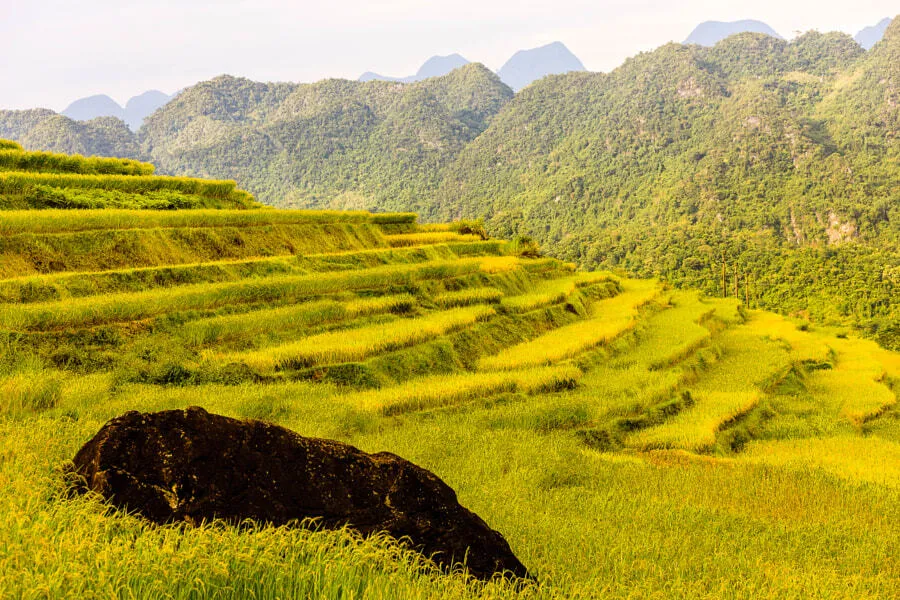
Pu Luong can be visited throughout much of the year, but the appearance of the terraces changes dramatically with the farming calendar.
There are generally two rice-growing periods, which is why travelers can see green or golden paddies at more than one point during the year. Exact planting and harvesting dates vary between villages and weather conditions, so it is better to think in seasonal windows rather than fixed dates.
|
Period |
What to Expect |
Good For |
|
March to April |
Comfortable temperatures, fresh vegetation and fields preparing for the growing season |
Walking, villages, quieter trips |
|
May to June |
Rice terraces ranging from fresh green to more mature fields depending on location and planting cycle |
Rice scenery, photography |
|
July to August |
Very green landscapes but higher rainfall and muddier trails |
Waterfalls, lush scenery |
|
September to October |
One of the main rice seasons, with many terraces turning golden before harvest |
Photography, trekking, first visits |
|
November to February |
Cooler and generally quieter, but fields may be between crops |
Walking, retreats, fewer visitors |
May to June: Green Rice & Early Harvest Scenery
This is an attractive time if you prefer bright green terraces and active farming landscapes. Depending on the exact village and year, some fields may already be approaching harvest while others remain green. Temperatures are warmer, but mornings and late afternoons can still be comfortable for walking.
September to October: Golden Rice Season
September and October are among the most popular months for Pu Luong because large areas of the terraces begin turning from green to gold. This is particularly photogenic around Ban Don and other agricultural valleys, although harvest dates are not identical across the reserve.
July and August: Lush but Wetter
The landscape becomes intensely green during the wetter summer months, and waterfalls generally carry more water. The trade-off is rain. Trails can become slippery, road journeys may take longer and some trekking routes are less comfortable after heavy weather. Vietnam Airlines specifically advises extra caution during the July–August rainy period.
November to February: Cooler & Quieter
If rice terraces are not your main priority, the cooler months can work well for walking and spending time at a lodge. The scenery is less consistently green or golden, but visitor numbers can be lower outside weekends and holiday periods.
If you are still deciding where Pu Luong should fit into your route, our guide to the 10 Best Places to Visit in Northern Vietnam and Travel Tips can help you compare the region’s main destinations.
Best Things to Do in Pu Luong
Walk Through the Rice Terraces around Ban Don
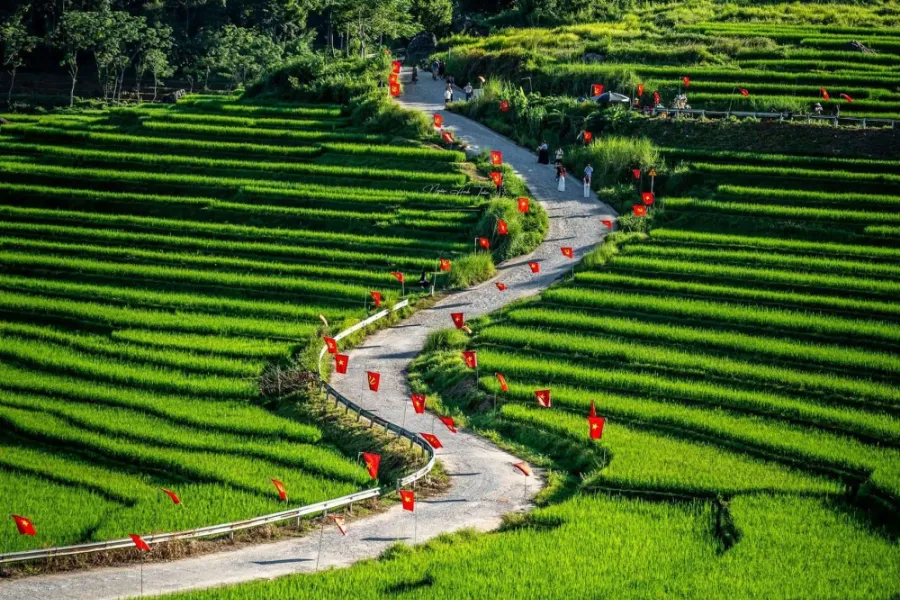
Ban Don is the most practical starting point for a first visit to Pu Luong. It has the largest concentration of accommodation and sits above valleys filled with terraced fields, small villages and forested mountains. Short walks can begin directly from many lodges, following concrete village lanes before dropping onto narrower paths between the fields.
You do not need a demanding trek to enjoy the scenery here. A two or three-hour walk around the surrounding villages is often enough to experience the terraces and see how closely local homes and farmland are connected. Early morning and late afternoon are especially pleasant when temperatures are lower and the light across the fields is softer.
Trek to Kho Muong Village & Bat Cave

Kho Muong sits deeper within the reserve and is one of the most interesting areas for travelers who want a more active day. The route into the valley passes forest, rice fields and steep slopes before reaching a traditional Thai village surrounded by limestone mountains.
Nearby Bat Cave adds a different element to the trek. Access can involve uneven and slippery terrain, so good shoes are important, and the visit is better suited to travelers comfortable walking on natural surfaces. Longer trekking routes can connect Kho Muong with other villages, while shorter programs can combine a village visit with time around the cave.
Explore Ban Hieu & Hieu Waterfall
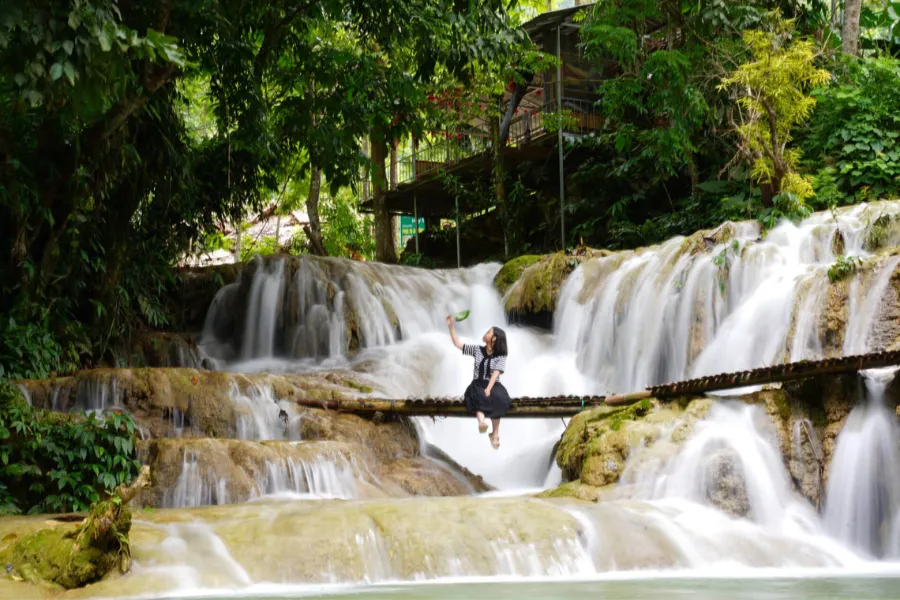
Ban Hieu combines a working village landscape with one of Pu Luong’s best-known waterfalls. Walking routes approach the village through rice terraces, small streams and forest before reaching Hieu Waterfall, where water flows across a long section of limestone and forms pools at different levels. Swimming may be possible when water levels and local conditions are suitable, but it should not be treated as guaranteed throughout the year.
The surrounding area also works well for lunch at a homestay or a slower village walk before continuing back towards Ban Don or another accommodation base.
See Pu Luong’s Traditional Water Wheels
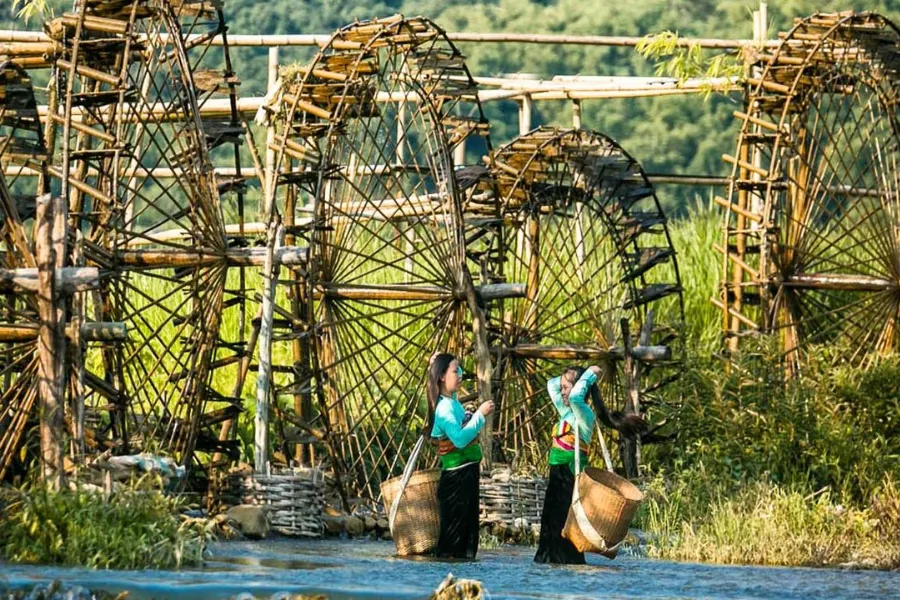
Large bamboo water wheels are one of the most recognizable features of rural Pu Luong. Traditionally used to lift water from streams into channels feeding rice fields, the wheels show how farming communities have adapted to the steep terrain and changing water levels of the valleys.
They are particularly associated with areas around streams and villages in the reserve and can often be included as part of a walking or road journey rather than visited as a standalone attraction. Take time to watch how the water moves through the system instead of treating the wheels only as a photo stop.
Spend Time in Thai Villages
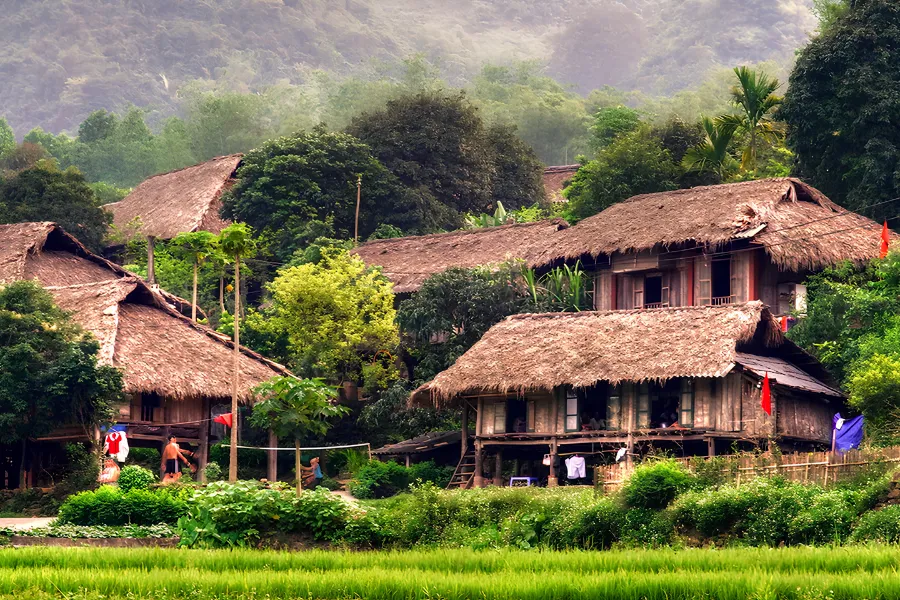
The villages are as important to the Pu Luong experience as the scenery. Traditional stilt houses, rice farming, weaving and home cooking remain part of daily life in many communities. Some homestays offer simple meals or cultural activities, while guided walks can provide more context about farming practices and local traditions.
The aim should not be to search for an “untouched” village. Tourism is already established in parts of Pu Luong, particularly Ban Don. A better experience comes from slowing down, asking before photographing people and choosing activities that create a respectful exchange rather than treating village life as a performance.
Visit Pho Doan Market
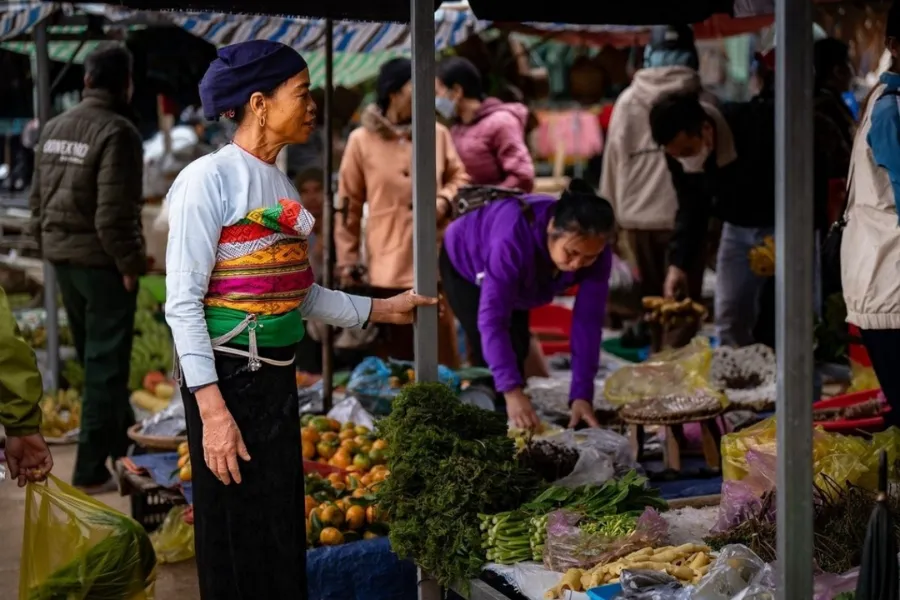
If your stay includes a Thursday or Sunday morning, Pho Doan Market is worth adding. The market has a long history as a trading point for communities in the surrounding mountains and continues to bring together Thai, Muong and other local residents selling produce, food, spices, textiles and everyday goods.
The market takes place on Thursday and Sunday mornings, generally becoming active from around 6:00 AM. Arriving early is worthwhile because activity begins to slow later in the morning. This remains a working local market, so it is better approached as a place to observe daily trade rather than as a souvenir attraction.
After visiting local villages and markets, you may also want to read our guide to the Best Souvenirs in Vietnam for ideas on what to bring home and what is worth looking for during your trip.
Explore Son Ba Muoi
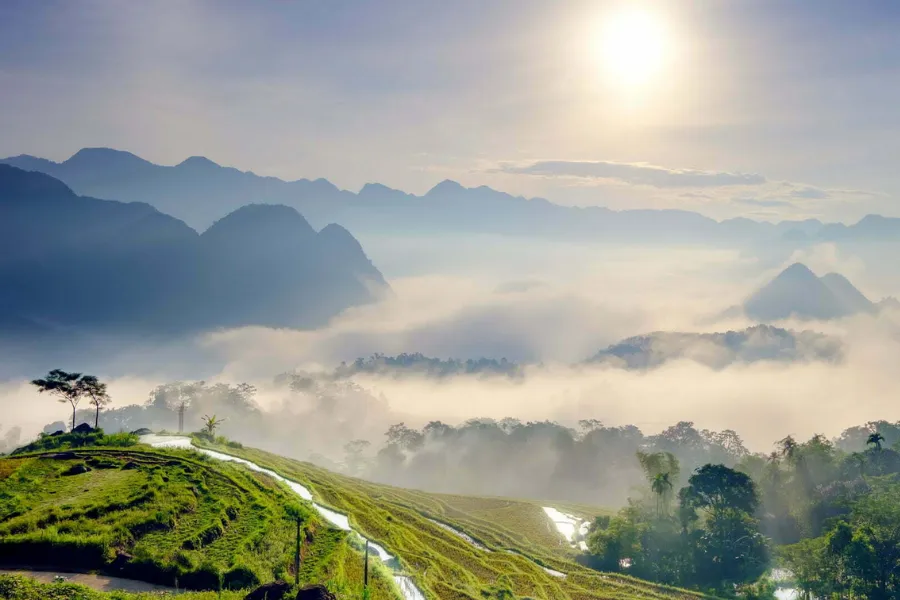
Travelers with more time can continue towards Son Ba Muoi, a group of highland villages in a more remote part of the Pu Luong area. The journey is longer and road conditions can be more demanding, but the higher setting provides a different perspective on the region, with mountain scenery, terraced fields and cooler conditions. It is better suited to a three or four-night Pu Luong itinerary than a quick weekend trip.
Trek towards Pu Luong Peak
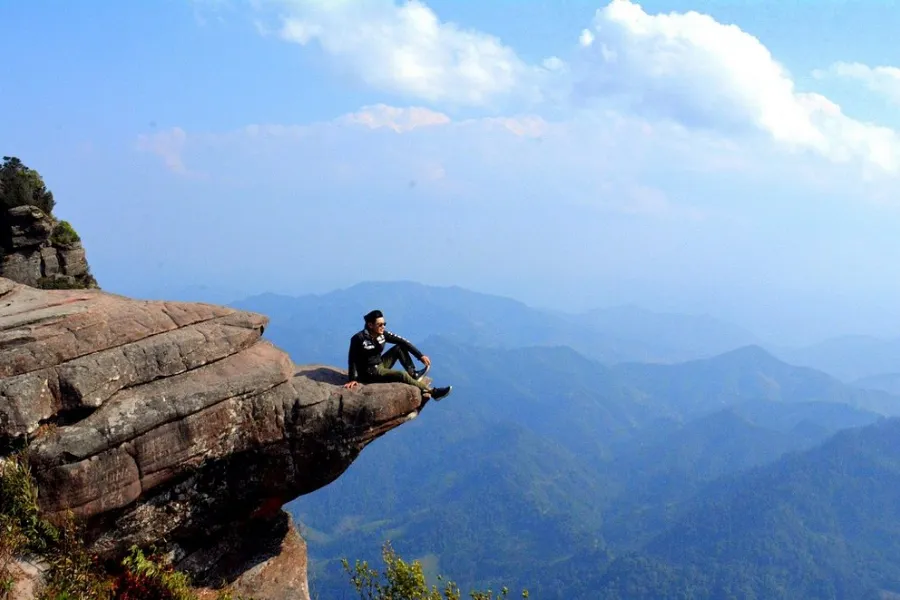
For active travelers, Pu Luong also has longer and more demanding mountain routes. A summit trek should not be treated as a casual extension of a village walk. Routes can involve steep gradients, uneven surfaces and several hours of walking, particularly in poor weather. A local guide is recommended, and the route should be adjusted according to weather, trail condition and fitness level.
Where to Stay in Pu Luong
Where you stay in Pu Luong has a bigger impact on the trip than simply choosing the hotel with the best view. The reserve is spread across several valleys and villages, and attractions are not concentrated around one town center. A lodge in Ban Don is convenient for first-time visitors, while staying in Ban Hieu puts you closer to the waterfall. Kho Muong feels more remote but gives trekkers easier access to the valley and cave.
Before booking, check four things: exact location, vehicle access, nearby walking routes and meal arrangements. In remote areas, walking to another restaurant or calling a taxi may not be realistic.
Ban Don: Best for First-Time Visitors & Rice Terrace Views
Ban Don is the easiest base for most first-time visitors. It has the largest concentration of lodges and homestays, good access from the main road and some of Pu Luong’s most recognizable rice-terrace views.
Many short walks can begin directly from your accommodation, making Ban Don a practical choice if you only have two or three nights. The trade-off is that it is also the busiest area during weekends and the main rice seasons.
Places to consider:
- Pu Luong Retreat
- Pu Luong Natura
- Pu Luong Treehouse
- Pu Luong Ecolodge
- Gateway Inn Pu Luong
Best for: first-time visitors, couples, families and travelers who want good scenery without making access too complicated.
Good to know: Ban Don has the broadest accommodation choice, but properties can sit at very different elevations. A room marketed as having a “valley view” may also involve steep stairs or hillside paths, so travelers with limited mobility should check access before booking.
Ban Bang: Best for Resort-Style Stays & a Quieter Base
Ban Bang sits away from the busiest part of Ban Don and has developed a growing collection of eco-style accommodation and hillside properties. It can be a good compromise for travelers who want more resort facilities but still prefer to stay surrounded by fields and mountains rather than in the main tourism cluster.
Places to consider:
- Pu Luong Eco Garden
- OH Pu Luong Homestay
- Pu Luong Cuisine Garden Homestay
- Pu Luong Sala Homestay
Best for: travelers who want a quieter base, pool or resort-style facilities, and do not need to be in the center of Ban Don.
Good to know: you will usually need transport to reach other parts of the reserve from this area, so it is better for guests traveling with a private driver or with transfers arranged through the property.
Ban Hieu: Best for Hieu Waterfall & a More Rural Stay
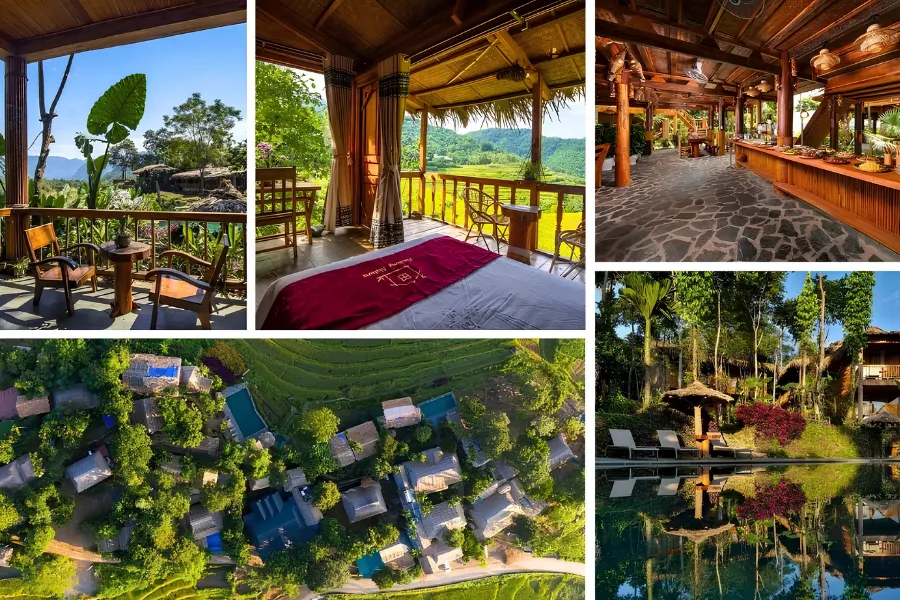
Ban Hieu feels more rural than Ban Don and is the better base if Hieu Waterfall and village walking are priorities. Accommodation is smaller-scale, and the sound of streams, steep paths and agricultural scenery form a bigger part of the experience. Road access can be less straightforward, particularly after heavy rain.
Places to consider:
- Ban Hieu Garden Lodge
- Ly Van GarDen
- PUNANO HOMESTAY
- Pu Luong Golden Rice Homestay
Best for: walkers, couples, repeat visitors and travelers who prefer village atmosphere to resort facilities.
Good to know: if you stay here, do not assume a large vehicle can reach the door of every property. Some accommodations require a walk or local motorbike transfer for the final section, particularly in wet weather.
Kho Muong: Best for Trekking & a More Remote Village Experience
Kho Muong is the most suitable base for travelers who want to stay deeper inside the reserve rather than return to Ban Don after trekking. The village sits in a limestone valley and is associated with Kho Muong Bat Cave and longer walking routes. Accommodation is generally simpler, often family-run and more closely connected to village life.
Places to consider:
- Kho Muong Homestay
- Anh Nam Homestay
- Pu Luong Ohayo
- Ha Hue Homestay
Best for: trekkers, small groups and travelers who prefer a simple village stay over a pool or resort.
Good to know: Kho Muong has steeper and more limited road access than Ban Don. If traveling with large luggage, ask your accommodation in advance whether the final section is accessible by car or requires a local transfer.
How to Get to Pu Luong
Pu Luong is roughly 160–180 kilometers southwest of Hanoi, but the journey usually takes longer than the distance suggests because the final sections pass through mountain roads and rural villages. For most travelers, allow around four to five hours from Hanoi, depending on traffic, route and the exact location of your accommodation.
Private Car from Hanoi
A private car is the most convenient option for couples, families and travelers combining Pu Luong with other destinations. The main advantage is not simply comfort. You can leave directly from your hotel, stop along the way and continue straight to your accommodation rather than transferring between buses or arranging a second vehicle after arrival. Private transport also makes it easier to create a one-way route such as: Hanoi → Mai Chau → Pu Luong → Ninh Binh → Hanoi, rather than returning to Hanoi after every countryside stop.
Limousine or Tourist Shuttle
Shared limousine vans operate between Hanoi and the Pu Luong area and are a reasonable choice for independent travelers. However, “Pu Luong” is a broad destination. Some services stop near the main road or Ban Don rather than delivering passengers directly to every lodge.
Before booking, ask:
- Where is the exact drop-off point?
- Is your hotel included?
- Is an additional motorbike or local transfer required?
- What is the luggage allowance?
- What happens if mountain weather delays the journey?
If your property is in Ban Hieu or Kho Muong, the last section may require additional arrangements.
By Motorbike
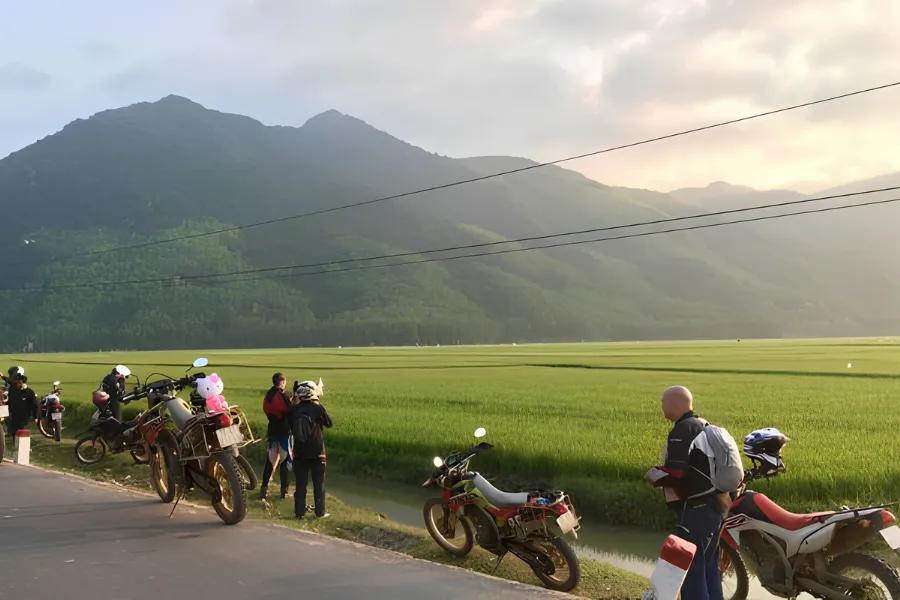
The road into Pu Luong can be very scenic, but this option is better suited to experienced riders. Mountain sections may include steep gradients, narrow village lanes and slippery surfaces after rain. Large bags also make longer riding days less comfortable. Travelers without previous experience on Vietnamese mountain roads are better off using a private car and exploring locally on foot.
From Mai Chau to Pu Luong
Mai Chau and Pu Luong combine particularly well. The distance is roughly 45–60 kilometers depending on the route and destination within the reserve, making it realistic to leave Mai Chau after breakfast and reach Pu Luong before lunch or early afternoon. This is one of the best ways to avoid repeating the same road back to Hanoi.
From Pu Luong to Ninh Binh
Pu Luong can also connect south-east towards Ninh Binh. Road journeys vary, but travelers commonly continue directly towards Tam Coc or Ninh Binh rather than returning north to Hanoi. Current route guides estimate roughly 130 kilometers from Pu Luong to the Tam Coc area, with transfer times dependent on road conditions.
This creates a particularly useful northern loop: Hanoi → Mai Chau → Pu Luong → Ninh Binh → Halong Bay for travelers with enough time.
How Many Days Do You Need in Pu Luong?
How long you need depends on whether you mainly want the scenery or intend to trek between villages.
2 Days / 1 Night: A Short Introduction
Two days are enough for a quick escape, but the journey can feel rushed because you will spend eight or more hours traveling to and from Hanoi. A typical short stay might include:
Day 1: Hanoi to Pu Luong, lunch, Ban Don rice terrace walk
Day 2: Water wheels or short village visit, return to Hanoi
This works best for travelers with limited time, but you will miss much of the deeper reserve.
3 Days / 2 Nights: Best for Most First-Time Visitors
Three days gives the trip much better balance. You can spend the first afternoon around Ban Don, use the second day for a longer trek or waterfall experience, and keep the final morning for a market, water wheels or slower walk. This is the duration I would recommend for most first-time visitors.
4 Days / 3 Nights: Better for Trekking & Slow Travel
Four days allow you to include more remote areas without turning every day into a transfer day. You could split the stay between Ban Don and Ban Hieu or Kho Muong, complete a longer trek and still have time to relax at your accommodation. This works particularly well for couples, photographers and travelers who prefer nature to fast-paced sightseeing.
5 Days or More: Combine Pu Luong with Mai Chau
Pu Luong does not necessarily need five nights on its own. Instead, travelers with more time can create a Mai Chau and Pu Luong route, spending one or two nights in Mai Chau followed by two or three nights in Pu Luong. The landscapes and activities complement each other without feeling repetitive.
> > > If you have more time, the Ultimate Vietnam Adventure in 21 Days offers a broader journey through Vietnam, combining mountain landscapes, cultural experiences and some of the country’s best-known destinations.
What to Eat in Pu Luong
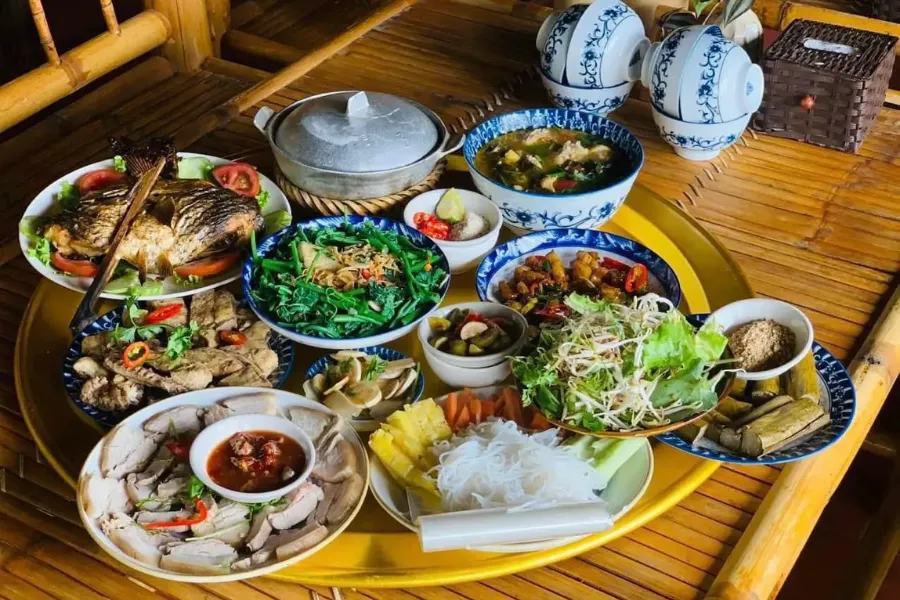
Food in Pu Luong is simple, local and strongly connected with the surrounding farms and villages. Many travelers eat dinner at their lodge or homestay because restaurants are not concentrated in one area. This is often a positive part of the experience rather than a limitation. Current accommodation guides note that family meals commonly include grilled meats, bamboo shoots, mountain vegetables and sticky rice.
- Co Lung Duck: Co Lung duck is one of the best-known local dishes in the area. The ducks are raised around Co Lung and are usually grilled, roasted or steamed with local herbs. The meat is firmer and more flavorful than standard farmed duck, and it often appears as part of a shared family-style dinner.
- Com Lam – Bamboo Sticky Rice: Sticky rice is packed into sections of bamboo and cooked over fire before the outer bamboo layer is peeled away. It is commonly served with grilled pork, chicken, sesame salt or other local dishes.
- Grilled Pork & Mountain Chicken: Grilled meats are common at homestays and local restaurants, often seasoned simply with herbs, lemongrass or local spices before being cooked over charcoal.
- Stream Fish: Freshwater fish from the surrounding streams may be grilled or cooked with herbs. Availability varies by season and accommodation, so it is worth asking what is fresh rather than ordering from a fixed expectation.
- Bamboo Shoots & Seasonal Vegetables: Meals frequently include bamboo shoots, greens and mountain vegetables grown or gathered locally. The exact dishes can change with the season, which is one reason homestay meals often feel different from standard restaurant menus.
- Local Rice Wine: Some village meals include locally produced rice wine. It is usually offered socially during dinner, but there is no expectation that visitors need to drink.
Things to Know Before Traveling to Pu Luong
There are several things to know before traveling to Pu Luong that can make the difference between a relaxed countryside stay and a frustrating trip.
- Pu Luong Is Not One Town: Do not search for “Pu Luong center” and assume everything is close together. Ban Don, Ban Hieu, Kho Muong and other areas can require significant driving or walking between them. Choose your accommodation according to what you want to do.
- Rice Fields Change Throughout the Year: The famous green and golden terrace photographs do not represent every month. Planting and harvest dates vary by village, rainfall and farming schedule. If rice scenery is a priority, ask your accommodation about current field conditions shortly before traveling.
- Trails Can Become Muddy Quickly: A short rain shower can change the condition of rice-field paths and forest trails. Bring shoes with reasonable grip and avoid planning a difficult trek on the same day as an important onward transfer.
- A Local Guide Is Useful for Longer Walks: Village trails often split through fields and forest, and signage can be limited. Short walks around Ban Don are usually manageable independently, but a guide is worthwhile for Kho Muong, full-day village routes or more remote trails. Current trekking guides also note that routes can be unmarked and branch frequently.
- Cash Is Still Useful: Do not rely entirely on credit cards. Larger retreats may accept cards or transfers, but small homestays, markets, local guides and roadside businesses may still prefer cash. Bring enough Vietnamese dong before leaving Hanoi or a larger town.
- Internet Quality Varies: Ban Don generally has better mobile coverage than deeper parts of the reserve. Kho Muong and more remote routes can have weaker signals, while homestay Wi-Fi quality varies. If you need reliable connectivity for work, confirm this directly with the property.
- Rural Accommodation Means Rural Conditions: Even comfortable eco-lodges remain surrounded by fields, insects and forest. Mosquitoes, geckos, frogs or other small wildlife are normal parts of the environment, especially during warmer and wetter months.
- Weekends Can Feel Very Different from Weekdays: Ban Don can become noticeably busier during weekends, public holidays and rice-harvest periods. If quiet scenery is the main reason you are visiting, consider arriving on a weekday.
- Do Not Overpack: Pu Luong is easier with a small or medium suitcase or soft bag, particularly if your accommodation involves steep paths or local transfers. Travelers staying in Kho Muong or joining village treks should carry only what they need for the overnight stay.
- Build Some Weather Flexibility into the Trip: Rain does not necessarily ruin a Pu Luong visit, but it can affect trekking, waterfall conditions and road travel. Keep at least part of the itinerary flexible rather than fixing every activity to a strict hour.
Pu Luong, Mai Chau or Sapa: Which Northern Vietnam Destination Suits You?
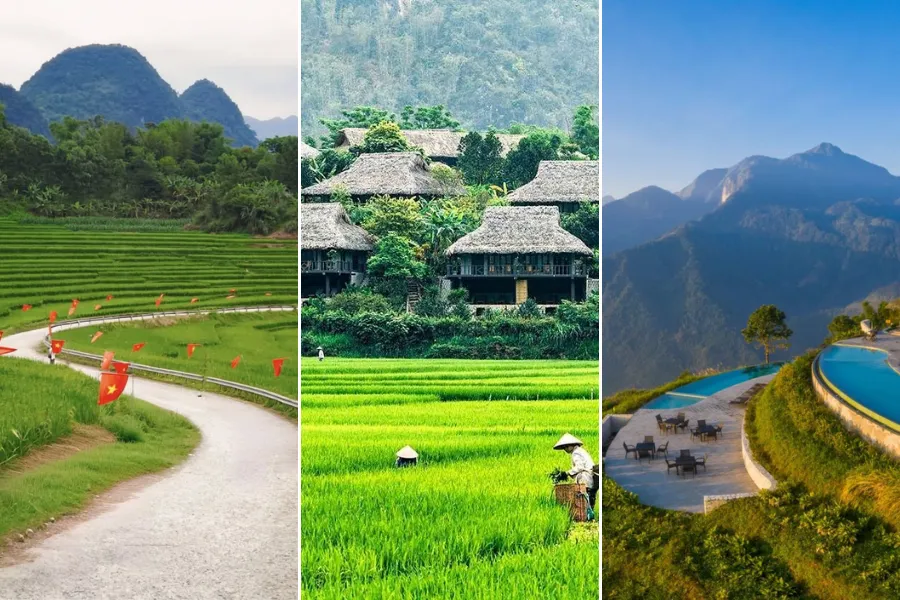
All three destinations offer rice landscapes and opportunities to experience ethnic minority culture, but they are quite different once you arrive.
Mai Chau is the gentlest countryside extension from Hanoi. Pu Luong places more emphasis on nature, terraced valleys and walking, while Sapa offers higher mountains and a much wider range of tourism infrastructure.
|
Pu Luong |
Mai Chau |
Sapa |
|
|
Overall Character |
Nature reserve, terraces and quiet villages |
Broad agricultural valley and White Thai villages |
High mountain town with deep valleys |
|
From Hanoi |
Around 4–5 hours |
Around 3–3.5 hours |
Around 5–6 hours by road |
|
Landscape |
Terraces, forest, limestone valleys and waterfalls |
Flatter rice fields surrounded by mountains |
Steep terraces and high mountain scenery |
|
Main Experiences |
Trekking, village walks, waterfalls and water wheels |
Cycling, village walks, crafts and homestays |
Trekking, Fansipan, Muong Hoa Valley and viewpoints |
|
Walking Level |
Easy to moderate, with harder routes available |
Mostly easy |
Easy walks to demanding mountain treks |
|
Tourism Development |
Retreats, eco-lodges and homestays |
Homestays and countryside resorts |
Large choice of hotels, restaurants and attractions |
|
Atmosphere |
Quiet and nature focused |
Relaxed and accessible |
Busier and more developed |
|
Recommended Stay |
2–3 nights |
1–2 nights |
2–3 nights or longer |
|
Best For |
Nature lovers, walkers, couples |
Families, cyclists, short countryside stays |
Trekkers, photographers, mountain scenery |
Mai Chau is known particularly for White Thai villages such as Lac and Pom Coong and easy cycling through the valley. Sapa, by contrast, sits at the head of a much deeper highland landscape, with Muong Hoa Valley and Fansipan as major attractions.
Choose Pu Luong for Nature & a Slower Pace
Choose Pu Luong if you want walking, rice terraces and time at a lodge without traveling as far into the mountains as Sapa. It also suits travelers who are comfortable with fewer restaurants, shops and organized attractions.
Choose Mai Chau for an Easy Countryside Escape
Mai Chau is particularly good for cycling, easy village walks and travelers with limited time. The terrain is gentler than Pu Luong or Sapa, which can make it more suitable for families or travelers who do not want significant trekking.
Choose Sapa for Higher Mountains & More Activities
Sapa offers the biggest mountain scenery of the three, together with Fansipan, Muong Hoa Valley and a broader selection of hotels and activities. It is the stronger choice if high-altitude landscapes are more important than a quiet retreat atmosphere.
Can You Combine Mai Chau & Pu Luong?
Yes, and this is one of the most logical combinations. Mai Chau provides an easy introduction to the countryside with cycling and White Thai villages before the route continues into Pu Luong for more pronounced terraces, forest and trekking. A 3 to 5-day Mai Chau and Pu Luong journey can therefore work better than treating either destination as a rushed overnight escape.
Is Pu Luong Worth Visiting?
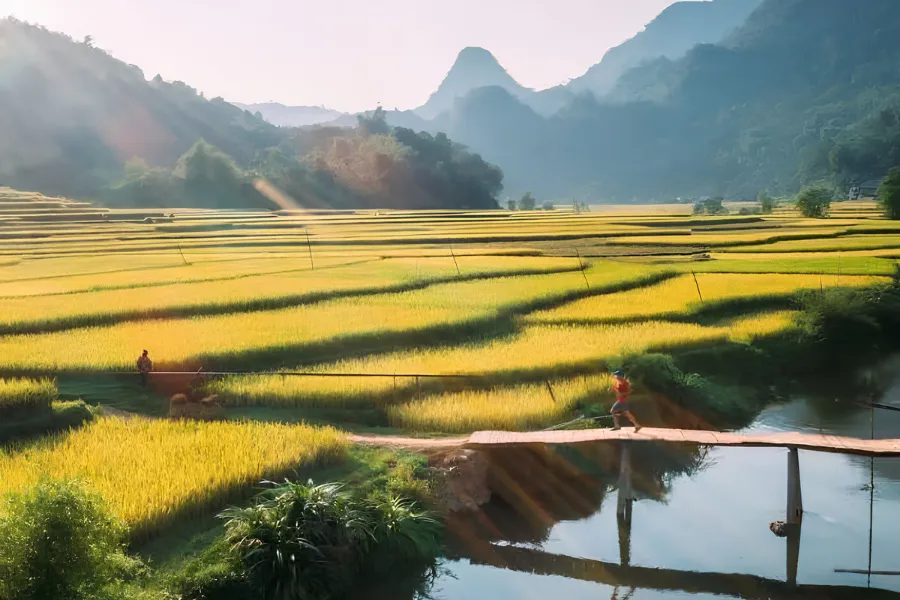
Pu Luong is worth considering if you want to slow down and spend more of the trip outdoors.
It is particularly suitable if you enjoy:
- Rice terraces and rural scenery
- Easy to moderate walking
- Village landscapes
- Nature-based accommodation
- Photography
- A quieter pace than major tourist centers
Pu Luong may be less suitable if you want:
- Nightlife or extensive shopping
- A large selection of restaurants
- Fully accessible sightseeing
- Major monuments or urban attractions
- A trip with very little walking or road travel
The destination works best when the landscape and the pace are the attraction, rather than when it is treated as a place with a long checklist of sights.
> > > For travelers who want to explore beyond Pu Luong, our Grand Northern Vietnam Journey: 10-Day Private Tour combines Hanoi, Mai Chau, Pu Luong, Ninh Binh and Halong Bay in one well-paced itinerary.
FAQs About Pu Luong Travel Guide
- Where is Pu Luong Nature Reserve?
Pu Luong is in Thanh Hoa Province, southwest of Hanoi, and extends across a mountainous area close to the border with Hoa Binh Province. - How far is Pu Luong from Hanoi?
Depending on the road and your accommodation, the journey is roughly 160–180 kilometers and usually takes around four to five hours. - What is the best month to visit Pu Luong?
September and October are especially popular for golden rice landscapes. May and June are also attractive for greener terraces and the first rice season. - How many days do you need in Pu Luong?
Three days and two nights is a good first visit. Two days is possible but feels rushed, while three or four nights work better for longer trekking and a slower stay. - Is Pu Luong suitable for families?
Yes, particularly for families with children comfortable walking outdoors. Choose shorter village walks and a well-located lodge rather than a demanding trekking programme. - Can you visit Pu Luong without trekking?
Yes. You can stay at a retreat, take shorter village walks, visit viewpoints, markets and water wheels, and explore parts of the reserve by private vehicle. You do not need to complete a long trek to enjoy the landscape. - Is Pu Luong crowded?
It is generally quieter than Sapa, but it is no longer a secret destination. Ban Don can become busier on weekends, national holidays and during the main rice seasons. - Do you need a guide in Pu Luong?
Not for every activity. Short walks around Ban Don can be straightforward, but a local guide is useful for longer village-to-village routes, caves and more remote trekking areas.
Planning a Private Pu Luong Journey
Pu Luong works particularly well as part of a slower journey through northern Vietnam rather than as a rushed overnight excursion from Hanoi. A private route can connect Hanoi with Mai Chau, Pu Luong and Ninh Binh while keeping travel times realistic and leaving enough space for village walks, trekking and time at your lodge.
If Pu Luong is high on your list, LuxeTravel Asia can design Pu Luong tours or include the reserve within longer Northern Vietnam tours, with private transport, local guides and accommodation selected around your preferred pace. Contact our local team and experience Pu Luong as part of a northern Vietnam route that gives the countryside enough time rather than simply passing through it.
Tags: northern vietnam tours, pu luong, pu luong eco garden, pu luong nature reserve, pu luong retreat, pu luong tours, pu luong travel guide, things to know before traveling to pu luong