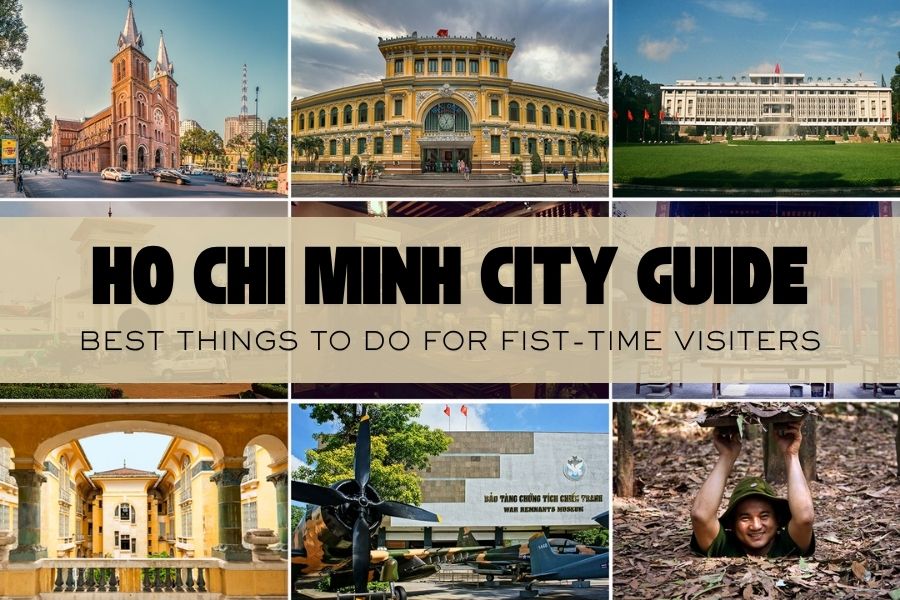
Things to do in Ho Chi Minh City are easy to find; deciding which ones are worth your time is the harder part. One morning might be spent exploring the city’s recent history, while the next begins over a strong coffee or in the middle of a busy local market. By evening, Saigon feels different again, whether you are walking beside the river, heading out for street food or simply watching the city slow down after dark.
For first-time visitors, the challenge is deciding what deserves your time. Several major sights sit conveniently around District 1, while places such as Cho Lon and the Cu Chi Tunnels reveal very different sides of the city.
This guide brings together 15 experiences worth considering, with enough practical advice to help you plan your days without turning Ho Chi Minh City into a race from one attraction to the next.
15 Best Things to Do in Ho Chi Minh City
Understand Vietnam’s Recent History at the War Remnants Museum
- Best time: Morning
- Time to allow: 1.5–2 hours
- Best for: History, first-time visitors, adults and older teenagers
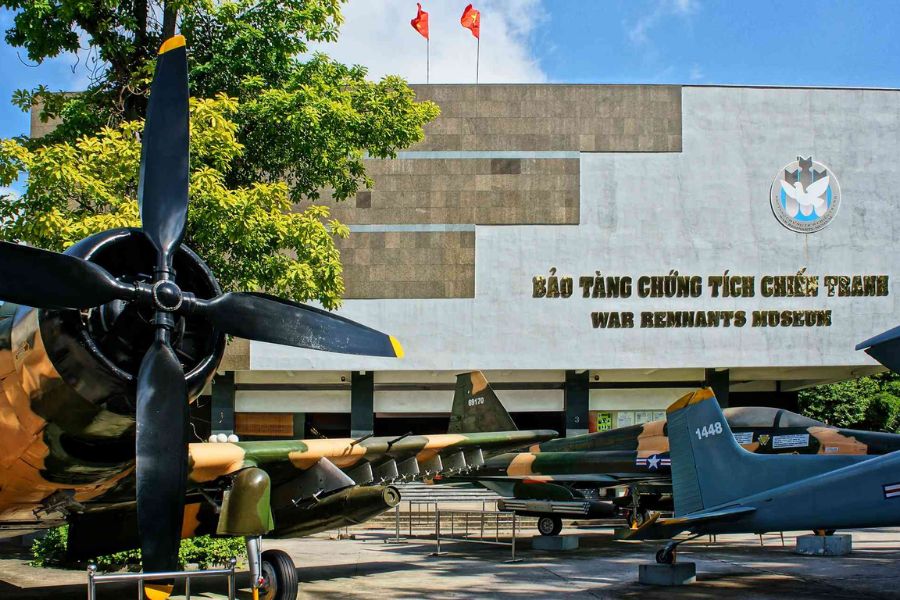
Many visitors arrive in Ho Chi Minh City knowing the broad outline of Vietnam’s modern history. The War Remnants Museum gives history faces, photographs and personal stories.
The experience begins almost casually, with military vehicles and aircraft outside. Inside, the mood changes. Photographs, documents and exhibits deal with warfare, civilian suffering and the long-term effects of Agent Orange. Some galleries are difficult to look at. That is also why the museum tends to stay with people long after they leave.
This is one place we would not squeeze into a crowded afternoon between lunch and another attraction. Give it time, then leave yourself a little space afterwards. A quiet coffee, a walk through a nearby park or simply returning to the hotel for a break can feel more appropriate than immediately moving on to the next museum.
Walk Through the Independence Palace
- Best time: Morning
- Time to allow: 1–1.5 hours
- Best for: History, architecture and first-time visitors
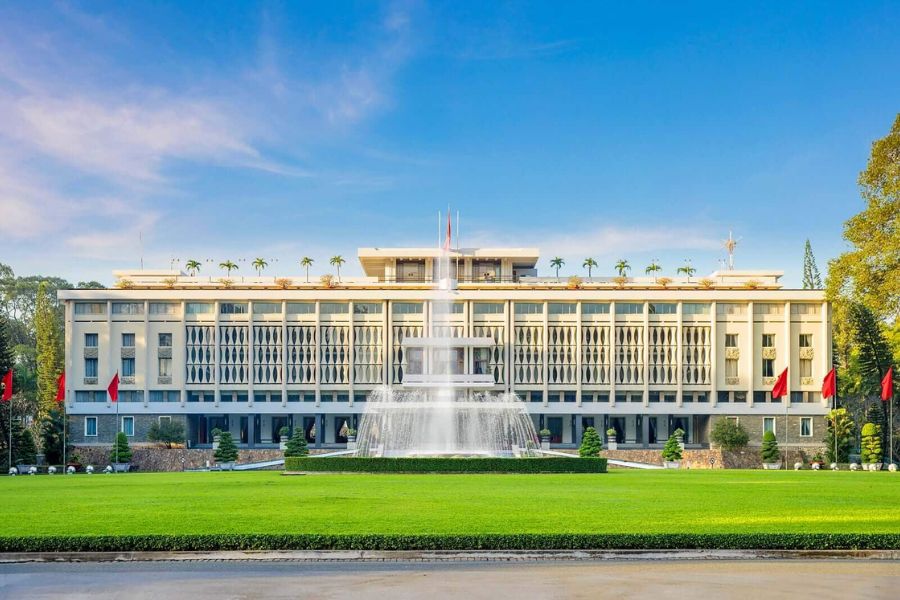
The Independence Palace feels strangely frozen in time. Walk through its reception rooms and meeting halls and you can still see the carefully arranged furniture, telephones and interiors of another political era. Large rooms designed for ceremonies sit alongside private offices and quieter spaces that once formed part of everyday government life.
The basement is easy to overlook, but it is one of the most interesting parts of the building. Narrower corridors lead to old communications equipment, maps and command rooms that make the palace feel less like an architectural monument and more like a working centre from a complicated period of history.
The War Remnants Museum and Independence Palace naturally complement each other, but there is no rule saying you must visit them one after another. For some travelers, seeing one in the morning and saving the other for another day makes the history easier to absorb.
Slow Down Around the Central Post Office, Notre-Dame Cathedral and Book Street
- Best time: Morning or late afternoon
- Time to allow: 1–1.5 hours
- Best for: Architecture, families, photography and easy walking
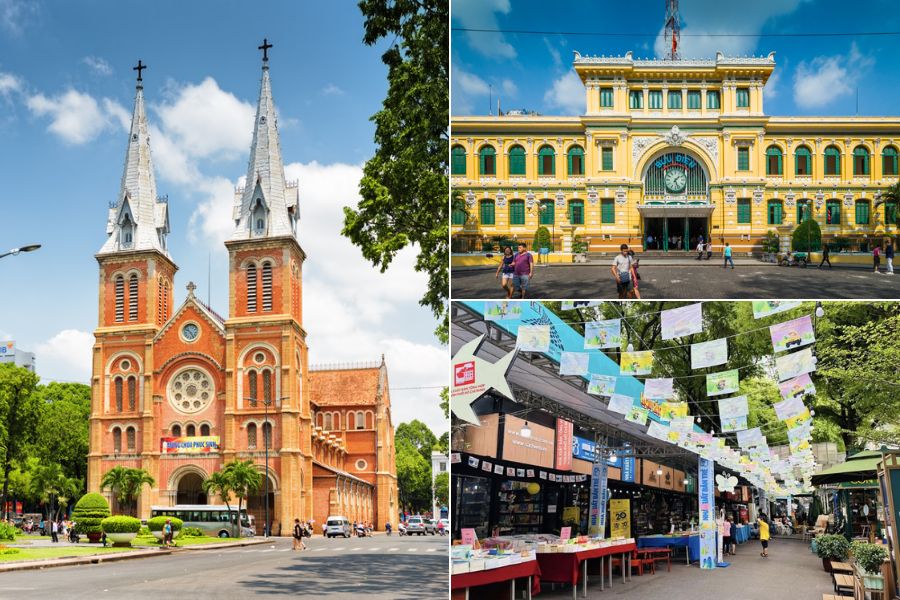
This small corner of District 1 is one of the easiest places to explore on foot. Step inside the Central Post Office and look beyond the souvenir counters. The vaulted ceiling, old maps and original details still give the building a sense of another era, even though it remains a functioning post office.
Across the road stands Notre-Dame Cathedral. Restoration work is still part of the scene in 2026, so visitors should not expect an uninterrupted postcard view of the building. A few minutes away, Nguyen Van Binh Book Street changes the mood again. There are bookstores, shaded corners and small cafes where the city suddenly feels slower. It is a useful place to stop when you have spent the morning moving between landmarks.
These three places work best together. There is little value in rushing through each one just to photograph the facade and leave.
> > > If Ho Chi Minh City is part of a longer journey through the country, our Inside Vietnam Tour Package 14 Days connects Saigon with other major destinations while leaving enough time to experience each region beyond its headline sights.
Follow Dong Khoi Street Towards the Saigon Opera House
- Best time: Late afternoon
- Time to allow: 1–1.5 hours
- Best for: Couples, architecture and first-time visitors
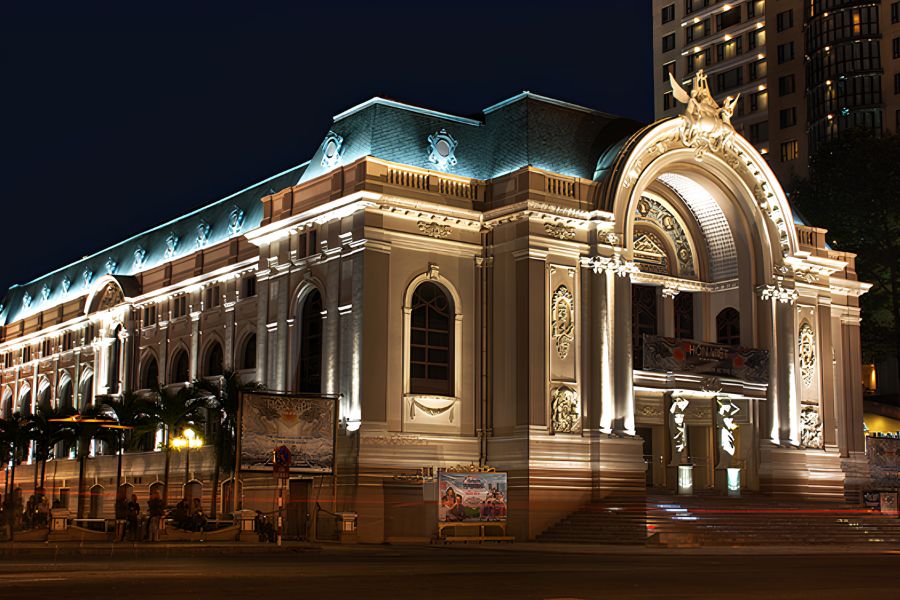
Dong Khoi is not a street you need to “complete”. It works better as a slow walk through one of the city’s most able central districts. Start near the Post Office and move towards the river. Along the way, old facades sit beside boutiques, offices, cafes and hotels. The Opera House eventually appears between modern buildings, elegant without feeling isolated from the city around it.
Late afternoon is a good time to be here. The heat starts to soften, office workers begin leaving for the day and the street gradually shifts towards its evening mood. Look down the smaller side streets as you walk. Saigon often becomes more interesting when you move your attention away from the landmark directly in front of you.
See Nguyen Hue Walking Street Come Alive After Dark
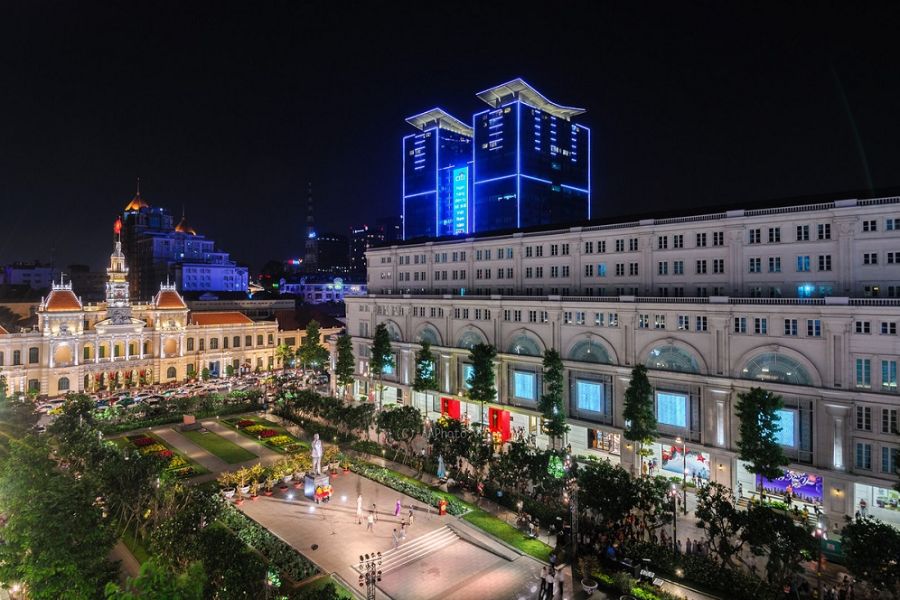
- Best time: After 6 PM
- Time to allow: 45–90 minutes
- Best for: Families, couples and people watching
During the day, Nguyen Hue can feel wide, hot and surprisingly empty. Come back after sunset and it becomes a different place. Families stroll along the pedestrian street, groups of friends gather on the steps, children run through the open space and cafes above the street begin filling up.
There is nothing complicated to do here, which is exactly the appeal. Walk towards the river, turn back towards the illuminated City Hall, buy a drink or find a table upstairs somewhere overlooking the promenade. For first-time visitors, this is one of the easiest ways to see ordinary evening life in central Saigon without booking a tour or travelling across the city.
Visit Ben Thanh Market With Realistic Expectations
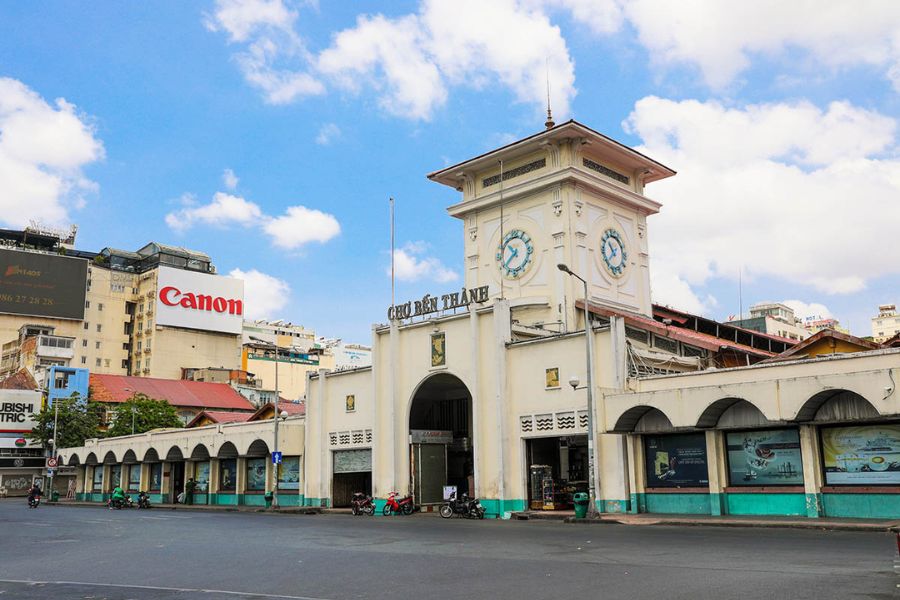
- Best time: Morning
- Time to allow: Around 1 hour
- Best for: First-time visitors, souvenirs and market atmosphere
Ben Thanh Market is famous enough that most first-time visitors will probably pass it at some point.
Go, but know what you are going for. The old market building is part of the city’s visual identity, and inside you will find coffee, dried foods, clothing, souvenirs, fabrics and small food stalls packed tightly together. It is colourful and convenient. It is also highly accustomed to tourists. That means this is not necessarily where you will find the lowest local prices or the most everyday version of market life in Ho Chi Minh City. Bargaining remains common at some stalls, particularly for clothing and souvenirs.
Spend an hour looking around, perhaps pick up something to take home, then compare it with Binh Tay Market later in your trip if markets genuinely interest you. The contrast between the two is often more revealing than either market on its own.
Spend a Morning in Cho Lon
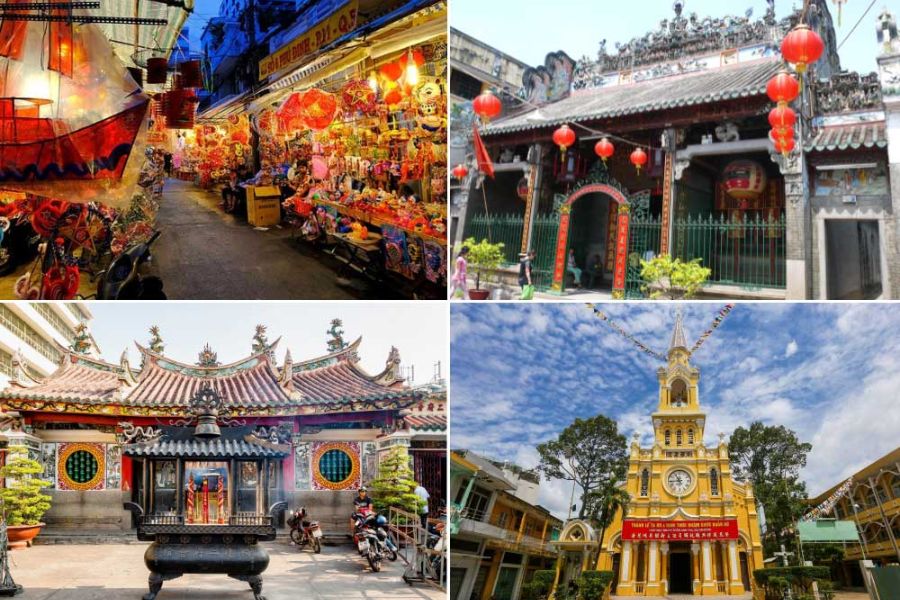
- Best time: Morning
- Time to allow: 2–3 hours
- Best for: Culture, food, photography and repeat visitors
Cho Lon feels like a different city folded into Saigon. The area grew around generations of Chinese-Vietnamese families, traders and religious communities, and that history is still visible in its markets, medicine shops, temples, food and narrow commercial streets.
Start around Binh Tay Market. The building itself is impressive, but what matters more is that the market still feels connected to everyday wholesale trade. Boxes arrive, shopkeepers call to one another and merchandise fills almost every available space. From there, continue towards Thien Hau Pagoda. Incense hangs in the air beneath the roof while worshippers come and go, often paying little attention to visitors quietly standing nearby.
Do not treat Cho Lon as a quick taxi stop between the market and the temple. Walk a little. Stop for noodles or a traditional dessert. Look inside the smaller streets. Two or three hours gives this part of the city enough time to feel like a neighbourhood rather than another sightseeing attraction.
Step Into the Jade Emperor Pagoda
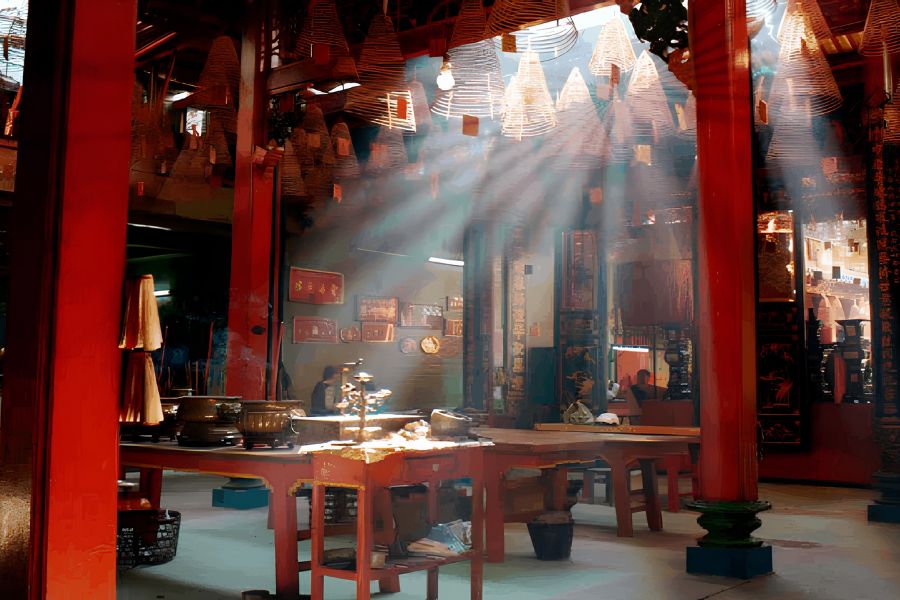
- Best time: Morning
- Time to allow: 30–45 minutes
- Best for: Culture, religious architecture and photography
A few steps inside the Jade Emperor Pagoda can feel like leaving the city behind. The halls are darker than the bright streets outside. Incense hangs in the air, carved figures fill the altars and visitors move quietly between rooms.
It is visually striking, but it is still an active place of worship. That changes how we recommend experiencing it. Keep your voice low. Avoid standing between worshippers and the altar. If people are praying, give them space rather than treating the moment as an opportunity for a close-up photograph.
Let Dinner Become Part of the Sightseeing
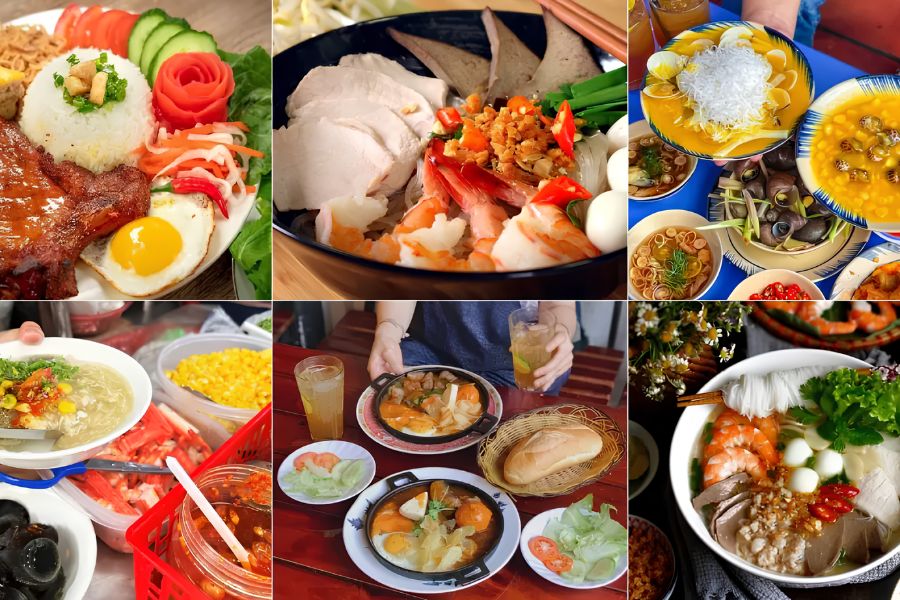
- Best time: Evening
- Time to allow: 2–3 hours
- Best for: Food lovers, couples and families with adventurous eaters
Some of the most memorable things to do in Saigon happen around a table rather than inside an attraction. A good evening might begin with grilled pork and broken rice, continue with a bowl of southern noodle soup and finish somewhere noisy with plates of seafood shared across a small table.
The point is not to eat every famous dish in one night. Choose an area and stay there for a while. District 3 and Ban Co are useful for everyday local food. Cho Lon brings in Chinese-Vietnamese influences. Vinh Khanh Street in District 4 becomes lively after dark, particularly for snails and seafood.
If ordering is intimidating, a local guide can help. But there is also something enjoyable about choosing a busy place, pointing to what looks good and working it out as you go. Saigon’s food scene is not separate from the city experience. For many travelers, it becomes one of the clearest memories of it.
Have Coffee More Than One Way
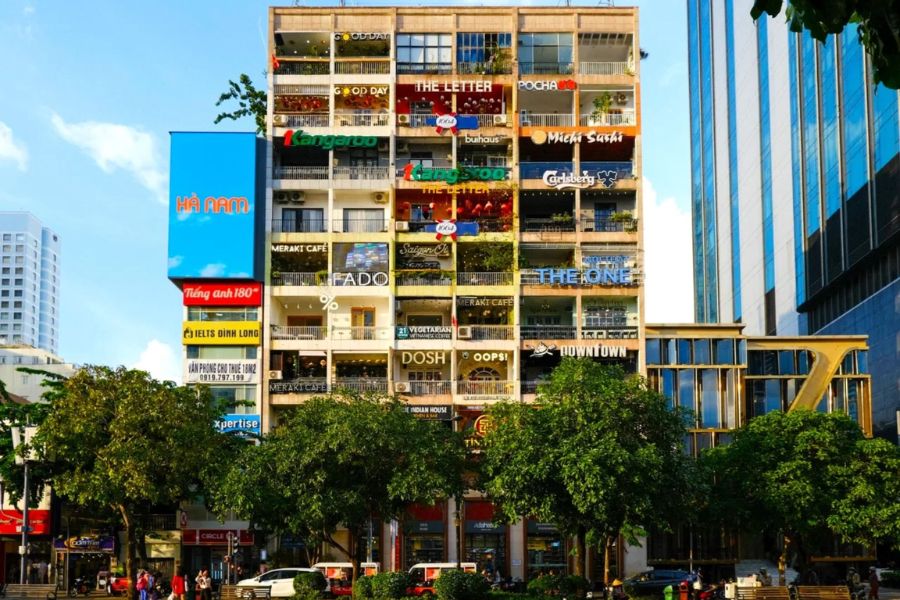
- Best time: Morning or mid-afternoon
- Time to allow: 45–90 minutes
- Best for: Couples, younger travelers and anyone who enjoys slowing down
Saigon runs on coffee, but there is no single coffee experience that represents the city. You could begin in an air-conditioned specialty cafe where every detail of the beans is explained, then spend the next morning sitting on a tiny pavement stool with a glass of strong Vietnamese iced coffee.
Both feel completely normal here. The old apartment block at 42 Nguyen Hue is an easy place for visitors to see how old urban spaces have been turned into modern cafes and shops. It is fun to explore, though it has become very visitor-friendly and should not be mistaken for the whole of Saigon’s coffee culture.
Try somewhere smaller too. Coffee is one of the easiest excuses to stop moving, sit down and simply watch the city for half an hour. In a place that often feels fast, that pause can become part of the experience.
Saigon is only one part of Vietnam’s food story. Our guide to Vietnamese breakfast introduces 12 morning dishes from north to south and shows how everyday eating changes as you travel through the country.
Watch the City Change from the Saigon River
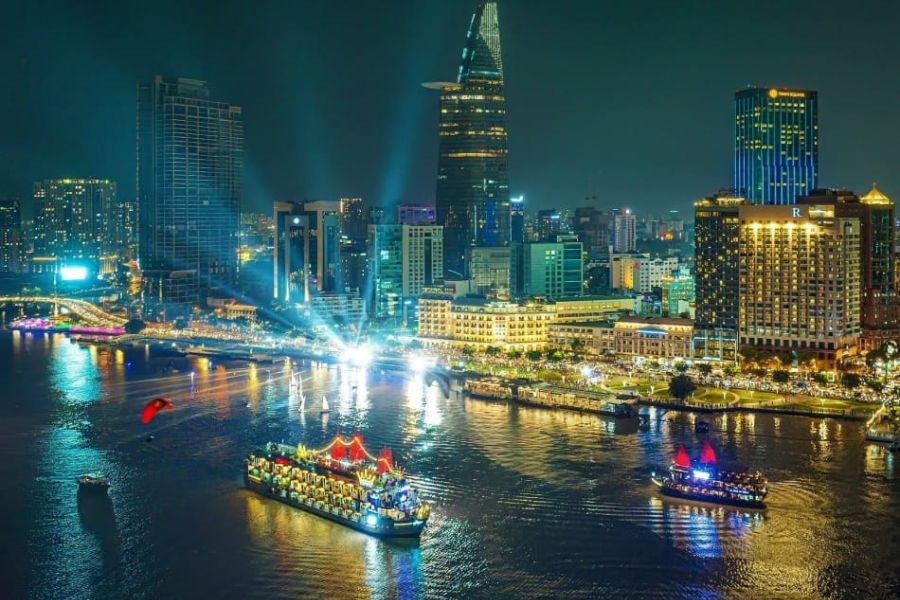
- Best time: Late afternoon or sunset
- Time to allow: 1–2 hours
- Best for: Couples, families and photography
Ho Chi Minh City can feel dense when you experience it only from the road. The Saigon River opens everything up. From the waterfront, the skyline suddenly has room around it, and you can see how quickly newer developments are spreading beyond the older central districts.
You do not need to turn this into a formal dinner cruise unless that appeals to you. A walk around Bach Dang Wharf, a short boat ride or a simple river service can provide the change of pace. Late afternoon works particularly well. The light softens, the temperature becomes more comfortable and the city begins switching from working day to evening.
For couples, a sunset cruise can be a relaxed way to end a sightseeing day. Families may prefer something shorter. Either way, spend some of the journey looking back rather than checking where you are going next.
> > > Couples who want to combine Saigon with a more relaxed journey through Vietnam may enjoy our Vietnam Honeymoon Escape: 17-Day Private Tour, balancing city time with cultural experiences, coastal stays and quieter moments together.
See Saigon from Above
- Best time: Around sunset
- Time to allow: Around 1 hour
- Best for: First-time visitors, couples and photography
After spending a day inside Ho Chi Minh City’s traffic and narrow streets, looking down on it from above changes your sense of scale. Saigon Skydeck at Bitexco Financial Tower remains one easy option in the central district. From above, the city spreads in every direction: the river bends past the centre, newer developments rise beyond it and older neighbourhoods fill the spaces between the towers.
Try to arrive before sunset rather than after dark. Seeing the city in daylight and watching the lights gradually appear is more interesting than arriving once everything is already illuminated. You also do not need multiple skyline experiences.
If you already have drinks booked at a rooftop bar with a good view, that may be enough. Choose the atmosphere you want rather than paying for every observation point simply because it appears on a list.
See More of the City with a Local Driver
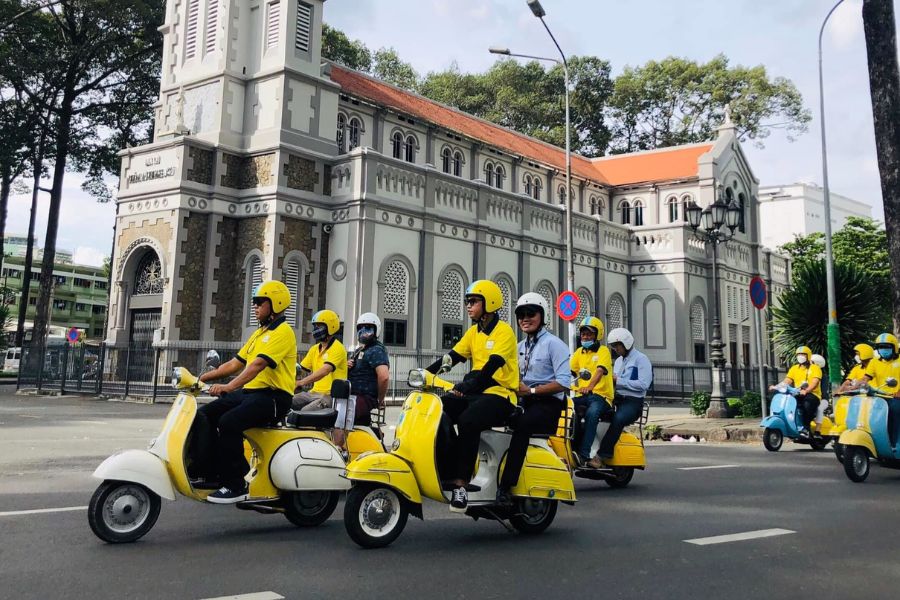
- Best time: Late afternoon or evening
- Time to allow: 3–4 hours
- Best for: First-time visitors, food lovers and couples
Central District 1 is easy to explore, but it represents only a small part of Ho Chi Minh City. A local driver can take you through residential streets, markets and food neighborhoods that would take far longer to connect by car or on foot.
The movement is part of the experience. You pass from broad boulevards into narrow streets, cross canals and suddenly find yourself eating somewhere you would never have noticed from a taxi window. For first-time visitors, we recommend riding as a passenger with an experienced local driver rather than trying to navigate the city’s traffic independently.
Planning to explore the city independently? These essential apps for traveling in Vietnam can help with directions, transport, translation and other everyday details while you are on the move.
Go Underground at the Cu Chi Tunnels
- Best time: Early morning
- Time to allow: Half day
- Best for: History, first-time visitors and families with older children
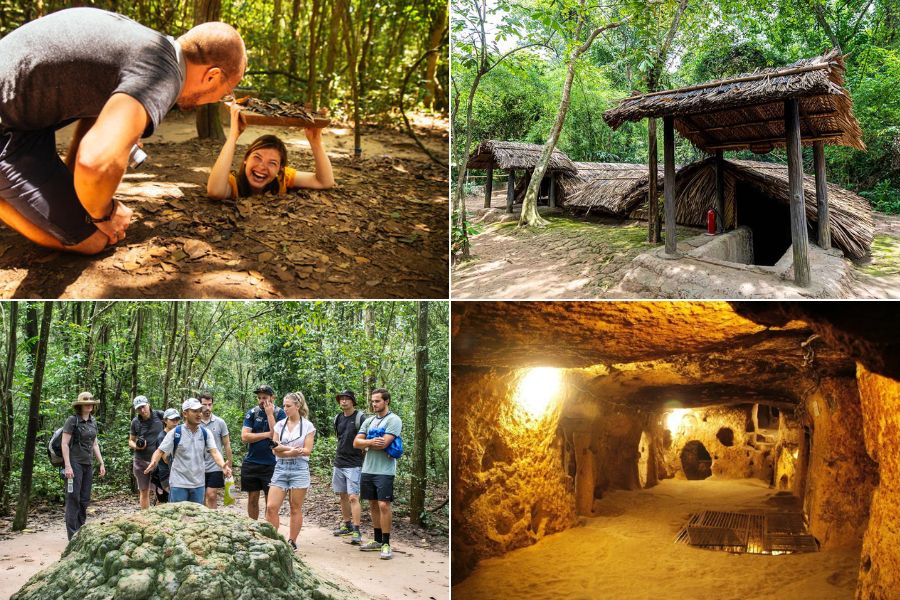
The road out to Cu Chi gradually leaves central Saigon behind, and by the time you arrive the setting already feels very different. The tunnel network played an important role during the wars in Vietnam, providing shelter, movement routes, communication spaces and operational areas underground. Today, sections have been opened or adapted so visitors can understand how the system worked.
Crawling through the tunnels is optional. Some visitors find it fascinating. Others discover within seconds that confined underground spaces are simply not for them. There is no reason to force the experience if you are claustrophobic, have back problems or have limited mobility. The historical explanations matter more than proving you can crawl through a narrow passage.
See a Quieter Side of Saigon in Tao Dan Park
- Best time: Around 6–8 AM
- Time to allow: 30–60 minutes
- Best for: Repeat visitors, photographers and slow travel
By 7 AM, Ho Chi Minh City is already awake. In Tao Dan Park, however, the morning starts differently. People walk beneath the trees, exercise together, stretch, talk with friends or simply sit before beginning the working day. There is no famous monument waiting at the end of the path. That is why this experience works.
After a few days of museums, markets and traffic, seeing a place used simply as part of everyday life provides another perspective on the city. If your hotel is nearby, walk through before breakfast and find coffee afterwards. You do not need to build half a day around it. Thirty quiet minutes may be enough.
What to Do in Ho Chi Minh City Based on Your Travel Style
Not every traveler needs the same version of Saigon.
|
Traveler |
Experiences to prioritize |
|
First-time visitors |
War Remnants Museum, Independence Palace, Post Office area, Cho Lon, street food |
|
Families |
Independence Palace, Central Post Office, river experience, markets and selected food stops |
|
Couples |
Dong Khoi, coffee, river sunset, skyline views and evening food |
|
History lovers |
War Remnants Museum, Independence Palace, Cu Chi Tunnels and Cho Lon |
|
Food lovers |
District 3, Cho Lon, Vinh Khanh and a local-guided food experience |
|
Repeat visitors |
Cho Lon side streets, Tao Dan Park, local markets, cafes and residential neighborhoods |
If you are wondering what to do in Ho Chi Minh City on a short visit, choose experiences that show you different sides of the city. One museum, one neighborhood, one food evening, one slow coffee and one excursion often tell you more than ten landmarks visited in a hurry.
> > > Families looking to explore more of the country can also consider The Best of Vietnam for Families: 15-Day Private Tour, combining city experiences with cultural stops, local activities and time to slow down between destinations.
Practical Tips for Exploring Ho Chi Minh City
- Group the central sights together. Independence Palace, the War Remnants Museum, Central Post Office, Dong Khoi and Nguyen Hue are all relatively close. A sensible walking route saves time sitting in traffic.
- Use the morning well. The city becomes noticeably hotter later in the day. Museums, markets and longer walks are generally easier before lunch.
- Take a car or ride-hailing service for longer journeys. Cho Lon, District 4 and outer neighborhoods are easy enough to reach, but walking there from District 1 is rarely the best use of your time.
- Do not panic at every road crossing. Wait for a sensible moment, move steadily and avoid sudden changes of direction. If a junction feels uncomfortable, find a signal-controlled crossing instead.
- Keep phones and valuables secure near busy roads. The same awareness you would use in any large city is sensible here, particularly around crowded tourist areas.
- Check opening times before building a tightly timed day. Museums and historic attractions may have midday breaks, last-entry rules or temporary closures.
- Expect restoration around Notre-Dame Cathedral. Work remains ongoing in 2026, so the appearance and access may differ from older photographs online.
- Leave part of the day empty. Saigon rewards a little flexibility. An unexpected lunch, a long coffee or a street you decide to follow can easily become the part of the day you remember most.
Frequently Asked Questions About Things to Do in Ho Chi Minh City
- What are the best things to do in Ho Chi Minh City for first-time visitors?
Start with a small number of places that provide context: the War Remnants Museum, Independence Palace and the Central Post Office area. Then add a neighborhood such as Cho Lon, an evening focused on local food and some time around the river or Nguyen Hue. - How many days do you need in Ho Chi Minh City?
Three full days suits most first-time visitors. Two days gives you a useful introduction, while four days allows enough time for Cu Chi, neighborhood exploration and a more relaxed pace. - Is Ho Chi Minh City worth visiting for two days?
Yes. Two days can work very well if you resist the temptation to see everything. Focus on the center during one part of the trip and use the remaining time for food, a neighborhood or an evening experience. - What can you do in Ho Chi Minh City at night?
Good evening options include street food, Nguyen Hue Walking Street, the Saigon River, rooftop views, coffee and locally guided motorbike experiences. Vinh Khanh Street is especially lively if seafood is part of the plan. - Is Ho Chi Minh City suitable for families?
Yes, with some thought about pacing. The Independence Palace, Post Office area, river and markets can work well with children. The War Remnants Museum contains difficult material, while the Cu Chi tunnel sections may not suit very young children. - Are the Cu Chi Tunnels worth visiting?
They are worthwhile for travelers interested in wartime history, but they require a substantial part of the day. If you only have two days in Ho Chi Minh City, decide whether the excursion matters more to you than spending additional time exploring the city itself. - Do I need a guided Ho Chi Minh City tour?
Not for the central attractions. A guide becomes more valuable when context matters, such as at Cu Chi, in Cho Lon or during a food-focused evening through neighborhoods you might not find on your own.
See More Than the Landmarks
Ho Chi Minh City rarely reveals itself all at once. The museums explain the past. Cho Lon tells another story through markets and temples. The river opens up the skyline. Coffee slows the day down. And after sunset, food stalls and crowded streets show a city that feels very different from the one you explored in the morning.
You do not need to complete every experience on this list. Choose a few that suit the way you travel, leave enough time between them and allow Saigon to interrupt the plan occasionally.
Planning Ho Chi Minh City as part of a private Vietnam journey? Contact LuxeTravel Asia to combine the city’s history, neighborhoods and local experiences with the Mekong Delta and the rest of southern Vietnam.
Tags: ho chi minh city, ho chi minh city tours, must do in ho chi minh city, things to do in ho chi minh city, things to do in saigon, what to do in ho chi minh city