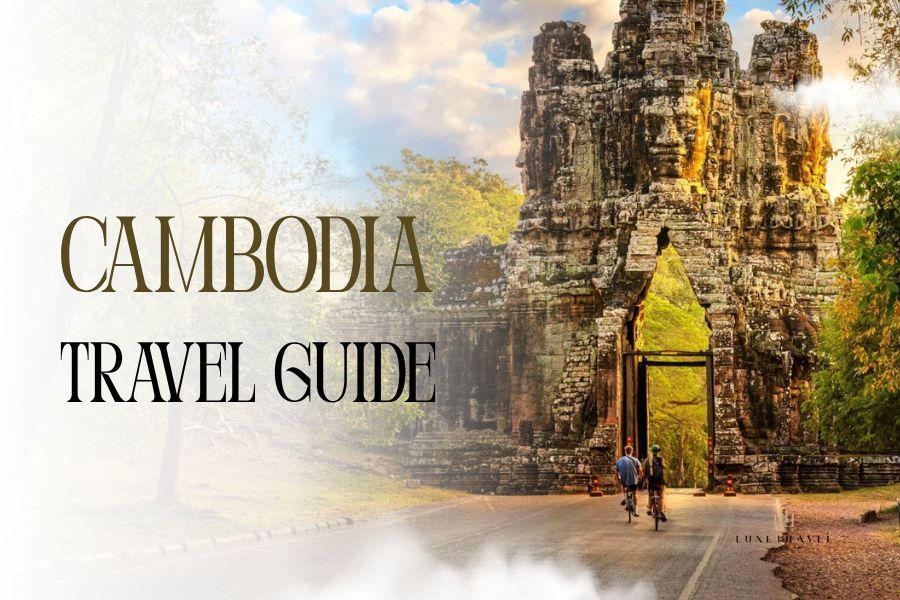
Welcome to your complete Cambodia travel guide, crafted to help you plan an extraordinary trip to one of Southeast Asia’s most fascinating destinations. Cambodia is best known for the magnificent stone spires of Angkor Wat rising above the jungle canopy, but the kingdom offers far more than ancient ruins alone.
Traveling Cambodia takes you from the world’s largest religious monuments to the lively floating villages of Tonle Sap Lake, the rich history and riverside buzz of Phnom Penh, and the quiet white-sand beaches of private southern islands.
Whether you are visiting for the first time or looking for tailor-made Cambodia luxury tours, this guide covers everything you need: entry requirements, the best seasons to visit, top highlights, local dishes to try, essential cultural etiquette, and practical tips for an easy, stress-free trip.
Cambodia Travel Guidelines: Visas, Entry Protocols & Border Requirements
Preparing your administrative paperwork well before departure ensures an effortless arrival when you travel in Cambodia:
- Passport Validity: Your passport must have at least six months of remaining validity from your scheduled date of entry and contain at least two completely blank visa pages.
- Cambodia e-Visa (Recommended for Tourist Travel): The official online e-Visa (Type-T / Tourist) is the most streamlined option for international arrivals. Applied for via the official Ministry of Foreign Affairs portal, processing takes approximately three business days. Always print at least two hard physical copies to present to border officers at immigration and customs.
- Visa on Arrival (VoA): Available at primary international gateways, including Siem Reap – Angkor International Airport (SAI), Phnom Penh International Airport (PNH), and Sihanoukville International Airport (KOS), as well as designated land border checkpoints with Vietnam and Thailand. Travelers must supply a completed application, one passport-sized photograph, and the visa fee in clean, increased US Dollar cash.
- Cambodia e-Arrival Card: Incoming air passengers must complete the official digital Cambodia e-Arrival declaration online within seven days prior to arrival. This system integrates health, customs, and immigration records into a single digital QR code, replacing older paper forms.
- Drone Regulations & Antiquity Restrictions: Unmanned aerial vehicles (drones) are strictly prohibited across the entire Angkor Archaeological Park and central Phnom Penh without express written authorization from the APSARA National Authority and civil aviation boards. Furthermore, taking genuine antique sculptures, Buddha fragments, or cultural artifacts out of the country without government permits is illegal and strictly prosecuted.
When is the Best Time for Travel in Cambodia?
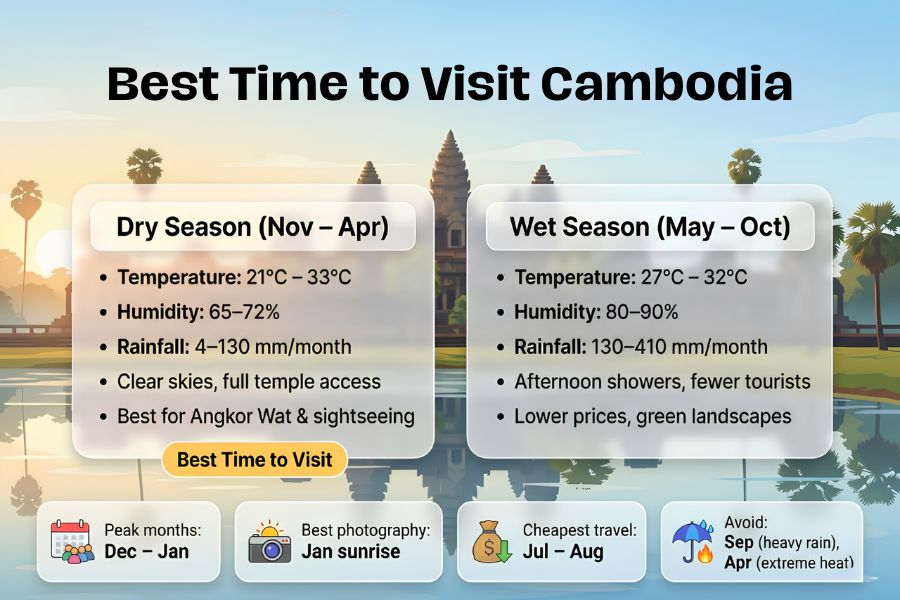
Cambodia enjoys a tropical monsoon climate divided into two distinct seasons, each offering its own character for Cambodia travel:
|
Season |
Months |
Climate & Conditions |
Travel Character & Best For |
|
Cool Dry Season (Peak Window) |
Nov – Feb |
Sunny, breezy, comfortable temperatures (24°C–28°C / 75°F–82°F), low humidity |
The Prime Sightseeing Period: Ideal for full-day temple walking, cycling, open-air river cruises, and coastal island relaxation. |
|
Hot Dry Season |
Mar – May |
Bright, dry, climbing heat (33°C–38°C / 91°F–100°F), low rainfall |
Early Birds & Beachgoers: Best suited for dawn temple explorations, afternoon poolside siestas, and private island retreats in the southern archipelago. |
|
Lush Green Season |
Jun – Oct |
Warm (28°C–32°C / 82°F–90°F), brief, heavy late-afternoon tropical downpours |
Atmospheric & Photogenic: Thriving rainforests, filled temple moats reflecting stone towers, high water on Tonle Sap Lake, fewer visitors, and exceptional luxury resort value. |
If your priority is comfortable outdoor weather, this cool, dry window is the definitive sweet spot. Clear skies, minimal rainfall, and mild breezes make climbing steep temple staircases and exploring dusty countryside trails effortless without the draining tropical heat.
The Best Time for Beach & Island Escapes (December to April): The southern coast around Sihanoukville and the Koh Rong Archipelago enjoys calm, turquoise seas, crystal-clear water for snorkeling, and dry, sunny beach days.
The Best Time for Photographers & Crowd-Free Travel (June to October): Do not dismiss the green season. Rain rarely lasts all day, it typically arrives as dramatic 1- to 2-hour downpours in the late afternoon. In return, the temples are surrounded by filled, mirror-like moats and mossy green stone, the Tonle Sap floating villages are at their most vibrant, and major archaeological sites are free from the heavy winter tour crowds.
Top Cambodia Places to Visit & In-Depth Highlights
Selecting the finest Cambodia places to visit allows you to experience the full spectrum of the nation’s natural and architectural heritage:
Siem Reap & The Angkor Archaeological Park
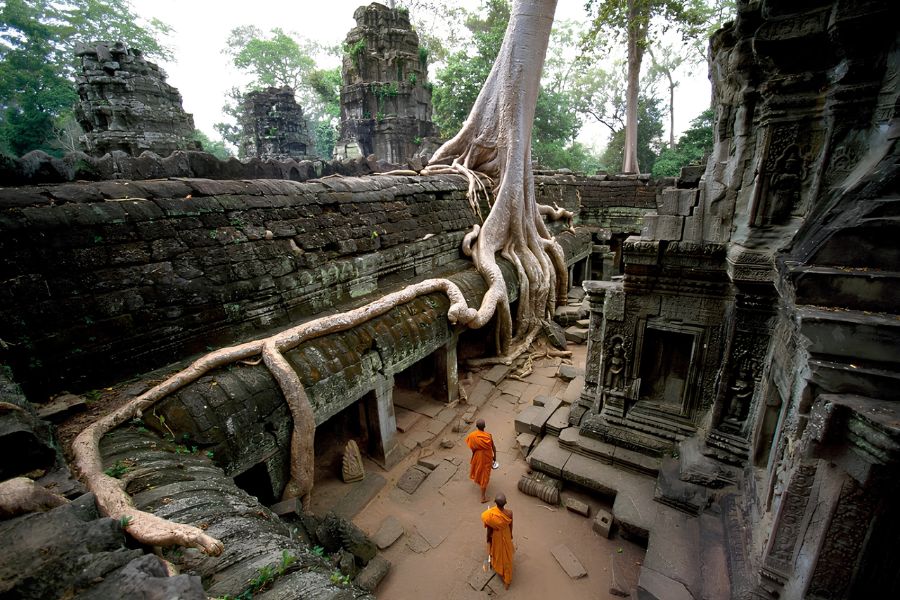
The beating heart of ancient Khmer civilization from the 9th to the 15th centuries, this UNESCO World Heritage complex spans over 400 square kilometers, preserving hundreds of sandstone shrines hidden within dense tropical forest canopy.
- Crowd-Free Sunrise at Angkor Wat: Watch the golden dawn silhouette of the five lotus-shaped towers over the northern reflection pond, followed by an unhurried exploration of the 800-meter-long stone gallery of bas-reliefs depicting ancient military triumphs and celestial Apsaras.
- The Giant Tree Roots of Ta Prohm: Walk through the atmospheric monastic complex where nature has reclaimed human architecture, as colossal roots of silk-cotton and strangler fig trees twist around collapsed stone vaults and mossy lintels.
- The 216 Smiling Faces of Bayon (Angkor Thom): Navigate the multi-tiered stone labyrinth at the center of King Jayavarman VII’s royal city, where 54 gothic towers feature giant, serenely smiling faces of Avalokiteshvara.
- The Pink Sandstone Jewel of Banteay Srei: Venture 25 kilometers north of the main circuit to admire this 10th-century temple dedicated to Shiva, celebrated for the deepest, most intricate, and best-preserved decorative stone carvings found in pre-modern Asia.
> > > >To experience these stone wonders without the crowds, consider our private The Angkor Temples Exploration, where an expert archaeological guide navigates quiet side gates, hidden forest ruins, and early-morning viewpoints.
Tonle Sap Lake & Floating Stilted Communities
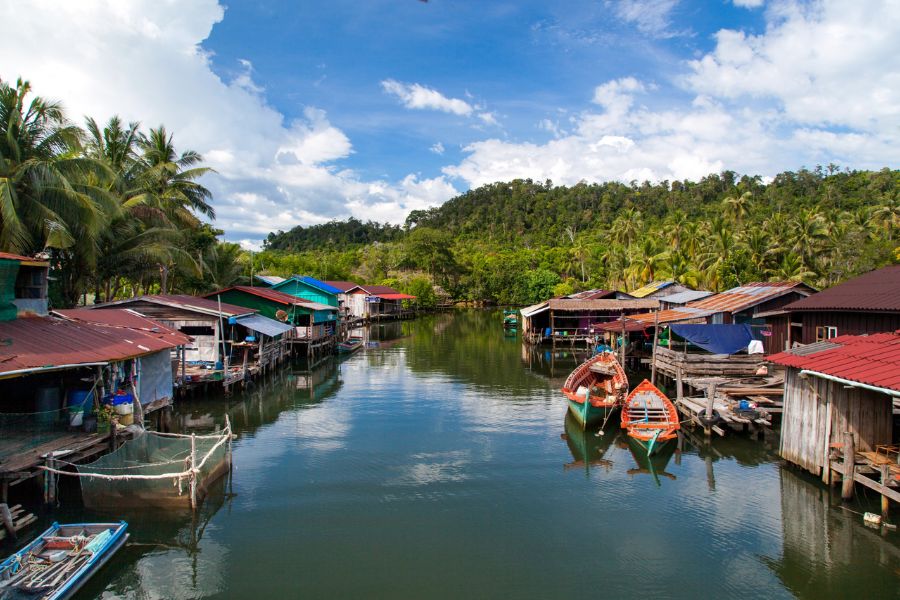
The largest freshwater lake in Southeast Asia and an official UNESCO Biosphere Reserve, Tonle Sap is an ecological wonder whose seasonal water volume expands fivefold during the monsoon, sustaining millions through fertile fishing grounds.
- Private Wooden Boat Cruises to Kompong Phluk: Drift past towering stilted wooden houses rising up to 10 meters above the waterline, passing floating primary schools, local repair workshops, and community pagodas.
- Canoe Gliding Through Flooded Mangroves: Transfer to a flat-bottom wooden canoe guided by local villagers, gliding through shaded, waterlogged cajuput and mangrove tunnels teeming with birdlife.
Phnom Penh: The Revitalized Capital of Royal Heritage & Resilience
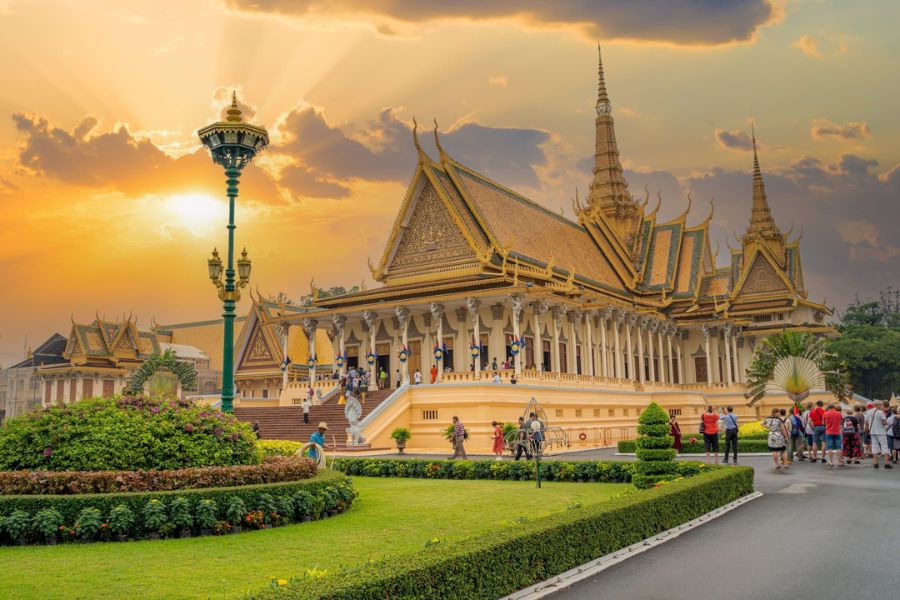
Located at the sacred confluence of the Mekong, Bassac, and Tonle Sap rivers, Cambodia’s capital blends classic Khmer golden spires with wide French-colonial boulevards and dynamic riverside dining.
- The Royal Palace Complex & Silver Pagoda: Marvel at the Throne Hall’s golden spires, examine the solid gold Maitreya Buddha encrusted with over 9,500 diamonds, and walk across the Silver Pagoda floor paved with over 5,000 solid silver tiles.
- The National Museum of Cambodia: Housed in an open-air terracotta pavilion surrounding a central courtyard, this institution safeguards the world’s most extensive collection of pre-Angkorian and Angkorian bronze, stone, and wood sculptures.
- Sobering Reflections at Tuol Sleng (S-21) & Choeung Ek: Gain perspective on Cambodia’s modern history by visiting the former high school turned interrogation center and the Memorial Stupa at the Killing Fields, honoring the resilience and forgiveness of the Khmer people.
- Sunset River Cruising on Chaktomuk: Board an artisanal wooden boat at golden hour to sip cocktails where four river channels converge, watching the city skyline glow as lanterns light up along Sisowath Quay.
Koh Rong Archipelago & The Southern Sanctuary
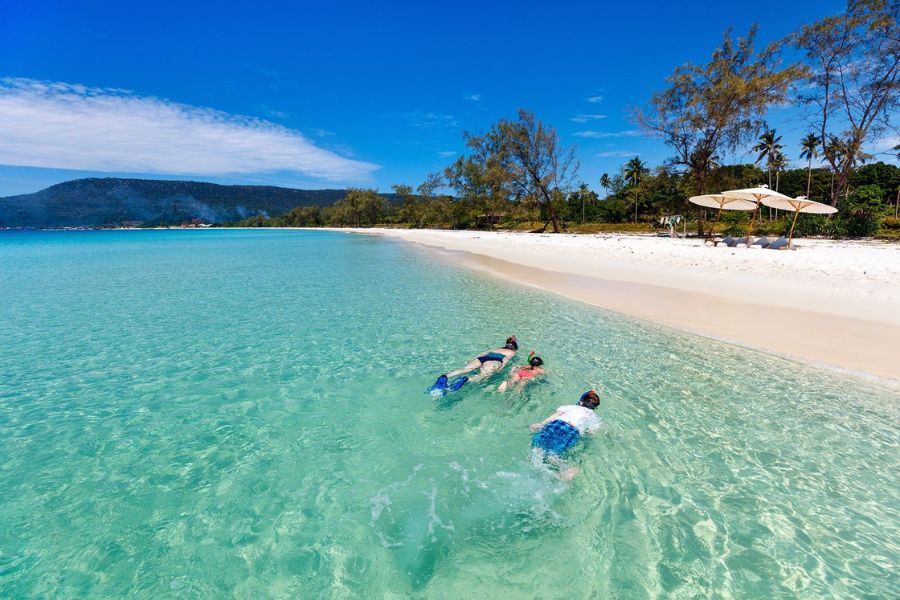
Lying off the coastline of Sihanoukville, this chain of islands delivers an untouched alternative to commercialized regional beaches, characterized by powdery quartz sands, clear sapphire waters, and dense inland jungles.
- Secluded Luxury on Private Islands: Rejuvenate in private overwater or beachfront pool villas at premier sustainable eco-resorts like Song Saa Private Island or The Royal Sands Koh Rong.
- Coral Snorkeling & Bioluminescent Night Plankton: Paddle open kayaks across coral gardens around Koh Rong Sanloem, and swim under night skies to witness natural blue bioluminescent marine plankton sparkling in the surf.
Cardamom Mountains: Wilderness Conservation & Eco-Glamping
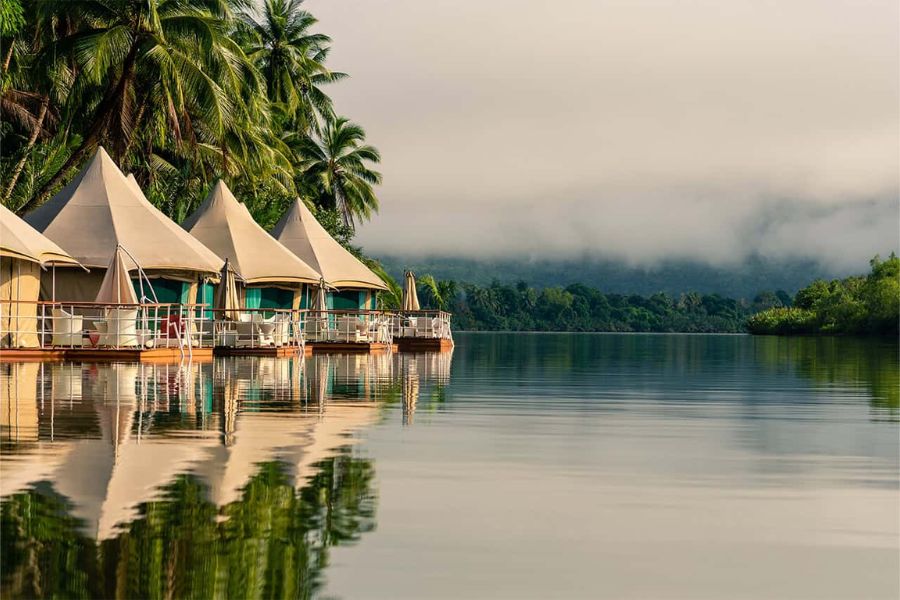
One of Southeast Asia’s largest unbroken lowland rainforest corridors, the Cardamom Mountains shelter endangered Asian elephants, clouded leopards, and sun bears within an untouched wilderness.
- High-End Conservation Glamping at Shinta Mani Wild: Arrive at your luxury tented retreat via a 400-meter zipline over river rapids, designed by architect Bill Bensley to directly fund wildlife protection.
- Anti-Poaching Patrols with Wildlife Alliance: Join dedicated wildlife rangers on guided bush patrols to locate and dismantle illegal snares, check camera traps, and explore unmapped waterways aboard expedition kayaks.
Battambang: Architectural Charm & Countryside Traditions
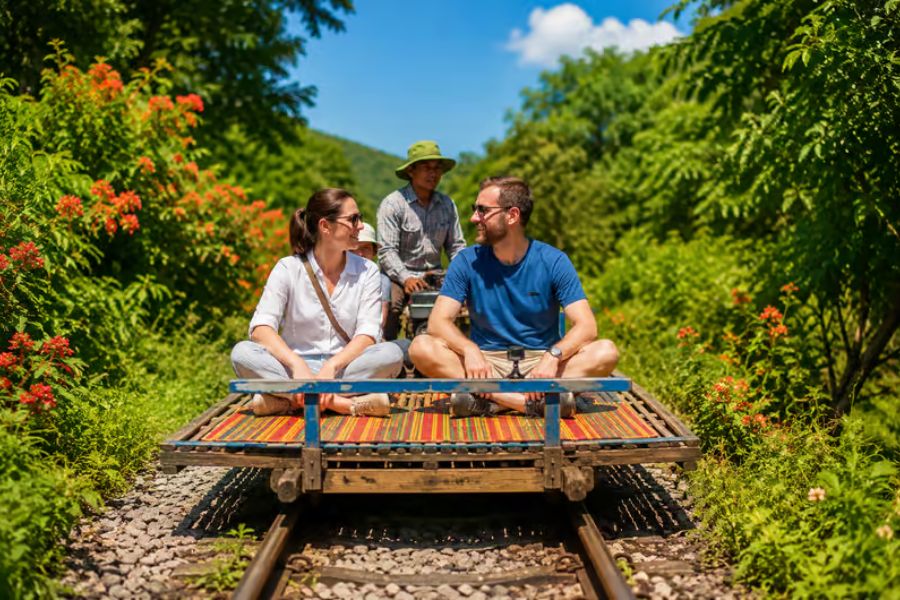
Cambodia’s second-largest city remains an authentic cultural preserve, celebrated for its well-maintained 20th-century French-colonial shophouses, independent arts community, and fertile agricultural plains.
- The Historic Bamboo Train (Norry): Ride an open bamboo platform fitted with a small petrol motor along ancient railway tracks, rolling past emerald rice paddies and peaceful farming hamlets.
- The Bat Flight Spectacle at Phnom Sampeau: Stand at the base of dramatic limestone crags at twilight as millions of wrinkle-lipped bats emerge from cave chambers, forming a winding, black aerial ribbon across the sunset sky for over 45 minutes.
Flavors of Cambodia: A Guide to Authentic Khmer Cuisine
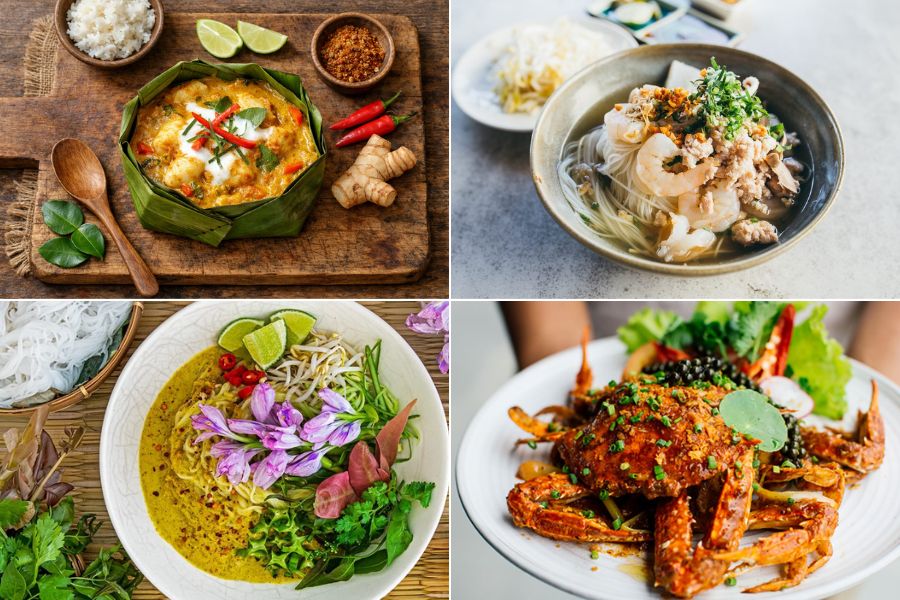
Khmer gastronomy relies on balance: delicate acidity derived from tamarind and kaffir lime, earthy sweetness from palm sugar and rich coconut creams, and a complex herbal base provided by Kroeung (a fragrant hand-pounded paste of lemongrass, galangal, turmeric, garlic, and shallots).
- Fish Amok (Amok Trey): The quintessential national dish. Freshwater river fish fillets are gently steamed with thick coconut cream, egg, kaffir lime leaves, and yellow Kroeung inside a folded banana-leaf bowl, producing a delicate, velvety texture similar to a savory soufflé.
- Beef Lok Lak (Lok Lak Sach Ko): Tender strips of grass-fed beef quickly seared in a wok with garlic, soy, and palm sugar, arranged over crisp lettuce, cucumber, and red onion, served alongside a dipping sauce of freshly cracked Kampot black pepper, sea salt, and fresh lime juice.
- Nom Banh Chok (Traditional Khmer Curry Noodles): A breakfast staple prepared with fresh fermented rice noodles bathed in a thin, fragrant lemongrass-and-turmeric fish curry, topped with fresh banana blossoms, cucumber ribbons, and wild seasonal herbs.
- Kuy Teav (Phnom Penh Rice Noodle Soup): A comforting, slow-simmered pork and dried-seafood bone broth poured over rice vermicelli, garnished with minced pork, fresh prawns, crisp shallots, fried garlic, and aromatic herbs.
- Kep Crab with Green Kampot Peppercorns: Fresh blue coastal crab wok-fried directly with fresh, whole stems of green Kampot peppercorns, delivering a bright herbal aroma and mild heat without masking the natural sweetness of the seafood.
> > > For an all-in-one route covering ancient history, delicious food, and scenic river landscapes, explore our customizable Cambodia Discovery itinerary.
Major Cultural Festivals & Celebrations in Cambodia
Aligning your itinerary with Cambodia’s traditional calendar provides deep insight into the spiritual foundations of Khmer life:
Khmer New Year (Choul Chnam Thmey)
- When: Annually in mid-April (typically April 13–16), marking the end of the agricultural harvest season.
- Where to Experience: Siem Reap (home to the vibrant Angkor Sankranta celebrations) and Phnom Penh.
- Significance & Standout Highlights: Families gather at community pagodas to perform ritual statue-washing ceremonies (Pithi Srang Preah) to cleanse bad deeds from the past year. Streets turn into open-air celebrations featuring traditional Romvong folk dancing, ancient street games like Tug-of-War (Teanh Prot), and lighthearted water-splashing blessings.
The Water Festival (Bon Om Touk)
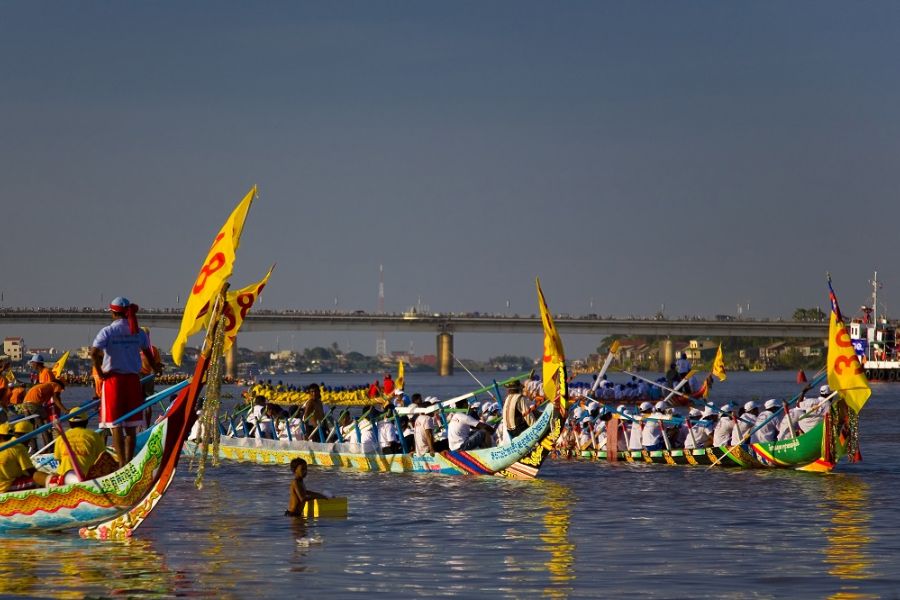
- When: Late October or November (aligned with the full moon of the Buddhist month of Kadec).
- Where to Experience: Sisowath Quay along the riverfront in Phnom Penh, or the Siem Reap River.
- Significance & Standout Highlights: Commemorates the natural reversal of the Tonle Sap River’s current and honors historical naval forces of the Khmer Empire. Up to four million spectators gather to cheer on hundreds of colorful longboat teams racing along the waterfront, followed by illuminated floating barges (Bandeet Pratip) and evening fireworks over the Mekong.
Pchum Ben (Ancestors’ Day)
- When: September or October (spanning 15 days, concluding during the new moon of the lunar month of Pheaktrobot).
- Where to Experience: Historic pagodas across Siem Reap, Battambang, and rural provinces.
- Significance & Standout Highlights: A revered Buddhist festival dedicated to honoring deceased ancestors up to seven generations back. Dressed in white shirts and traditional skirts, families visit temples before sunrise to offer sticky rice balls (Bay Ben) and warm food to monks, generating protective spiritual merit for the souls of their forebears.
The Royal Ploughing Ceremony (Preah Reach Pithi Chrot Preah Neangkol)
- When: Early May (fourth day of the waning moon of the lunar month of Pisak).
- Where to Experience: Meru Field, adjacent to the National Museum and Royal Palace in Phnom Penh.
- Significance & Standout Highlights: An ancient agrarian court ritual overseen by the King or royal representatives to open the rice-planting season. Sacred royal oxen are led along ceremonial furrows and then offered choices of corn, grain, water, and wine, allowing royal astrologers to divine weather patterns, harvest yields, and national fortune for the coming year.
Practical Travel Tips & Sacred Temple Etiquette
Respecting spiritual boundaries and understanding everyday local dynamics ensures a safe, enriching visit:
- Master the Dual-Currency Reality: US Dollars (USD) are widely accepted alongside Cambodian Riel (KHR). Carry crisp, unblemished USD bills for larger payments; notes with even minor tears, folds, or pen marks are routinely rejected. Change for small purchases under $10 is returned in Riel (roughly 4,000 KHR per 1 USD).
- Setup High-Speed Local Connectivity: Avoid costly roaming charges by downloading a regional eSIM prior to departure or picking up a physical tourist SIM card (Smart or Cellcard) upon clearing airport customs.
- Strictly Observe the Temple Dress Code: When entering the Angkor Park and Royal Palace sanctuaries, shoulders and knees must be completely covered by tailored shirts with sleeves and trousers or long skirts. Draping a thin scarf over exposed shoulders or wearing leggings is rejected by site wardens at checkpoint gates.
- Preserve Ancient Sandstone Relics: Never touch, lean against, or rub delicate ancient sandstone carvings, bas-relief murals, or architectural lintels. Body oils and contact damage accelerate the degradation of centuries-old stonework.
- Respect Monks & Spiritual Boundaries: Buddhist monks command deep societal reverence. Women must never touch a monk or hand items directly to them (place offerings onto a tray or cloth instead). Always bow slightly and step aside to allow monks to pass comfortably.
- Mind Footwear and Seating Posture: Remove hats and shoes before stepping inside active pagoda sanctuaries. When seated before Buddha statues or monastics, tuck your legs beneath or beside you; pointing your soles toward sacred statues or people is considered offensive in Khmer culture.
- Never Sit or Climb on Ancient Masonry: Avoid stepping over safety cordons or resting on unreinforced temple terraces. Many structures remain structurally delicate and are undergoing active multi-national restoration.
- Keep Noise Levels Low and Respectful: Pagodas and temple ruins remain active pilgrimage grounds for worshippers. Set mobile phones to silent, speak in hushed tones, and avoid playing amplified music or shouting across ruins.
- Always Request Permission for Portraits: Politely ask for consent before taking photographs of local elders, monks, or children. A warm smile and a courteous nod show genuine respect for personal boundaries.
- Never Give Cash or Sweets to Children at Ruins: Purchasing souvenirs from or handing cash directly to children at temple sites inadvertently encourages them to skip schooling for street trade. Support accredited educational charities or artisan trade schools like Artisans Angkor instead.
- Practice the Traditional Sampeah Greeting: Pressing your palms together in a lotus-bud shape before your chest with a slight bow (Sampeah) is the traditional, heartfelt method of greeting locals, expressing gratitude, and saying goodbye.
> > > If you are looking to combine the best of both nations in one effortless private trip, take a look at our complete Vietnam – Cambodia Journey In Depth itinerary.
Elevate Your Journey: Why Choose Cambodia Luxury Tours & Private Travel?
Experiencing the wonders of the Khmer Empire through tailored Cambodia luxury tours elevates an ambitious travel itinerary into a seamless, deeply personal expedition:
- Strategic Crowd-Avoidance Planning: Experienced private archaeological guides navigate entry via quiet side gates at dawn, timing visits to highlight monuments when large tour groups are dining or in transit.
- Climate-Controlled Transition Vehicles: Exploring outdoor stone ruins under tropical heat can be physically demanding. Dedicated private chauffeured vehicles welcome you after every excursion with fresh chilled water and cold, scented towels.
- Hand-Curated 5-Star Heritage Accommodations: Stay at grand colonial properties such as Raffles Grand Hotel d’Angkor, secluded private-pool sanctuaries like Amansara, conservation eco-retreats, or exclusive island villas.
- Seamless Domestic Transfers: Private travel specialists organize domestic flights, private speedboats, and border crossings, ensuring you transition effortlessly across every province.
From the quiet majesty of moss-covered ruins at sunrise to the warm smiles of river communities, Cambodia rewards travelers who approach it with curiosity, time, and respect. With thoughtful planning, dependable local guidance, and personal pacing, your journey across this remarkable nation will leave an impression that endures for a lifetime.
Ready to experience Angkor Wat at sunrise, cruise tranquil freshwater lakes, and unwind on secluded private beaches? Contact us today to start designing your tailor-made Cambodia itinerary.
Tags: cambodia, cambodia luxury tours, cambodia places to visit, cambodia tours, cambodia travel, cambodia travel guide, cambodia travel guidelines, travel in cambodia, traveling cambodia