Things to do in Hanoi range from exploring centuries-old merchant streets and eating pho for breakfast to discovering imperial history, local cafés and the quieter neighbourhoods around West Lake. For a first-time visitor, the challenge is rarely finding enough to do, but deciding what is genuinely worth your time.
Hanoi is best explored at a comfortable pace. A morning in the Old Quarter, one or two important historical sites and a good local meal will often give you more than rushing across the city to complete a long sightseeing list.
This guide covers the best things to do in Hanoi Old Quarter, major cultural sites, food, Train Street, evening experiences and practical advice for getting more from your time in Vietnam’s capital.
Best Things to Do in Hanoi at a Glance
If you are wondering what to do in Hanoi on a first visit, this is a useful starting point:
|
Experience |
Best time |
Allow |
Best suited to |
|
Explore Hanoi Old Quarter |
Morning or late afternoon |
2-3 hrs |
Everyone |
|
Hoan Kiem Lake & Ngoc Son Temple |
Early morning |
1 hr |
First-time visitors |
|
Ho Chi Minh Complex |
Morning |
1.5-2 hrs |
History |
|
Temple of Literature |
Morning or afternoon |
1 hr |
Culture & history |
|
Morning |
1.5-2 hrs |
Deeper history |
|
|
Hoa Lo Prison |
Afternoon |
1-1.5 hrs |
Modern history |
|
Hanoi Train Street |
Depends on access |
Around 1 hr |
Curious visitors |
|
Hanoi street food |
Evening |
2-3 hrs |
Food lovers |
|
Egg coffee & café culture |
Anytime |
45-60 min |
Everyone |
|
Water puppet show |
Late afternoon/evening |
About 1 hr |
Families & first visits |
|
West Lake & Tran Quoc Pagoda |
Late afternoon |
1.5-2 hrs |
Slower travel |
|
Cyclo ride |
Late afternoon |
Around 1 hr |
First-time visitors |
|
Old Quarter Night Market |
Fri-Sun evening |
1-2 hrs |
Atmosphere & shopping |
The mistake we see most often is treating this table as a checklist. Hanoi works better when two or three experiences are connected naturally rather than crossing the city all day simply to say you have seen everything.
Explore Hanoi Old Quarter: The Best Place to Begin
The Hanoi Old Quarter is the most natural introduction to the city. It is a walkable mix of historic shops, street food, pagodas, cafés and daily commerce, all concentrated within the old guild streets north of Hoan Kiem Lake. The district can feel chaotic at first. Motorbikes pass close to the pavement, shops spill into the street and food stalls occupy spaces that look too small to function. After an hour, however, the rhythm starts to make more sense.
Walk the Historic 36 Streets
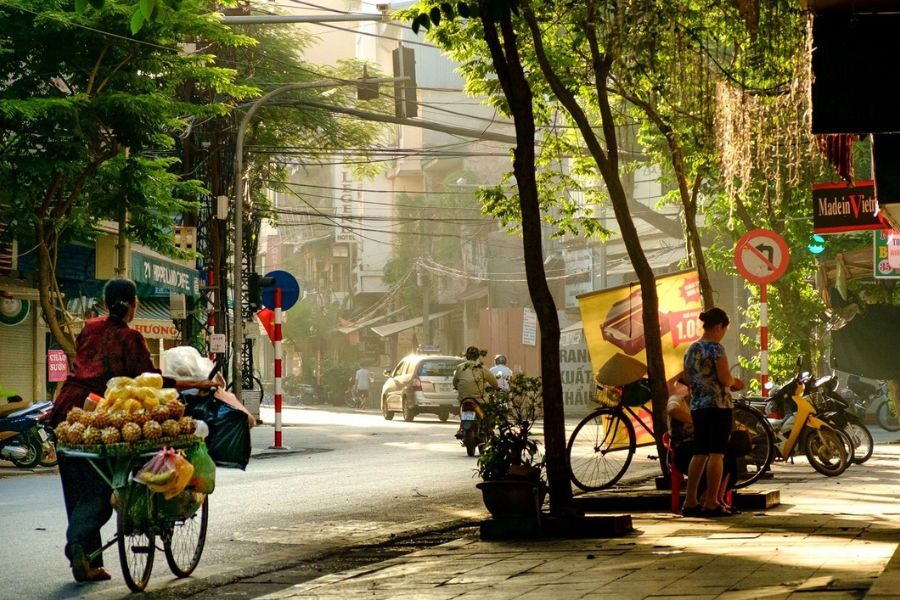
The Old Quarter is traditionally associated with the 36 guild streets, many named after the products or trades once concentrated there. Vietnam Tourism notes that names such as Hang Bac, Hang Gai and Hang Ma reflect the area’s historic craft and trading structure, although only some streets still specialise in their original goods today.
A few useful streets to notice include:
- Hang Bac: historically associated with silver and jewellery.
- Hang Gai: commonly known today for silk and textiles.
- Hang Ma: colourful paper decorations and ceremonial goods.
- Lan Ong: traditional herbal medicines.
- Hang Dao: one of the main commercial streets leading north from Hoan Kiem Lake.
Do not try to “complete” all 36 streets. A better approach is to choose a general direction and allow yourself to turn into small alleys, temples and shops that catch your attention.
The Old Quarter is still a working commercial neighbourhood, not an open-air museum. Delivery bikes, residents, shopkeepers and visitors all share the same limited space, and that everyday activity is a large part of what makes it interesting.
See Hoan Kiem Lake at Two Different Times of Day
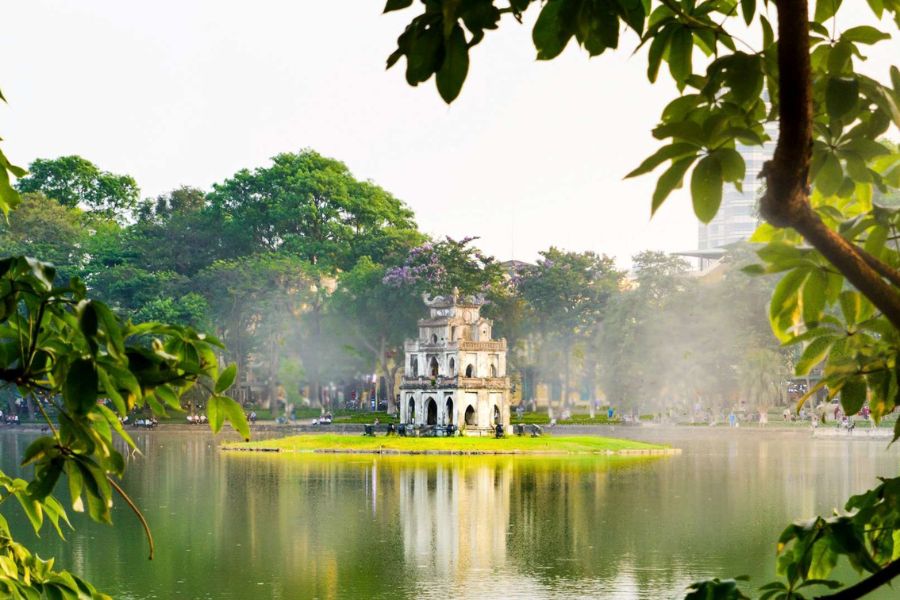
Hoan Kiem Lake sits directly beside the Old Quarter, but it is worth treating the lake as an experience rather than just another photo stop.
One of the easiest ways to understand Hanoi is to see the same lake at 6:30 in the morning and again at 8:00 in the evening. Early morning is when we particularly like this part of Hanoi. Residents walk, exercise and practise tai chi around the water before the surrounding streets become busy. Cross the red The Huc Bridge to Ngoc Son Temple, then continue around the lake rather than immediately returning to the Old Quarter.
If your stay includes a weekend, come back again after dark. The atmosphere changes completely as families, young people and visitors gather around the pedestrian areas.
If you are visiting between September and November, our guide to Hanoi in Autumn explains why this is one of the most pleasant times to explore the city on foot, with cooler weather and a softer pace around the lakes and Old Quarter.
Visit St Joseph’s Cathedral and the Streets Around It

St Joseph’s Cathedral adds another historical layer to central Hanoi. The neo-Gothic church dates from the French colonial period and rises above a neighbourhood of narrow streets, cafés and small restaurants. Vietnam Tourism dates the cathedral to 1886.
The cathedral itself is worth seeing, but we would not arrive, take a photograph and immediately leave. The surrounding Nha Chung and Nha Tho streets are part of the experience, particularly if you stop for coffee. This is one of those parts of Hanoi where the historic building and present-day street life are equally interesting.
Walk Through Dong Xuan Market

At the northern end of the Old Quarter, Dong Xuan is Hanoi’s largest traditional covered market. The experience is different from a souvenir shop. Large sections serve local commerce, with clothing, household goods, food and wholesale products moving through the building and surrounding streets.
For visitors, the main value is atmosphere and context rather than shopping for a specific item. It helps show that the Old Quarter remains a commercial centre rather than an area preserved solely for tourism.
Hanoi Old Quarter Map: A Simple Walking Route

If you are looking for an Old Quarter Hanoi map, you do not need an overly complicated route.
A practical first walk is:
Hoan Kiem Lake → Ngoc Son Temple → St Joseph’s Cathedral → Hang Gai → Hang Bac → Ma May → Dong Xuan Market
Allow around two to three hours, including stops.
The important part is not following every turn precisely. Use the route to keep your general direction, then leave time to explore side streets. Vietnam Tourism specifically recommends approaching the Old Quarter on foot and allowing its alleys, cafés and small pagodas to become part of the experience.
For a first morning, this works much better than repeatedly getting into a car to travel between individual Old Quarter landmarks.
Discover Hanoi’s History at Its Most Important Cultural Sites
The Old Quarter shows Hanoi as a living city, but several important sites outside it help explain the capital’s longer political and intellectual history. Rather than trying to visit all of them in one day, choose two or three depending on how interested you are in history.
Visit the Ho Chi Minh Complex and Ba Dinh Square

The Ho Chi Minh Complex is one of Hanoi’s most important civic and historical areas. It includes the mausoleum area, Ba Dinh Square, the Presidential Palace grounds and the One Pillar Pagoda.
Visits here work best in the morning. The mausoleum itself operates on a more restricted schedule than ordinary tourist attractions and can close for official reasons or periodic maintenance, so check current opening information close to your visit rather than relying on an old itinerary. Dress respectfully, expect security procedures and keep the visit relatively focused.
We would normally combine this area with the Temple of Literature rather than returning immediately to the Old Quarter and then crossing the city again later.
Walk Through the Temple of Literature

The Temple of Literature offers a calmer contrast to the streets outside. Founded as a centre of Confucian learning, it is closely connected to Vietnam’s scholarly tradition and early system of higher education. Its courtyards, gateways and stone stelae make the history easy to absorb without needing a long museum visit.
Allow around an hour unless you have a strong interest in Vietnamese history. A local guide adds value here because the symbols, examination system and architectural layout are much more meaningful once somebody explains why they matter.
Go Deeper at the Imperial Citadel of Thang Long

Travelers with more time should consider the Imperial Citadel of Thang Long. This is less immediately visual than the Old Quarter or Hoan Kiem Lake, but much stronger for understanding Hanoi’s role as a political centre over successive dynasties.
If you only have one day, we would prioritise the Temple of Literature and central Hanoi. With two or three days, the citadel becomes easier to include without exhausting the itinerary.
Understand a More Difficult History at Hoa Lo Prison

Hoa Lo Prison presents a much heavier part of Hanoi’s history, from the French colonial period through later wartime use. It deserves more than a quick photo stop. Allow at least an hour if you want to read the exhibits properly.
We also would not sandwich it between five light-hearted attractions simply because they are geographically nearby. Sites dealing with difficult history are usually better when travellers have enough time to understand what they are seeing rather than racing through them.
Visit Hanoi Train Street, but Understand the Rules First
Hanoi Train Street has become one of the most photographed places in Hanoi, but it is also one of the attractions where old blog posts and social-media videos can create the wrong expectations.
Railway safety restrictions have repeatedly been enforced in the area. In 2025, Hanoi’s tourism authorities told tour operators not to bring guests into railway cafés because of safety concerns, and more recent reporting says access is strictly controlled during scheduled train movements.
Is Hanoi Train Street Open?
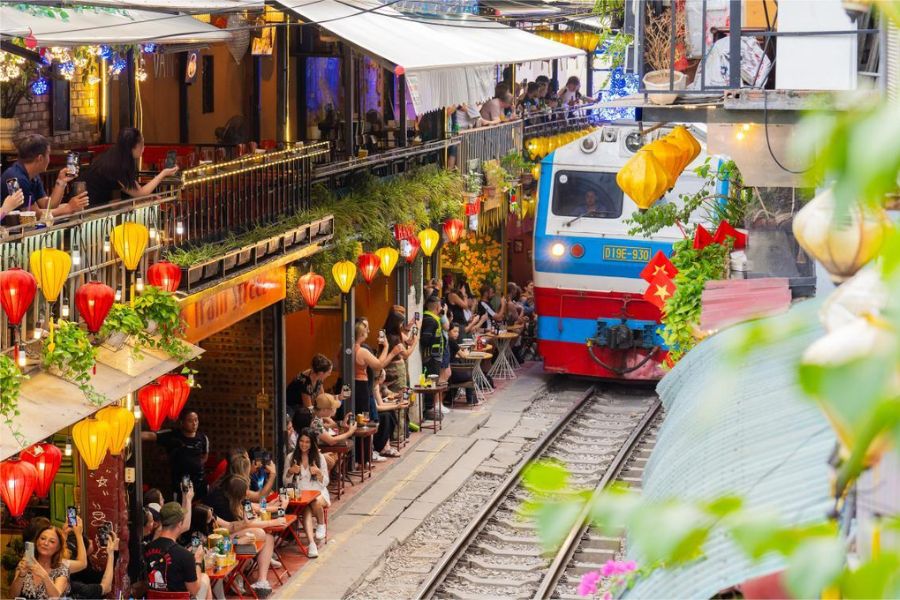
There is no simple permanent “yes” or “no”.
The railway remains in use and visitors continue to go to the area, but access can be restricted by barriers and security staff. Enforcement has also changed over time, which is why a video from another traveller does not necessarily reflect what you will find on the day you visit. Follow any barriers or instructions in place and never enter the tracks simply because other visitors are doing so.
What Is the Hanoi Train Street Schedule?

A current Vietnam Airlines guide publishes indicative train times for both the Le Duan and Phung Hung sections, with several trains listed throughout the day and evening. The same source explicitly warns that the Hanoi Train Street schedule can change without notice.
There is another reason to avoid building an itinerary around a fixed online timetable: Hanoi has proposed rerouting passenger trains away from the central railway section, which could materially change Train Street in the future if implemented.
Our advice is therefore:
- check the railway situation on the day;
- ask your hotel or local guide for current information;
- do not travel across Hanoi purely on the basis of an old timetable screenshot;
- obey local security instructions even if a café appears open.
For current access advice, safety considerations and practical planning, see our full Guide for Hanoi Train Street before adding it to your day.
Eat Your Way Through Hanoi’s Street Food
Food is one of the easiest ways to get closer to everyday Hanoi. The Old Quarter is full of specialist stalls and small restaurants serving dishes such as pho, bun cha, banh cuon and xoi.
How to Find Good Pho in Hanoi Old Quarter
People often search for the best pho in Hanoi Old Quarter, but there is no single answer that everyone in Hanoi would agree on. A more useful approach is to look for a specialist shop with:
- a short menu
- steady local customers
- broth being served continuously
- a busy morning trade
- quick table turnover
Pho is particularly good as an early breakfast. Try the broth before adding chilli, lime or sauces; northern pho tends to be more restrained than many southern versions.
Try More Than Pho

Hanoi food deserves more than one famous noodle soup. Look out for:
- Bun cha: grilled pork with rice noodles, herbs and dipping sauce.
- Banh cuon: freshly steamed rice rolls with pork and mushroom.
- Cha ca: turmeric-seasoned fish cooked with dill and spring onion.
- Xoi: savoury sticky rice with different toppings.
Bun rieu: tomato and crab noodle soup.
The best way to approach Hanoi street food is not to order full portions of six dishes in one evening. Share, taste smaller amounts and let somebody who knows the neighbourhood choose a sensible sequence. A local food walk is especially useful for first-time visitors with dietary restrictions because ingredients such as fish sauce, shrimp paste, peanuts and pork may not always be obvious from looking at a dish.
If you want to go beyond a few famous dishes, our Hanoi Street Food Guide explores more of the small shops, local favourites and eating habits that define the city’s food culture.
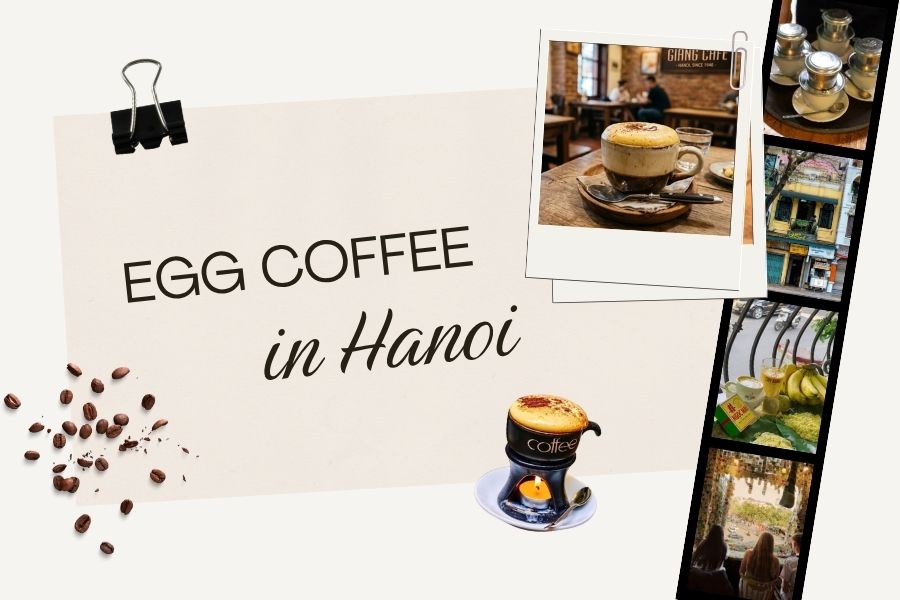
Slow Down over Egg Coffee and Hanoi’s Café Culture
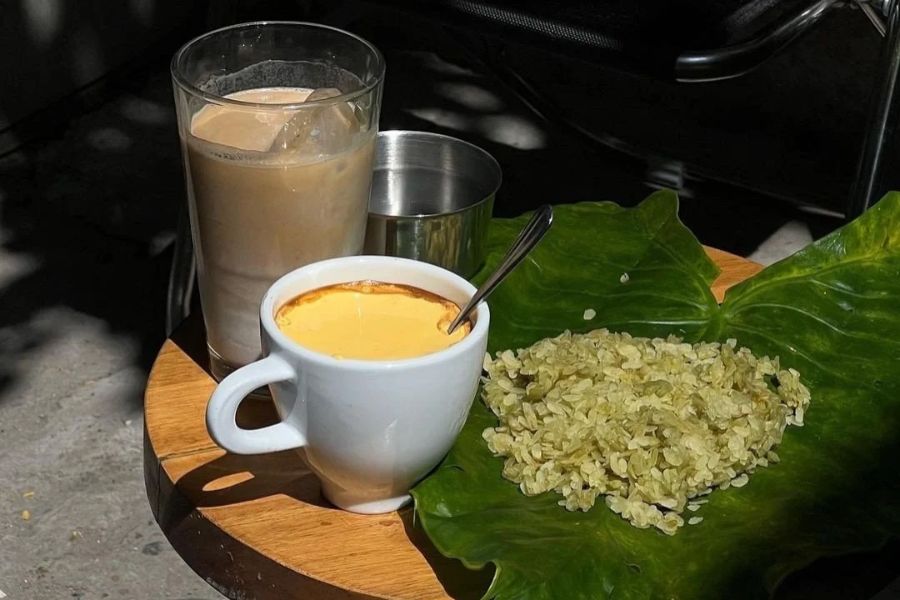
Coffee in Hanoi is not simply something to drink between attractions. The city has long-established cafés hidden above shops, down narrow passages and around the lakes. Sitting for half an hour and watching the street below can sometimes tell you more about Hanoi than adding another museum to the itinerary.
Egg coffee is the obvious speciality for first-time visitors, but do not stop there. Black Vietnamese coffee, coffee with condensed milk and newer variations all sit within a much broader café culture.
If you are staying in the Old Quarter, leave at least 30-45 minutes rather than treating coffee as a five-minute photo opportunity. The café itself is part of the experience.
Watch a Traditional Water Puppet Show

Water puppetry is one of Hanoi’s easiest traditional performances for international visitors to enjoy. The puppets perform over water while musicians and singers accompany the story from the side of the stage. Because much of the storytelling is visual, understanding every word is not essential.
The Thang Long Water Puppet Theatre near Hoan Kiem Lake makes it especially easy to combine with an Old Quarter afternoon or an early dinner. Families often enjoy it, and a performance also works well when the weather is too hot or wet for another hour of walking. If you have a preferred evening time, book ahead rather than assuming the next performance will have good seats.
> > > Families planning a longer journey can see how Hanoi fits into a wider route in our Best of Vietnam for Families: 15-Day Private Tour, with a mix of culture, easy-paced sightseeing and experiences suited to different ages.
See a Quieter Side of Hanoi Around West Lake

After a morning in the Old Quarter, West Lake can feel almost like a different city. The roads are broader, the water opens up the view and cafés, residential neighbourhoods and temples replace much of the Old Quarter’s tightly packed commerce.
Tran Quoc Pagoda, set beside the lake, is the most obvious cultural stop. Combine it with a slower walk or short drive around part of the lakeshore rather than arriving only for a quick photograph. Late afternoon works particularly well, especially after a busy morning of historical sightseeing. This is also why we do not recommend our customers staying exclusively inside the Old Quarter for three days without seeing another part of Hanoi. The contrast is part of understanding the city.
Take a Cyclo Ride as an Introduction to Central Hanoi

A cyclo ride can be a very good first orientation to Hanoi. It is one of the best ways to take in the Old Quarter’s street life without having to navigate the traffic immediately on foot. Around 45-60 minutes is usually enough. Longer than that and many travellers would rather get out and start walking.
A cyclo works particularly well:
- on the first afternoon after arrival;
- for older travellers who want an introduction before walking;
- for families;
- when combined with the Old Quarter and French Quarter.
What it does not replace is a good walking tour or local guide. From a cyclo you see the city; on foot you begin to understand it.
Experience Hanoi After Dark: Night Market, Walking Streets and Local Evenings
Hanoi does not shut down after dinner. In many parts of the centre, the streets become more social once the heat and working day begin to ease.
Walk Through Hanoi Old Quarter Night Market
The Hanoi Old Quarter Night Market operates on weekend evenings, running from the Hang Dao area north toward Dong Xuan Market. The market operates on Friday, Saturday and Sunday from around 6:00 PM, although its own pages vary between 11:00 PM and midnight closing time. Treat late-evening times as approximate rather than planning around the final minute.
Expect:
- clothing and accessories;
- souvenirs;
- small gifts;
- snacks;
- street performers;
- large local and visitor crowds.
If you are not in Hanoi over a weekend, do not rearrange the whole trip just for the market. The Old Quarter remains lively in the evening on other days.
See Ta Hien and Bia Hoi Culture

Ta Hien is one of the Old Quarter’s most energetic evening streets. Fresh beer, small plastic stools and crowded pavement tables form part of Hanoi’s bia hoi tradition, although Ta Hien today mixes local drinking culture with a substantial tourist nightlife scene.
Go for the atmosphere, but do not treat it as representative of every Hanoi evening. A quieter dinner, rooftop drink or lakeside walk can be equally enjoyable.
Should You Explore Independently or Take a Hanoi City Tour?
You do not need a guide for everything in Hanoi. Some parts of the city are actually better independently.
Easy to explore on your own
- Hoan Kiem Lake
- Old Quarter streets
- cafés
- weekend night market
- West Lake
- general shopping
Where a local guide adds more value
- Ho Chi Minh Complex
- Temple of Literature
- Imperial Citadel
- Hoa Lo Prison
- food experiences
- historic architecture
- family visits where children ask a lot of questions
The biggest benefit of good Hanoi city tours is not simply transportation between attractions. It is context and routing. A guide can explain why an unremarkable-looking doorway matters, help you understand a temple ceremony and prevent half the morning being lost travelling backwards across the city.
At the same time, we would not put every hour of a Hanoi stay inside a guided programme. For many first-time travellers, a good balance is half or most of the first day with a local guide, followed by free time to return to the streets, cafés or shops that interest you. That combination feels much more natural than following somebody with a timetable for three consecutive days.
Travellers who want historical context without committing a full day can join our Story of Hanoi – Half Day City Tour, which connects several of the capital’s key cultural and historical sites with a local guide.
Use Hanoi as the Starting Point for Northern Vietnam

Hanoi is not only worth exploring in its own right; it is also the natural starting point for many of the most rewarding journeys through Northern Vietnam. How long you spend in the capital should therefore depend partly on what comes next.
For most first-time visitors, two full days in Hanoi is enough to see the main highlights, while three days gives you a more comfortable pace for food, cafés, West Lake and neighbourhood exploring. If Hanoi is your first stop after a long international flight, we generally prefer three nights rather than immediately sending travellers onto another long journey.
From Hanoi, several very different destinations are within reach:
- Ninh Binh: A day trip is possible, but staying overnight allows more time for the countryside, cycling and an early boat trip before the main visitor crowds arrive.
- Halong Bay: Day cruises are available, but an overnight cruise gives you more time on the bay and allows you to experience the evening and early morning after many day visitors have returned to Hanoi.
- Mai Chau: A good choice for travellers looking for valleys, villages and a gentler introduction to rural northern Vietnam.
- Pu Luong: Better with at least two nights of rice terraces, village walks and slower countryside experiences are the priority.
- Sapa: Treat Sapa as a destination rather than a day trip. The journey from Hanoi takes time, and two or three nights gives much more room for mountain scenery, ethnic villages and walking.
- Ha Giang: This is a multi-day journey in its own right and should not be squeezed into a short extension from Hanoi.
One of the most common planning mistakes is looking at a map and assuming that every destination north of Hanoi works as a convenient day trip. It does not. An itinerary with repeated early departures and late returns can quickly become more about driving than experiencing northern Vietnam.
A better approach is to use Hanoi as the beginning of the route. Spend enough time getting to know the capital, then continue north or east in a logical direction rather than returning to Hanoi after every experience.
This is also where well-planned Vietnam tours can make a noticeable difference. The right sequence of Hanoi, Ninh Binh, Halong Bay, Mai Chau, Pu Luong or Sapa reduces unnecessary transfers and gives each destination enough time to feel worthwhile.
> > > If your itinerary does not allow an overnight cruise, our Halong Bay Day Trip From Hanoi is a practical option for seeing the bay before returning to the capital the same evening.
Practical Tips for Visiting Hanoi for the First Time
- Cross the road steadily rather than suddenly: Traffic can look intimidating, especially around the Old Quarter. Choose a clear moment, walk at a predictable pace and avoid suddenly running forward or stepping backwards once drivers have begun adjusting around you.
- Start important sightseeing earlier: Hanoi can be hot and humid for much of the year, while popular historical sites are also more comfortable before the main daytime crowds arrive. Early mornings leave the afternoon available for cafés, museums or slower exploring.
- Keep some small cash: Cards are widely accepted at hotels and larger businesses, but local food shops, market vendors and small purchases are still easier with Vietnamese dong. Smaller notes are particularly useful.
- Use a car or Grab for longer jumps across the city: Walking is excellent within the Old Quarter but less efficient when connecting Ba Dinh, West Lake and other districts. Do not spend half your sightseeing day walking along major traffic roads simply because two places look close on a map.
- Dress appropriately for religious and civic sites: Clothing that covers shoulders and knees is useful for temples and the Ho Chi Minh Complex. Comfortable shoes matter just as much because even a standard Hanoi day involves more walking than many visitors expect.
- Do not over-plan the Old Quarter: Give yourself a route, but not a minute-by-minute schedule. The neighbourhood is at its best when you have time to stop for coffee, look inside a small temple or follow a street because something caught your attention.
- Check opening days before important historical sites: Museums and official monuments do not all operate on the same schedule, and some have lunch breaks or periodic closures. Verify the places that matter most shortly before visiting.
- Keep Train Street flexible: Access and railway operations can change. Treat it as an optional stop rather than building the entire day around a published train time.
> > > For travelers who want to continue beyond Hanoi into the mountains, our Diverse Vietnam: 12-Day Private Tour with Sapa combines the capital with northern scenery, local communities and a broader cross-section of Vietnam.
Frequently Asked Questions About Things to Do in Hanoi
- What are the best things to do in Hanoi for first-time visitors?
For a first trip, focus on Hanoi Old Quarter, Hoan Kiem Lake, the Temple of Literature, the Ho Chi Minh Complex, local street food and at least one slower experience such as West Lake, coffee or a water puppet show. Two or three days gives you enough time to combine landmarks with everyday city life. - What can you do in the Hanoi Old Quarter?
The best things to do in Hanoi Old Quarter include walking the historic guild streets, visiting Hoan Kiem Lake and Ngoc Son Temple, exploring Dong Xuan Market, eating local food, stopping at cafés and experiencing the neighbourhood after dark. - Is the Hanoi Old Quarter walkable?
Yes. The Old Quarter is one of Hanoi’s best areas to explore on foot, although traffic can feel intense at first. Vietnam Tourism also recommends walking as one of the best ways to discover its historic streets, shops and hidden pagodas. - How many days do you need in Hanoi?
Two days is enough for the major highlights, while three days provides a more comfortable first visit. We generally favour three nights when Hanoi is also the first stop after a long international flight. - Is Hanoi Train Street still open?
The railway remains active and visitors continue to go to the area, but access is controlled and can be restricted for safety reasons. Security measures are particularly strict around scheduled train movements, so check local conditions on the day and follow all barriers and instructions. - What time is the Hanoi Old Quarter Night Market?
The weekend market generally operates from around 6:00 PM on Friday, Saturday and Sunday, with published closing times ranging from approximately 11:00 PM to midnight. - Is Hanoi a good base for Northern Vietnam?
Yes, but not every northern destination should be treated as a day trip. Ninh Binh can work in one day, while places such as Sapa, Pu Luong and Ha Giang deserve several days. Halong Bay is also better experienced overnight when the itinerary allows.
Hanoi Is Better When You Leave Space Between the Sights
Hanoi is not a city you understand by completing a checklist. The Temple of Literature, Ho Chi Minh Complex and Old Quarter all matter, but so do the moments between them: an early walk around Hoan Kiem Lake, lunch at a small noodle shop, time over coffee or an evening when there is nowhere else you need to be.
For a first visit, choose the places that help you understand the city and leave enough room to notice what happens around them. Hanoi’s history is important, but much of its character comes from the everyday life continuing around those historic places.
If Hanoi is the beginning of a wider journey through Vietnam, contact us to plan a private trip at the right pace. LuxeTravel Asia can connect your time in the capital with Ninh Binh, Halong Bay, Mai Chau, Pu Luong, Sapa and other parts of Northern Vietnam, with local guides, private transfers and an itinerary designed to avoid unnecessary backtracking. Contact us and start planning your Vietnam journey from Hanoi.
Tags: best pho in hanoi old quarter, hanoi, hanoi city tours, hanoi old quarter, hanoi old quarter night market, hanoi streetfood, hanoi train street schedule, must do in hanoi, northen vietnam, old quarter hanoi map, things to do in hanoi, things to do in hanoi old quarter, vietnam tours, what to do in hanoi