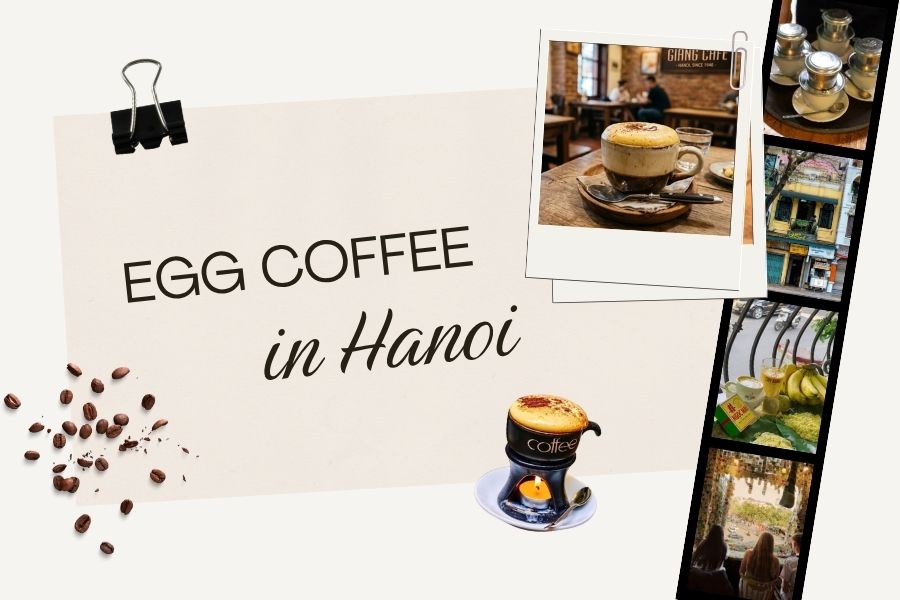
Egg coffee in Hanoi sounds unusual until the first spoonful: strong Vietnamese coffee beneath a thick, sweet layer of whipped egg yolk that tastes much closer to custard than breakfast eggs.
Known locally as ca phe trung, the drink has become one of Hanoi’s best-known food experiences. You will now find versions across Vietnam, but drinking it in the capital comes with something more: old cafés, narrow upstairs rooms, the story of the family credited with creating it and a coffee culture that has developed over generations.
For a first cup, the hot version is usually the best introduction. Taste the creamy layer first, then take a little of the darker coffee underneath. That contrast between bitter, strong coffee and sweet egg cream is what makes the drink work.
And despite its fame, trying Vietnamese egg coffee does not need to become a café-hopping challenge. One good cup, in the right setting, is often enough to understand why it became such a Hanoi favourite.
Vietnamese Egg Coffee at a Glance
|
What to know |
|
|
Vietnamese name |
ca phe trung |
|
Origin |
Hanoi |
|
Created |
1946 |
|
Main ingredients |
Strong coffee, egg yolk, sugar and usually condensed milk |
|
Taste |
Sweet, creamy and custard-like with strong coffee underneath |
|
Hot or iced? |
Both are available; hot is the traditional starting point |
|
Where to try it |
Hanoi Old Quarter and around Hoan Kiem Lake |
|
How long to allow |
Around 30-45 minutes |
What Is Vietnamese Egg Coffee?
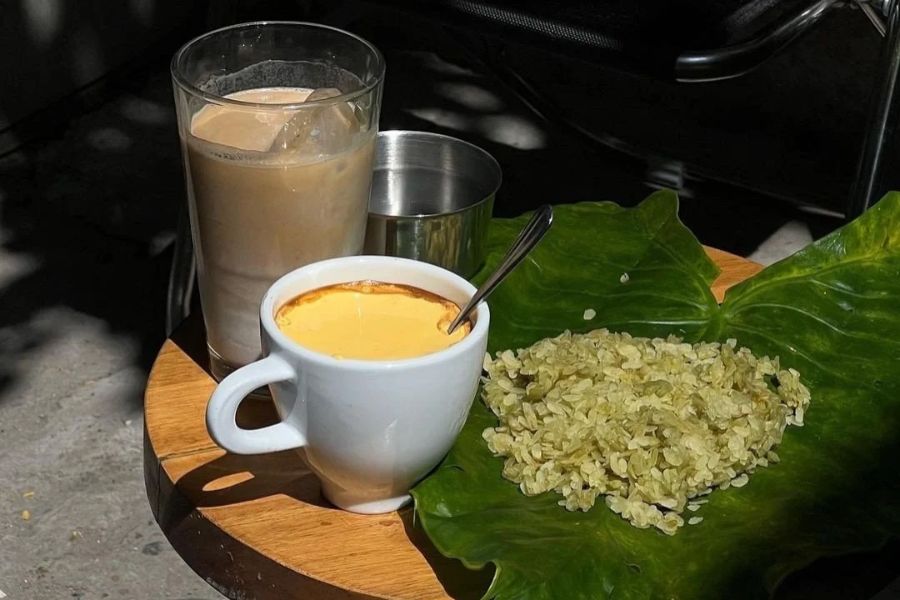
At its simplest, Vietnamese egg coffee combines strong coffee with a whipped mixture made from egg yolk, sugar and usually condensed milk. Recipes vary between cafés, and some traditional family versions include additional ingredients that are not publicly disclosed.
The result has two distinct layers. At the bottom is dark, concentrated Vietnamese coffee. On top sits a thick golden cream, whipped until smooth and airy. When made well, the egg should not dominate the flavour. Instead, the top layer is sweet and rich, with a texture somewhere between custard, tiramisu cream and a very light mousse.
That is why the English description “Vietnamese coffee with egg” can be slightly misleading. It sounds as though someone has simply cracked an egg into a cup of coffee; the actual drink is far more carefully prepared.
The hot version gives the clearest contrast between coffee and cream. In some traditional cafés, the cup is placed inside a small bowl of warm water to prevent the drink from cooling too quickly. The egg layer gradually softens as the heat from the coffee comes through from below.
If this is your first cup, try a little of the cream by itself. Then take a spoonful that reaches the coffee underneath. You can stir everything together afterwards if you prefer a more uniform drink, but there is no need to mix it immediately.
How Egg Coffee Became a Hanoi Classic
The story of egg coffee in Hanoi is closely associated with Nguyen Van Giang.
Giang worked at Hanoi’s Metropole Hotel and is widely credited with developing the drink during the 1940s, when milk was difficult to obtain. He experimented with whipped egg yolk to create the richness needed for the coffee, and the drink proved popular enough that he eventually established his own café. Café Giang dates its story to 1946, and the recipe has remained connected to the family ever since.
The idea made sense within Vietnam’s developing coffee culture. Vietnamese coffee became known for strong, dark-roasted beans, the slow metal phin filter and additions such as condensed milk that softened the bitterness of the brew. Robusta remains particularly important to the country’s coffee identity and produces the bold flavour that stands up well beneath the sweetness of egg cream.
Egg coffee took that contrast even further. Instead of simply making the coffee milder, the whipped topping turned the drink into something almost halfway between coffee and dessert. Over time, variations appeared using cacao, matcha, rum and other flavours, but the original combination of strong coffee and egg cream remains the one most closely associated with Hanoi.
You can now find egg coffee in Vietnam far beyond the capital, but Hanoi still gives it the strongest context. Here, the drink is connected not just to a recipe but to old family cafés, the Old Quarter and a long-standing habit of spending time over strong coffee in surprisingly small spaces.
If you are visiting between September and November, our guide to Hanoi in Autumn explains the weather, seasonal atmosphere and why this is such a pleasant time for walking the Old Quarter and stopping at local cafés.
7 Cafés to Try Egg Coffee in Hanoi
There is no objective answer to the best egg coffee in Hanoi. Some visitors care most about the original story, others want an atmospheric old café, while some would happily trade history for a rooftop view or a quieter place to sit.
These seven stops offer different reasons to go.
|
Café |
Why go |
Atmosphere |
|
Café Giang |
The original egg coffee story |
Busy, simple, historic |
|
Cafe Dinh |
Old-Hanoi character near the lake |
Hidden, informal |
|
Cafe Pho Co |
Hoan Kiem Lake views |
Atmospheric, tucked away |
|
Loading T Café |
A quieter setting |
Vintage, relaxed |
|
The Note Coffee |
Easy first-time stop |
Colourful, lively |
|
Hanoi Egg Coffee |
Learn more about making the drink |
Friendly, visitor-focused |
|
Café Lam |
Wider Hanoi coffee heritage |
Old-school, artistic |
Café Giang – For the Original Egg Coffee Story

Address: 39 Nguyen Huu Huan, Hoan Kiem, Hanoi
If you plan to try egg coffee only once and its history matters to you, Café Giang is the natural place to begin. The café is directly associated with Nguyen Van Giang, who created the drink and established his own business in 1946. Today, the Nguyen Huu Huan location remains busy with both Vietnamese customers and international travelers.
Do not arrive expecting a polished specialty-coffee bar. The entrance is easy to pass, the interior is simple and tables can fill quickly. That slight sense of disorder is part of the experience.
The classic hot egg coffee arrives thick and sweet, with the strong coffee gradually cutting through the creamy topping. It is rich enough that you do not need to order a second one immediately. Come for the drink and the story rather than luxurious surroundings.
Cafe Dinh – For an Older Hanoi Feel

Address: 13 Dinh Tien Hoang, Hoan Kiem, Hanoi
Cafe Dinh is another name closely associated with Hanoi’s traditional egg coffee scene and the Giảng family tradition. The experience, however, feels quite different from Café Giang.
The entrance is easy to miss, and reaching the café involves climbing upstairs into a modest space overlooking the Hoan Kiem area. That hidden quality is typical of older Hanoi cafés, where some of the most memorable places sit above shops rather than opening directly onto the pavement.
Come here if the setting matters to you as much as ticking off a famous name. The room is simple rather than carefully styled for visitors, which is exactly why many people enjoy it. It feels like somewhere you discover rather than somewhere designed to announce itself from across the street.
Cafe Pho Co – For Hoan Kiem Lake Views
Address: 11 Hang Gai, Hoan Kiem, Hanoi
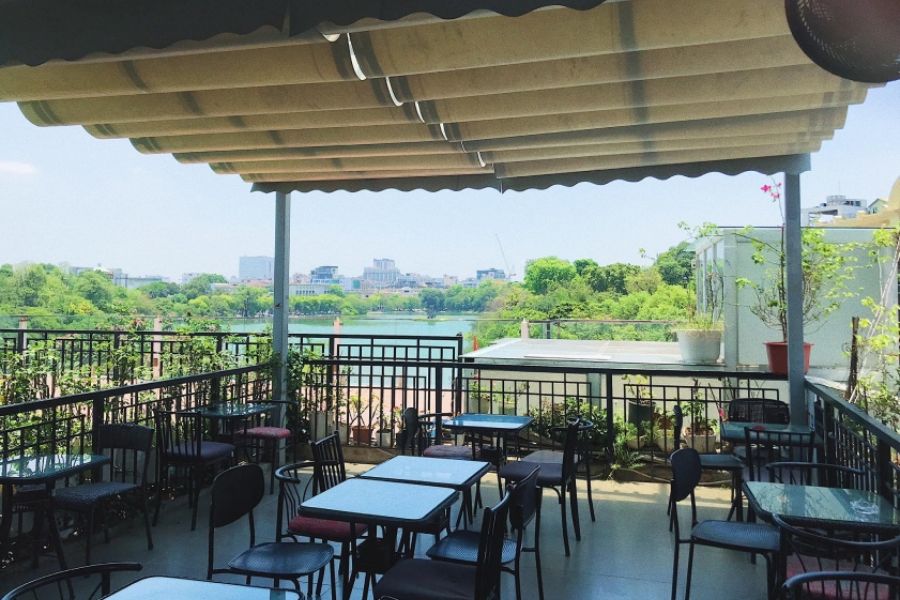
Cafe Pho Co is a good reminder that finding the café can be part of the Hanoi experience. From busy Hang Gai Street, you make your way through a narrow entrance and climb through an old building before reaching upper seating areas. From there, the view opens toward Hoan Kiem Lake. The café is well known for both its atmosphere and its egg coffee.
Come here when you want to slow down rather than simply drink a coffee and leave. The egg coffee itself is only part of the reason to visit. Allow time to climb to the upper level, find a seat and look across the rooftops toward the lake. If Café Giang is about the history of the drink, Cafe Pho Co is much more about enjoying the drink in a distinctly Hanoi setting.
Egg coffee is only one part of the city’s food culture. Our Hanoi Street Food Guide goes further into the dishes, neighbourhood shops and eating habits that make Hanoi such a rewarding place to explore through food.
Loading T café – For a Quieter, More Stylish Setting

Address: 8 Chan Cam, Hoan Kiem, Hanoi
Loading T offers a useful contrast to the more famous egg coffee stops. Set upstairs in an older building near the cathedral area, it has a quieter, more considered feel without losing the slightly hidden character that makes Hanoi cafés interesting.
This is a good choice if you want to try egg coffee without making the entire stop about the drink’s origin story. Sit for a while, take in the old building and let the coffee become part of the break rather than another item on the sightseeing list. The atmosphere also works particularly well after walking around St Joseph’s Cathedral and the surrounding Old Quarter streets.
The Note Coffee – For a Colourful, Visitor-Friendly Stop

Address: 64 Luong Van Can, Hoan Kiem, Hanoi
The Note Coffee offers almost the opposite experience from Cafe Dinh. Its walls are covered in colourful handwritten notes left by visitors, and the café has become a recognisable stop for international travellers exploring the area around Hoan Kiem Lake. That does not make it a lesser experience; it simply means you should know what you are choosing.
If you want old-Hanoi nostalgia, go elsewhere. If you want a convenient central café with plenty of personality and an easy introduction to egg coffee, The Note Coffee works well. A place can be popular with tourists and still be enjoyable. The useful question is not whether a café is “touristy”, but whether its atmosphere is the one you want.
Hanoi Egg Coffee – For Travellers Who Want to Learn More
Address: 8 Gia Ngu, Hoan Kiem, Hanoi
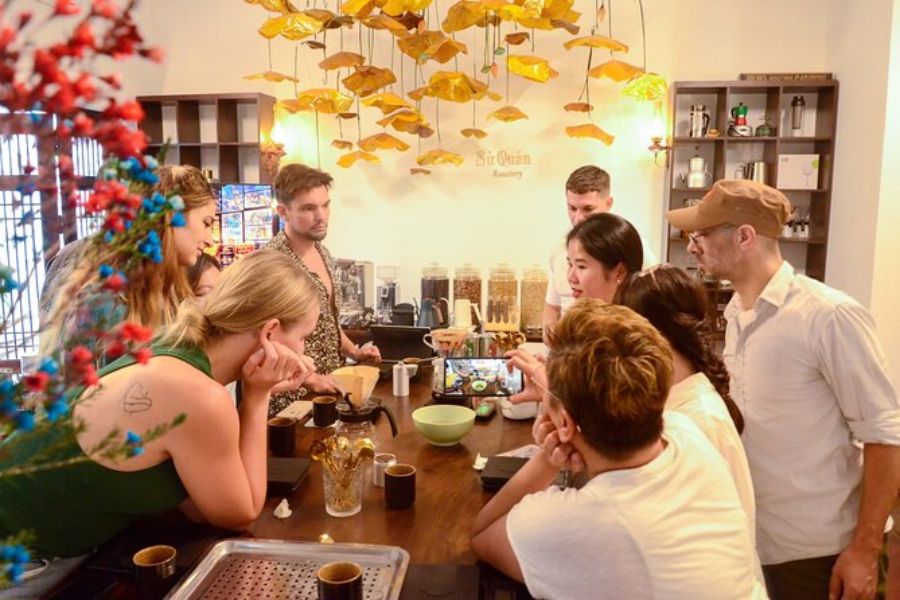
Hanoi Egg Coffee takes a more hands-on approach to the drink. Alongside serving egg coffee in the Old Quarter, the café currently offers short workshops where visitors can learn how Vietnamese coffee and egg coffee are prepared. Its own programme includes sessions focused specifically on egg coffee as well as broader Vietnamese coffee classes.
You do not need to take a class simply to enjoy the café, but it is a useful option for travellers who become curious about what creates the texture of the egg layer and how Vietnamese coffee is brewed. This makes the stop less about heritage and more about understanding the drink itself.
Café Lam – For a Classic Hanoi Coffee House

Address: 60 Nguyen Huu Huan, Hoan Kiem, Hanoi
Café Lam belongs on this list for a different reason. It is not one of Hanoi’s famous egg-coffee specialists. Instead, it represents the wider coffee culture in which drinks such as ca phe trung developed. The café traces its history to the early 1950s and has occupied 60 Nguyen Huu Huan since the mid-1950s. It became particularly associated with Hanoi’s artists, writers and intellectuals, and the walls still carry artworks connected with that history.
If you have already visited Café Giang nearby, Café Lam makes an interesting second stop. Instead of ordering another rich egg coffee immediately, try a more traditional black Vietnamese coffee or coffee with condensed milk. The short distance between the two also makes Nguyen Huu Huan one of Hanoi’s most interesting streets for travellers curious about the city’s older coffee culture.
> > > Families can also enjoy Hanoi’s café culture without turning it into a long food programme; our Best of Vietnam for Families: 15-Day Private Tour shows how local experiences can fit naturally around a more relaxed family itinerary.
How to Drink Egg Coffee Without Losing the Coffee Underneath
Egg coffee does not come with strict rules, but a few simple habits make the first cup more enjoyable.
- Taste the cream first. Take a small spoonful from the top before mixing anything. This lets you understand how light or rich the egg mixture is and makes the bitterness of the coffee underneath more noticeable afterwards.
- Then reach the coffee below. Try to get a little cream and dark coffee in the same spoonful. A well-balanced cup depends on that contrast; drinking only the top layer can make it seem overwhelmingly sweet.
- Do not stir immediately. Some travellers prefer everything fully mixed, and there is nothing wrong with that, but give yourself a few tastes of the separate layers first. Once stirred, you cannot get that contrast back.
- Drink the hot version while it is still warm. As the cup cools, the egg layer becomes heavier and the balance changes. This is one reason traditional cafés sometimes place the cup in warm water.
- Think of it as a small dessert. Egg coffee is considerably richer than a normal black coffee. One small cup after breakfast, lunch or during an Old Quarter walk is usually more satisfying than treating it like a large latte.
- Do not feel you need to finish several versions in one afternoon. If you want to compare cafés, spread them across two or three days. Hanoi has plenty of other coffee worth drinking in between.
> > > For a first trip covering the country’s main highlights, our Highlights of Vietnam: 12-Day Private Tour combines Hanoi with Central and Southern Vietnam while leaving room for local food and café stops along the way.
Can You Find Egg Coffee Outside Hanoi?

Yes. Egg coffee in Vietnam is no longer confined to the capital.
As the drink became better known, cafés in Ho Chi Minh City, Hoi An, Da Nang, Nha Trang and other destinations began serving their own versions. Some stay quite close to the Hanoi style, while others make the topping lighter, sweeter or introduce variations using cacao, matcha, coconut and other flavours.
What changes outside Hanoi is less the possibility of finding a good cup and more the context around it. In Ho Chi Minh City, the same drink sits within a much broader contemporary café scene. In Hoi An, it becomes an easy break while walking the Ancient Town, while Da Nang cafés often take a more modern approach to Vietnamese speciality drinks.
So there is no need to avoid egg coffee elsewhere. But if your Vietnam tours include Hanoi, this is still where we would try the first cup.
Egg Coffee in Ho Chi Minh City
Ho Chi Minh City’s coffee culture is enormous, and egg coffee now appears alongside everything from traditional phin coffee to modern speciality brewing.
A few places to look for it include:
- Tonkin Egg Coffee & Vietnamese Delights – 1 Le Thi Rieng, District 1, Ho Chi Minh City
- Tonkin Specialty Coffee – 91 Ly Tu Trong, District 1, Ho Chi Minh City
- Little HaNoi Egg Coffee – 119/5 Yersin, District 1, Ho Chi Minh City
The atmosphere generally feels more contemporary than Hanoi’s older family cafés, which is part of the interest rather than a reason to compare one city unfavourably with the other.
Egg Coffee in Hoi An
Hoi An is perhaps the easiest place to fit an egg coffee stop into a day outside Hanoi. The Ancient Town naturally encourages slow walking, shaded café breaks and time away from sightseeing.
Options include:
- Little Hanoi Egg Coffee – 18 Phan Boi Chau, Hoi An
- Hoi An Coffee Hub – Alley 11 Nguyen Thai Hoc, Hoi An
- Hoi An Roastery Espresso & Coffee House – 89 Tran Phu, Hoi An
If you missed egg coffee in Hanoi, Hoi An is a very easy second chance.
Egg Coffee in Da Nang
Da Nang’s coffee scene tends to feel younger and more experimental, and cafés often put egg coffee beside newer Vietnamese drinks rather than treating it purely as a heritage speciality.
You can try:
- Ca phe trung 3T – 186 Bach Dang, Hai Chau, Da Nang
- Eggyolk Coffee – 12 An Thuong 32, Ngu Hanh Son, Da Nang
Do not be surprised to see egg cacao, egg matcha and other variations offered beside the classic version.
Egg Coffee in Nha Trang
Nha Trang also has local cafés serving the drink, making it easy to try during a beach stay without searching out a large hotel or international chain.
One established option is:
- Egg coffee – 67 Trinh Phong, Nha Trang
If Hanoi is already part of your itinerary, however, we would still make your first egg coffee there. Not because versions elsewhere are somehow less valid, but because the Old Quarter cafés and the history behind the drink give that first cup a context that cannot be completely reproduced in another city.
> > > If Hanoi is the beginning of a wider northern journey, our Grand Northern Vietnam Journey: 10-Day Private Tour connects the capital with mountain landscapes, rural communities and some of the region’s most rewarding scenery.
Frequently Asked Questions About Egg Coffee in Hanoi
- What is egg coffee in Hanoi?
Egg coffee, or ca phe trung, is a Hanoi drink made from strong Vietnamese coffee topped with a sweet whipped mixture based on egg yolk. The result is thick, creamy and closer to a coffee dessert than an ordinary milk coffee. - Does Vietnamese egg coffee taste like egg?
A good Vietnamese egg coffee should not taste strongly of raw egg. The whipped layer is sweet and creamy, with a custard-like flavour, while the strong coffee underneath provides bitterness and balance. - Where can I try the best egg coffee in Hanoi?
Café Giang is the most important stop if you want the history of the drink. Cafe Dinh, Cafe Pho Co, Loading T, The Note Coffee and Hanoi Egg Coffee offer different settings and styles. There is no single café that will be “best” for every traveller. - Is egg coffee served hot or cold?
Both versions are common. The hot version is the more traditional introduction and gives a stronger contrast between warm coffee and creamy egg foam. Iced versions are refreshing in Hanoi’s hotter months. - How do you drink Vietnamese egg coffee?
Start by tasting the egg cream, then take some coffee and cream together. You can stir the cup later if you prefer a more consistent flavour. There is no strict etiquette. - Is egg coffee safe to drink?
The preparation can involve raw or lightly cooked egg yolk, so food hygiene matters. Travellers at higher risk from foodborne illness should be more cautious and ask whether pasteurised egg is used. - Can you find egg coffee outside Hanoi?
Yes. Egg coffee is now served throughout Vietnam, including Ho Chi Minh City, Hoi An, Da Nang and Nha Trang. Hanoi remains particularly meaningful because it is where the drink originated.
> > > Travelers following a longer north-to-south route can experience how coffee culture changes along the way on our Inside Vietnam: 14-Day Private Vietnam Tour Package, from Hanoi’s old cafés to the very different pace of Central and Southern Vietnam.
More Than an Unusual Cup of Coffee
Egg coffee is memorable partly because it sounds like something that should not work. Strong, bitter coffee and whipped egg cream seem like unlikely partners, yet together they create one of Hanoi’s most distinctive flavours. The drink becomes even more interesting when you have it in a small Old Quarter café, understand where it came from and then notice how differently Hanoi approaches coffee from the next Vietnamese city you visit.
You do not need to search for seven cups or decide which café is the definitive winner. Choose one or two places that fit naturally into your time in Hanoi, sit down and give the drink more than five minutes. For travellers planning Vietnam private tours or Vietnam luxury tours, these small local experiences are often what give the larger journey its character.
Planning a private journey through Vietnam? Contact LuxeTravel Asia to bring Hanoi’s food, coffee and local neighbourhoods into your itinerary alongside the country’s cultural highlights and landscapes.
Tags: best egg coffee in hanoi, egg coffee in hanoi, egg coffee in Vietnam, hanoi, vietnam luxury tours, vietnam private tours, vietnam tours, vietnamese coffee, vietnamese coffee with egg, vietnamese egg coffee