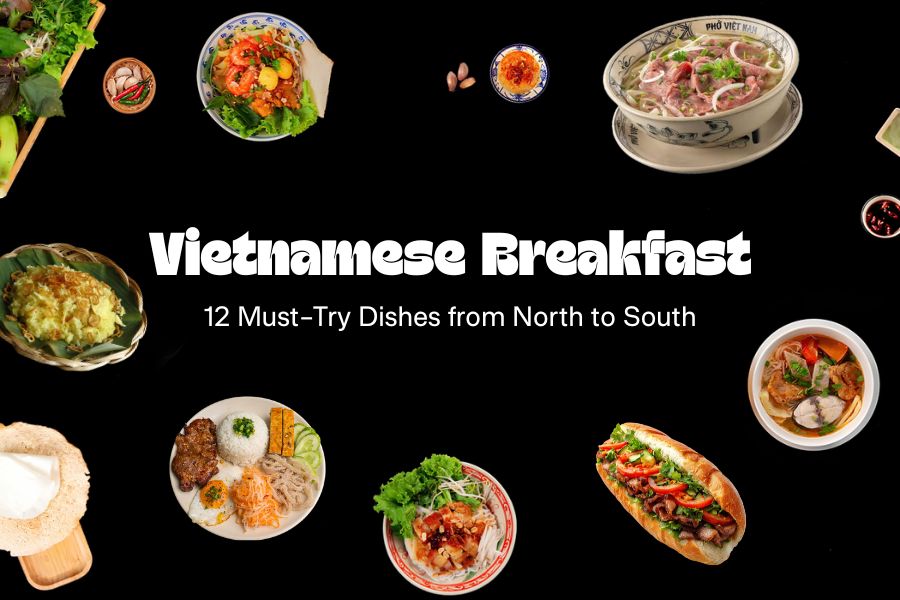
Must-try Vietnamese breakfast dishes go far beyond pho and banh mi, with each region starting the day in its own way. In Hanoi, that might mean a steaming bowl of pho or freshly made banh cuon. In Hue, breakfast can be a fragrant bowl of bun bo Hue, while in Ho Chi Minh City the smell of pork grilling for com tam often appears on the street before the morning traffic reaches its peak.
Breakfast in Vietnam is usually savoury, filling and surprisingly varied. Rice, noodles, sticky rice, bread, grilled meat and fresh herbs all have a place at the morning table, and many local shops build their entire reputation around preparing just one dish well.
One of the easiest ways to understand Vietnamese food culture is to leave the hotel buffet behind for at least one morning. A bowl prepared in a busy neighbourhood shop tells you something about the city you are visiting, from the lighter flavours of the north to the stronger seasoning of Central Vietnam and the broader influences found in the south.
This guide introduces 12 dishes worth trying, explains where they come from and shares the small details that can make a traditional breakfast in Vietnam much more enjoyable for a first-time visitor.
Vietnamese Breakfast at a Glance: What Do Locals Actually Eat?

There is no single national breakfast plate in Vietnam. Morning food changes with region, family habits, working hours and what is available nearby, but a few patterns appear again and again.
Breakfast is commonly savoury rather than sweet. Noodle soups, rice dishes, sticky rice, steamed rice rolls and filled baguettes are all normal ways to begin the day. Eating out is also part of everyday life, particularly in larger towns and cities, where specialist breakfast shops can be busy from early morning.
|
Breakfast habit |
What travellers should know |
|
Breakfast is usually savoury |
Soup, noodles, rice, sticky rice and bread are more common than cereal or pastries |
|
Eating out is normal |
Many locals stop at a familiar shop on the way to work or school |
|
Specialist shops are common |
A small menu can be a good sign when a place has focused on one dish for years |
|
Regional differences matter |
Pho in Hanoi, mì Quảng in Quang Nam and cơm tấm in Saigon give very different starts to the day |
|
Earlier is often better |
Some breakfast-focused shops sell out or slow down once the morning rush is over |
When choosing where to eat, a short menu should not put you off. Some of the most reliable local breakfast shops prepare the same broth, rice dish or steamed roll every morning, and that repetition is exactly why people return.
Food is only one part of preparing for the journey. Our Vietnam Travel Guide 2026 covers the practical details you need for planning a trip, from weather and transport to money, local customs and getting around.
12 Must-Try Vietnamese Breakfast Dishes from North to South
For a first trip, these 12 dishes give a useful introduction to how breakfast in Vietnam changes as you travel through the country.
|
Dish |
What to expect |
Region most associated with it |
|
Pho – Vietnamese Beef or Chicken Noodle Soup |
Aromatic broth, soft rice noodles and a clean, balanced flavour |
Northern Vietnam |
|
Banh Cuon – Steamed Rice Rolls |
Delicate rice sheets filled with pork and mushroom, served with fish sauce |
Northern Vietnam |
|
Xoi – Vietnamese Savoury Sticky Rice |
Soft, filling sticky rice topped with chicken, pork, mung bean or fried shallots |
Across Vietnam |
|
Bun Rieu – Crab and Tomato Rice Noodle Soup |
Lightly sour tomato broth with crab, tofu and fresh herbs |
Northern Vietnam |
|
Bun Bo Hue – Hue Spicy Beef Noodle Soup |
Richer broth with lemongrass, chilli, beef and fermented shrimp paste |
Hue / Central Vietnam |
|
Mi Quang – Quang Nam Turmeric Noodles |
Noodles with very little broth, herbs, peanuts and crisp rice cracker |
Quang Nam / Hoi An |
|
Bun Cha Ca – Fish Cake Noodle Soup |
Light, savoury broth with springy fish cakes and noodles |
Central coast |
|
Banh Canh – Thick Vietnamese Noodle Soup |
Thick, chewy noodles in a fuller broth with pork, fish or seafood |
Central & Southern Vietnam |
|
Com Tam – Broken Rice with Grilled Pork |
Grilled pork, broken rice, pickles and fish sauce, often with fried egg |
Ho Chi Minh City / South |
|
Hu Tieu – Southern Vietnamese Noodle Soup |
Clear, slightly sweeter broth with pork, seafood and noodles |
Southern Vietnam |
|
Bo Ne – Vietnamese Sizzling Beef and Eggs |
Beef and fried eggs served hot on a skillet with pâté and baguette |
Southern Vietnam |
|
Banh Mi – Vietnamese Baguette Sandwich |
Crisp baguette with pâté, meat, egg, herbs and pickled vegetables |
Across Vietnam |
Northern Vietnamese Breakfast: Pho, Banh Cuon, Xoi and Bun Rieu
Northern breakfast flavours tend to be comparatively restrained, allowing broth, rice and fresh herbs to do much of the work. Hanoi in particular is one of the best places to see how seriously a seemingly simple morning meal can be taken.
Pho – Vietnamese Beef or Chicken Noodle Soup

Pho is the obvious starting point, but it deserves its reputation. Flat rice noodles are served in an aromatic broth with beef or chicken, usually with spring onion, herbs and condiments added according to taste.
In Hanoi, it is worth tasting the broth before reaching for lime, chilli or sauces. Northern versions are often less heavily garnished than those found farther south, and adding everything on the table before the first spoonful can hide the balance the cook has spent hours building.
Pho is also a useful breakfast on sightseeing days because one bowl is satisfying without being particularly heavy. If you are leaving the hotel early for a Hanoi city tour, an established pho shop close to the Old Quarter can make a much better start than rushing through a buffet.
Banh Cuon – Steamed Rice Rolls
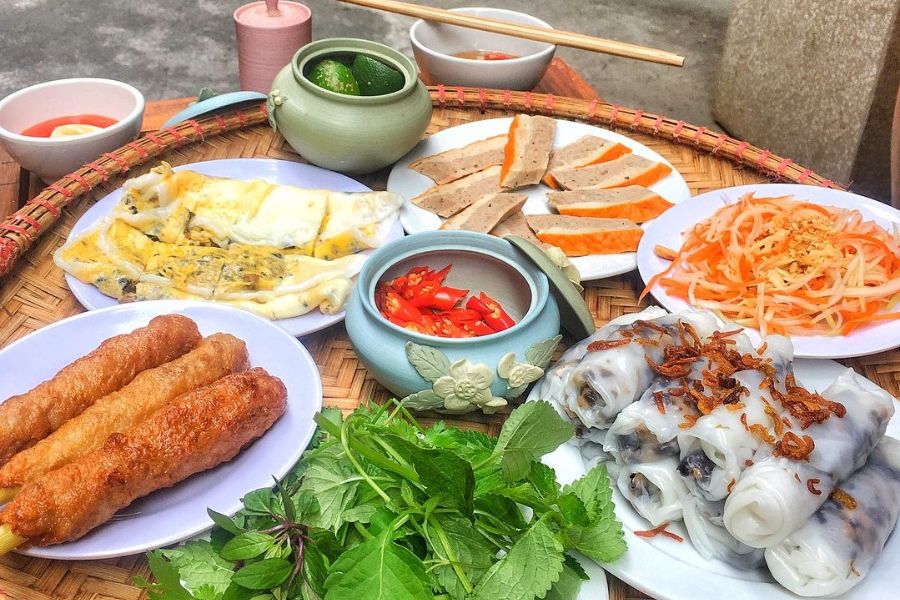
Banh cuon is one of Hanoi’s classic morning foods. Thin sheets made from steamed rice batter are usually rolled around minced pork, mushrooms and shallots, then served with fried shallots, herbs, Vietnamese pork sausage and a light fish-sauce dip.
The texture is the reason to eat banh cuon fresh. If you see the rice sheets being steamed and rolled at the front of the shop, it is worth waiting a few minutes for a new plate rather than choosing something that has been sitting ready-made. Fresh banh cuon should be soft, delicate and almost translucent.
It is also a good introduction for travellers who find a large bowl of noodle soup too much first thing in the morning.
> > > To take that contrast beyond Hanoi, our Diverse Vietnam: 12-Day Private Tour with Sapa combines the capital’s food culture with mountain scenery, local communities and a very different side of northern Vietnam.
Xoi – Vietnamese Savoury Sticky Rice

Xoi is glutinous sticky rice served in many different forms. It can be topped with mung beans, fried shallots, chicken, pork, Vietnamese sausage or other savoury ingredients. Some versions are simple enough to eat on the move; others are substantial enough to keep you full well into the day.
This is one of the most practical Vietnamese breakfasts when you have an early train, flight or long drive. It is easy to pack, quick to eat and widely sold in the morning around markets, busy streets and neighbourhood food stalls.
For travellers, xoi is also a useful reminder that a Vietnamese breakfast does not always involve soup. Rice in different forms is just as much a part of the morning routine.
Bun Rieu – Crab and Tomato Rice Noodle Soup

Bun rieu gives you a very different bowl from pho. Its broth is built around tomato and crab, with rice vermicelli, tofu and other toppings depending on the shop. The flavour is usually brighter and slightly more acidic, with herbs and condiments served alongside.
If you have already eaten pho several times, bun rieu is an excellent next step into Vietnamese noodle soups because it shows how varied a morning bowl can be without becoming difficult for a first-time visitor.
For travellers spending several days in Hanoi, alternating a pho morning with banh cuon, xoi or bun rieu gives a much more representative picture of local breakfast culture than simply ordering the same famous dish every day.
If Hanoi’s morning food culture leaves you wanting to explore further, our Hanoi Street Food Guide takes you beyond breakfast to the small shops, markets and local dishes worth trying around the city.
Central Vietnam Breakfast: Bun Bo Hue, Mi Quang, Bun Cha Ca and Banh Canh
Central Vietnamese cooking is often more assertive in its use of chilli, fermented seasonings and herbs. Hue, Quang Nam and the central coast each have breakfast dishes closely tied to their local identity.
Bun Bo Hue – Hue Spicy Beef Noodle Soup
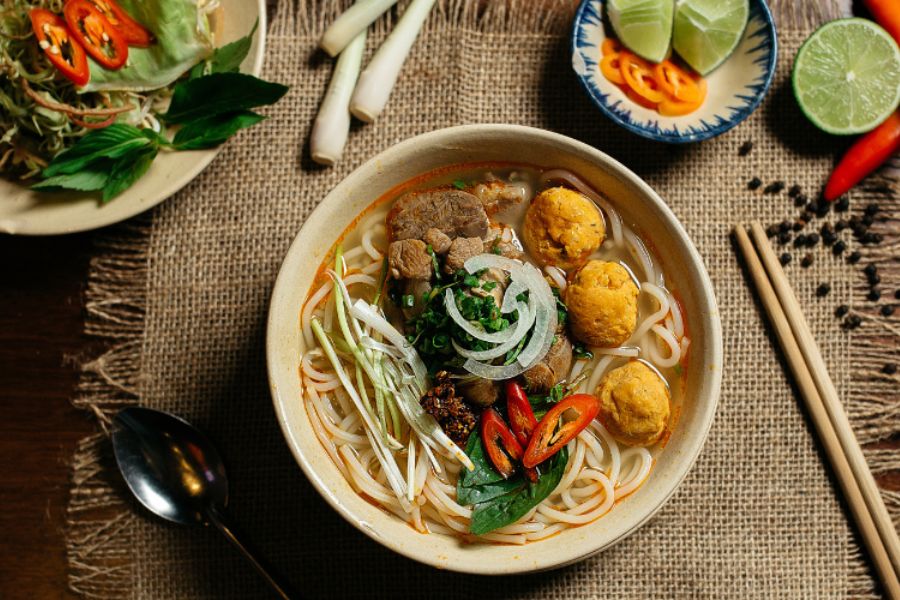
Despite the English shorthand “beef noodle soup”, bun bo Hue is more complex than the name suggests. The broth can combine beef and pork bones with lemongrass, fermented shrimp paste and chilli, while toppings vary from sliced beef to pork and crab-based additions.
If you normally prefer mild food, taste the bowl before adding extra chilli. The lemongrass and shrimp paste are central to the flavour, and a good bowl should already have considerable character before you adjust it.
Trying bun bo in Hue is also different from simply ordering the same dish elsewhere in Vietnam. Eating it early in the morning among local regulars places the food back in the city and culture it came from, which is part of what makes regional food worth travelling for.
Mi Quang – Quang Nam Turmeric Noodles

Mi Quang is one of the dishes first-time visitors most often misunderstand. The noodles may look as though they are about to arrive in a bowl of soup, but only a small amount of intensely flavoured broth is added.
The flat noodles are usually served with pork, chicken, shrimp or other proteins, fresh herbs, peanuts and crisp rice crackers. The best way to eat it is to mix everything together so the herbs, peanuts, crackers and broth become part of each bite. The crisp rice cracker is not simply a decoration.
If you are staying in Hoi An for several nights, mi Quang makes a strong alternative to the hotel buffet because it connects breakfast directly with the wider Quang Nam region.
Bun Cha Ca – Fish Cake Noodle Soup

Along Vietnam’s central coast, fish naturally finds its way into breakfast. Bun cha ca combines noodles and a relatively light broth with fish cakes, vegetables and herbs, with recipes changing between places such as Da Nang and Nha Trang.
It is a good choice for travellers who enjoy seafood but want something less rich than bun bo Hue. The fish cakes should have a springy texture rather than feeling soft or flour-heavy.
A bowl like this also makes sense in a coastal city. That connection between local ingredients and local breakfast is one reason we prefer introducing regional dishes in the places where they naturally belong instead of treating Vietnamese food as one nationwide menu.
Banh Canh – Thick Vietnamese Noodle Soup
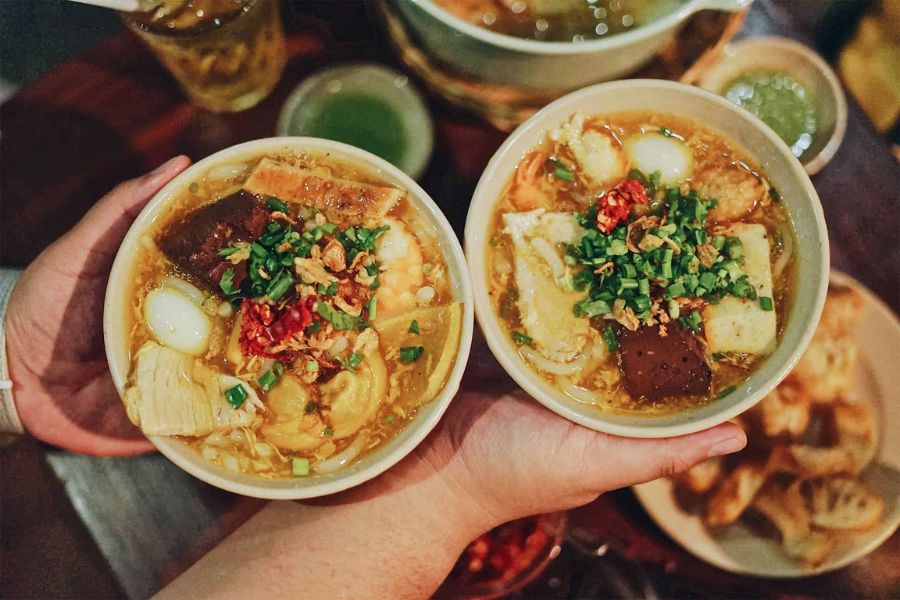
Banh canh stands out because of its noodles. Made from rice flour, tapioca or a combination of the two, they are noticeably thicker and chewier than pho or bun.
The broth can be made with pork, crab, fish or seafood, depending on the region, and is often fuller and heavier than the broth used for pho. For travellers who enjoy texture, this is one of the most interesting bowls to try. It can also be quite filling, so it works particularly well before a long sightseeing day or when lunch will be later than usual.
> > > Families who would like to introduce local food at a comfortable pace can see how we combine culture, easy-going experiences and regional cuisine in our Best of Vietnam for Families: 15-Day Private Tour.
Southern Vietnamese Breakfast: Com Tam, Hu Tieu, Bo Ne and Banh Mi
Breakfast in southern Vietnam feels broader and less rule-bound. Ho Chi Minh City in particular draws culinary influences from around the country, and many dishes traditionally associated with breakfast can also be eaten later in the day.
Com Tam – Vietnamese Broken Rice with Grilled Pork

Com tam is one of Saigon’s defining foods and one of the clearest examples of rice being eaten for breakfast. Broken rice is usually served with grilled pork, pickles, scallion oil, fish sauce and often a fried egg or other accompaniments.
In the morning, you may smell the pork grilling before you see the shop itself. That is often a useful sign that you are close to a busy cơm tam place preparing for the breakfast rush.
For Western travellers, eating rice and grilled pork at 7:30 in the morning may initially feel more like lunch, but that is exactly the point of trying a traditional breakfast in Vietnam rather than translating breakfast expectations from home.
Hu Tieu – Southern Vietnamese Noodle Soup

Hu tieu is one of southern Vietnam’s everyday noodle dishes. The broth is generally clear and slightly sweeter than northern pho, while toppings can include pork, shrimp, quail eggs and vegetables. It can also be served dry, with the broth provided separately.
If pho is your reference point, hu tieu is useful because it shows how differently southern noodle soups are constructed. The flavour, toppings and noodle texture are all distinct, even though the basic idea of noodles and broth may look familiar at first glance.
Bo Ne – Vietnamese Sizzling Beef and Eggs

Bo ne arrives on a hot skillet with beef, fried egg and often pâté, tomato and a baguette. It is closer to a cooked Western-style breakfast in structure, which makes it approachable for travellers who are not ready for soup or rice first thing in the morning.
When the skillet arrives, give it a moment before leaning too close. Tear pieces from the baguette and use them to pick up egg, sauce and beef rather than treating the bread as a separate side.
It is also one of the easier dishes to recommend to families or first-time visitors because the ingredients feel familiar even though the way they are served is distinctly Vietnamese.
Banh Mi – Vietnamese Baguette Sandwich
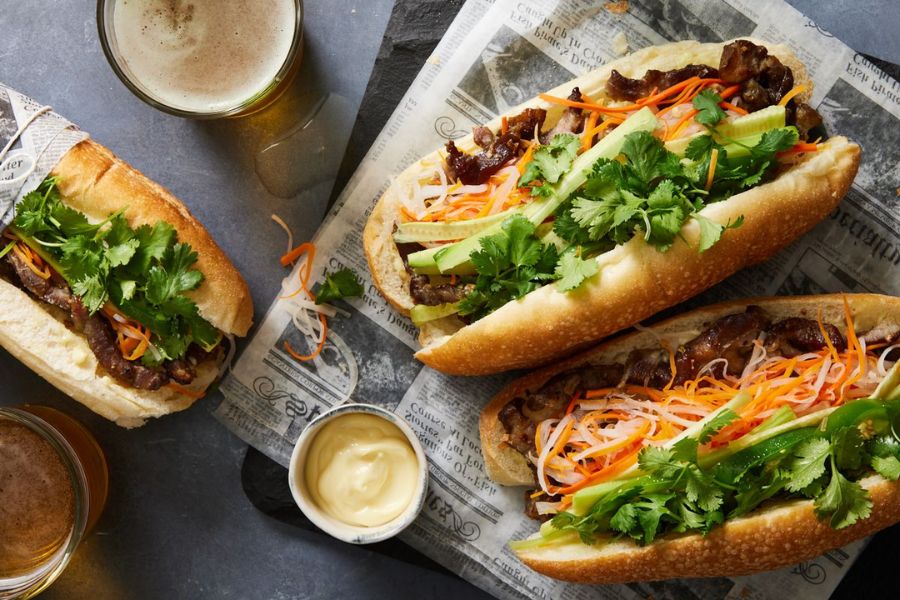
Banh mi is one of the easiest Vietnamese breakfasts for a traveller to understand and one of the most convenient on a busy morning. A crisp baguette can be filled with pâté, pork, Vietnamese cold cuts, egg, pickled vegetables, cucumber, herbs and sauces, with variations changing from city to city.
This is the breakfast we often favor on days with an early excursion or transfer. It can be picked up quickly, carried easily and eaten without setting aside time for a sit-down meal. Do not assume all banh mi are alike, either. A breakfast egg banh mi in Hoi An can feel quite different from a meat-heavy Saigon banh mi or a version with grilled fish cake along the central coast.
Why Vietnamese Noodle Soup Is Such a Big Part of Breakfast
Rice is central to Vietnamese cooking, and noodles made from rice appear in an extraordinary number of forms. That is one reason a Vietnamese noodle soup can look completely different from one city to the next.
A morning bowl also makes practical sense. It combines carbohydrates, protein, liquid and fresh herbs in one meal, while specialist shops can prepare their broth before customers begin arriving.
|
Dish |
Noodle style |
What makes it different |
|
Pho |
Flat rice noodles |
Aromatic, generally clear broth |
|
Bun bo Hue |
Thick round rice vermicelli |
Lemongrass, chilli and shrimp-paste depth |
|
Hu tieu |
Rice/tapioca-style noodles |
Clearer, slightly sweeter southern broth |
|
Banh canh |
Thick rice or tapioca noodles |
Chewy texture and often heavier broth |
|
Mi Quang |
Flat yellow or white noodles |
Very little broth, mixed with herbs, peanuts and crackers |
One useful habit is to stop thinking of all these dishes simply as “Vietnam noodle soup”. Each region has its own noodle texture, broth and way of seasoning the bowl at the table.
Vietnamese Coffee and What to Drink with Breakfast
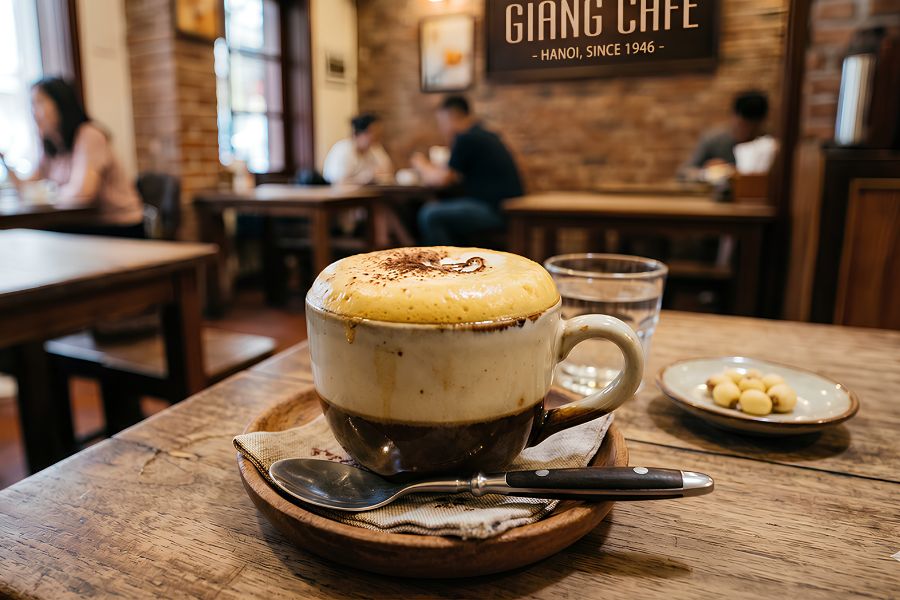
Breakfast in Vietnam is often accompanied by tea, water or coffee. Vietnamese coffee is usually made with robusta beans and can feel considerably stronger than the coffee some international travellers are used to.
Both black and milk coffee can be served hot or over ice. In the south, iced coffee is especially common, while Hanoi offers its own well-known café culture and drinks such as egg coffee. Egg coffee is worth trying, but it should not be treated as the standard morning drink for the whole country. A simple black coffee or iced coffee with condensed milk is much closer to the everyday rhythm you will see in cafés around Vietnam.
If you are not used to strong robusta coffee, drink it slowly. A small Vietnamese coffee can contain more punch than its size suggests, particularly when followed by a full morning of sightseeing in the heat.
How to Eat Breakfast in Vietnam Like a Local
A few small habits make local breakfast much easier to enjoy, especially if it is your first time eating outside the hotel.
- Go early for the best atmosphere: Breakfast-focused shops are usually busiest between early morning and the start of the working day. Arriving earlier also gives you a better chance of seeing the shop at its normal rhythm, with regular customers coming and going rather than only tourists sitting down later in the morning.
- Look for a busy specialist shop rather than the longest menu: A place selling one or two dishes is not necessarily limited. In many neighbourhoods, that narrow menu is exactly why people trust the shop, because the same broth, filling or topping has been prepared every morning for years.
- Taste first, season second: With pho and other noodle soups, try the broth before adding lime, chilli or bottled sauces. The table condiments are there to adjust the bowl to your taste, not because every dish automatically needs all of them.
- Expect stronger flavours in some regions: Central Vietnamese breakfast can be noticeably more assertive, with chilli, fermented shrimp paste and stronger seasoning appearing more often. If you prefer mild food, ask before adding extra condiments rather than assuming the bowl will taste like northern pho.
- Keep some cash with you: Small breakfast shops, market stalls and neighbourhood vendors may not accept cards, even in larger cities. A few smaller notes also make payment easier when the morning rush is busy.
- Explain allergies and dietary restrictions clearly: Fish sauce, shrimp paste, peanuts, pork and shellfish appear frequently in Vietnamese cooking, sometimes in broths or sauces where they are not immediately visible. If an allergy is serious, having the restriction written clearly in Vietnamese can be more useful than relying on a quick verbal explanation.
- Do not worry if breakfast looks like lunch: Grilled pork, rice or a substantial noodle bowl may feel unusual first thing in the morning if you are used to toast and cereal. In Vietnam, these are completely normal breakfast foods, and trying them at the time locals actually eat them is part of the experience.
- Leave the hotel buffet behind at least once: A good hotel breakfast is useful on an early-start day, but if you are staying three or four nights in Hanoi, Hue, Hoi An or Ho Chi Minh City, one morning outside can tell you far more about the neighbourhood. It does not need to be a formal food tour; sometimes one good local breakfast shop is enough.
Finding the Best Breakfast in Vietnam During Your Journey

There is no single “best Vietnamese breakfast” because the answer changes as you travel south. Hanoi gives you pho, banh cuon and northern noodle soups; Hue adds the stronger flavour of bun bo Hue; Quang Nam brings mi Quang; and Ho Chi Minh City introduces the morning smell of grilled pork, hu tieu and countless banh mi variations.
That progression is part of what makes a longer Vietnam route so rewarding. A 14 day Vietnam tour package travelling from Hanoi through Central Vietnam to Ho Chi Minh City gives you enough time to see regional food change alongside the landscape, architecture and local culture.
Families may prefer a gentler introduction. On a 15 day Vietnam family tour, familiar dishes such as pho, banh mi, steamed rice rolls and grilled pork are often good starting points before trying stronger broths, fermented flavours or more unfamiliar ingredients. Giving children and first-time visitors some choice usually works better than turning every meal into a food challenge.
A 12 day Vietnam tour can still cover several regional breakfast styles, while a longer journey gives you more mornings to eat away from the hotel without sacrificing convenience. The important part is not scheduling a formal food tour every day; sometimes the most memorable meal is simply stopping at the right neighbourhood shop on the way to the next experience.
That is how we prefer to include food in our Vietnam tours. Breakfast, markets and small local restaurants should fit naturally around the journey rather than making every meal feel like another appointment.
For couples who want to experience those regional flavours as part of a slower journey, our Vietnam Honeymoon Escape: 17-Day Private Tour combines local experiences with cultural stops, private touring and time to relax.
Frequently Asked Questions About Vietnamese Breakfast
- What is a traditional breakfast in Vietnam?
A traditional breakfast in Vietnam can include noodle soup, rice, sticky rice, steamed rice rolls or bánh mì. Common examples include pho and banh cuon in the north, bun bo Hue and mi Quang in Central Vietnam, and com tam or hu tieu in the south. - What do Vietnamese people usually eat for breakfast?
There is no single everyday breakfast. Noodle soups, rice dishes, xoi, banh mi and steamed rice-based dishes are all common, and preferences vary considerably by region and family. - Is pho really eaten for breakfast in Vietnam?
Yes. Pho is widely eaten in the morning, particularly in northern Vietnam, although it can also be enjoyed later in the day. - What is the most popular Vietnamese breakfast?
Pho is probably the internationally best-known answer, but it would be misleading to call it the only national favourite. Banh mi, xoi, banh cuon, com tam, hu tieu and regional noodle dishes are all important parts of Vietnamese breakfast culture. - What time do people eat breakfast in Vietnam?
Breakfast shops often become busy from early morning as people eat before work or school. Exact opening times vary, but arriving between roughly 6:30 AM and 8:30 AM is a good way to experience the morning atmosphere at many local shops. - Which Vietnamese breakfast is easiest for first-time visitors?
Pho, banh mi, banh cuon and com tam are all approachable choices. If you enjoy stronger flavours, continue with bun bo Hue, mi Quang or bun rieu once you are more familiar with Vietnamese herbs and seasonings.
Some of the best food memories in Vietnam begin before the day’s sightseeing has really started. It might be the smell of charcoal outside a com tam shop in Saigon, watching bánh cuốn being steamed to order in Hanoi, or discovering that mì Quảng looks nothing like the noodle soup you expected.
Those moments are small, but they often stay with travellers longer than another carefully scheduled stop.
When we design journeys through Vietnam, food works best when it appears naturally along the route: a breakfast worth waking up early for, a market beside the day’s sightseeing or a neighbourhood shop that makes sense before the next transfer.
Explore Vietnam with LuxeTravel Asia and leave a little space in your mornings for the dishes you did not know you were looking for.
Tags: 10 day Northern Vietnam tour, 12 day Vietnam tour, 12 day Vietnam tour with Sapa, 14 day Vietnam tour package, 15 day Vietnam family tour, breakfast in Vietnam, must-try vietnamese breakfast, traditional breakfast in Vietnam, vietnam, vietnam noodles soup, vietnam tours, vietnamese breakfast