
Places to visit in Northern Vietnam range from Hanoi’s historic streets and Halong Bay’s limestone islands to peaceful countryside valleys, terraced rice fields and remote mountain communities. Each destination offers a different experience, making the north one of Vietnam’s most varied regions to explore.
Beyond the familiar highlights, places such as Mai Chau, Pu Luong, Mu Cang Chai and Cao Bang reveal a quieter side of the country, where local traditions and everyday village life remain closely connected to the landscape.
Choosing where to go, however, takes some thought. Mountain journeys can be longer than expected, and not every destination fits comfortably into the same Northern Vietnam itinerary. This guide introduces 10 remarkable places, their main attractions and the types of travellers they suit, along with practical advice for exploring the region.
Weather in Northern Vietnam: What to Expect Throughout the Year
Northern Vietnam experiences four distinct seasons, but the weather can vary considerably between Hanoi, the mountains and the coast. A comfortable autumn day in Hanoi does not necessarily mean clear skies in Sapa, while cooler winter temperatures can bring mist and limited visibility to Halong Bay.
Understanding these differences is useful when choosing destinations for your Northern Vietnam itinerary, particularly if trekking, photography or overnight cruises are important parts of your journey.
|
Season |
Typical weather |
Travel experiences |
|
Spring (March-April) |
Mild to warm, sometimes humid with light rain or mist |
Comfortable sightseeing in Hanoi and Ninh Binh, countryside walks and mountain scenery |
|
Summer (May-September) |
Hot and humid in the lowlands, with frequent rainfall, especially in July and August |
Green rice terraces, lush valleys and waterfalls; greater flexibility needed for mountain travel |
|
Autumn (October-November) |
Generally cooler, with less humidity and often clearer conditions |
Hanoi sightseeing, mountain journeys, photography and countryside experiences |
|
Winter (December-February) |
Cool to cold, particularly in the highlands; mist and drizzle are possible |
Cultural sightseeing, quieter landscapes and mountain experiences for travellers prepared for cold weather |
How Weather Changes Across Northern Vietnam
Hanoi and Ninh Binh experience hot, humid summers and noticeably cooler winters. Spring and autumn generally offer more comfortable conditions for walking, cycling and outdoor sightseeing, although occasional rain is still possible.
Sapa, Ha Giang and Mu Cang Chai have cooler mountain climates, especially at higher elevations. Winter temperatures can fall sharply, while summer rain may make trekking paths slippery and affect mountain-road conditions. Travellers hoping to photograph golden rice terraces should also remember that harvest timing varies between destinations and from year to year.
Halong Bay, Cat Ba and Lan Ha Bay follow a different pattern. Summer brings warm conditions for water activities but also a greater risk of storms, which can lead to cruise cancellations. Winter cruises can be enjoyable, although mist and cooler temperatures may limit visibility and make swimming less appealing.
Choosing the Right Season for Your Journey
For travellers combining Hanoi, Ninh Binh, Halong Bay and the northern mountains, March-April and October-November generally offer a comfortable balance of conditions. However, there is no single month that guarantees ideal weather everywhere.
If rice terraces are your priority, consider the local growing and harvest seasons. For mountain adventures, allow flexibility around rain and visibility. For cruises, remember that sailing conditions matter more than sunshine alone.
The most useful approach is to consider the weather of each destination when selecting your route, rather than treating Northern Vietnam as one climate zone.
If Northern Vietnam is part of a longer trip across the country, our Best Time to Visit Vietnam guide explains how weather patterns change between the north, centre and south, helping you choose travel dates that work across several destinations.
10 Best Places to Visit in Northern Vietnam
Hanoi – History, Local Culture and Street Food

Highlights:
- Explore Hanoi Old Quarter, Hoan Kiem Lake and Ngoc Son Temple.
- Visit the Temple of Literature and important historical landmarks.
- Discover Hanoi street food, egg coffee and traditional water puppetry.
Best for: First-time visitors, couples, families, history enthusiasts and food lovers.
Allow: Two to three days. An extra night is particularly useful when Hanoi is your first stop after a long international flight.
Hanoi is where many journeys through Northern Vietnam begin, but the capital deserves more than a quick overnight stop before heading to the mountains or Halong Bay. Its character comes from the contrast between centuries-old temples, busy trading streets, French-era buildings and neighbourhoods where daily routines continue around visitors.
The Old Quarter is a natural starting point. Walk around Hoan Kiem Lake early in the morning, explore the old merchant streets and stop for a bowl of pho or freshly made banh cuon. Beyond the historic centre, the Temple of Literature, Ho Chi Minh Complex and Hoa Lo Prison provide different perspectives on the city’s history.
One of the most enjoyable ways to experience Hanoi is to combine guided sightseeing with time on your own. A morning exploring historical sites followed by an afternoon wandering through cafés and small shops often feels more rewarding than filling the day with consecutive museum visits.
Ninh Binh – Limestone Landscapes and Peaceful Countryside
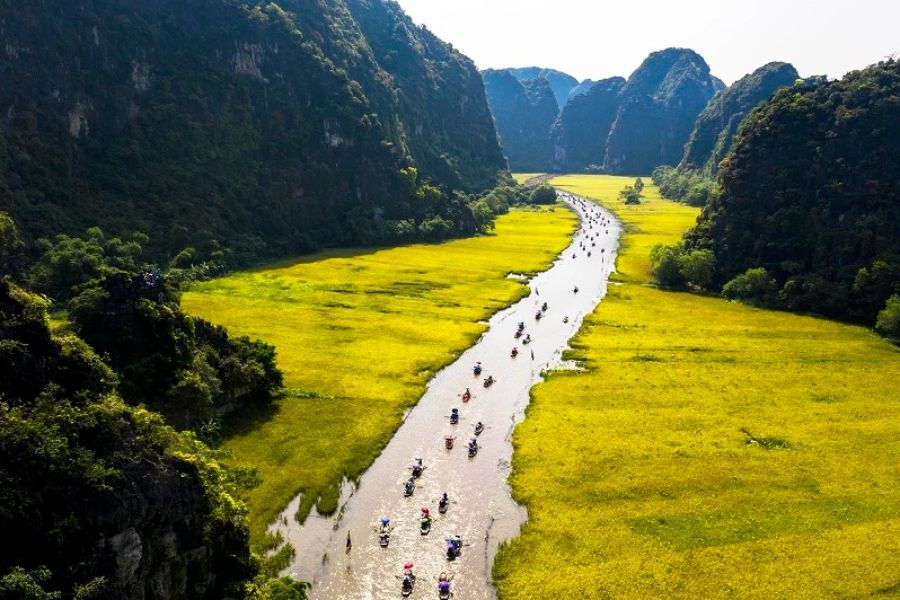
Highlights:
- Take a traditional boat trip through Trang An or Tam Coc.
- Explore Hoa Lu Ancient Capital and historic temples.
- Cycle through villages or climb Hang Mua for panoramic views.
Best for: Couples, families, photographers, nature lovers and travellers who enjoy gentle outdoor activities.
Allow: One to two days, with an overnight stay preferable for a more relaxed experience.
Ninh Binh offers one of the most striking changes of scenery within easy reach of Hanoi. Limestone mountains rise above rice fields, quiet waterways pass through caves and small roads connect villages, temples and farmland.
A boat journey through Trang An or Tam Coc is the main attraction. In Trang An, local rowers guide traditional sampans through waterways surrounded by towering limestone cliffs and cave passages. Tam Coc offers another beautiful experience, with its river winding between mountains and fields that change colour throughout the farming season.
Beyond the boat trips, Hoa Lu Ancient Capital introduces the region’s historical importance, while Hang Mua rewards those willing to climb its steep steps with wide views over the surrounding landscape.
Ninh Binh works as a day trip, but staying overnight makes a noticeable difference. You can enjoy quieter countryside roads, cycle between villages and experience the area without trying to fit every attraction into a few hours.
Halong Bay – Limestone Islands and Overnight Cruises
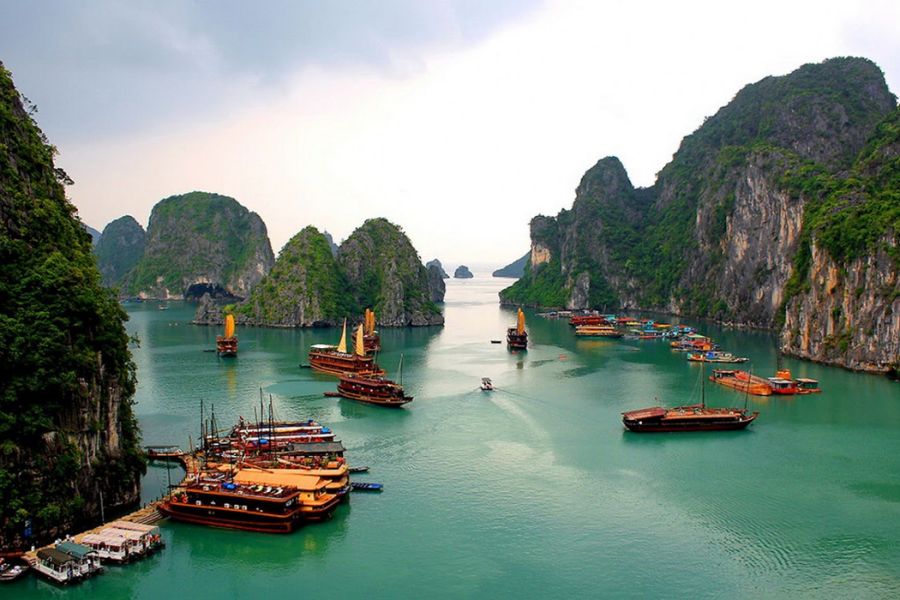
Highlights:
- Spend a night aboard a cruise surrounded by limestone islands.
- Explore caves and sheltered waters by kayak or small boat.
- Enjoy sunset and early-morning views from the deck.
Best for: First-time visitors, couples, honeymooners, families and travellers who enjoy scenery with a comfortable pace.
Allow: Two days and one night for a classic overnight cruise, including transfers.
Halong Bay is one of Vietnam’s most recognisable natural landscapes. Thousands of limestone islands and rocky formations rise from the water, creating scenery best appreciated from a boat rather than a viewpoint on land.
An overnight cruise allows visitors to experience the bay at different times of day. Depending on the itinerary, activities may include kayaking, visiting caves, swimming or joining a morning Tai Chi session on deck. Popular stops on certain routes include Sung Sot Cave, Luon Cave and Ti Top Island.
The difference between a day cruise and an overnight cruise is not simply the amount of sightseeing. Staying aboard gives you an evening on the water and a quieter early morning before much of the daytime boat traffic begins.
For travellers seeking a comfortable experience, it is worth looking carefully at the cruise route, cabin size, private balcony, onboard facilities and actual sailing programme. A beautifully presented cabin matters, but so does how much time the cruise spends moving through the bay rather than remaining at anchor.
Cat Ba Island and Lan Ha Bay – Island Nature and Outdoor Adventures
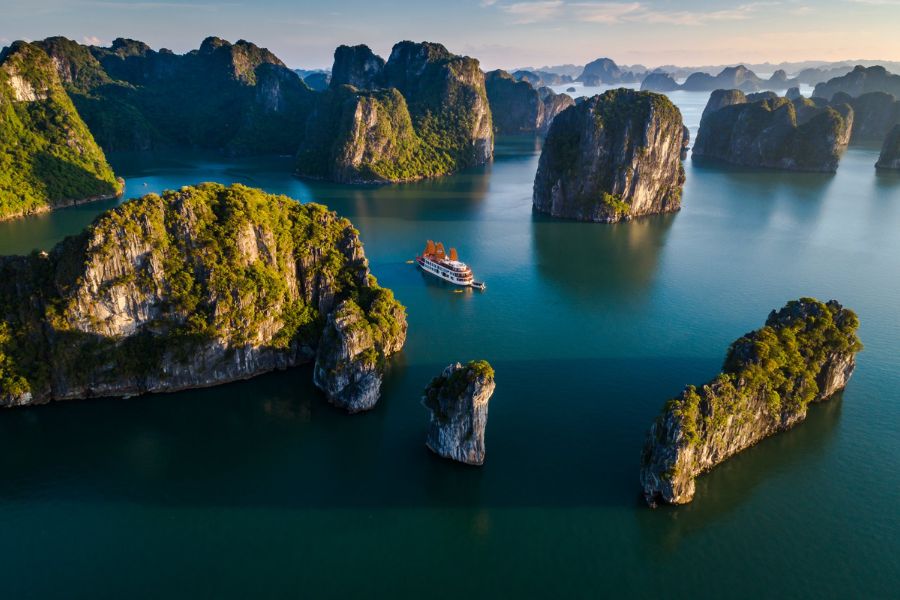
Highlights:
- Kayak among limestone islands and sheltered lagoons.
- Explore Cat Ba National Park and its forest trails.
- Enjoy boat excursions and coastal scenery around Lan Ha Bay.
Best for: Active couples, nature enthusiasts, outdoor travellers and families with older children.
Allow: Two to three days if combining island activities with time on the bay.
Cat Ba Island and neighbouring Lan Ha Bay offer another way to experience Northern Vietnam’s coastal landscape. While the limestone scenery resembles Halong Bay, Cat Ba adds forested hills, hiking opportunities and island life to the experience. On Cat Ba Island, the national park offers forest landscapes and walking trails of varying difficulty. Visitors can combine time on the water with an island stay, making the destination suitable for those who prefer a more active holiday.
Lan Ha Bay is particularly appealing for kayaking. Its sheltered waterways, small coves and limestone formations make it possible to explore sections of the bay at a slower pace, away from the larger vessels. Activities depend on the route, tides, weather and local access conditions.
Halong Bay and Lan Ha Bay are part of the wider UNESCO-listed Ha Long Bay-Cat Ba Archipelago landscape. However, they should not automatically be treated as two separate must-visit stops. If your time is limited, choosing one cruise route that matches your interests is often more sensible than booking similar experiences twice.
Mai Chau – Rural Villages and Relaxed Valley Life
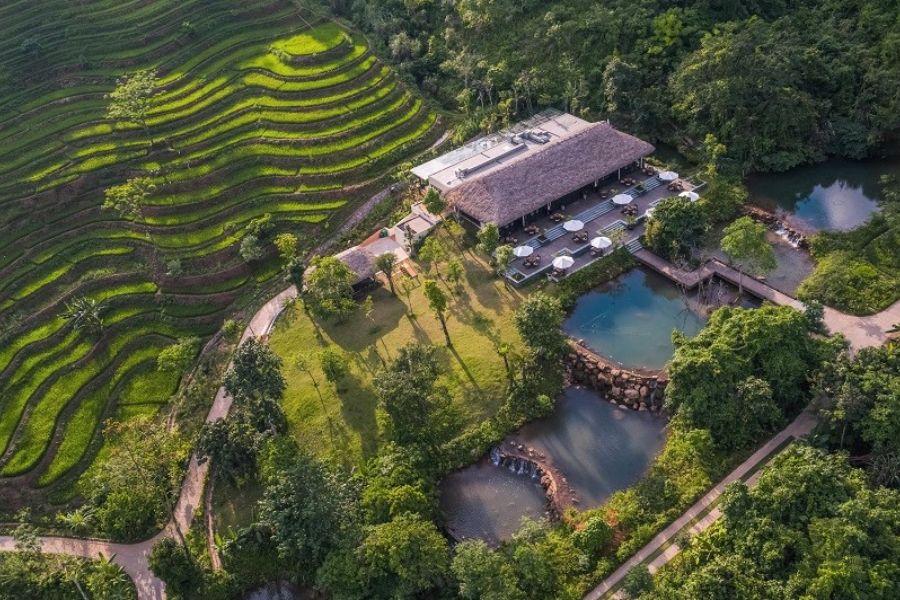
Highlights:
- Cycle through rice fields and traditional villages.
- Learn about White Thai culture, weaving and rural life.
- Enjoy local meals and a peaceful countryside retreat.
Best for: Families, couples, senior travellers, cultural explorers and visitors who prefer gentle activities.
Allow: One to two nights, depending on how much countryside time you would like.
Mai Chau is a peaceful valley surrounded by green mountains, rice fields and villages where many families belong to the White Thai community. It provides an approachable introduction to rural Northern Vietnam without requiring demanding treks or long mountain excursions.
Cycling is one of the most enjoyable activities here. Small paths lead through farmland and villages such as Lac and Pom Coong, passing traditional stilt houses, local workshops and fields that change with the agricultural season.
With a local guide, visitors can learn about traditional weaving, village architecture and food prepared using regional ingredients. These experiences work best when there is time for genuine conversation rather than moving quickly from one demonstration to another.
Mai Chau also has a range of countryside lodges and retreats, allowing travellers to enjoy the landscape in comfort. An afternoon cycling followed by a relaxed evening overlooking the valley can be enough to make the stay feel very different from Hanoi.
Pu Luong – Rice Terraces, Village Walks and Nature Retreats
Highlights:
- Walk through rice terraces and traditional villages.
- Discover bamboo water wheels and rural irrigation practices.
- Stay at a countryside retreat overlooking valleys and mountains.
Best for: Couples, nature lovers, photographers, walkers and travellers looking for peaceful rural experiences.
Allow: Two nights for a comfortable introduction.
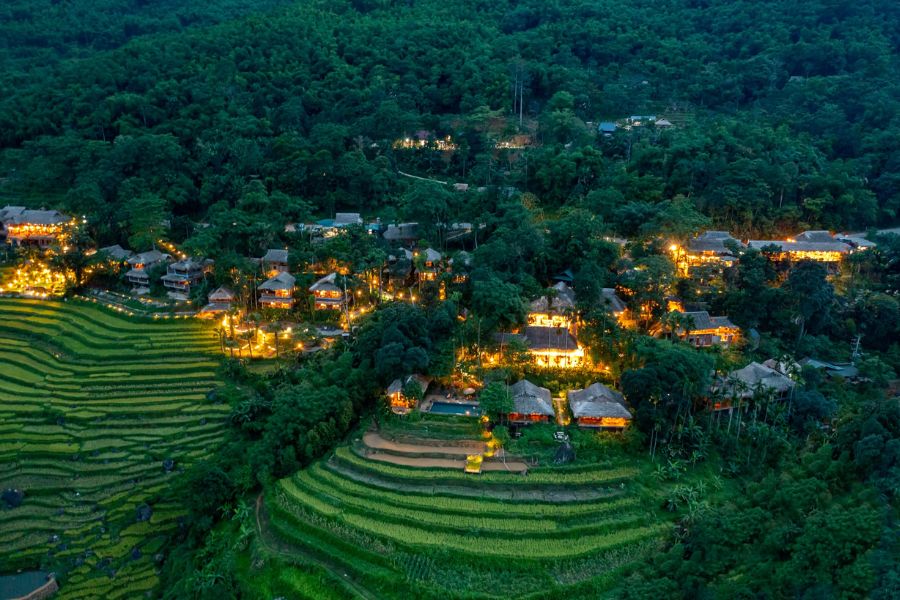
Pu Luong Nature Reserve combines forested hills, terraced rice fields and small villages set along mountain slopes and valleys. It appeals to travellers who enjoy being outdoors but do not necessarily want the longer transfers or higher elevations associated with Sapa.
The scenery is closely connected to agricultural life. Rice terraces change throughout the growing season, while village paths pass houses, streams and cultivated hillsides. Guided walks around areas such as Ban Don and Kho Muong can introduce visitors to both the landscape and local communities. Accommodation is part of the appeal. Several countryside retreats overlook valleys and rice terraces, providing a comfortable base for walking, photography and quiet afternoons.
Pu Luong is not a destination we would rush through in one night. Two nights allow enough time to enjoy the surroundings without making the journey feel like another quick stop between Hanoi and Ninh Binh.
> > > For a longer countryside journey, our Grand Northern Vietnam Journey: 10-Day Private Tour connects Hanoi, Mai Chau, Pu Luong, Ninh Binh and Halong Bay, bringing together village life, natural scenery and cultural experiences without unnecessary backtracking.
Sapa – Mountain Scenery and Ethnic Villages
Highlights:
- Walk through Muong Hoa Valley, Lao Chai and Ta Van.
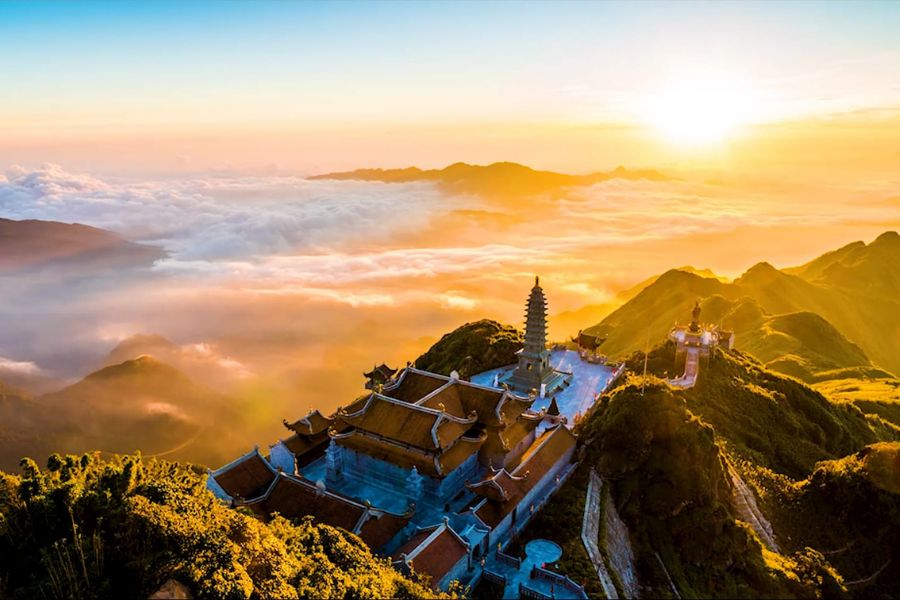
- Visit Fansipan and enjoy highland panoramas.
- Discover terraced rice fields and traditional mountain villages.
Best for: Trekking enthusiasts, photographers, cultural explorers, active couples and families with older children.
Allow: Two to three nights, particularly when travelling by road from Hanoi.
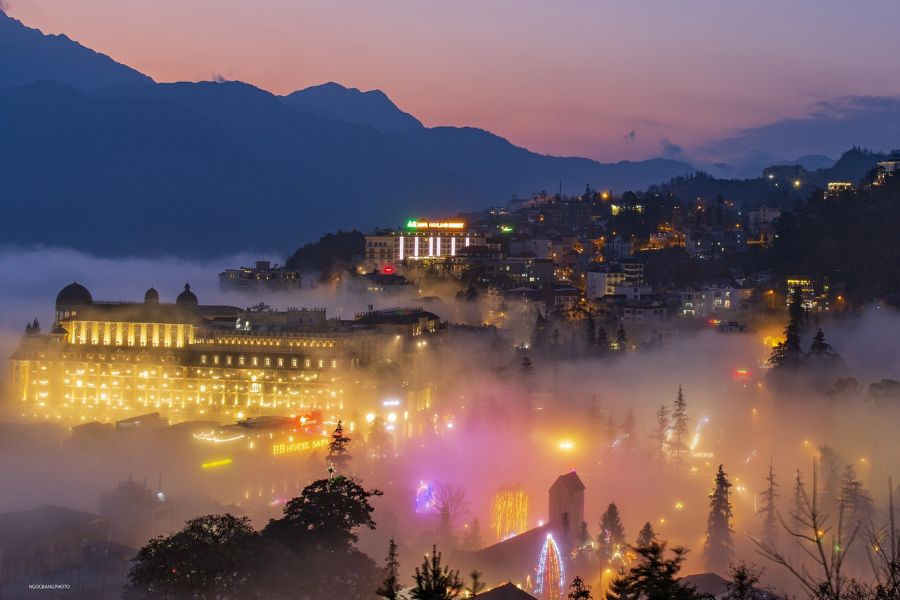
Sapa is one of Northern Vietnam’s best-known mountain destinations, celebrated for its highland scenery, terraced fields and villages inhabited by Hmong, Dao, Giay and other ethnic communities.
The Muong Hoa Valley is particularly rewarding for travellers interested in walking. Routes around Lao Chai and Ta Van pass cultivated hillsides, village houses and sections of terraced rice fields. The experience varies considerably depending on the route, weather and level of walking involved.
Fansipan, often called the Roof of Indochina, offers a different attraction. The cable car makes the mountain accessible to visitors who would not attempt a demanding summit trek, although cloud cover can significantly affect the views. Sapa town itself can be busy, so choosing accommodation carefully matters. A hotel in the centre is convenient for restaurants and activities, while a well-positioned lodge outside town may offer a quieter setting and closer access to rural landscapes.
The journey from Hanoi is substantial, and Sapa should not be treated as a day trip. Giving it several nights makes the transfer worthwhile and leaves room for both mountain scenery and local experiences.
There is much more to Sapa than Fansipan and the town centre. Our guide to the best things to do in Sapa explores mountain villages, walking routes and local attractions to help you decide where to spend your time.
Mu Cang Chai – Spectacular Terraced Rice Fields
Highlights:
- Photograph the rice terraces around La Pan Tan and Mam Xoi.
- Enjoy views along the Khau Pha mountain route.
- Visit rural villages and learn about highland farming.
Best for: Photographers, nature lovers, couples and travellers interested in less-visited mountain landscapes.
Allow: Around two nights, allowing time for the journey and viewpoints.
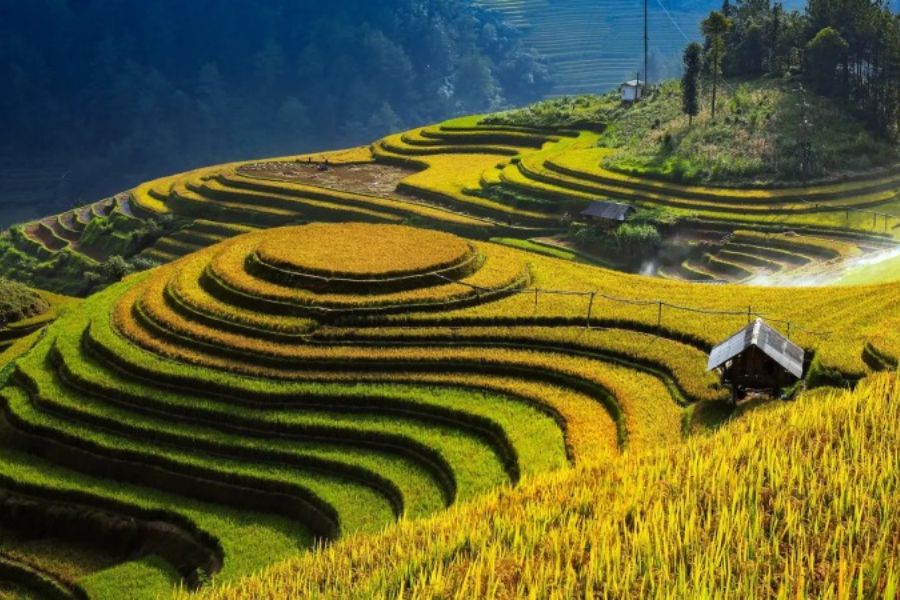
Mu Cang Chai is renowned for its rice terraces, which curve around steep hillsides and form some of Northern Vietnam’s most distinctive agricultural landscapes. Areas such as La Pan Tan and Mam Xoi Hill attract photographers, especially when the terraces turn golden before harvest. However, the scenery is not limited to autumn. Early in the growing season, water-filled terraces reflect the sky, while summer brings broad stretches of green rice.
The landscapes are the result of generations of farming, particularly among local Hmong communities. Spending time in the villages provides an opportunity to understand how the terraces are maintained and why their appearance changes throughout the year.
If photography is your main reason for visiting, timing matters. The golden harvest commonly falls around September and early October, but exact conditions depend on planting schedules and weather. It is better to check the fields close to your travel dates than expect the same landscape throughout the year.
Ha Giang – Mountain Passes and Remote Highland Landscapes
Highlights:
- Travel through Dong Van Karst Plateau.
- See Ma Pi Leng Pass and the Nho Que River.
- Explore mountain villages and local highland culture.
Best for: Adventure travellers, photographers, returning visitors and nature enthusiasts comfortable with long mountain journeys.
Allow: Three to four nights for the main highland route.
Ha Giang offers a very different side of Northern Vietnam. Here, high mountain roads pass through deep valleys, limestone plateaus and communities scattered across some of the country’s most rugged terrain.
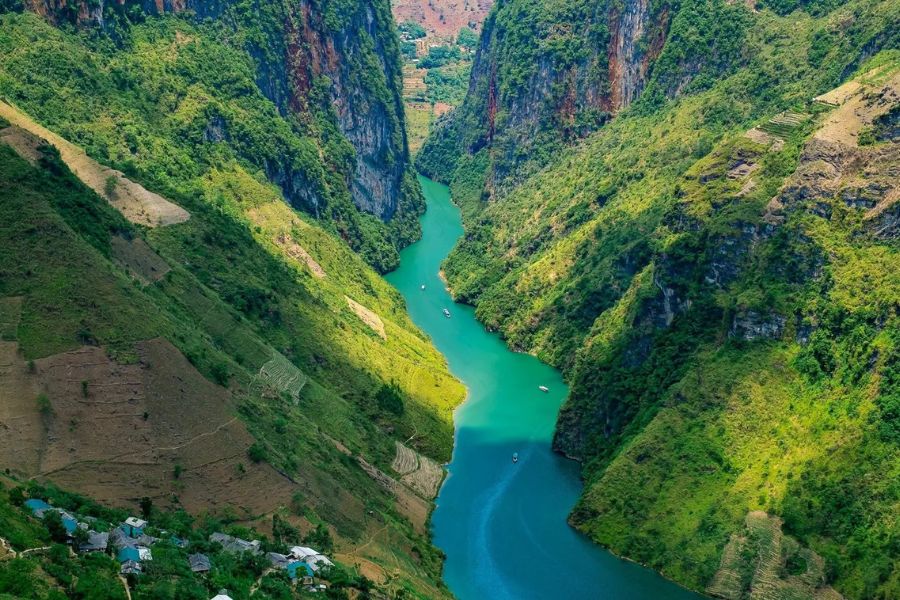
The Dong Van Karst Plateau is one of the region’s defining landscapes. Along the route, Quan Ba provides sweeping mountain views, while Ma Pi Leng Pass overlooks the dramatic gorge of the Nho Que River. Towns and villages around Dong Van and Meo Vac add a cultural dimension to the journey.
Ha Giang is often associated with motorbike adventures, but riding a motorcycle is not the only way to experience the region. Travelling in a suitable private vehicle with an experienced mountain driver can be a more comfortable option for couples, families and visitors who do not want to ride on steep, winding roads.
The key is to allow enough time. Although distances between some towns appear short, mountain driving, viewpoints and weather conditions can make travel slower than expected. We would also avoid treating Ha Giang purely as a scenic driving route. Markets, village stops and conversations with local guides help give meaning to the landscapes beyond the photographs.
> > > Travellers who want to experience more of Vietnam’s northern highlands can explore our Ha Giang & Sapa – Northern Vietnam Adventure, bringing together two distinctive mountain destinations in one journey.
Cao Bang – Ban Gioc Waterfall and Remote Natural Beauty
Highlights:
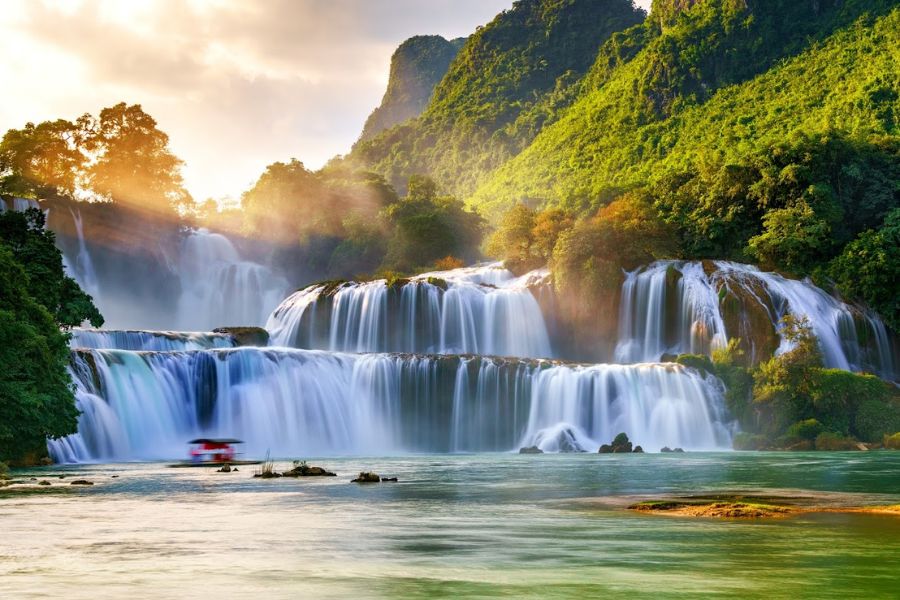
- Visit Ban Gioc Waterfall near the Vietnam-China border.
- Explore Nguom Ngao Cave and surrounding limestone landscapes.
- Discover rural villages and mountain scenery around Cao Bang.
Best for: Nature lovers, photographers, returning visitors, cultural explorers and travellers looking for quieter destinations.
Allow: Two to three nights or longer as part of an extended Northeast journey.
Cao Bang is a compelling destination for travellers willing to venture beyond Northern Vietnam’s more familiar routes. Mountain valleys, rivers, limestone formations and small communities give the area a quieter atmosphere than Hanoi, Sapa or Halong Bay.
Ban Gioc Waterfall is the best-known attraction, with broad cascades flowing through a dramatic border landscape between Vietnam and China. Nearby, Nguom Ngao Cave offers a very different experience beneath the limestone mountains, with chambers containing stalactites and stalagmites.
Cao Bang works particularly well for visitors who have already seen Vietnam’s classic highlights or who want a longer Northeast journey. Accommodation and transport options are more limited in remote areas, making advance planning valuable.
> > > If you are drawn to quieter mountain regions, our Hidden Northeast Vietnam & Halong Bay journey offers another way to explore northern landscapes beyond the familiar tourist routes, alongside an experience on Halong Bay.
Practical Tips for Travelling Through Northern Vietnam
- Allow more time for mountain transfers. Distances in Northern Vietnam can be deceptive. A journey of 100 kilometres through mountain passes may take considerably longer than the same distance on an expressway, especially when roads are winding or weather conditions deteriorate. Build in time for breaks rather than scheduling sightseeing immediately after every long drive.
- Choose your mountain destinations carefully. Sapa, Ha Giang and Mu Cang Chai all offer remarkable scenery, but they are not interchangeable or conveniently connected on every route. If you have limited time, exploring one highland area properly can be more rewarding than spending consecutive days travelling between several distant regions.
- Understand the rice-growing seasons. Terraced fields do not remain green or golden throughout the year. Sapa, Pu Luong and Mu Cang Chai have different planting and harvest patterns, while rainfall and farming decisions affect the appearance of the landscape. If rice terraces are a priority, check conditions for the specific destination rather than relying on a general Vietnam travel calendar.
- Choose accommodation for its location as well as its facilities. A comfortable hotel in Sapa town offers convenience, but a countryside lodge may provide a better connection to the valleys. The same principle applies in Mai Chau and Pu Luong, where the view, access road and distance from walking routes can matter more than a property’s star rating.
- Check the actual difficulty of village walks. A gentle bicycle ride through Mai Chau is different from a full-day trek through Sapa’s hillside villages. Mountain paths can be steep, uneven or muddy after rain, so ask about distance, elevation and surface conditions before booking. A shorter route with time to stop often suits families and less active travellers better.
- Keep some flexibility for mountain weather. Fog, heavy rain and cloud can change the experience at Fansipan, Ma Pi Leng Pass or highland viewpoints. Avoid making an entire day’s success depend on one photograph or panoramic view, and be prepared to adjust activities when visibility or road conditions are poor.
- Consider your vehicle and luggage needs. Transport that works comfortably on main highways may be less suitable for narrow village roads or steep mountain routes. In places such as Sapa and Ha Giang, the appropriate vehicle can depend on group size, road access and accommodation location. Confirm these details in advance rather than assuming one large vehicle can reach every stop.
- Leave room for unplanned moments. Some of the most enjoyable experiences in Northern Vietnam happen between major attractions: a roadside view, a village market, a conversation with a local guide or an extra hour overlooking the fields. An itinerary that leaves no flexibility can make even beautiful destinations feel rushed.
Is a Private Northern Vietnam Tour Worth It?
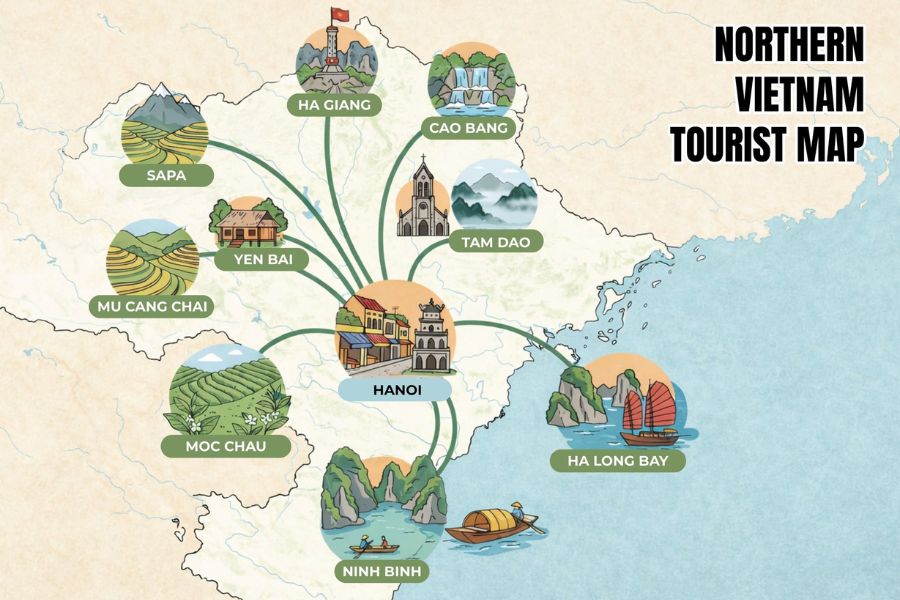
Travelling independently through parts of Northern Vietnam is entirely possible. Hanoi has a wide range of accommodation and transport options, while Ninh Binh and Halong Bay are well connected to the capital through established visitor services.
The situation changes as you travel farther into rural valleys and mountain regions. On routes involving Mai Chau, Pu Luong, Ha Giang or Cao Bang, transport connections can be less straightforward. Travellers may need several vehicles, longer road transfers or additional arrangements to reach accommodation and sightseeing locations.
This is where private Northern Vietnam tours can be particularly useful.
Having a dedicated vehicle and local guide makes it easier to connect destinations without repeatedly returning to Hanoi. It also provides flexibility to adjust walking distances, stop at viewpoints, spend more time in villages or change the day’s programme when the weather affects mountain activities.
For families and multi-generational groups, the advantages can be practical rather than extravagant. Comfortable transfers, well-chosen accommodation and a realistic sightseeing pace often matter more than adding extra attractions.
A private tour is not essential for every visitor. However, for those who want to travel through Northern Vietnam beyond the usual highlights, thoughtful routing and local knowledge can reduce unnecessary travel and allow more time for the experiences that brought them there.
The aim should not be to visit the greatest number of places. It should be to connect the right destinations in a way that makes the journey enjoyable.
> > > Families planning to explore more of the country can also consider The Best of Vietnam for Families: 15-Day Private Tour, combining northern highlights with cultural experiences, family-friendly activities and time to relax elsewhere in Vietnam.
Frequently Asked Questions About Northern Vietnam
- What are the best places to visit in Northern Vietnam?
Hanoi, Ninh Binh and Halong Bay are common choices for first-time visitors, offering a combination of culture, countryside and coastal scenery. Mai Chau and Pu Luong provide gentler rural experiences, while Sapa, Mu Cang Chai, Ha Giang and Cao Bang appeal to travellers seeking mountain landscapes, hiking or more remote destinations. - How many days should I spend in Northern Vietnam?
Seven days can cover Hanoi, Ninh Binh and Halong Bay at a reasonable pace. Around ten days provides more flexibility to include Mai Chau or Pu Luong. If you want to travel into Sapa, Ha Giang or Cao Bang, allow additional time for transfers and exploration rather than trying to include every destination in one short journey. - Is Northern Vietnam suitable for families?
Yes, provided the destinations and activities match the ages and interests of the family. Hanoi, Ninh Binh, Halong Bay and Mai Chau offer a good balance of sightseeing, boating and gentle countryside experiences. Some mountain routes are better suited to families with older children who are comfortable with longer drives and more demanding walks. - Should I visit Sapa or Ha Giang?
Sapa is a practical choice for travellers interested in terraced valleys, ethnic villages, trekking and a wider range of accommodation. Ha Giang is more focused on remote mountain roads, dramatic passes and highland landscapes, with longer driving days. The decision depends on whether walking and village experiences or a multi-day mountain journey are your main priority. - Can I combine Ninh Binh and Halong Bay in one trip?
Yes. Ninh Binh and Halong Bay connect well within a Northern Vietnam journey, and direct road transfers are available between them. Ninh Binh offers river scenery and countryside experiences, while Halong Bay is about exploring limestone islands from the water. They complement one another without offering exactly the same activities. - What is the best way to travel around Northern Vietnam?
The most suitable transport depends on the route. Trains, scheduled buses and road transfers work for many major destinations, while private vehicles offer greater flexibility on rural and mountain routes. For remote areas, consider driving conditions, travel time and the suitability of the vehicle rather than choosing transport based on price alone. - Are private Northern Vietnam tours suitable for first-time visitors?
Yes, particularly if the journey includes several destinations beyond Hanoi. A private tour can combine transport, accommodation, local guides and sightseeing while keeping the programme flexible. For travellers who prefer independence, it is also possible to combine guided days with free time rather than booking an entirely scheduled holiday.
Discover Northern Vietnam Beyond the Familiar Highlights
Northern Vietnam offers far more than a collection of famous viewpoints. Its character lies in the contrast between Hanoi’s lively streets, quiet valleys, working rice terraces, high mountain roads and limestone islands rising from the sea.
The most memorable journeys leave enough time to experience those places properly. That might mean cycling through Mai Chau, spending an extra morning in Pu Luong or watching the changing light over Halong Bay from an overnight cruise.
Choosing where to go is only the beginning. Connecting those destinations comfortably is what turns a collection of places into a rewarding journey.
Ready to explore Northern Vietnam? Contact LuxeTravel Asia to plan a private journey with knowledgeable local guides, comfortable transport and time for the landscapes, communities and experiences you most want to discover.
Tags: north vietnam things to see, northern vietnam itinerary, northern vietnam tours, places to visit in Northern Vietnam, things to do in northern vietnam, tour northern vietnam, tours to north vietnam, travel northern vietnam, vietnam, vietnam north tour