
Taking one of the trains from Hanoi to Sapa is a memorable way to begin a journey into northern Vietnam. Instead of spending most of the day on the road, you can leave Hanoi in the evening, sleep on board and arrive near the mountains the following morning.
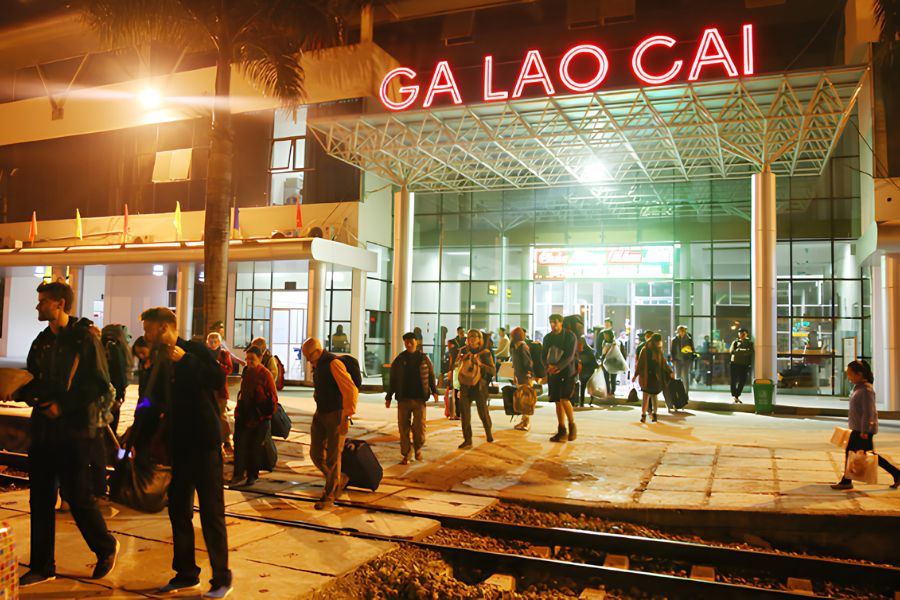
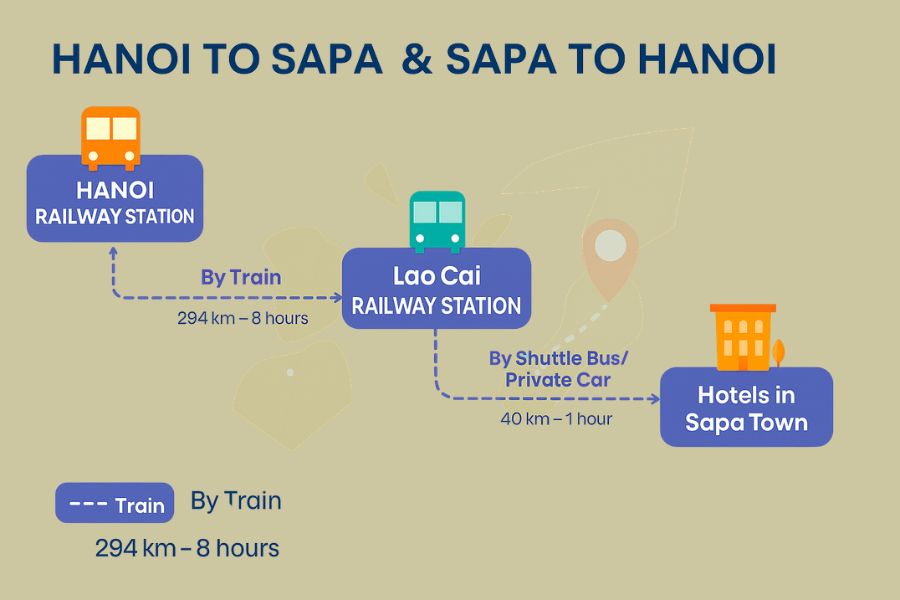
There is one important detail first-time visitors should know: the railway does not actually reach Sapa. Trains travel from Hanoi to Lao Cai Railway Station, around 35 kilometres from Sapa, and the final part of the journey continues by road.
From standard Vietnam Railways sleepers to more refined private tourist carriages, there are several ways to make the overnight trip. This guide explains how the journey works, which sleeper trains you can consider, what the cabins are really like, how to arrange the Lao Cai transfer and whether train, bus or private car is the better choice for your trip.
Hanoi to Sapa by Train: How the Journey Works
Travelling Hanoi to Sapa by train is actually a two-stage journey.
|
Stage |
What happens |
|
Hanoi |
Board an evening sleeper train |
|
Hanoi to Lao Cai |
Travel overnight by rail |
|
Lao Cai Railway Station |
Arrive early the following morning |
|
Lao Cai to Sapa |
Continue approximately 35 km by road |
|
Arrival in Sapa |
Usually early morning, depending on the train and transfer |
Sapa has no railway station. The Hanoi–Lao Cai railway is therefore the rail portion of the journey, followed by a car, minivan or shuttle up into the mountains. Current operator schedules show evening services such as SP3, leaving Hanoi at around 22:00 and arriving in Lao Cai at approximately 05:55, and SP7, leaving at around 22:40 and arriving around 06:25. Train schedules can change, however, so always confirm the exact service on your travel date rather than building an itinerary around a timetable copied months in advance.
Is the train worth taking?
For many travellers, yes, but not because it is the fastest way to reach Sapa.
The main advantage is that most of the rail journey takes place overnight. You can have dinner in Hanoi, board the train later in the evening and arrive in Lao Cai early the next morning without using most of a sightseeing day for transport. It also offers more freedom to lie down than a standard road vehicle and avoids several continuous hours on mountain roads.
There are trade-offs. Trains move and make noise throughout the night, sleeping cabins are compact and the early-morning arrival does not suit everyone. You also need an additional transfer from Lao Cai.
The overnight train therefore works particularly well for travellers who enjoy rail journeys, are comfortable sleeping away from a hotel and would rather preserve their daytime hours for exploring Sapa.
> > > If you are comparing different ways to explore the region, our Grand Northern Vietnam Journey: 10-Day Private Tour follows a different northern route through countryside, mountain scenery, Ninh Binh and Halong Bay, offering an alternative to building the trip primarily around Sapa.
Which Trains from Hanoi to Sapa Can You Choose?
Searching for a Sapa train from Hanoi can initially be confusing because names such as Chapa Express, Sapaly Express and Livitrans appear alongside train numbers such as SP3.
These are not necessarily separate trains travelling on independent railway lines. Many premium tourism brands operate their own sleeper carriages on the Hanoi–Lao Cai railway services. The locomotive, route and overall journey are shared, while the operator provides a particular carriage, cabin design and level of service. Sapa’s official tourism information similarly explains that private operators use upgraded carriages on the same railway route.
Vietnam Railways Sleeper
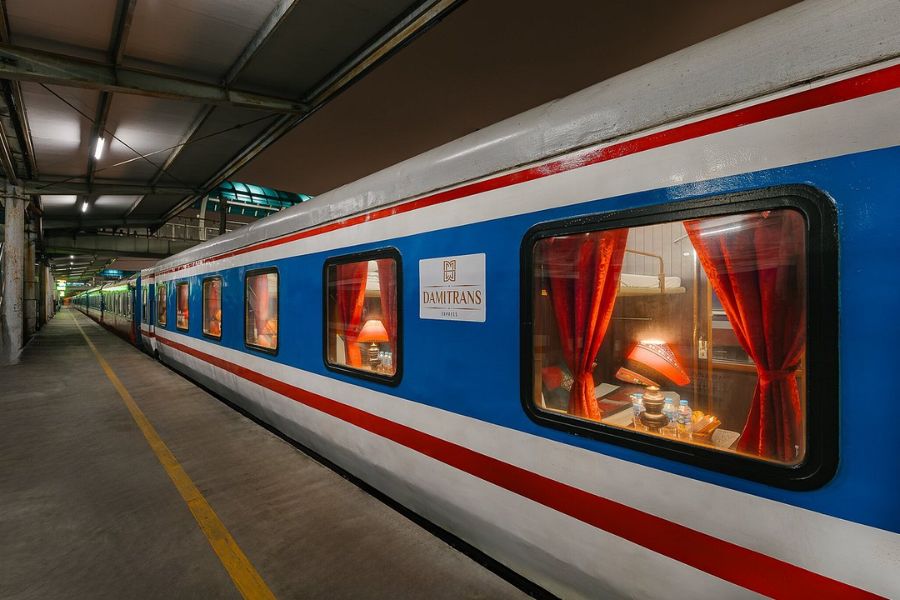
The standard railway option is usually the most straightforward choice for travellers prioritising price rather than additional cabin services.
Typical sleeper configurations include:
- Soft sleeper: four berths in one cabin.
- Hard sleeper: six berths in one cabin.
- Air conditioning.
- Bedding.
- Shared washroom and toilet facilities.
A four-berth soft sleeper is generally the more comfortable standard option for an overnight journey. If you are travelling as a couple, remember that booking two individual berths does not automatically mean you will have the entire cabin to yourselves. If privacy matters, check whether it is possible to reserve a full compartment.
Private and Luxury Sleeper Trains
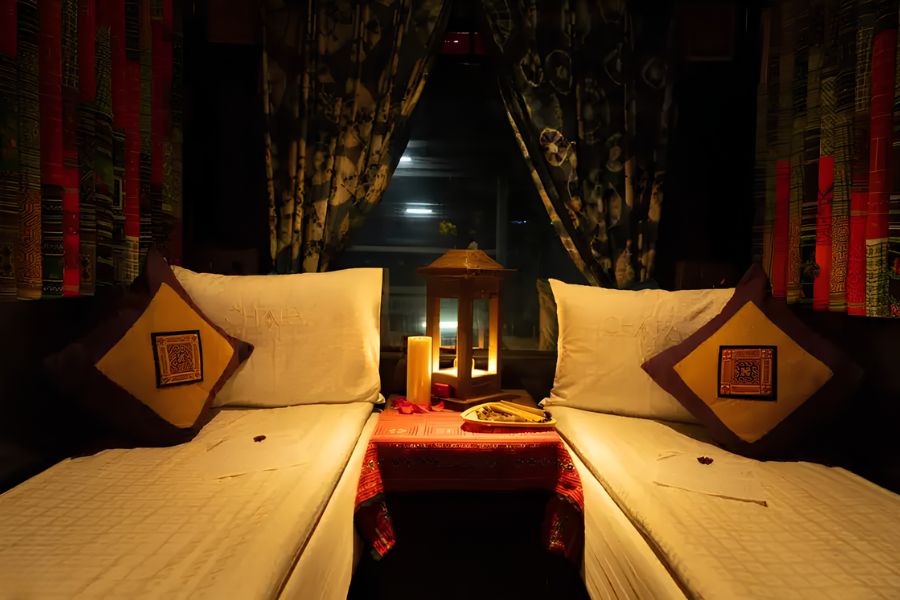
Travellers looking for a luxury train from Hanoi to Sapa will find several upgraded tourist-carriage options. Rather than treating one as universally “the best”, it is more useful to compare the cabin you are actually booking. Here are several names currently associated with the Hanoi–Lao Cai route:
|
Train / carriage |
What to expect |
Suitable for |
|
Several cabin levels including four-berth, twin and premium private options |
Couples, families and comfort-focused travellers |
|
|
Sapaly Express |
Wood-panelled sleeper cabins, typically four berths with some private options |
Couples and small families |
|
Livitrans Express |
Four-berth Deluxe and two-berth VIP options with additional refreshments depending on cabin |
Couples and travellers wanting upgraded comfort |
|
Laman Express |
Four-berth Deluxe and two-berth VIP cabins, with private check-in services |
Couples and private travellers |
|
Fanxipan Express |
Tourist sleeper cabins generally configured for two to four travellers |
Couples and small groups |
Availability can vary by departure date, and not every operator necessarily runs every train every evening. Check the actual operating service before choosing based only on photos or brand names.
Standard Sleeper vs Luxury Train Hanoi to Sapa
|
Feature |
Standard railway sleeper |
Private tourist carriage |
|
Cabin style |
Functional |
More refined décor |
|
Typical arrangement |
Four or six berths |
Often two or four berths |
|
Bedding |
Basic |
Usually upgraded |
|
Privacy |
Shared unless full cabin booked |
More private cabin choices |
|
Amenities |
Limited |
May include drinks, snacks or lounge services |
|
Price |
Lower |
Higher |
|
Best suited to |
Value-focused travellers |
Couples, families and comfort-focused travellers |
These cabins can be noticeably more comfortable and attractive than standard railway sleepers, but this is still an overnight train travelling on conventional railway tracks. It should not be confused with a purpose-built luxury rail journey offering large suites, private bathrooms and hotel-style onboard facilities.
What Is the Overnight Sapa Train Really Like?
A sleeper train can be an enjoyable part of the journey, but setting the right expectations matters.
Cabin Space and Sleeping Berths
Most cabins are compact. A four-berth compartment normally has two lower and two upper sleeping berths. There is space for luggage, but large suitcases can make the cabin feel crowded, particularly when four adults are sharing.
Keep a small overnight bag with you containing:
- Passport and ticket.
- Phone and charger.
- Toothbrush and basic toiletries.
- Medication.
- Water.
- Earplugs.
- Eye mask.
- A light layer for the air conditioning.
That way you do not need to open and reorganise a large suitcase after everyone has settled into bed.
Private two-berth cabins offer noticeably more privacy for couples, while families of four may find that reserving an entire four-berth cabin gives a good balance between comfort and practicality.
How Comfortable Are the Beds?
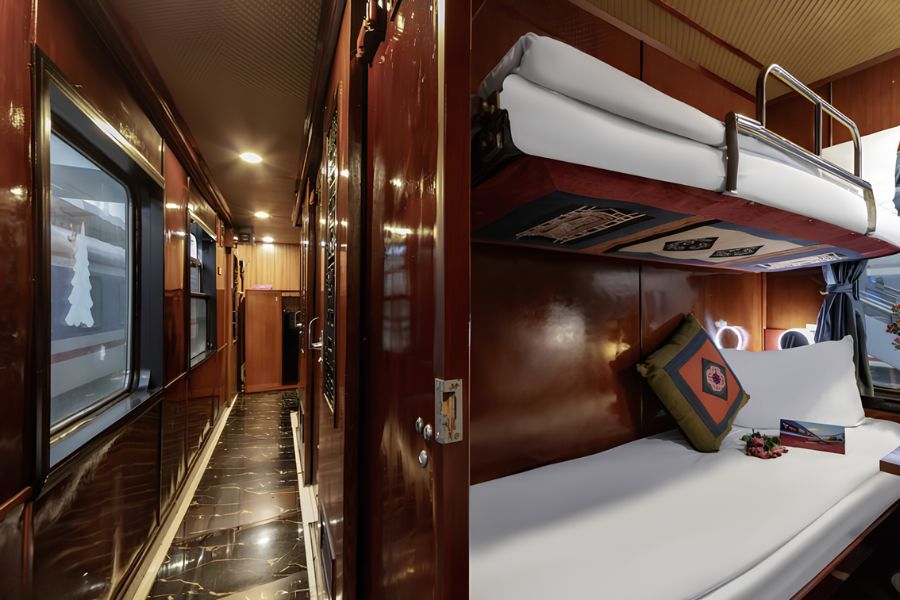
A soft sleeper gives you a horizontal bed rather than a reclining seat, which is one of the main reasons travellers choose the train. However, it is still a railway berth rather than a hotel bed. Some people sleep extremely well once the train is moving. Others notice the sound of the wheels, stops along the route and the movement of the carriage.
Upgraded operators generally provide better bedding and additional cabin touches. Chapa, for example, currently lists higher-grade bedding and various amenities across its cabin classes, while Livitrans includes refreshments in some Deluxe and VIP categories. An eye mask and earplugs are worth carrying even when using a premium cabin.
Toilets and Washing Facilities
Expect shared toilet and washing facilities at carriage level rather than private bathrooms in most sleeper cabins. Facilities vary between carriages and operators, so this is an area where you should check the particular product rather than assuming every “VIP” cabin has the same facilities. If a private bathroom is essential to your comfort, the Hanoi–Lao Cai overnight train may not be the right choice.
Electricity, Wi-Fi and Air Conditioning
Most tourist carriages have access to electricity, but the number and location of sockets can vary. Premium operators may also advertise Wi-Fi, although internet performance on a moving train should never be relied on for important work or calls. Download entertainment, maps and essential documents before boarding.
Air conditioning can also feel surprisingly cool during the night, so carrying a light jumper or cardigan is sensible even if Hanoi was warm when you departed.
Is the Sapa Train Good for Families?
It can be. Children often enjoy the novelty of sleeping on a train, and reserving an entire four-berth cabin can create a private family space. For families, I would pay attention to three details. First, younger children may be more comfortable on lower berths. Second, the train reaches Lao Cai very early, so everyone may still be tired when they disembark. Third, your Sapa hotel room may not be available for immediate check-in.
A comfortable plan is often to arrange your Lao Cai transfer in advance, reach Sapa, have breakfast and keep the first morning relatively gentle rather than beginning a long trek immediately.
> > > Families planning a longer holiday can also explore The Best of Vietnam for Families: 15-Day Private Tour, which balances sightseeing and local experiences with a pace designed to work more comfortably for parents and children.
Booking Your Sapa Train and Boarding in Hanoi
Booking Standard Railway Tickets
Standard sleeper berths can be purchased through Vietnam Railways ticketing channels. The railway’s timetable system allows passengers to check Hanoi–Lao Cai services by travel date.
When booking, check:
- Exact travel date.
- Train number.
- Berth class.
- Upper or lower berths where selectable.
- Departure station.
- Passenger details.
- Cancellation and amendment conditions.
During busy Vietnamese public holidays and peak travel periods, the better sleeper options can sell out, so waiting until the evening of departure is not always wise.
Booking a Private Tourist Carriage
If you prefer Chapa, Sapaly, Livitrans, Laman or another tourist sleeper, book according to the operator’s current instructions or through a reputable travel company. Pay close attention to what the price actually represents.
Is it:
- one berth in a four-berth cabin;
- the entire four-berth cabin;
- a private twin cabin;
- or a private double cabin?
This distinction can change the price substantially. A description such as “Deluxe cabin” does not necessarily mean the cabin is private unless that is specifically stated.
Booking Through a Tour Company
For travellers incorporating Sapa into a longer Vietnam journey, it can be easier to arrange the train, Lao Cai transfer, accommodation and Sapa programme together. The benefit is not simply convenience. It prevents a common logistical gap where the traveller has booked a comfortable sleeper cabin but arrives in Lao Cai at 06:00 with no confirmed transport into Sapa.
Before Boarding in Hanoi
Do not assume every tourist carriage uses exactly the same check-in location. For example, Chapa currently lists its Hanoi office at Hanoi Railway Station, 120 Le Duan, while other operators may provide different meeting or voucher-exchange instructions. I would arrive approximately 45–60 minutes before departure, particularly when using a tourist carriage for the first time.
Check your operator’s instructions before leaving the hotel. Also consider eating dinner in Hanoi rather than depending on the train for a full meal. Some premium cabins provide snacks and drinks, but these should be considered refreshments rather than a replacement for dinner.
> > > Sapa is not the only option for travellers interested in Vietnam’s northern mountains. Our Hidden Northeast Vietnam & Halong Bay journey explores a quieter side of the region, combining remote landscapes and local communities with time on Halong Bay.
Lao Cai Station to Sapa: What Happens After the Train?
This is the part of the journey first-time visitors most frequently overlook. The Sapa train finishes at Lao Cai Railway Station. From there, Sapa town is roughly 35 kilometres away by mountain road.
Current Sapa tourism guidance estimates the transfer at around 60–90 minutes depending on traffic, weather and transport, while other travel sources commonly place it around an hour in normal conditions.
Transfer Options from Lao Cai to Sapa
|
Transfer |
Best suited to |
|
Private car |
Couples, families, older travellers and private tours |
|
Pre-booked minivan |
Solo travellers and small groups |
|
Shared shuttle |
Budget-conscious independent travellers |
For a private journey, I prefer arranging the vehicle before leaving Hanoi.
When you step off the train early in the morning, it is much easier to have a driver waiting than to begin comparing transport options while carrying luggage and feeling half awake. The road climbs gradually from Lao Cai into the Hoang Lien Mountains. Weather can affect journey time, particularly during periods of heavy rain or dense mountain fog.
What About Early Hotel Check-In?
This is another detail worth planning.
Arriving in Sapa at 07:00 does not mean your hotel room will automatically be ready at 07:00. Standard check-in may not be until the afternoon unless early access has been specifically arranged and confirmed. If early check-in is unavailable, a sensible programme might include breakfast, leaving luggage at the hotel and beginning with a relaxed town visit or a shorter sightseeing programme. Avoid assuming you will step off the night train and immediately begin a strenuous full-day trek.
Train vs Bus vs Private Car: Which Is Better?
When travellers ask how to get from Hanoi to Sapa, there is no single correct answer. The overnight train is only one of several practical options.
|
Transport |
Typical journey style |
Main advantage |
Main consideration |
|
Overnight train + Lao Cai transfer |
Rail overnight, then road |
Preserves daytime hours and allows a flat sleeping berth |
Requires transfer in Lao Cai |
|
Bus / limousine |
Direct road journey |
Goes directly to Sapa |
Several continuous hours on the road |
|
Private car |
Door-to-door road transfer |
Maximum flexibility and privacy |
Usually higher cost |
Buses and shuttle vans from Hanoi generally take around five to six hours, while overnight trains travel via Lao Cai and require the additional mountain transfer.
Choose the Train If…
The train makes sense if you:
- Enjoy rail travel.
- Prefer sleeping horizontally rather than sitting for a long road transfer.
- Want to leave Hanoi in the evening and preserve the following day.
- Are comfortable with an early arrival.
- Do not mind transferring vehicles in Lao Cai.
For couples, the journey can also be an enjoyable experience in itself when a private two-berth cabin is available.
Choose a Private Car If…
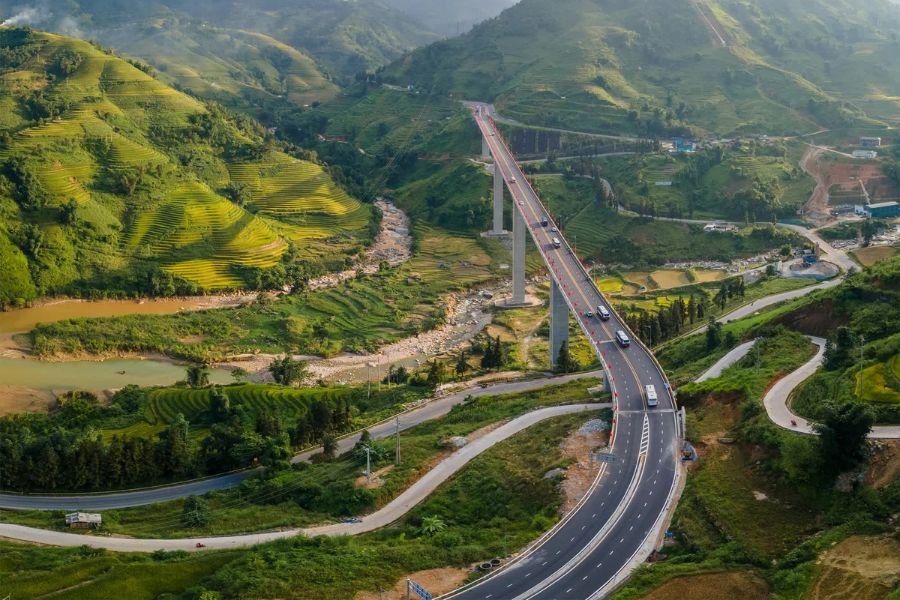
A private car may be a better option if you:
- Are travelling with younger children or older family members.
- Have substantial luggage.
- Prefer door-to-door transport.
- Want control over departure time.
- Would like rest stops along the route.
- Know that you sleep poorly on trains.
Private transport can also be useful when Sapa is one part of a more complex northern journey rather than a simple Hanoi–Sapa return trip.
Choose a Bus or Limousine If…
A direct bus or limousine appeals to travellers who value simplicity and shorter total journey time. You avoid the Lao Cai transfer because the vehicle reaches Sapa itself. Some travellers prefer a daytime limousine so they can arrive in the afternoon and check directly into the hotel rather than dealing with an early morning arrival.
Do You Need to Use the Same Transport Both Ways?
No. One useful approach is to take the overnight train from Hanoi to Lao Cai for the experience, then return from Sapa to Hanoi by private car or limousine. Alternatively, travellers arriving in Sapa after several days of road travel elsewhere in northern Vietnam may prefer to take the sleeper train back to Hanoi. Your transport should support the itinerary rather than forcing the itinerary to fit a particular mode of transport.
Arriving in Sapa: Things to Do and Where the Train Fits into a Northern Journey
The train is only the beginning. Once you reach Sapa, the experience shifts quickly from Hanoi’s urban energy to highland valleys, villages and mountain scenery.
Things to Do in Sapa
Some of the most rewarding things to do in Sapa include exploring the countryside rather than spending the entire stay around the town centre.
- Muong Hoa Valley is one of the area’s defining landscapes, with terraced fields and villages extending along the valley floor.
- Lao Chai and Ta Van are frequently included in village walks, providing opportunities to see agricultural landscapes and learn more about local communities.
- Fansipan offers a completely different experience. The cable car makes the high mountain accessible without a multi-day trek, although weather and cloud can strongly affect the views.
- Cat Cat Village is conveniently located near Sapa and easy to visit, although it has a more developed tourism environment than some of the villages farther into the valley.
Travellers who have more time can also explore areas associated with Red Dao and Hmong communities, with the route chosen according to walking ability and personal interests.
Once you have reached the mountains, our guide to the best things to do in Sapa explores Muong Hoa Valley, local villages, Fansipan and practical ideas for making the most of your time in the region.
How the Train Fits into Northern Vietnam Tours
A sleeper train works particularly well when Sapa forms part of a wider northern journey. For example:
Hanoi → overnight train → Sapa → Hanoi → Ninh Binh → Halong Bay
This uses the night journey to reduce the amount of sightseeing time lost between Hanoi and the mountains.
Some Northern Vietnam tours also combine Sapa with other mountain destinations. In those cases, however, returning to Hanoi before travelling north again may create unnecessary backtracking. A private vehicle can sometimes connect regional destinations more efficiently.
> > > Travellers who want to continue beyond Sapa can also consider our Ha Giang & Sapa – Northern Vietnam Adventure, combining village and mountain experiences around Sapa with the dramatic passes and highland landscapes of Ha Giang.
Practical Tips for Taking the Train from Hanoi to Sapa

- Book your preferred sleeper early. Private two-berth cabins and lower berths are limited. Weekends, public holidays and busy travel seasons can reduce availability quickly, so book once your travel dates are confirmed rather than relying on a last-minute purchase.
- Check whether you are booking a berth or the whole cabin. A surprisingly low advertised price may represent one bed in a shared four-berth compartment. Couples wanting privacy should specifically confirm that the reservation covers the entire cabin.
- Remember that your train ticket ends in Lao Cai. Unless a transfer is explicitly included, you will still need transport to Sapa after arriving. Confirm the vehicle, meeting point and driver’s contact details in advance.
- Pack a small overnight bag. Keep toiletries, medication, charger, passport and a light layer somewhere easy to reach. Opening a large suitcase in a full sleeper cabin late at night is inconvenient for everyone.
- Bring earplugs and an eye mask. Premium bedding cannot remove the sound and movement of the railway. These small items can make a substantial difference if you are a light sleeper.
- Have dinner before boarding. Some tourist carriages provide snacks, drinks or light refreshments, but selection varies by operator. Enjoy dinner in Hanoi and treat whatever is provided on board as an extra.
- Prepare for a cool cabin. Air conditioning may feel cold during the night even when Hanoi and Sapa are warm during the day. A light jumper or cardigan is useful.
- Do not over-plan your first morning. If you normally sleep poorly while travelling, schedule breakfast and a gentle activity before committing to a demanding trek. The goal is to arrive ready to enjoy Sapa, not simply to squeeze an extra half-day into the programme.
Weather in Sapa can be very different from Hanoi and other parts of the country, so if the mountains are part of a longer trip, our Best Time to Visit Vietnam guide explains how conditions change between northern, central and southern Vietnam throughout the year.
Frequently Asked Questions About Trains from Hanoi to Sapa
- Is there a direct train from Hanoi to Sapa?
No. There is no railway station in Sapa. Trains travel from Hanoi to Lao Cai Railway Station, after which you continue approximately 35 kilometres by road to Sapa. - How long does the train from Hanoi to Sapa take?
The rail journey from Hanoi to Lao Cai generally takes around eight hours on the main overnight services. You then need approximately another hour, sometimes longer depending on weather and traffic, for the road transfer from Lao Cai to Sapa. - Which Sapa train from Hanoi should I choose?
For value, a standard four-berth soft sleeper is a practical option. Travellers wanting greater privacy and upgraded bedding can consider tourist carriages such as Chapa Express, Sapaly Express, Livitrans, Laman or Fanxipan. Compare the actual cabin type rather than choosing purely by operator name. - Is there a luxury train from Hanoi to Sapa?
There are premium tourist sleeper carriages offering private cabins, upgraded bedding and additional services. However, these run on conventional railway services to Lao Cai. Think of them as upgraded overnight sleeper cabins rather than a standalone luxury rail cruise. - How much does a Hanoi to Sapa sleeper train cost?
Prices vary considerably according to operator, berth type and whether you are purchasing one bed or a whole private cabin. Because fares and cabin availability change, check the current price for your travel date rather than relying on an old fixed fare table. - How do I get from Lao Cai Railway Station to Sapa?
You can use a private vehicle, pre-booked minivan or shared shuttle. For couples and families, a pre-arranged private transfer is particularly convenient after an overnight journey. - Is the train better than the bus from Hanoi to Sapa?
It depends on your priorities. The bus is generally faster and goes directly to Sapa. The train allows you to sleep in a proper berth and avoids several continuous hours on the road, but it takes longer overall and requires a transfer at Lao Cai. - Should I take the train both ways?
Not necessarily. Taking the sleeper train in one direction and travelling by private car or limousine in the other can provide both the rail experience and a more direct road journey. The best combination depends on what comes before and after Sapa in your itinerary.
Is the Hanoi to Sapa Train Right for Your Trip?
Taking the overnight train to Sapa is not the quickest way into Vietnam’s northern mountains, but speed is not always the point.
For travellers comfortable with sleeper cabins, it offers a practical way to leave Hanoi after dinner, spend the night travelling north and wake close to the highlands the following morning. A private tourist carriage can add comfort and privacy, while standard sleepers keep the journey relatively simple.
The most important thing is to plan the whole journey, not just the rail ticket. Choose the right cabin, confirm where you board, arrange your Lao Cai transfer and leave enough flexibility for the morning after arrival.
Planning Sapa as part of a private Northern Vietnam journey? Contact LuxeTravel Asia to arrange your sleeper train, Lao Cai transfer, accommodation and local experiences as one connected trip.
Tags: hanoi to sapa by train, how to get from hanoi to sapa, luxury train hanoi to sapa, northern vietnam tours, sapa, sapa train, sapa train from hanoi, Things to do in Sapa, Trains from Hanoi to Sapa