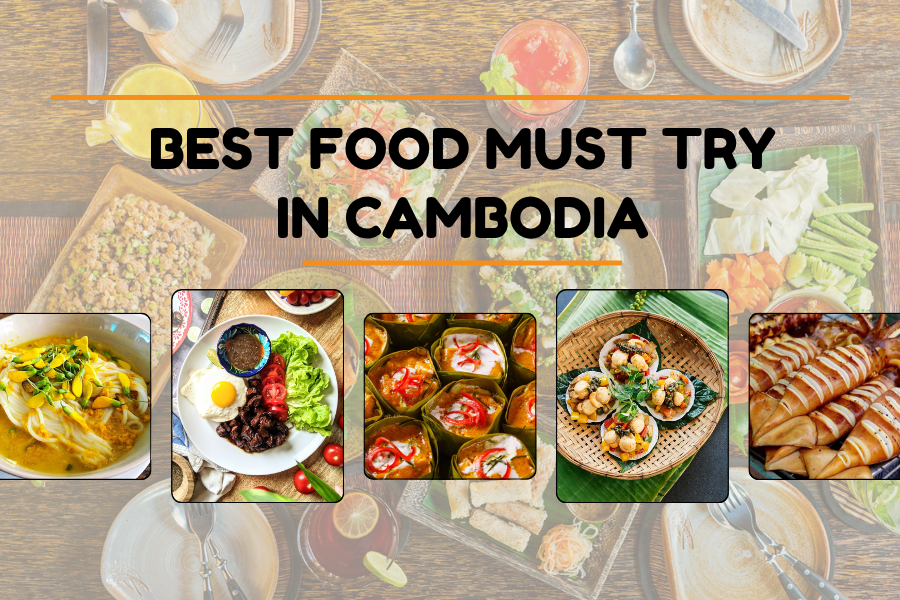
Discovering the famous food in Cambodia is an enticing culinary revelation that unveils one of Southeast Asia’s oldest, most nuanced, yet frequently overlooked gastronomic traditions. While neighboring Thailand is celebrated for fiery chilies and Vietnam for delicate herb-strewn broths, authentic Cambodian food charts its own distinctive course. Rooted in ancient water ecosystems, freshwater fisheries, and fragrant spice pastes, khmer food balances rich coconut creams with zesty forest aromatics, sour fermented fruits, and deep, earthy seasoning bases.
For international travelers curating a multi-country Vietnam and Cambodia trip, gastronomy serves as the ultimate bridge between cultures. Transitioning from the crisp herbs and charred meats of Hanoi to the creamy curries, steamed lake fish, and peppery stir-fries of Siem Reap creates a multi-layered sensory adventure.
Whether you are exploring the temple plains or planning comprehensive Vietnam and Cambodia tour packages, here is your complete guide to the most celebrated dishes of Cambodian cuisine, including where to find them and insider dining strategies.
The Holy Trinity of Cambodian Cuisine: Kroeung, Prahok & Palm Sugar

To appreciate traditional cuisine in Cambodia, one must first understand the three foundational flavor pillars that define nearly every soup, stew, and stir-fry across the country:
- Kroeung (Aromatic Herb Paste): The bedrock of Khmer cooking. This fragrant paste is pounded by hand in stone mortars, blending fresh lemongrass stalks, fresh turmeric root, galangal, kaffir lime leaves, shallots, and garlic. It yields three distinct variations, yellow, green, and red, each lending deep color and citrusy warmth to curries.
- Prahok (Fermented Fish Paste): Known as the “cheese of Cambodia,” this fermented, salted mud-fish paste traces its lineage to the ancient Khmer Empire. Sourced primarily from the bountiful freshwater yields of Tonle Sap Lake, a discreet teaspoon of prahok introduces an irreplaceable savory depth (umami) to broths, dips, and braises.
- Kampong Speu Palm Sugar: Sourced from the sap of native palmyra sugar palms, this unrefined sweetener possesses a delicate floral note and buttery caramel finish, far gentler than refined cane sugar. It harmonizes the pungent, sour elements in traditional dressings and stews.
Understanding the nuances of Khmer spices, dining customs, and market etiquette is just the beginning of exploring this deeply soulful kingdom. For a complete orientation on regional highlights, airport VIP arrivals, currency nuances, and local traditions, explore our comprehensive Cambodia Travel Guide before you begin your feast.
Top 14 Must-Try Traditional Food in Cambodia
Fish Amok (Amok Trey)
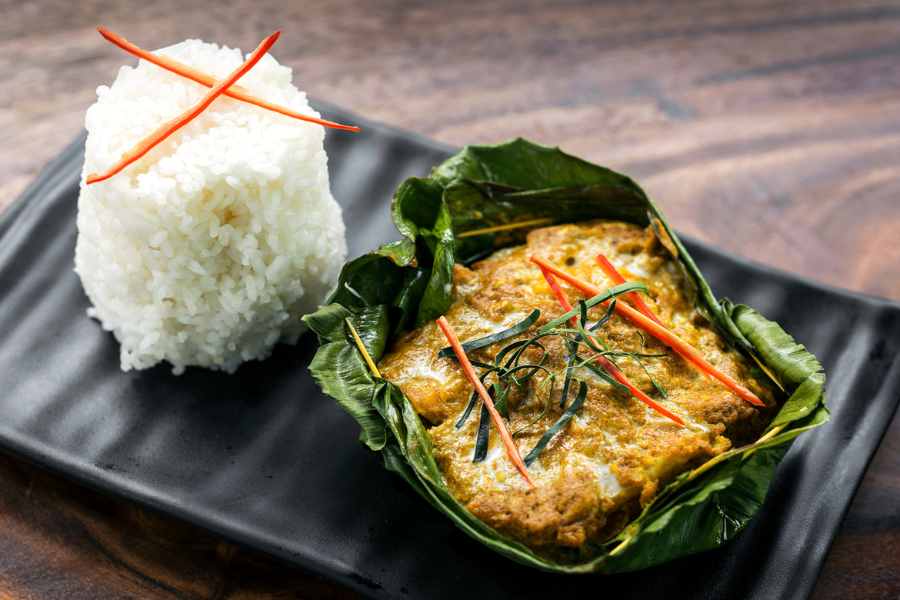
Considered the crowning jewel of Khmer royal heritage, Fish Amok is a fragrant, steamed curry custard. Fresh freshwater snakehead fish or catfish from Tonle Sap Lake is diced and folded into an aromatic blend of yellow kroeung, thick coconut cream, egg, and shredded slok ngor leaves (a bitter local herb that balances the sweetness of the coconut). The mixture is placed inside a folded banana leaf cup and gently steamed until it achieves a silky, mousse-like consistency.
Where to Eat:
- Malis Restaurant (Phnom Penh & Siem Reap): Elegant fine-dining venue where Master Chef Luu Meng serves elevated, traditional Khmer recipes.
- The Sugar Palm (Siem Reap): Renowned for serving home-style Fish Amok steamed to order inside whole coconuts or woven banana leaves.
Dipping a spoon into a steaming banana-leaf basket of Fish Amok, what catches you off guard is the velvety lightness of the texture. The fresh fish flakes effortlessly into the coconut cream, leaving a clean, floral whisper of turmeric and kaffir lime on the palate that pairs naturally with hot jasmine rice.
Beef Lok Lak (Lok Lak Sach Ko)

A French-Indochinese culinary classic that has become an everyday popular Cambodian dish. Tender beef tenderloin is cut into cubes and flash-seared in a hot cast-iron wok with oyster sauce, soy sauce, garlic, and palm sugar to lock in its juices. The glistening meat is ladled over crisp lettuce, sliced cucumbers, and ripe tomatoes, topped with a runny fried egg and accompanied by its signature dipping sauce: coarse ground black Kampot pepper mixed with fresh lime juice and sea salt.
Where to Eat:
- Romdeng (Phnom Penh): A historic French-colonial villa restaurant run by an NGO training former street youth in high-end culinary arts.
- Chanrey Tree (Siem Reap): Refined riverside garden setting specializing in countryside Khmer cuisine.
The true alchemy of Lok Lak is unlocked in the dipping bowl. Dipping a piece of caramelized beef into the sharp, peppery lime-and-salt mixture creates an immediate explosion of bright, savory heat that cuts straight through the richness of the wok-tossed meat.
Kampot Pepper Crab (Kdam Chaa)

A signature coastal specialty hailing from the seaside province of Kep. Freshly harvested blue swimmer crabs are tossed into a blazing wok alongside garlic, scallions, sweet soy, and generous whole green branches of immature Kampot peppercorns. Rather than drying the peppercorns into black spice, cooking them fresh releases delicate floral oils and a mellow, popping heat that coats the sweet crab meat.
Where to Eat:
- Kimly Seafood Restaurant (Kep Crab Market): Wooden overwater stilt restaurant where you can watch fishermen haul live crab traps directly from the sea.
- Mahob Khmer Cuisine (Siem Reap): Upscale wooden house setting serving soft-shell crab with green Kampot pepper sauce.
Sitting at a rustic wooden table over the water in Kep at sunset, hearing the surf lap against the wooden pilings while cracking open sweet, warm crab claws coated in spicy green pepper berries is the ultimate coastal dining experience.
> > > If your travel schedule is focused on a quick cultural and culinary getaway to the Kingdom of Wonder, our private 5 Days Cambodia Discovery offers the ideal balance: combining sunrise excursions through ancient stone temples with evening tastings of heritage Khmer specialties and tranquil sunset boat cruises across Tonle Sap Lake.
Nom Banh Chok (Khmer Noodles)
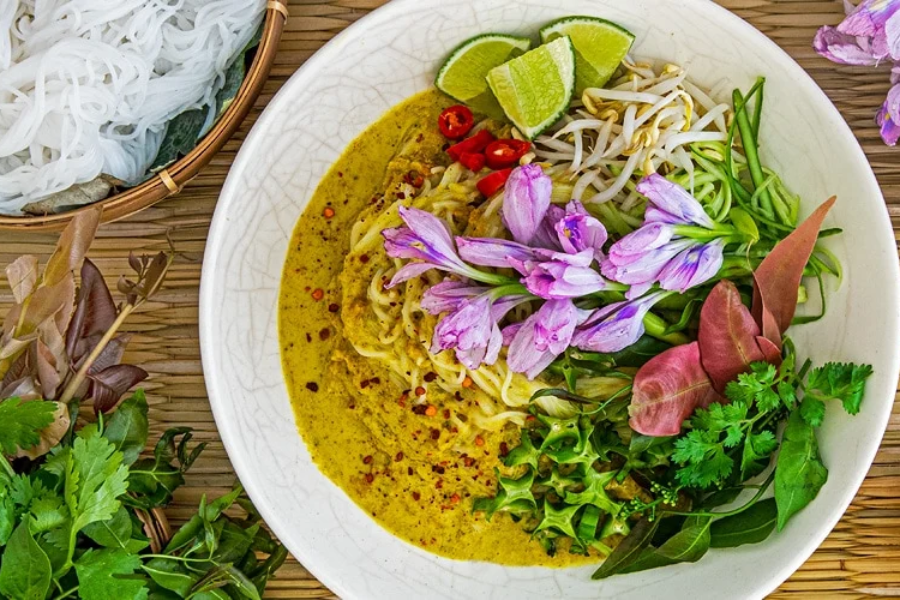
The beloved national breakfast of Cambodia, affectionately known simply as “Khmer Noodles.” Artisanal fermented rice vermicelli noodles are pressed by hand and bathed in a light, fragrant green fish curry broth simmered with lemongrass, wild ginger (fingerroot), kaffir lime, turmeric, and light coconut milk. The bowl is garnished with edible fresh water lilies, shredded banana blossom, sliced cucumber, and wild mint.
Where to Eat:
- Preah Dak Village Noodle Stalls (Siem Reap): Traditional artisanal noodle-making village situated along the road to Banteay Srei temple.
- The Lotus Pond (Siem Reap): Tranquil open-air dining pavilion offering heirloom morning noodle recipes.
Stopping in Preah Dak village around 7:00 AM as morning mist clings to the palm thatch roofs, a bowl of Nom Banh Chok feels gentle and restorative. The earthy wild ginger warms the broth, while the raw shaved banana blossoms add a cooling crunch to the silky, fresh noodles.
Bai Sach Chrouk (Pork and Broken Rice)

The comforting wake-up call found on street corners throughout the kingdom. Thin slices of tender pork shoulder or belly are marinated overnight in coconut milk, crushed garlic, dark soy sauce, palm sugar, and cracked black pepper. In the early morning, vendors grill the skewers over glowing coconut-husk charcoal until caramelized and smoky. The meat is sliced over warm broken rice, served alongside pickled daikon, cucumbers, and a small bowl of clear scallion broth.
Where to Eat:
- Pork and Rice Man (Corner of Street 19 & Norodom Blvd, Phnom Penh): Legendary morning street-cart vendor serving rapid-fire breakfast plates from 6:00 AM.
- Toul Tom Poung Market (Russian Market food court, Phnom Penh): Bustling market stalls grilling fresh skewers over open charcoal braziers.
Walking the sidewalks of Phnom Penh at dawn, the sweet, smoky aroma of charred pork fat and caramelized palm sugar drifting from curbside grills is impossible to resist. It is a humble, inexpensive plate that delivers deep satisfaction.
Samlor Korkor (Traditional Stirring Pot Stew)

While Fish Amok is famous among visitors, Cambodians widely consider Samlor Korkor to be their true national soul food. Dating back hundreds of years to the Angkorian era, this hearty stew derives its body from toasted pounded rice (khao khouy) and yellow kroeung simmered with prahok, seasonal vegetables (green papaya, green banana, bitter gourd, morning glory), and freshwater fish or pork belly.
Where to Eat:
- Kravanh Restaurant (Phnom Penh): Heritage restaurant celebrated for authentic, home-cooked regional Khmer dishes.
- The Sugar Palm (Siem Reap): Excellent spot to sample unadulterated, time-honored country broths.
Samlor Korkor feels like home cooking at its most comforting. The broth has a rich, murky texture thickened by roasted rice, balancing the fermented depth of prahok with the natural sweetness of stewed green bananas and pumpkin.
Khmer Red Curry (Samlor Kari Sach Moan)
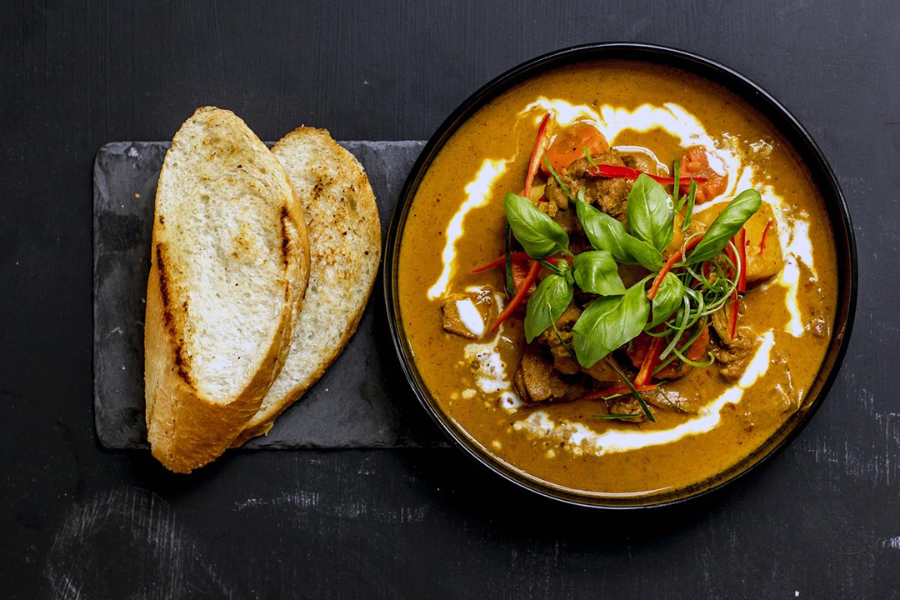
Unlike the fiery curries of neighboring Thailand, Khmer Red Curry is gentle, aromatic, and comforting. Tender chicken, beef, or duck is slow-simmered in coconut cream infused with red kroeung, dried red chilies, star anise, sweet potatoes, baby eggplants, and green beans. The curry is mild enough for all palates and is served on festive occasions alongside crisp French baguettes or rice vermicelli.
Where to Eat:
- Haven Restaurant (Siem Reap): Celebrated social-enterprise training restaurant set within a lush tropical garden.
- Romdeng (Phnom Penh): Renowned for rich chicken and beef curry served with artisan dipping breads.
Dipping a warm, crusty piece of French baguette into a bowl of velvety red curry reveals a smooth sweetness from the braised sweet potatoes and coconut milk, followed by the soft perfume of star anise and lemongrass.
Lap Khmer (Lime-Marinated Khmer Beef Salad)
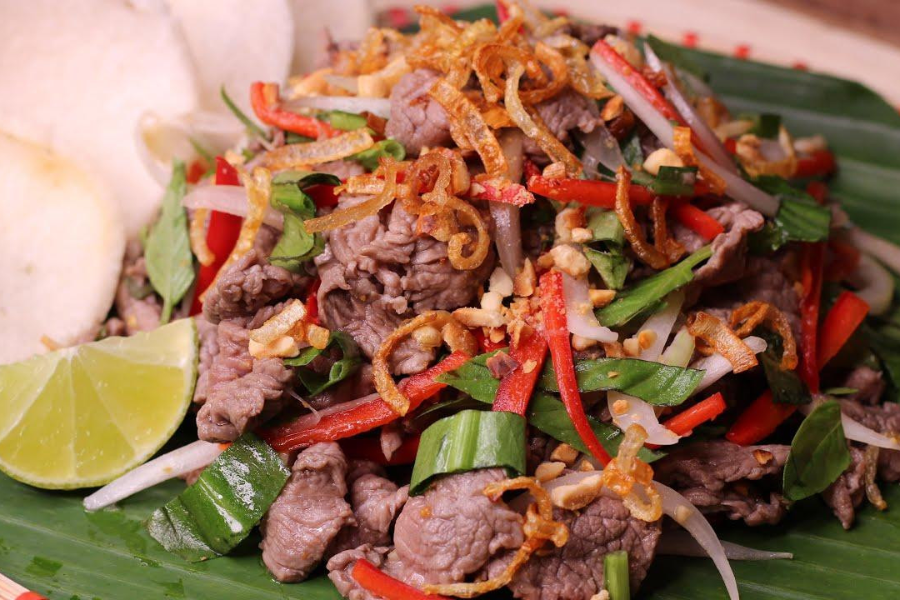
A vibrant raw beef salad packed with citrus and herbal brightness. Shaved beef tenderloin is thinly sliced and flash-cured in fresh lime juice, creating a texture similar to South American ceviche. The beef is tossed with slivered lemongrass, shallots, fiery bird’s eye chilies, raw long beans, fresh mint, culantro, and a sprinkle of toasted ground rice, seasoned with sweet fish sauce.
Where to Eat:
- ST 63 Bassak Restaurant (Phnom Penh): Bustling open-air dining spot popular among locals for savory small plates and cold drinks.
- The King’s Cuisine (Siem Reap): Traditional dining room serving well-balanced cold meat and herb salads.
On a sweltering afternoon, Lap Khmer provides an instant reset. The lime juice provides an invigorating tang against the tender beef, while raw long beans and fresh mint deliver a clean crunch that cools down the kick of the bird’s eye chilies.
Kuy Teav (Fragrant Noodle Broth)

A popular morning staple reflecting Chinese-Khmer culinary traditions. The soul of Kuy Teav is its crystal-clear pork and dried squid broth, gently simmered for over twelve hours with charred onions and aromatic radishes. Rice noodles are blanched and topped with sliced pork loin, minced pork, fish cakes, crispy golden garlic oil, scallions, and fresh cilantro, served with lime wedges and sweet chili paste on the side.
Where to Eat:
- Kuy Teav Orussey (Near Orussey Market, Phnom Penh): Bustling street-side noodle institution famed for its rich, clear broth.
- Phsar Chas Morning Food Stalls (Old Market, Siem Reap): Great early morning stop for market-style breakfasts before exploring temples.
Sitting at a stainless-steel table inside Orussey Market as vendors set up their stalls, sipping this piping-hot broth reveals pure culinary craftsmanship. The roasted garlic oil floats across the sweet pork soup, making it a warming start to the day.
Num Pang Pâté (Khmer Baguette Sandwich)

Cambodia’s beloved take on the French baguette sandwich, sharing common heritage with Vietnamese banh mi. The baguette is toasted until its crust crackles, then generously smeared with rich pork liver pâté, whipped butter, seasoned chili sauce, and layered with sliced ham, pork belly, fresh cucumber, cilantro, and tangy pickled green papaya slaw.
Where to Eat:
- Num Pang Pâté Kandal (Near Kandal Market, Phnom Penh): Iconic food stand renowned for rich house-made liver pâté and warm bread.
- Pub Street Daytime Baguette Carts (Siem Reap): Street food carts serving freshly toasted sandwiches during afternoon hours.
The balance between the rich, creamy pork pâté and the crunchy, sweet-and-sour pickled papaya makes Num Pang an exceptional midday street snack while exploring colonial avenues.
Samlor Machu Trey (Sweet & Sour Tamarind Fish Soup)
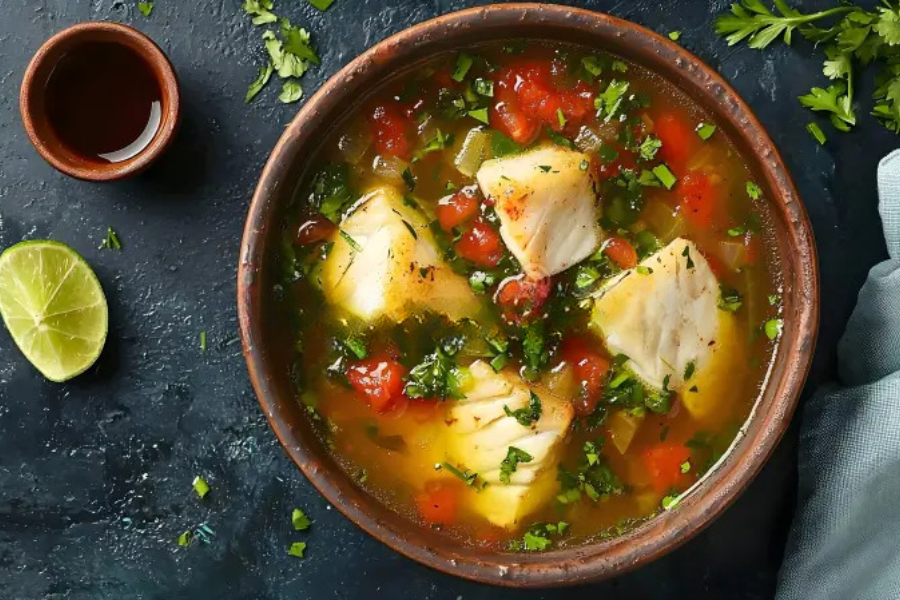
A staple sour soup found in homes across Cambodia. Fresh fillets of freshwater lake fish are simmered in a clear broth soured naturally with ripe tamarind pulp, accompanied by juicy pineapple chunks, tomatoes, crisp morning glory, and elephant ear stalks. The soup is topped with fried garlic, fresh sawtooth coriander, and fragrant holy basil.
Where to Eat:
- Viroth’s Restaurant (Siem Reap): Elegant mid-century Indochine-style dining room serving authentic home-style Khmer cooking.
- Sovanna 1 Restaurant (Phnom Penh): Long-running evening restaurant renowned for its charcoal grills and sour broths.
The sour profile of Samlor Machu Trey is gentle and rounded thanks to the ripe tamarind, avoiding the sharp vinegar bite of Western soups. Spooned over jasmine rice with fresh fish, it is light, restorative, and cooling.
> > > Savoring authentic street food without digestive worries or securing reservations at boutique heritage restaurants requires an insider’s touch. Discover how dedicated local foodie-guides, private chauffeured vehicles, and seamless border logistics elevate your adventure in our guide on Vietnam and Cambodia Tours: Why Private Travel Makes All Difference.
Nom Krok (Crispy Coconut-Rice Pancakes)
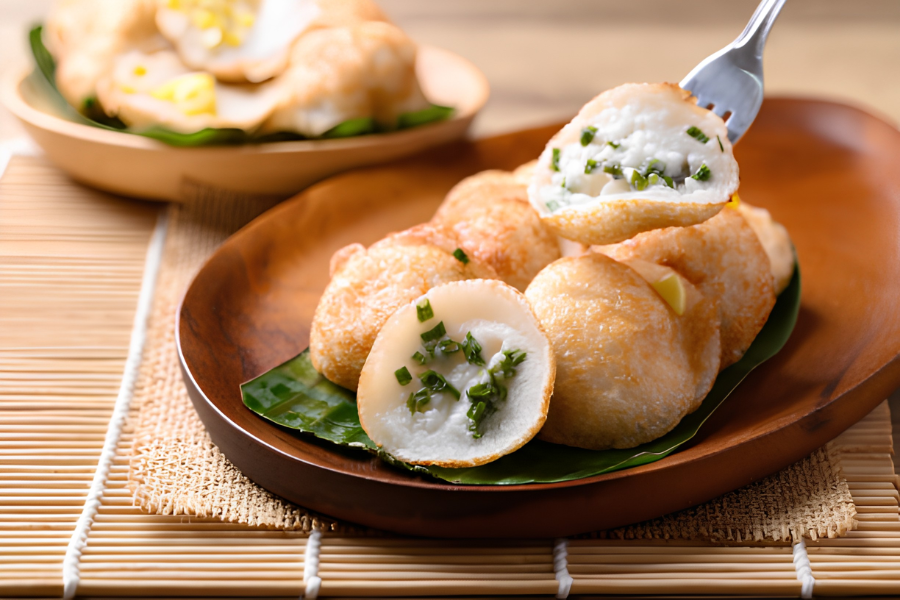
A popular street delicacy cooked in heavy cast-iron or clay griddles with hemispherical indentations. A smooth batter of rice flour, coconut milk, and scallions is poured into the sizzling hot molds over open embers. The exterior crisps into a golden shell while the center remains warm, creamy, and custard-like. They are typically wrapped in a banana leaf and served with sweet palm sugar fish sauce.
Where to Eat:
- Phsar Chas (Old Market) Perimeter (Siem Reap): Street carts operating hot griddles from mid-afternoon through the evening.
- Angkor Night Market Stalls (Siem Reap): Night market vendors preparing fresh batches for late-evening strolls.
Watching a street vendor use two small spoons to flip the golden half-spheres over glowing charcoal is mesmerizing. Biting through the crisp, toasted outer crust yields a warm, sweet coconut cream center accented with a savory touch of green scallion.
Yaohon (Cambodian Coconut Soda Hotpot)

The quintessential communal dining experience for Khmer families celebrating special evenings. A rich broth made from chicken stock, thick coconut milk, and coconut cream soda or fresh coconut water is simmered at the table, seasoned with fermented soybean paste, crushed lemongrass, and kaffir lime. Diners cook thinly sliced beef, prawns, squid, water spinach, and glass noodles directly in the broth, dipping each bite into a rich, sweet fermented bean-curd sauce.
Where to Eat:
- Sovanna BBQ & Hotpot (Phnom Penh): Bustling outdoor evening hub where local families gather around smoking hotpots.
- Siem Reap Riverside Hotpot Alley (Siem Reap): Open-air tables set along the river, specializing in evening hotpot dinners.
Gathering around a bubbling pot of Yangon on a warm evening by the river is a culinary community at its best. The sweet, fragrant coconut broth infuses the beef with savory flavor, while the pungent bean-curd dipping sauce ties the meal together.
Essential Dining & Street Food Tips in Cambodia
- Follow the High-Turnover Rule: When eating at street carts, choose stalls packed with local patrons where ingredients are being cooked fresh to order over glowing charcoal rather than sitting under display glass.
- Stick to Factory-Produced Tube Ice: Ice in casual restaurants is generally safe if it comes in the form of cylindrical factory tubes (tube ice with a hole in the center). Avoid crushed blocks of ice that may have been handled roughly during transport.
- Manage Prahok Intensity Politely: If you have a sensitive palate or are unaccustomed to fermented fish, ask your server politely: “Som kom dak prahok” (Please do not add fermented fish paste).
- Support Vocational Social Enterprises: Dine at community-focused training restaurants like Haven or Marum in Siem Reap, and Romdeng in Phnom Penh. You will enjoy refined Khmer cooking prepared to strict hygiene standards, with proceeds supporting hospitality education for underserved youth.
- Blanch Raw Greens at Casual Stalls: At local noodle or hotpot shops, if you have a sensitive stomach, dip raw side greens (like long beans, morning glory, and water lilies) into boiling broth for a few seconds rather than eating them completely raw.
- Mind the Sweetness in Savory Cooking: Khmer chefs use palm sugar generously. If you prefer savory and acidic profiles over sweetness in your stir-fries and soups, feel free to request your dishes be less sweet.
- Keep Small Cash for Local Markets: Street vendors and markets cannot break large $50 or $100 bills. Keep a supply of clean, crisp $1 and $5 banknotes along with Cambodian Riel (1,000 to 10,000 KHR notes) for hassle-free transactions.
- Book a Private Market Tour with a Chef: Elevate your understanding of Khmer ingredients by booking a morning market tour led by a private chef in Siem Reap, learning how to select fresh galangal, turmeric, and local herbs before cooking your own lunch.
Savor Indochina: The Vietnam and Cambodia Trip in 14 Days
True travel magic happens when culinary traditions are conversed across borders. Combining Vietnam and Cambodia into a single seamless journey allows you to experience two distinct regional flavor philosophies side by side:
- The Trans-Border Culinary Dialogue: Contrast Hanoi’s cinnamon-scented Pho bo and charcoal-grilled Bun cha with the rich lemongrass curries and sweet coconut custards of Siem Reap. Experience the fresh herbs of Hoi An’s markets before tasting the peppery seafood of the Gulf of Thailand.
- The Flagship Itinerary: Vietnam and Cambodia Trip in 14 Days: Our hand-crafted two-week journey connects Hanoi, Lan Ha Bay, historic Hoi An, and vibrant Saigon with an overland or flight transition into Siem Reap’s ancient temple empire. Designed for food and culture connoisseurs, it integrates private street food expeditions by vintage Vespa, chef-led cooking classes in heritage gardens, and torchlit royal dinners set within ancient ruins.
- The Comfort of Bespoke Travel: Navigating regional food cultures is effortless when accompanied by private bilingual guides who understand dietary preferences, reserve prime tables at top heritage restaurants, and arrange air-conditioned limousine transfers between each gastronomic stop.
From the sweet, charcoal-grilled aromas wafting through morning alleyways in Phnom Penh to the peppery sea breeze of Kep’s crab shacks, Cambodian gastronomy is an overlooked culinary treasure. It offers a genuine reflection of the land, the rivers, and the warmth of its people.
Ready to taste the real flavors of Southeast Asia while exploring ancient temples and emerald bays? Contact our private luxury travel specialists today to curate your personalized culinary and cultural itinerary across Vietnam and Cambodia.
Tags: cambodia, cambodian cuisine, cambodian food, cuisine in cambodia, food in cambodia, khmer food, popular cambodian dish, traditional foods in cambodia, vietnam and cambodia tour packages, vietnam and cambodia trip