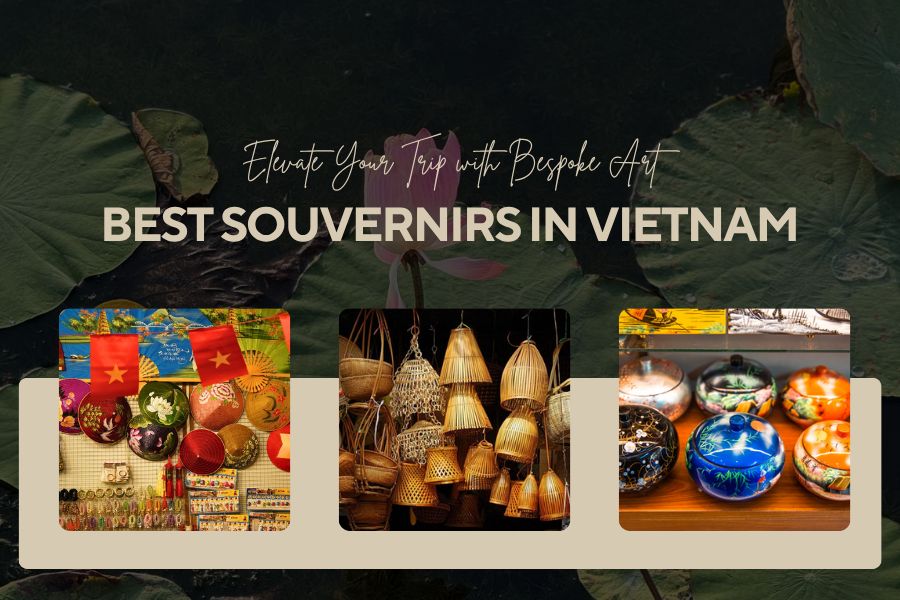
Choosing the right souvenirs in Vietnam is a good way to bring home something that reflects the places, food and craft traditions you experienced during your trip. From coffee and local snacks to silk, lacquerware, ceramics and handmade textiles, the options vary considerably from one region to another.
The challenge is knowing what is genuinely worth buying. Tourist areas are full of mass-produced items, while better-quality products often come from specialist shops, local markets, craft villages or small producers with a clear connection to the region.
This guide covers the best souvenirs in Vietnam, including what to buy, typical price ranges, where to shop and practical tips for choosing authentic, useful gifts rather than generic keepsakes.
Traditional Artisanal Crafts & Wearables
Vietnam’s craft traditions span thousands of years, rooted in imperial court guilds, peaceful agrarian villages, and mountain minority enclaves.
Pure Mulberry Silk & Bespoke Tailored Garments
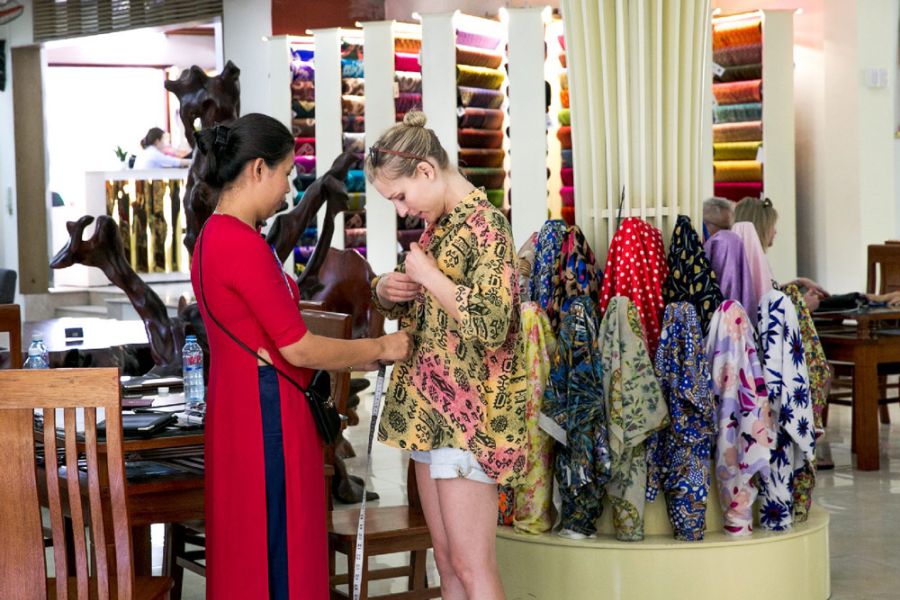
The art of sericulture (silk production) has flourished in northern river deltas and central river ports for centuries. Historic centers like Van Phuc Silk Village on the outskirts of Hanoi and the ancient riverside port of Hoi An continue to weave pure natural mulberry silk. Unlike synthetic polyester blends, authentic Vietnamese silk possesses a featherlight drape, a soft, organic sheen, and remarkable thermal properties: it breathes naturally during sweltering tropical afternoons and insulates comfortably against mountain chills.
What to Buy: Hand-woven raw silk scarves, bespoke evening gowns, flowing traditional tunics (Ao Dai), patterned ties, and custom-tailored linen-silk suits crafted within 24 to 48 hours in Hoi An.
Price Range:
- Hand-woven silk scarves: 250,000 to 800,000 VND ($10 to $32)
- Custom-tailored two-piece suits or evening wear: 2,000,000 to 6,000,000+ VND ($80 to $250+)
Buying Tips: Perform a quick burn test if the boutique allows it: snip a loose thread from an interior seam and ignite it. Genuine natural silk burns slowly with an organic odor similar to singed hair, leaving a brittle, crushable black ash. Synthetic polyester melts rapidly into a hard, plastic bead with acrid chemical smoke.
While ordering bespoke suits and silk dresses within 24 hours is a quintessential highlight of visiting the ancient port, Hoi An offers far more than just world-class tailoring. Explore our curated breakdown of the best things to do in Hoi An to make the most of your time in this romantic destination.
Handcrafted Traditional Lacquerware
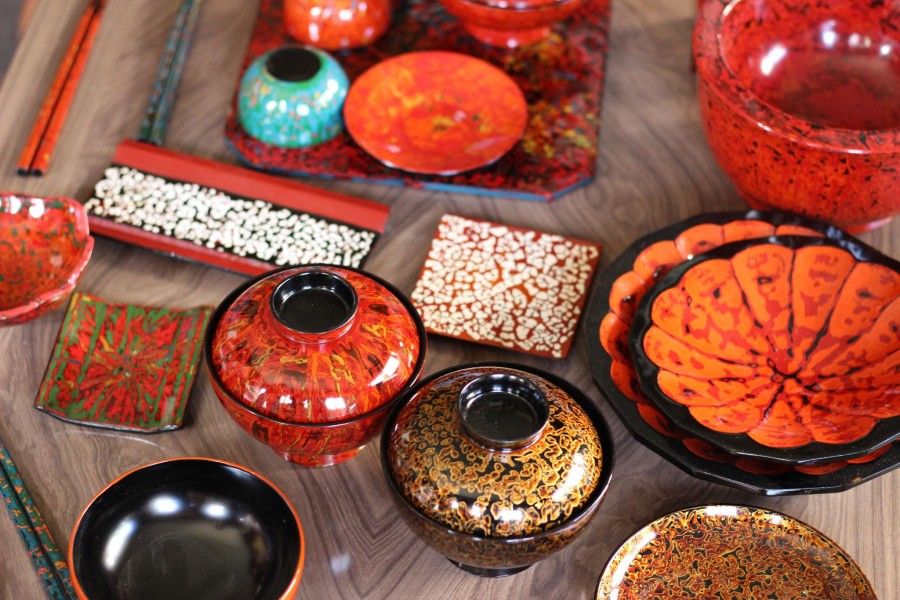
Vietnamese lacquerware is an intricate discipline that elevated utilitarian craft into museum-grade fine art during the early 20th century. Sourced from the toxic resin of the indigenous lacquer tree, authentic pieces undergo between 15 and 20 individual coatings. Each layer is dried in a humidity-controlled chamber, adorned with crushed duck eggshell, gold leaf, or iridescent mother-of-pearl, and repeatedly sanded smooth under flowing freshwater over two to three months.
What to Buy: Mother-of-pearl inlaid jewelry boxes, minimalist tea trays, hand-painted wall art panels, and decorative tabletop bowls with crushed eggshell mosaics.
Price Range:
- Lacquered coasters and small decorative bowls: 150,000 to 400,000 VND ($6 to $16)
- Inlaid jewelry caskets and polished tea trays: 600,000 to 1,800,000 VND ($24 to $72)
- Large original lacquer fine art paintings: 3,000,000 to 20,000,000+ VND ($120 to $800+)
Buying Tips: Inspect the surface finish under strong light. Authentic multi-layered lacquer exhibits a deep, luminous quality with flawless surface tension. It feels cool to the touch and carries a solid, reassuring weight. Cheap souvenir variants made of synthetic spray paint over pressed MDF chipboard feel featherlight, scratch easily, and emit a chemical solvent scent.
Heritage Ceramics & Stoneware
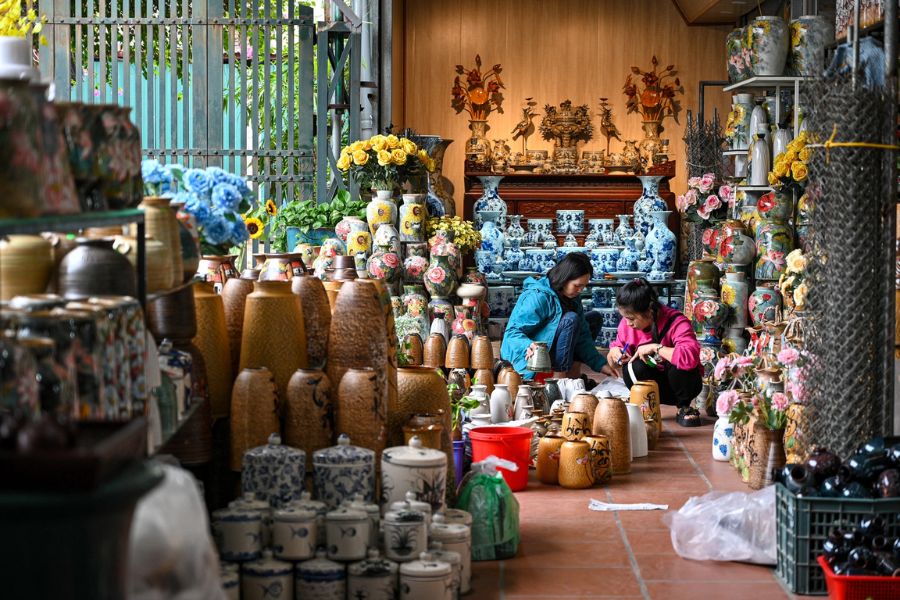
Vietnam’s ceramic lineage is among the oldest in East Asia, highlighted by the 14th-century maritime legacy of Chu Dau ceramics and the clay-dusted lanes of Bat Trang village on the Red River. Distinguished by delicate crackle glazes, celadon washes, and freehand cobalt-blue motifs depicting river life, dragonflies, and lotus blossoms, these stoneware pieces capture rustic grace and refined imperial heritage.
What to Buy: Crackle-glazed kung fu tea sets with brass trim, hand-thrown stoneware flower vases, celadon dinnerware sets, and unglazed terracotta teapots.
Price Range:
- Hand-thrown single cups or small dessert plates: 80,000 to 200,000 VND ($3 to $8)
- Crackle-glaze traditional tea set (teapot and 6 cups): 500,000 to 2,500,000 VND ($20 to $100)
- Museum-quality gold-accented Chu Dau vases: 2,000,000 to 10,000,000+ VND ($80 to $400+)
Buying Tips: Gently tap the rim of the ceramic vessel with your knuckle. High-fired stoneware and porcelain (kilned at over 1,200°C) produce a clear, sustained musical chime, verifying a dense, lead-free clay body. Low-fired commercial pottery emits a dull, hollow thud and chips easily in transit.
During a shore excursion to Bat Trang, an American family joined a resident ceramicist at a foot-pedal potter’s wheel. Both children shaped their own small clay bowls, which the kiln master glazed, fired, and delivered to their hotel in the French Quarter before departure. The mother later noted that those two slightly imperfect stoneware bowls were the most treasured pieces on their dining shelf.
> > > Stepping inside an ancient kiln workshop, listening to master potters share centuries-old glaze recipes, and feeling damp clay spin beneath your hands at the wheel brings the craft to life in a way no museum can replicate. Immerse yourself in the living history of Red River stoneware on our private Bat Trang Pottery Village Half Day Tour, complete with a private chauffeured transfer and personal artisan instruction.
Iconic Conical Hats (Non La) & Bamboo Wares
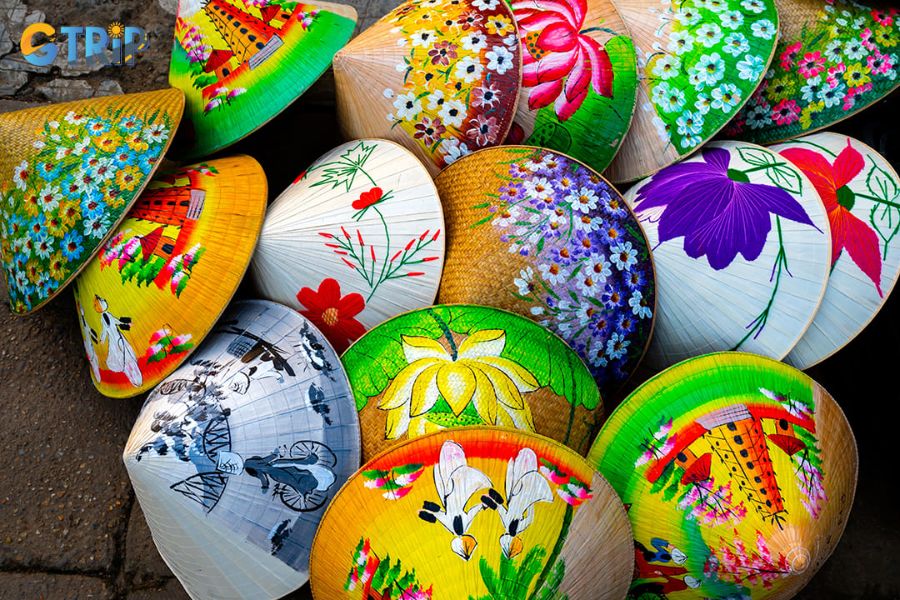
The quintessential symbol of pastoral Vietnam, the Non La is an architectural marvel of natural materials. Crafted in historic villages like Chuong Village outside Hanoi or Tay Ho in Hue, each hat requires 16 concentric bamboo ribs stitched by hand with split palm fronds. Hue’s famed “poem hats” hide delicate paper cutouts of classic verses and landscapes between two translucent leaf layers, visible only when held against the bright sun.
What to Buy: Classic embroidered non la, translucent poem hats from Hue, organic dried lotus leaf hats, woven rattan vanity cases, and spiraled bamboo salad bowls.
Price Range:
- Standard rural conical hats: 50,000 to 120,000 VND ($2 to $5)
- Hand-stitched poem hats or lotus leaf hats: 200,000 to 450,000 VND ($8 to $18)
- Artisanal coiled bamboo and rattan tableware: 150,000 to 500,000 VND ($6 to $20)
Buying Tips: Examine the stitching density along the 16 interior bamboo rings. Master artisans make stitches nearly invisible, with zero overlapping leaf seams and smooth interior bamboo edges that will not snag your hair. For woven bamboo baskets, look for an even honey tint with a light layer of natural plant resin to deter moisture.
Handcrafted Hoi An Silk Lanterns
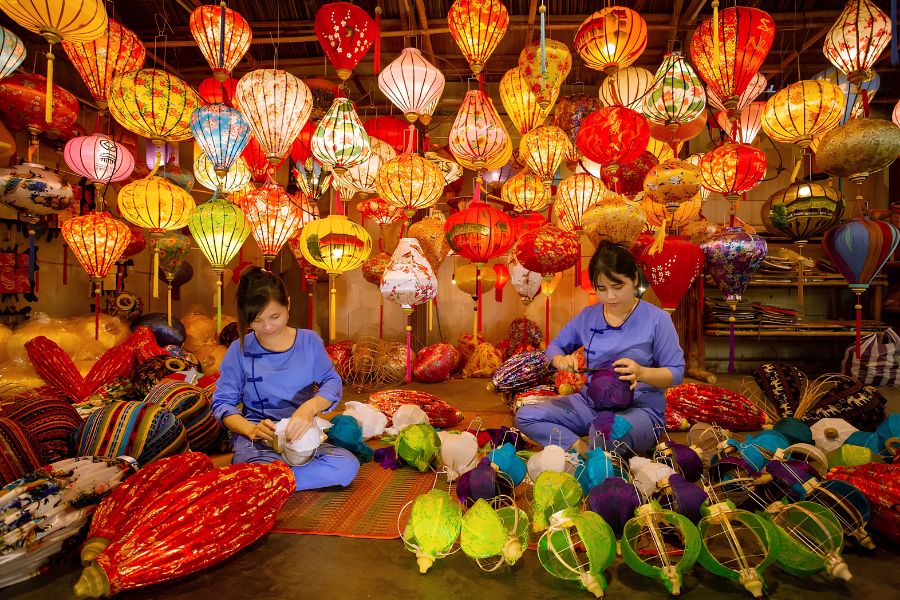
As dusk settles over the canals of Hoi An, thousands of hanging lanterns cast an amber and crimson glow across the ancient shophouses. Constructed from seasoned mountain bamboo treated against wood-boring insects and stretched with supple local silk, these lanterns represent prosperity, peace, and domestic harmony.
What to Buy: Garlic-bulb, diamond-faceted, or lotus-bud lanterns wrapped in jacquard floral silk, specifically selecting the modern collapsible bamboo frames designed to pack flat into luggage.
Price Range:
- Compact decorative lanterns: 60,000 to 120,000 VND ($2.50 to $5)
- Large heritage silk lanterns (45cm to 60cm diameter): 180,000 to 400,000 VND ($7 to $16)
Buying Tips: Always ask the merchant to demonstrate expanding and collapsing the wire-tension mechanism in the shop. Ensure the fabric is pure silk rather than synthetic nylon; silk diffuses light with a soft, warm ambiance, whereas cheap synthetic fabrics show an artificial, reflective glare.
I consistently encourage travelers to pick up at least two collapsible lanterns in Hoi An. A business traveler from Munich bought four in amber and peacock blue; a year later he sent a photograph of his garden terrace lit by those lanterns, capturing a small slice of Hoi An summer in Bavaria.
If you are planning a winter getaway to soak up festive street decorations, midnight mass at colonial cathedrals, and lively night markets, discover our complete guide to celebrating Christmas in Vietnam for seasonal event highlights and luxury holiday dining.
Ethnic Minority Indigo Textiles & Mountain Batik Art
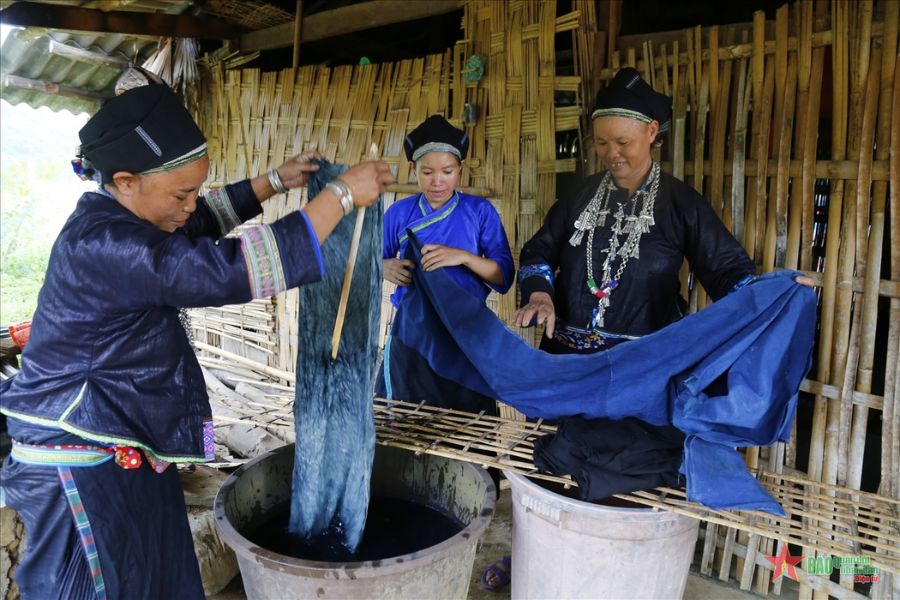
In the misty valleys of Sapa, Ha Giang, and Bac Ha, tribal women from the Black H’Mong and Red Dao communities preserve ancient textile arts. Working with hand-loomed mountain hemp, craftswomen draw geometric symbols using copper pens dipped in molten beeswax before immersing the cloth in cold, fermented natural indigo vats dozens of times to achieve an inky, night-sky blue.
What to Buy: Indigo-dyed table runners, geometric batik accent cushion covers, hand-embroidered tribal tote bags, and museum-grade ceremonial tapestries.
Price Range:
- Small coin purses and woven bookmarks: 50,000 to 150,000 VND ($2 to $6)
- Hand-drawn batik cushion covers: 250,000 to 600,000 VND ($10 to $24)
- One-of-a-kind vintage tribal blankets: 1,200,000 to 4,000,000+ VND ($50 to $160+)
Buying Tips: Avoid mass-market street stalls selling fluorescent, synthetic cross-stitch made by industrial factories. Seek out fair-trade non-profits (such as Craft Link or Chie) or village cooperatives where the hemp feels pleasantly coarse, the stitching exhibits organic human variations, and the fabric carries the herbal, earthy scent of organic indigo.
Culinary Keepsakes & Aromatic Treasures
Vietnam’s culinary landscape is among the most celebrated in Asia. Bringing home shelf-stable specialty foods and spices allows you to recreate authentic Southeast Asian flavors in your own kitchen.
Single-Origin Coffee Beans & Traditional Metal Phin Filters
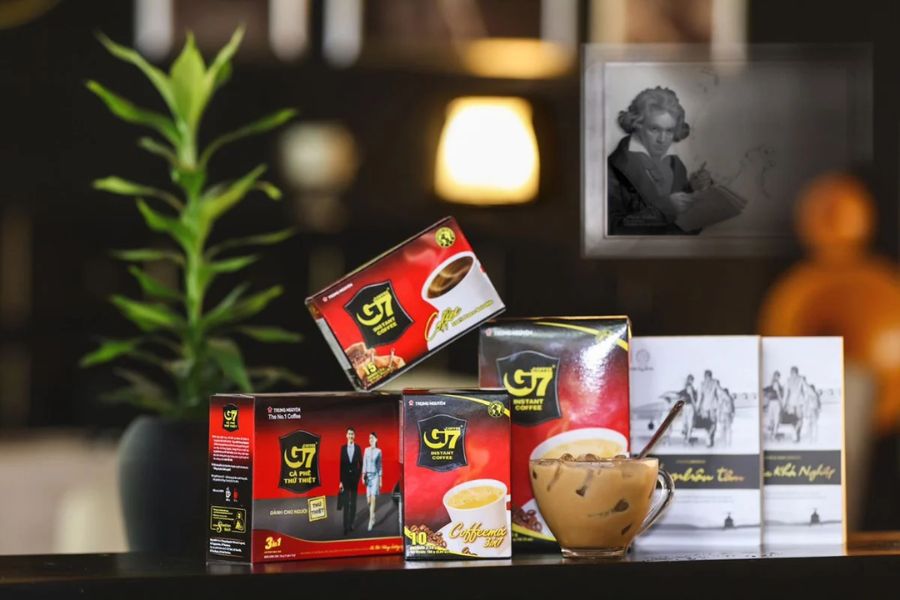
As the world’s leading exporter of Robusta coffee and a rising producer of high-altitude Arabica, Vietnam boasts a coffee culture defined by slow, contemplative extraction. Dark-roasted beans deliver deep notes of dark chocolate, toasted chicory, and warm caramel, best brewed through a traditional perforated metal drip filter (Phin) over sweetened condensed milk.
What to Buy: Sun-dried peaberry Robusta (Culi) from Buon Ma Thuot, Bourbon Arabica from the misty hills of Cau Dat (Dalat), and an engraved stainless steel or aluminum Phin filter.
Price Range:
- Classic aluminum or stainless steel Phin filter: 30,000 to 80,000 VND ($1.20 to $3.20)
- Whole bean roasted coffee (500g vacuum bag): 180,000 to 450,000 VND ($7 to $18)
- Certified high-altitude civet or specialty micro-lots: 1,500,000 to 4,000,000+ VND ($60 to $160+)
Buying Tips: Purchase whole beans from specialty roasters that grind them on the spot if requested. Avoid generic pre-ground supermarket packs that do not list bean varieties; lower-grade blends are often cut with roasted soybeans, corn starch, and artificial clarified butter flavorings.
Artisanal Loose-Leaf Teas: Lotus, Jasmine & Ancient Shan Tuyet
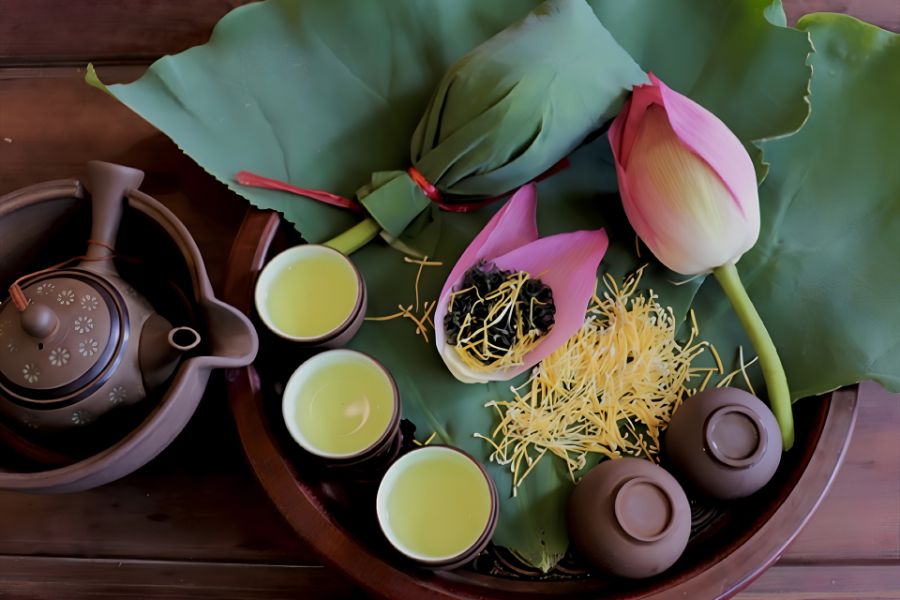
Tea culture in Vietnam is an art of delicate botanical balance. The crown jewel is traditional West Lake Lotus Tea, where premium green tea leaves are scented inside blooming lotus flowers gathered before sunrise, requiring over one thousand flowers to scent a single kilogram. In the northern mountains, ethnic foragers harvest wild buds from centuries-old Shan Tuyet tea trees growing wild at elevations above 1,500 meters.
What to Buy: Freeze-dried single-blossom lotus tea bulbs, silver-tipped wild Shan Tuyet tea, mountain jasmine pearls, and lightly oxidized Moc Chau oolong.
Price Range:
- Premium whole-leaf jasmine or oolong (200g canister): 150,000 to 350,000 VND ($6 to $14)
- Wild-harvested ancient Shan Tuyet tea (200g tin): 400,000 to 1,200,000 VND ($16 to $48)
- Authentic West Lake single-blossom lotus tea: 400,000 to 800,000 VND ($16 to $32 per individual flower pod)
Buying Tips: Natural flower-scented tea possesses a clean, subtle perfume that opens gradually over multiple hot water infusions. If a dry blend releases an overpowering, candy-sweet floral aroma the moment you unseal the container, it has likely been treated with artificial scenting oils.
Jumbo Roasted Cashew Nuts
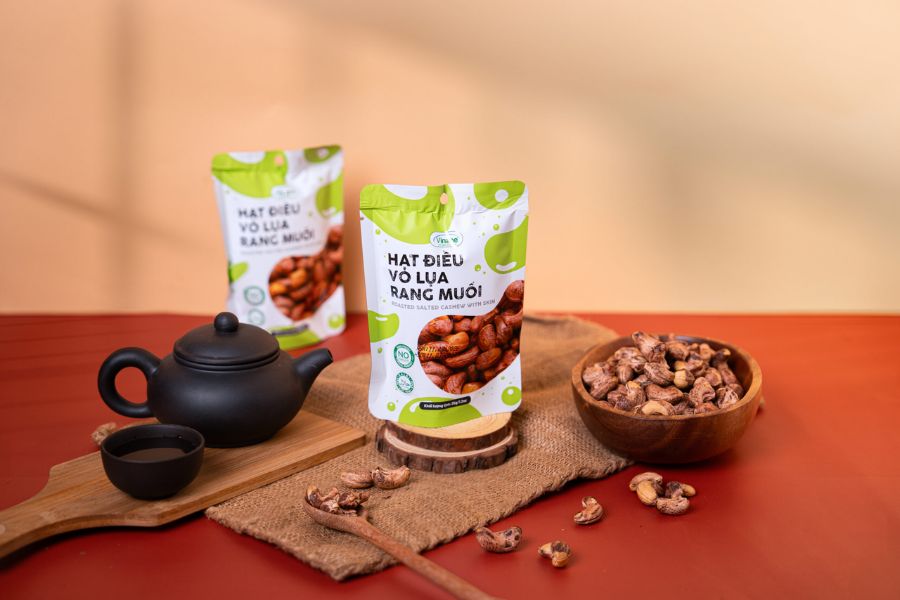
Vietnam’s volcanic southern soils yield some of the largest, richest cashew nuts in the global market. Roasted over open wood fires with a light dusting of sea salt while retaining their paper-thin inner skins, Vietnamese cashews are exceptionally crisp, naturally sweet, and free of the oiliness typical of factory-processed nuts.
What to Buy: Grade-A1 jumbo whole cashews, roasted in their papery skins, packaged in vacuum-sealed rounds or airtight tins.
Price Range:
- 500g tin of premium skin-on salted cashews: 160,000 to 250,000 VND ($6.50 to $10)
Buying Tips: Opt for cashews with their papery skins intact. The skin protects the nut from oxidizing, preserves its crisp texture, and flakes away cleanly with a twist of your fingers. Ensure the vacuum seal is tight and the nuts are unbroken.
Phu Quoc Premium Fish Sauce & Sea Salt Peppercorns
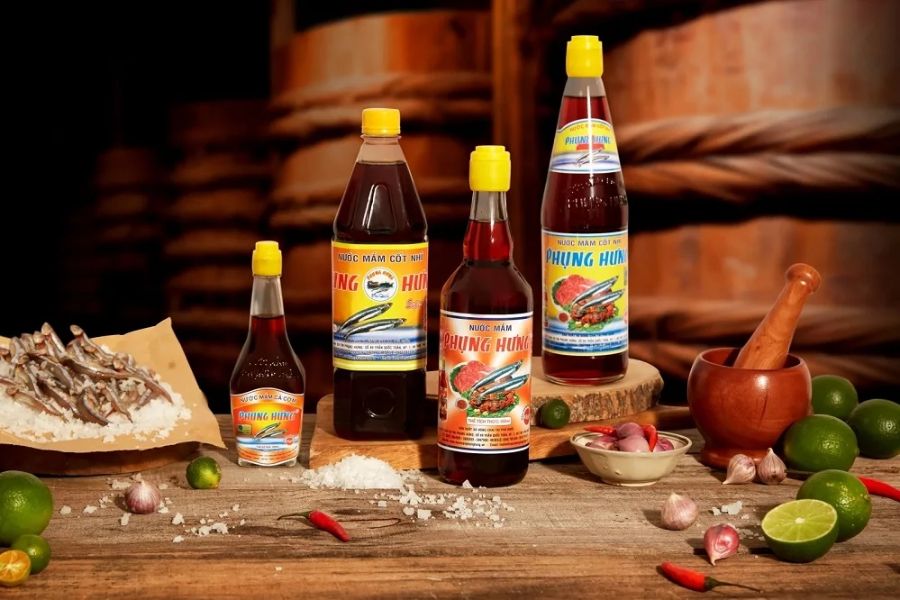
The backbone of Vietnamese cuisine, traditional fish sauce from Phu Quoc Island holds European Union Protected Designation of Origin (PDO) status. Fermented from wild black anchovies and sea salt inside giant tropical hardwood vats for 12 to 15 months, the first-press nectar is clear, deep mahogany, rich in natural protein, and loaded with savory umami complexity.
What to Buy: First-press 40° to 43°N protein-grade artisanal fish sauce, whole black peppercorns from Phu Quoc, and spicy chili-lime pepper salt seasonings.
Price Range:
- 500ml glass bottle of first-press 40°N fish sauce: 120,000 to 280,000 VND ($5 to $11)
- Sealed jar of Phu Quoc whole sun-dried black peppercorns (250g): 80,000 to 180,000 VND ($3 to $7)
Buying Tips (Critical Transport Note): Commercial airlines universally prohibit raw fish sauce in carry-on luggage due to spill risks, and many airlines ban it in checked luggage unless it is packaged in factory-sealed, leakproof styrofoam crates. To avoid customs headaches, purchase certified export-grade, double-sealed gift packs, or pick them up at international airport duty-free shops after clearing security.
Marou Artisanal Craft Chocolate
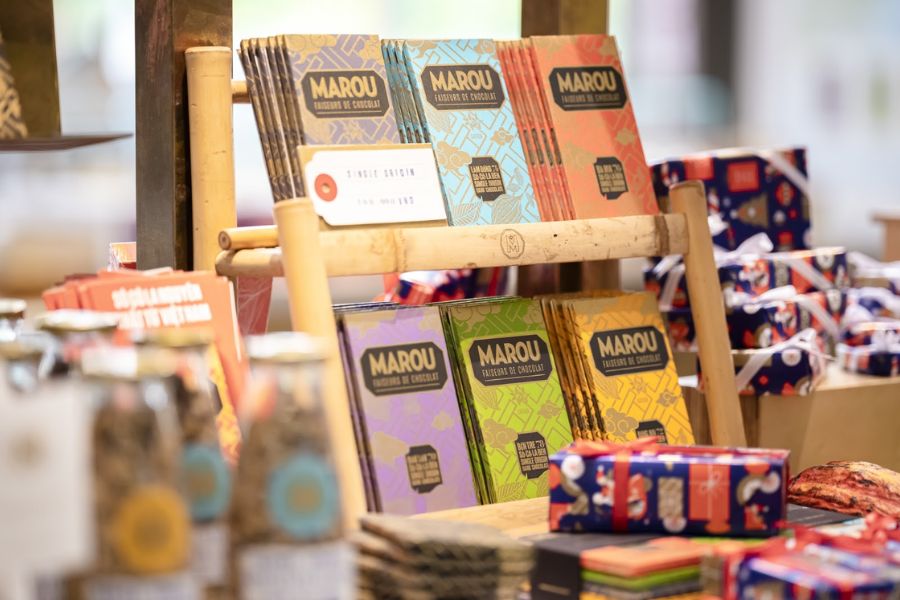
Hailed as some of the most sophisticated bean-to-bar chocolate in the world, Marou was founded by two French culinary entrepreneurs who recognized the unique terroir of southern Vietnamese cacao. Sourcing exclusively from smallholder family farms across six distinct provinces (including Ben Tre, Tien Giang, and Lam Dong), their single-origin dark chocolate bars reveal complex tasting notes ranging from dried fruit and red berries to gentle tobacco.
What to Buy: The signature six-province Single-Origin Tasting Box, wrapped in hand-printed silk-screened gold paper, or unique infused bars flavored with Dalat arabica, ginger, or coconut milk.
Price Range:
- Small pocket bar (24g): 60,000 to 75,000 VND ($2.50 to $3)
- Full-size single-origin bar (80g): 130,000 to 170,000 VND ($5 to $7)
- Elegant ribbon-tied presentation gift sets: 350,000 to 800,000 VND ($14 to $32)
Buying Tips: Buy directly from official Maison Marou boutiques (located in Hanoi, Saigon, and Da Nang) or upscale gourmet delis to ensure the chocolate has been stored in climate-controlled conditions. Keep the bars below 22°C during your travels to prevent the cocoa butter from blooming.
> > > Finding souvenirs that delight both curious kids and discerning grandparents is an effortless joy when your travel rhythm is balanced. If you are designing an enriching multi-generational holiday with flexible pacing and child-friendly hotels, take a look at our handcrafted The Best of Vietnam for Families private journey.
Jewelry & Natural Keepsakes
For travelers seeking refined keepsakes, Vietnam provides access to certified ocean gems, fragrant wild aromatics, and creative paper arts.
Cultured Sea Pearls from Phu Quoc Island
Surrounded by the warm, clean waters of the Gulf of Thailand, Phu Quoc Island provides ideal marine conditions for oyster cultivation. Local pearl sanctuaries culture Akoya, Mabe, and deep-toned Tahitian pearls over two to seven years, creating jewelry with lustrous surfaces and high durability at attractive direct-from-source prices.
What to Buy: Classic single-pearl drop pendants in 18k yellow or white gold, Akoya pearl stud earrings, and mixed-tone saltwater pearl strands.
Price Range:
- Freshwater pearl silver rings or earrings: 500,000 to 1,500,000 VND ($20 to $60)
- Saltwater Akoya/Mabe pearls set in fine gold: 4,000,000 to 15,000,000+ VND ($160 to $600+)
Buying Tips: Never purchase pearls from unlicensed beach hawkers, where plastic or glass beads are routinely coated in artificial pearlescent lacquer. Visit established pearl operations (such as Ngoc Hien or Quoc An) on Phu Quoc, where purchases include a gemological certificate verifying origin, pearl classification, and nacre thickness.
Natural Agarwood & Aromatic Oud
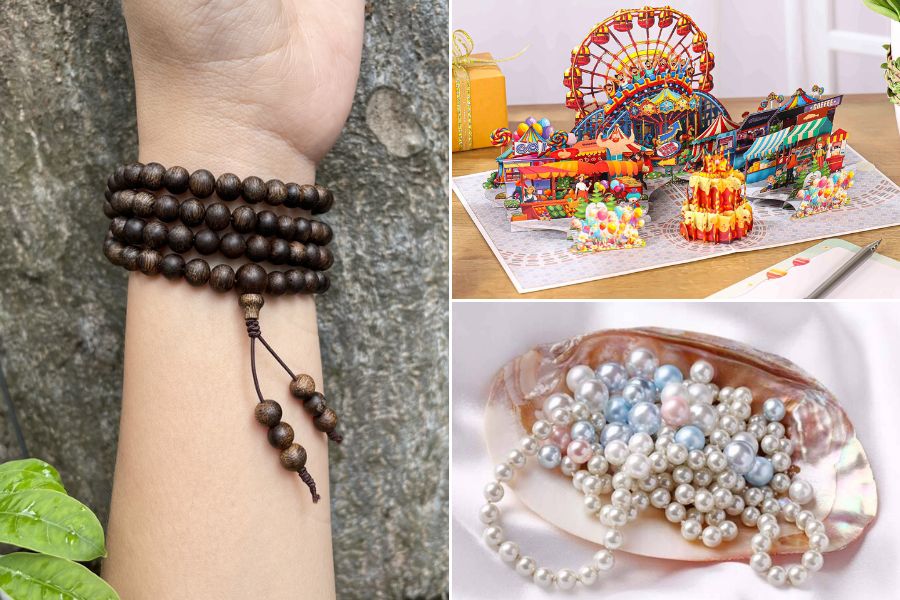
Revered in temple rituals, agarwood is a dark, resinous heartwood that forms inside Aquilaria trees when they are pierced by natural forest fungi. Central Vietnam, particularly Khanh Hoa and Quang Nam provinces, produces some of the most sought-after natural agarwood in the world. Its resin exudes an ancient, balsamic aroma believed to clear negative energy, ease stress, and foster peaceful reflection.
What to Buy: Polished agarwood bead bracelets, natural incense cones paired with backflow ceramic burners, and pure distilled agarwood essential oil.
Price Range:
- Box of wild-harvested incense cones with ceramic burner: 250,000 to 600,000 VND ($10 to $24)
- Cultivated agarwood bead meditation bracelet: 800,000 to 2,500,000 VND ($32 to $100)
- Rare wild-grade sinking agarwood beads: 8,000,000 to 50,000,000+ VND ($320 to $2,000+)
Buying Tips: High-grade agarwood has an understated, honeyed scent at room temperature that deepens when warmed by your skin. Beware of cheap, pitch-black wooden beads soaked in synthetic chemical perfume; these smell overwhelmingly strong in the shop, but dry out and turn chalky within weeks.
Handcrafted 3D Pop-Up Cards & Bamboo Paper Art
A delightful, lightweight souvenir that showcases delicate paper craftsmanship. Inspired by Japanese kirigami and adapted to Vietnamese folk motifs, these cards unfold into intricate three-dimensional depictions of Hanoi’s One Pillar Pagoda, dragons, street food vendors, or the historic Japanese Bridge of Hoi An.
What to Buy: Laser-cut architectural pop-up cards, multi-layered shadow boxes, and framed paper filigree artworks.
Price Range:
- Architectural 3D pop-up cards: 40,000 to 90,000 VND ($1.50 to $3.50 each)
Buying Tips: Inspect the card by opening and closing it smoothly to ensure the delicate paper hinges do not catch. Buy a protective, unbent envelope for easy transport in your carry-on luggage.
These cards are the ultimate lightweight keepsake. Several travelers in our private parties have bought them by the dozen to hand out to friends, family, and colleagues back home. Opening the card to reveal a miniature three-dimensional street vendor never fails to bring a smile.
Where to Buy Souvenirs in Vietnam: Top Regional Shopping Hubs
Navigating Vietnam’s artisan districts is most rewarding when you know exactly which streets specialize in specific crafts:
|
Region |
Iconic Shopping Quarters & Specialized Streets |
Best Items to Hunt For |
|
Hanoi & The North |
|
Pure silk scarves, custom tailored attire, crackle-glazed tea sets, and authentic mountain hemp batik. |
|
Central Vietnam (Hue, Da Nang, Hoi An) |
|
Bespoke linen suits, collapsible silk lanterns, salted jumbo cashews, and delicate poem hats. |
|
Southern Vietnam (Saigon & Phu Quoc) |
|
Single-origin chocolates, cultured sea pearls, artisanal fish sauce, and rich peaberry Robusta beans. |
Our Practical Shopping & Packing Tips for Travelers
- Distinguish Handcrafted Character from Factory Copies: Look closely at surface details. Authentic hand-turned pottery exhibits fine, organic variations in weight and glaze flow. In contrast, factory-molded imports feel uniform, feature stamped pixelated motifs, and lack hand-signed artisan marks.
- Practice Courteous, Good-Humored Bargaining: At open-air markets like Ben Thanh or Hanoi’s weekend night market, initial asking prices for souvenirs are often quoted 30% to 40% above final value. Counter with a respectful smile and a reasonable initial offer. Keep bargaining lighthearted, and never haggle over fixed prices in modern boutiques, supermarkets, or fair-trade shops.
- Comply with International Food & Liquid Regulations: Vacuum-sealed roasted cashews, packaged tea leaves, and craft chocolates clear international customs easily. However, unsealed agricultural items, raw seeds, or fresh plant matter may be confiscated upon return home. For liquids like specialty fish sauce or local rice wine, pack them securely in checked luggage within hard plastic containers, or purchase them duty-free at the airport gate.
- Cushion Fragile Stoneware & Lacquer Inside Hard Luggage: When purchasing fine ceramics or lacquer, have the artisan wrap each piece in multiple layers of shock-absorbent bubble wrap. Pack fragile boxes in the center of your hardshell suitcase, surrounded by soft sweaters and folded linen clothing.
- Request Origin Documentation for High-End Purchases: When investing in cultured sea pearls, fine gold jewelry, or high-grade agarwood, request a certificate of origin and an itemized receipt detailing gem dimensions, precious metal hallmarks, and care instructions.
- Carry Small-Denomination Cash (VND) for Village Ateliers: While upscale boutiques and city hotels accept Visa and Mastercard, rural craftspeople, roadside stallholders, and weekend market vendors operate entirely in cash. Keep a stash of crisp 20,000, 50,000, and 100,000 VND banknotes in your wallet.
- Support Certified Fair-Trade Collectives: Whenever possible, buy indigenous textiles and woven crafts through verified social enterprises and non-profits like Craft Link or Hope Center. These organizations guarantee that profits flow back directly to disabled artisans, minority weavers, and local rural schools.
- Engage Private Guides to Bypass Tour Traps: Many mass-market bus tours make forced stops at commercial souvenir emporiums that inflate prices with high sales commissions. Choosing bespoke Vietnam private tours ensures you are guided to genuine, family-owned workshops, where you meet respected artisans and purchase directly from the source.
> > > Because Vietnam’s craft heritage shifts remarkably as you journey from the mountain looms of the far north down to the lacquer studios of the southern deltas, the ultimate way to collect authentic treasures is across a comprehensive cross-country expedition. Explore the full tapestry of cultural highlights, scenic wonders, and regional craft hubs with our signature 15 Days Vietnam Tours – Best Vietnam Discovery.
Adding Craft & Shopping Experiences to Your Vietnam Journey
Shopping for souvenirs can be more meaningful when it is connected to the places where products are actually made. A private itinerary can make it easier to include craft villages, specialist workshops and local markets without turning the trip into a long series of shopping stops.
Depending on your interests, this may include:
- Visits to craft villages and workshops: Explore places known for pottery, textiles, lantern making, lacquerware or traditional crafts, and learn more about how the products are made.
- More time for specialist shopping: Private transport gives you the flexibility to stop at workshops or trusted local stores when something genuinely interests you, rather than relying only on tourist markets.
- Help with larger purchases: For fragile or oversized items, your guide or hotel can help you ask about packaging, delivery options and whether international shipping is available. Shipping terms, insurance and customs requirements should always be confirmed directly with the seller or carrier.
The best souvenirs in Vietnam are often the ones that connect naturally with the places you visit: coffee from the highlands, ceramics from a craft village, a lantern from Hoi An or textiles made in the northern mountains. Rather than trying to buy something in every destination, choose a few items that you will actually use, display or remember the trip by.
Plan Your Journey with LuxeTravel Asia and discover Vietnam through the places, people and crafts that give each region its own character.
Tags: popular souvenirs from vietnam, souvenirs from vietnam, souvenirs in Vietnam, souvenirs vietnam, vietnam, vietnam gifts, vietnam luxury tours, vietnam private tours, vietnam souvenirs, vietnam tours, Vietnam travel, vietnamese souvenirs, what to buy in vietnam