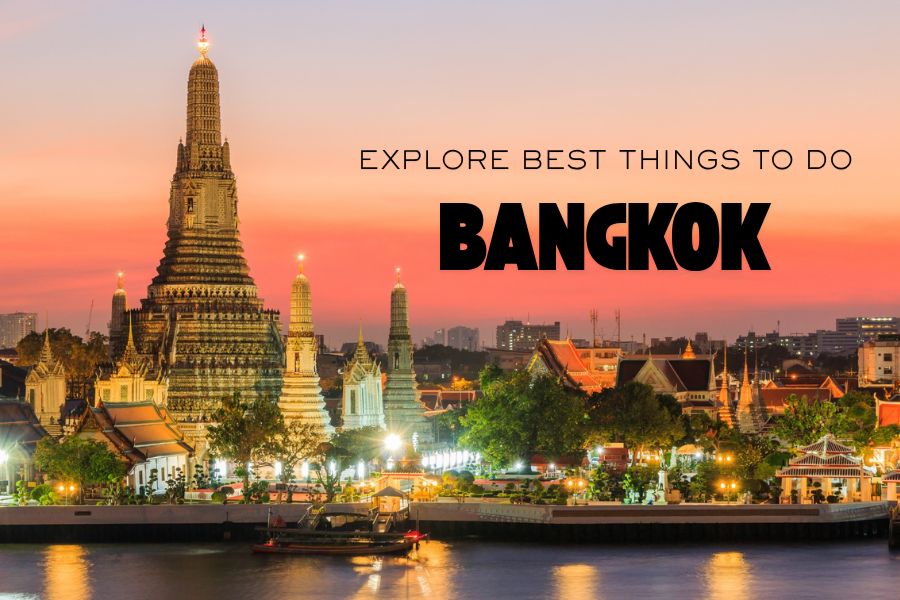
Finding the absolute best things to do in Bangkok means stepping into one of Asia’s most exhilarating sensory paradoxes. In Thailand’s kinetic capital, 18th-century gilded spires reflect off futuristic glass skyscrapers, quiet wooden canal houses rest in the shadow of towering Buddhist monuments, and centuries-old wok stalls operate alongside world-class fine dining.
For travelers experiencing Bangkok first time, the sheer energy, tropical climate, and sprawling scale of the metropolis can feel thrilling yet complex to navigate. Knowing precisely what to do in Bangkok, and how to time each neighborhood, makes all the difference between feeling drained by the traffic and reveling in the city’s vibrant rhythm.
From sacred national treasures and hidden waterways to vibrant night markets and sky-high cocktail lounges, here is your essential guide to the top Bangkok travel places, complete with season-by-season weather advice, field-tested practical tips, and traveler FAQs.
Bangkok Weather, Best Time to Visit & The “Beat-the-Heat” Strategy
Understanding Bangkok’s tropical monsoon cycle is key to mapping out your daily sightseeing:
|
Season |
Months |
Climate Characteristics |
Traveler Takeaway |
|
Cool & Dry Season (Peak Window) |
November to February |
26°C – 31°C; low humidity, clear skies, pleasant evening breezes |
Optimal window for walking tours, temple visits, and open-air rooftop dining |
|
Hot Season |
March to May |
34°C – 38°C+; intense sun, high humidity |
Plan outdoor heritage sites for the early morning; use mid-afternoons for air-conditioned retreats |
|
Rainy Season |
June to October |
28°C – 33°C; sharp, heavy afternoon downpours with clear intervals |
Fewer crowds and lush greenery; pack compact umbrellas and keep afternoon plans flexible |
Rather than tackling Bangkok chronologically by map zone, successful urban exploration relies on pacing your day around the sun:
- The Morning Window (7:30 AM – 10:30 AM): Dedicate early hours to open stone complexes like the Grand Palace and Wat Pho. Arriving at opening time allows you to admire the intricate gold Leafing before midday heat radiates off the marble courtyards.
- The Midday Respite (11:30 AM – 3:30 PM): Retreat indoors during peak heat. This is the ideal window for lingering over a Michelin-recognized lunch, touring shaded heritage houses like Jim Thompson’s compound, browsing upscale design galleries at ICONSIAM, or unwinding with a restorative traditional Thai massage.
- The Twilight Transition (4:30 PM Onward): As the temperature cools, head outside. Board a private longtail boat to cruise the Thonburi canals, watch the sunset light up Wat Arun from across the river, explore Chinatown’s sizzling street stalls, and finish with craft cocktails high above the skyline.
10 Best Things to Do in Bangkok
Marvel at the Grand Palace & Wat Phra Kaew
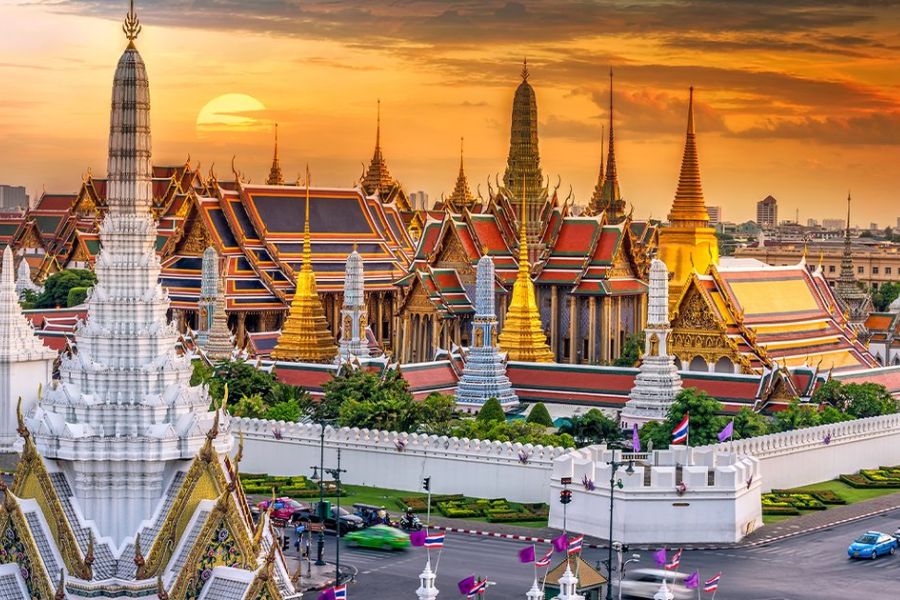
Sprawling across the historic island of Ko Ratanakosin, the Grand Palace served as the official seat of the Kings of Siam from 1782 until the mid-20th century. Within its whitewashed battlements lies Wat Phra Kaew (Temple of the Emerald Buddha), the most sacred religious sanctuary in Thailand. The complex is an architectural marvel of gilded stupas, porcelain-inlaid spires, polished marble terraces, and multi-tiered roofs glowing in orange and green tiles. Surrounding the cloisters, two kilometers of hand-painted murals depict the epic tales of the Ramakien.
- Hours: Daily from 8:30 AM to 3:30 PM.
- Dress Code: Strict royal decorum applies: shoulders, midriffs, and knees must be completely covered. No sheer fabrics, ripped jeans, or skin-tight athletic wear.
We met our guide at the palace gates at 8:15 AM sharp, entering Wat Phra Kaew just as the ceremonial doors opened. Standing before the Emerald Buddha in the quiet morning hall before the tour bus crowds arrived allowed our guests to appreciate the gold-leaf craftsmanship and silent reverence of the monks without being rushed.
Gaze at the Reclining Buddha at Wat Pho

Located an easy walk south of the Grand Palace, Wat Pho is among Bangkok’s oldest and largest temple complexes. The centerpiece is the monumental Reclining Buddha, a 46-meter-long, 15-meter-high brick-and-plaster statue coated entirely in gold leaf, depicting the historical Buddha entering final Nirvana. Its five-meter-long feet are inlaid with mother-of-pearl illustrating the 108 auspicious marks (lakshanas) of the enlightened one. Beyond its art, Wat Pho is revered as the historical birthplace of traditional Thai medical wisdom and herbal medicine.
- Hours: Daily from 8:00 AM to 6:30 PM.
- Highlights: Four soaring royal chedis decorated in colorful ceramic mosaic flowers, and an active traditional massage school on the temple grounds.
After admiring the Reclining Buddha, we pre-booked a private one-hour traditional herbal massage at Wat Pho’s historic massage pavilion. Slipping into linen robes in a quiet open-air courtyard while skilled practitioners worked out the stiffness from our long-haul flight was the most authentic physical reset imaginable.
Catch Sunset Across the River at Wat Arun (Temple of the Dawn)
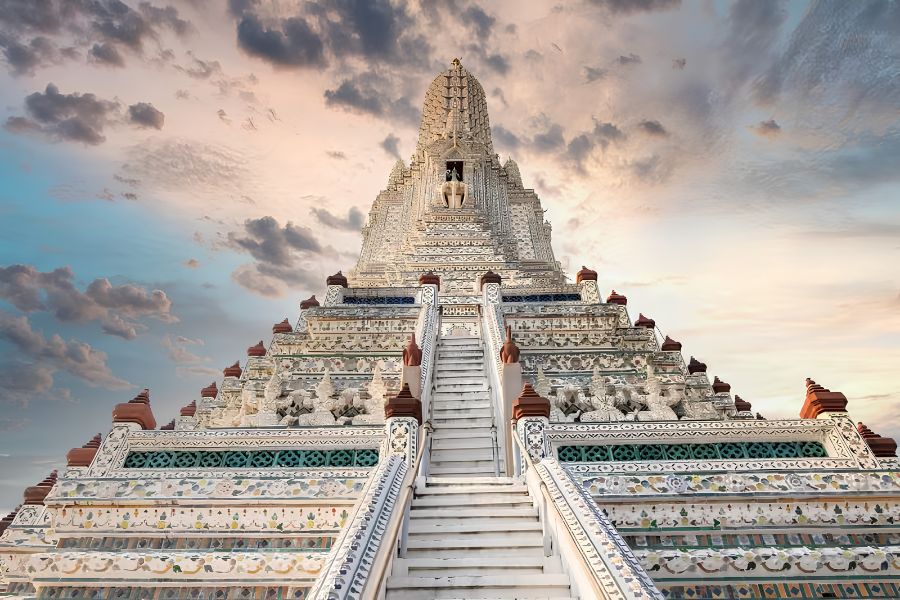
Standing majestically on the west bank of the Chao Phraya River in Thonburi, Wat Arun is one of Thailand’s most recognizable landmarks. Unlike the gold-leaf monuments across the water, its central Khmer-style tower (prang) rises over 70 meters, encrusted with intricate mosaic patterns crafted from recycled Chinese porcelain shards and seashells once used as ballast on merchant ships. While striking in the daytime, the temple reaches its visual peak at dusk when floodlights turn its white surfaces into a warm golden beacon against the evening river.
- Hours: Daily from 8:00 AM to 6:00 PM.
- Vantage Points: Climb the steep lower terraces for close-up views of mythological stone guardians, or book an opposite riverfront terrace along Maharaj Road to view the monument across the water.
We reserved a riverfront corner table at a rooftop terrace on the Tha Tien pier directly opposite Wat Arun at 5:00 PM. Watching the sky shift from pale amber to violet, while the temple’s porcelain towers were illuminated by golden spotlights over the dark river current, was easily our travelers’ favorite twilight moment in Bangkok.
Cruise the Hidden Canals (Klongs) of Thonburi on a Private Longtail Boat

Before modern boulevards replaced waterways, Bangkok was renowned as the “Venice of the East.” Crossing the Chao Phraya into the Thonburi district reveals an extensive, living network of historic canals (klongs) that showcase old river life. Cruising on a wooden longtail boat past stilt homes, wooden family shrines, and fruit orchards offers an intimate glimpse into neighborhood daily routines far removed from the high-rise downtown core.
- Departure Points: Sathorn Pier, River City, or private hotel jetties along the river.
- Key Sights: The towering 69-meter golden seated Buddha at Wat Paknam Phasi Charoen, local floating kitchens, and water monitor lizards sunning themselves along the stone banks.
Our captain guided our private wooden longtail boat off the busy main river into the calm, shaded klongs of Thonburi. We drifted past locals feeding river catfish from wooden boardwalks and watched water monitor lizards sunbathe on stone steps, before the monumental golden head of the Big Buddha at Wat Paknam rose dramatically above the palm canopy.
Embark on a Michelin & Street Food Safari in Chinatown (Yaowarat)

As dusk settles, Bangkok’s historic Yaowarat district transforms into one of the world’s most dynamic open-air food destinations. Beneath an ocean of glowing neon Chinese signage, multi-generational street vendors fire up woks over hot coals, serving dishes refined over decades. The culinary mix spans peppery pork broths and fresh seafood omelets to warm sweet desserts infused with ginger and coconut.
- Prime Hours: Tuesday to Sunday from 6:30 PM to 11:00 PM (Mondays feature fewer street stalls due to municipal street-cleaning ordinances).
- Must-Try Dishes: Crispy fried oyster omelets (hoi thod), hand-pulled flat rice noodles in peppery broth (guay jub), and toasted charcoal buns filled with pandan custard.
Accompanied by our culinary guide, we skipped the long public queues at Yaowarat’s famous Michelin-awarded stalls. Our guests loved tucking into steaming bowls of rolled rice noodles in peppery broth at Guay Jub Ouan Pochana on metal folding chairs, soaking in the sensory rush of neon lights and passing tuk-tuks.
Unravel Silk History & Architecture at Jim Thompson House
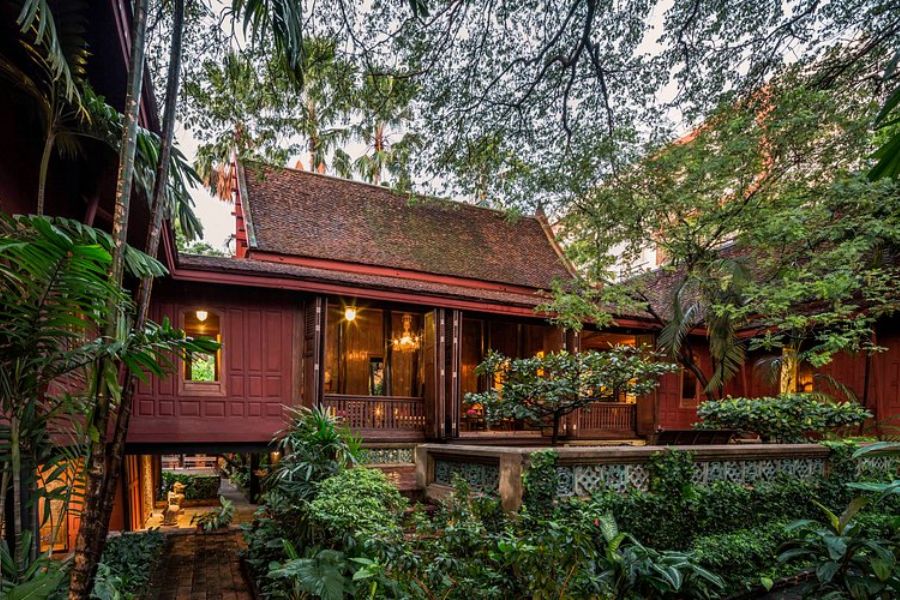
Hidden inside a quiet residential soi off Rama I Road, this tranquil compound was the home of Jim Thompson, the enigmatic American entrepreneur and OSS officer who revitalized Thailand’s handwoven silk industry in the 1950s and 1960s. The residence comprises six historic teakwood houses dismantled in central Thailand and reassembled above a canal. Filled with Thompson’s curated collection of Southeast Asian art, Buddhist statues, and antique ceramics, the home preserves a mid-century tropical aesthetic.
- Hours: Daily from 10:00 AM to 6:00 PM.
- Setting: Surrounded by lush gardens filled with palms and lotus ponds, featuring an on-site silk boutique and a quiet waterside restaurant.
Stepping into the lush, shaded garden of Jim Thompson House felt like entering a secluded tropical sanctuary away from downtown traffic. Our private docent guided our group through the teak rooms, pointing out rare Burmese Buddha statues and antique ceramics, followed by chilled lemongrass tea on the terrace over the canal.
Experience Cultural Retail at ICONSIAM & SookSiam
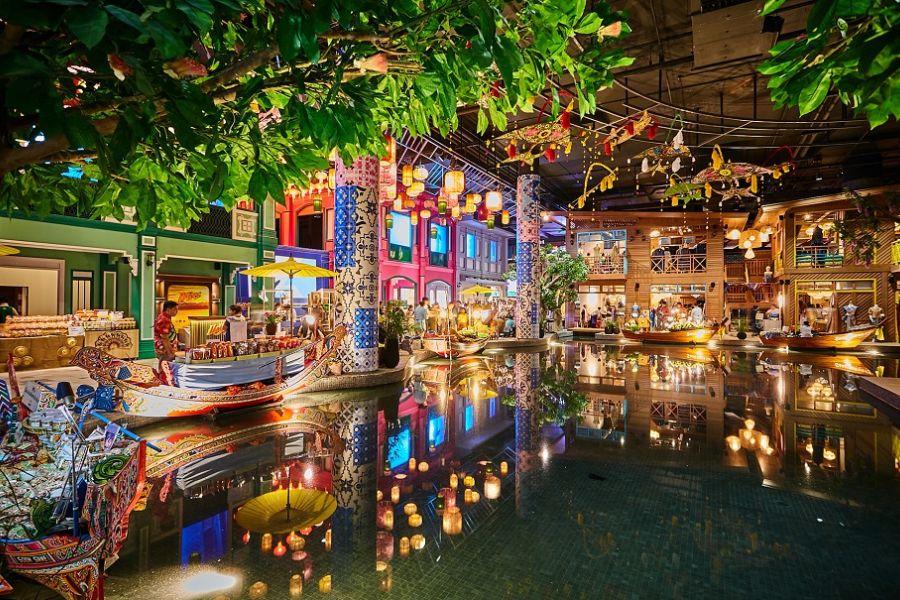
Positioned on the west bank of the Chao Phraya, ICONSIAM represents Bangkok’s modern, design-forward retail scene. On its ground floor, SookSiam recreates an indoor Thai market covering 77 provinces across four cultural zones. Here, local artisans cook regional specialties, from spicy northern sausage to southern curries, directly from wooden longtail boats set within air-conditioned canals, pairing traditional market charm with modern convenience.
- Hours: Daily from 10:00 AM to 10:00 PM.
- Highlights: The upper floors host international designer boutiques, curated art pavilions, and a broad outdoor river terrace that provides sweeping views of the city skyline.
We took the private hotel shuttle boat across to ICONSIAM for lunch. Our travelers enjoyed sampling northern pork sausages and mango sticky rice from indoor longboats at SookSiam in complete air-conditioned comfort, followed by coffee on the panoramic veranda overlooking the river barge traffic.
Treasure Hunt in Chatuchak Weekend Market (Antiques & Artisan Zone)
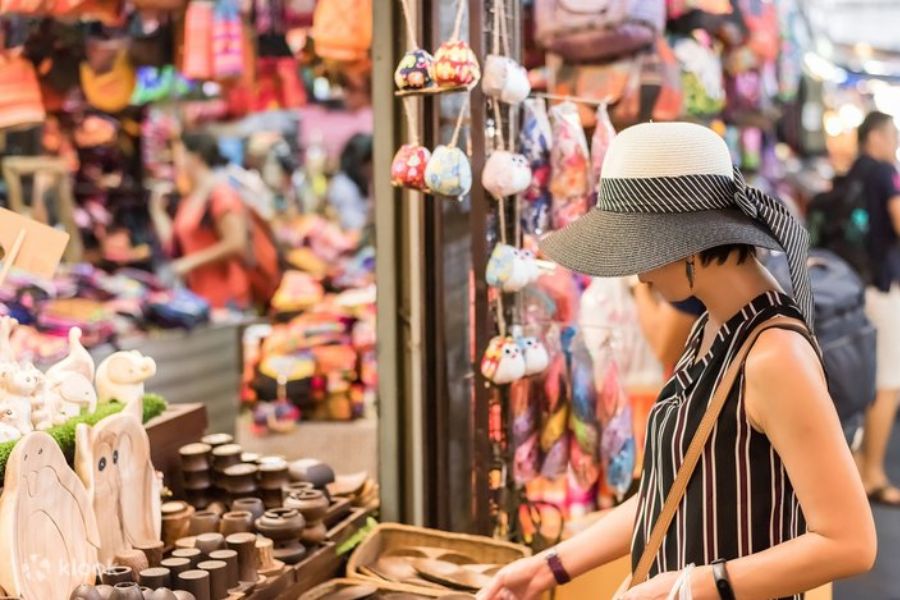
Spanning 35 acres with over 15,000 distinct stalls, Chatuchak (also known locally as “JJ Market”) is among the largest open-air weekend markets in the world. While many aisles offer contemporary casual clothing and souvenirs, dedicated cultural collectors head straight to Sections 1 and 26. These quieter alleys feature seasoned antique dealers, celadon ceramics, hand-woven tribal textiles, custom woodwork, and bronze sculpture.
- Hours: Saturday and Sunday from 9:00 AM to 6:00 PM.
- Strategy: Arrive around 9:00 AM when stalls open to enjoy cooler temperatures and browse easily before midday crowds fill the covered arcades.
We brought our shoppers into Chatuchak at 9:00 AM before the heat peaked. Having a private guide who knew the exact labyrinth corridors of Section 26 helped our guests find beautiful hand-carved teak platters and vintage celadon pottery, with our driver ready nearby to load the packages straight into the air-conditioned van.
Sip Craft Cocktails at Sky-High Rooftop Lounges

Bangkok’s vertical architecture is home to one of the world’s finest collections of high-altitude lounges. Floating forty to seventy stories above the city grid, these venues offer an expansive look at the metropolis below, where glittering expressways trace lines between illuminated skyscrapers and the winding path of the Chao Phraya River.
Top Lounges:
- Mahanakhon SkyWalk: Thailand’s highest observation deck (314 meters), featuring a cantilevered glass tray floor.
- Vertigo & Moon Bar at Banyan Tree: A dramatic open-air dining terrace with panoramic views of the city center.
- Lebua at State Tower: Renowned for its golden dome and wide vistas over the river.
We booked VIP sunset access to the outdoor terrace at Mahanakhon SkyWalk at 5:45 PM. Walking across the glass tray 314 meters above the city grid as the streetlights began to flicker on below was an exhilarating sensory finale for our first-time guests.
Take a Heritage Day Trip to Ancient Ayutthaya (UNESCO)
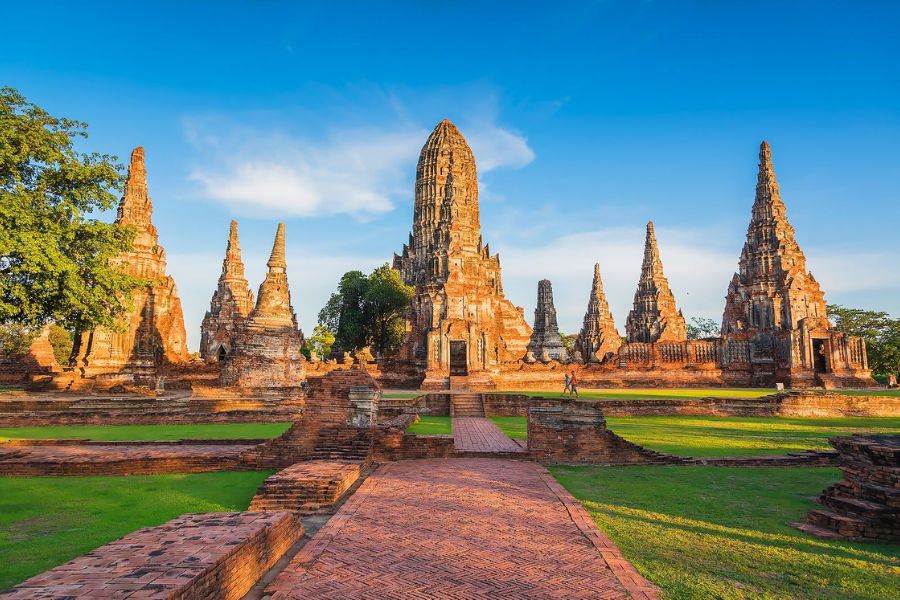
Located just an hour north of modern Bangkok, the historic city of Ayutthaya was the second capital of the Siamese Kingdom from 1350 until its destruction in 1767. Today, this UNESCO World Heritage Site preserves a hauntingly beautiful landscape of weathered red-brick stupas, headless stone Buddhas, and sprawling monastic courtyards surrounded by three merging rivers. It offers an essential historical perspective on the Kingdom before Bangkok was founded.
- Hours: Daily from 8:00 AM to 6:00 PM.
- Must-See Highlights: The famous Buddha head entwined within the roots of a banyan tree at Wat Mahathat, the three monumental bell-shaped stupas of Wat Phra Si Sanphet, and the riverside Khmer prangs of Wat Chaiwatthanaram.
We left Bangkok at 7:30 AM in a private limousine, arriving at Wat Mahathat just as the morning light illuminated the stone Buddha head cradled inside the banyan roots without another tourist in sight. After spending the morning wandering the red-brick ruins of Wat Chaiwatthanaram with our historian guide, we boarded a private river cruiser for a relaxing lunch drift back down the Chao Phraya River directly into central Bangkok.
Essential Practical Tips for First-Timers in Bangkok
- Adhere Strictly to Royal & Sacred Temple Dress Codes: At the Grand Palace, shoulders and ankles must be completely covered. Wraps and scarves draped over sleeveless tops are no longer permitted; you must wear shirts with sleeves and full-length pants or skirts.
- Bypass the Common “Palace is Closed” Conversation: If a friendly stranger, tuk-tuk driver, or passerby outside a temple claims the site is closed for a royal ceremony or cleaning, politely decline and continue directly to the official ticket counter inside the main gate.
- Carry Cash in Small Baht (THB) Denominations: While luxury malls and fine dining venues accept major credit cards, street food carts, water taxis, and temple merit donations operate exclusively in cash. Keep 20, 50, and 100 THB banknotes accessible in a separate pocket.
- Choose Metred Taxis or Trusted Ride-Hailing Apps: Hail bright pink or green-yellow metered taxis and insist on the meter (“Meter na khrap/kha”). During evening rush hours in central districts like Sukhumvit or Silom, using Grab or Bolt guarantees transparent pricing and eliminates route misunderstandings.
- Use the River Express as a Scenic Transit Corridor: The Chao Phraya River is not just a scenic landmark, it is a fast, traffic-free transit highway. The Orange Flag Chao Phraya Express Boat costs a flat 16 THB and stops at major historical piers, including Tha Tien (Wat Pho/Wat Arun) and Tha Chang (Grand Palace).
- Observe Cultural Body Etiquette: In Thai Theravada Buddhist culture, the head is sacred and the feet are spiritually lowest. Never touch anyone on the head (including young children), avoid pointing your feet at Buddha statues or monks, and always remove your shoes before stepping across residential or temple thresholds.
- Hydrate Consciously and Carry Sun Protection: The combination of city heat and stone temple courtyards accelerates dehydration. Drink plenty of bottled mineral water, enjoy fresh young coconuts throughout the day, and carry polarized sunglasses and a lightweight linen hat.
> > > While Bangkok dazzles with its kinetic street food scene, river canals, and gilded temples, the capital also serves as the ideal anchor for a broader Southeast Asian journey. If you want to connect Thailand’s bustling highlights directly with the misty limestone karsts of Halong Bay, lantern-lit evenings in Hoi An, and the ancient stone temples of Angkor Wat, explore our private 18 Days Vietnam-Cambodia and Thailand Discovery.
Frequently Asked Questions (FAQs) for First-Timers
- How many days are ideal for a first-time trip to Bangkok?
3 to 4 days is the sweet spot. This allows you to explore the Grand Palace and top temples, take a private canal cruise, spend an evening sampling street food in Chinatown, and still have time for museum visits, high-end shopping, and an evening at a panoramic rooftop lounge without rushing. - Is Bangkok safe for solo travelers and luxury vacationers?
Yes. Bangkok is considered one of the safest major capitals in Asia. Violent crime targeting international visitors is rare. The most frequent issues are minor transport overcharging or pushy tuk-tuk drivers around prominent tourist monuments, both of which are easy to avoid with standard travel awareness. - Can women wear sandals or open-toed footwear at the Grand Palace?
Yes. Sandals, open-toed shoes, and loafers are allowed for both men and women. The strict dress code applies to clothing on the body: shoulders, midriffs, and legs down to the ankles must be properly covered. - Is street food in Bangkok safe to eat for sensitive stomachs?
Street food in Bangkok is generally fresh and safe, especially when dining at stalls with high local turnover where ingredients are cooked to order over high heat. Look for vendors displaying the municipal “Clean Food Good Taste” certificate, or join a curated food tour to discover trusted stalls. - Should I take a tuk-tuk or an air-conditioned car?
Tuk-tuks are an iconic, fun experience for short evening hops around the Old City or Chinatown. However, for longer daytime trips across the city, an air-conditioned car or modern rail transit (BTS Skytrain and MRT Subway) protects you from midday traffic fumes and tropical heat. - What is the most convenient area to stay for first-time visitors?
For riverside atmosphere and easy access to temples via boat, the Chao Phraya Riverfront (Charoen Krung and Bang Rak) is unmatched. For high-end dining, luxury shopping, and fast Skytrain transit, Siam, Ratchadamri, and lower Sukhumvit offer prime city-center bases.
Why Book a Private Tour in Bangkok?
Bangkok’s greatest charm, its layered, fast-moving energy, can also present logistical challenges for visitors navigating it alone:
- Navigating Dense Urban Geography: Bangkok’s top highlights do not follow a simple grid. The historic temples lie along the river in Ko Ratanakosin, the cultural markets pulse in Thonburi and Chinatown, and the contemporary retail centers stretch through Pathum Wan and Sukhumvit. Coordinated private travel links these varied hubs smoothly, alternating between air-conditioned vehicles and private riverboats so you never lose hours sitting in traffic jams.
- Unlocking Deeper Cultural Layers: Standing before the intricate porcelain spires of Wat Arun or the murals of the Grand Palace, the visual detail is stunning. A knowledgeable private guide brings those sights to life, deciphering hidden architectural symbolism, sharing historical palace intrigues, and introducing you to quiet neighborhood artisans you would otherwise miss.
- Tailoring Daily Rhythm to Real-Time Energy: The best urban days leave room for spontaneity. With a private arrangement, you can easily tweak the pace as you go, pausing mid-morning for an iced coconut at a shaded riverside cafe, lingering longer in Chatuchak’s artisan quarter, or swapping an afternoon walking tour for an impromptu foot massage when you need a break.
Whether watching dawn illuminate the porcelain mosaic spires of Wat Arun or taking in the city lights from an open-air rooftop lounge high above the streets, Bangkok leaves a lasting impression on everyone who visits.
If you are planning a broader voyage across the region, Bangkok pairs naturally with the mist-shrouded limestone towers of Vietnam and the ancient temple sanctuaries of Cambodia. Let us design a tailored itinerary that matches your personal pace, curated from your first morning in the capital to your final evening along the river.
Tags: bangkok, bangkok first time, bangkok things to do, bangkok travel places, thailand luxury tours, thailand private tours, Thailand tours, things to do in bangkok, things to do in bkk, what to do in bangkok