
The best time to visit Laos for most travellers is from November to February, when the weather is generally drier and cooler, making it easier to explore temples, villages, river towns and the mountainous north. This is also the most comfortable period for walking, trekking and longer journeys by road.
However, after years of planning trips across Laos and Southeast Asia, we would not choose travel dates based on temperature alone. October and early November are often particularly rewarding because the rains are easing, the countryside is still green and waterfalls usually carry more water than they do later in the dry season. Travelling from May to September can also work well for those who prefer lush scenery, fewer visitors and a slower pace.
Laos has a tropical monsoon climate, but its mountains, plateaus and Mekong lowlands mean that conditions can feel very different from one place to another. Northern highlands are generally cooler than the plains, while southern Laos tends to remain warmer throughout the year.
So rather than asking only, “What is the best month to visit Laos?”, it is more useful to consider where you want to go, what you want to experience and how much flexibility you have. This guide covers Laos weather by month, seasonal differences, regional conditions and the practical factors we consider when planning a journey.
Best Time to Visit Laos: A Quick Guide to the Seasons
Laos has two broad climatic seasons. The rainy or monsoon season generally runs from May to around mid-October, while the dry season lasts from mid-October to April. Within the dry season, November to February is noticeably cooler, while March and April become increasingly hot.
For first-time visitors travelling through several parts of the country, November to February is usually the easiest time to go to Laos. Conditions are more predictable, road travel is generally easier and the temperatures are comfortable enough for both cultural sightseeing and outdoor activities.
|
Period |
Typical conditions |
Best suited to |
What to consider |
|
November–February |
Cooler and mostly dry |
First visits, cultural touring, trekking, river journeys |
Most popular travel period |
|
March–April |
Dry but increasingly hot |
Festivals, cultural trips, slower itineraries |
Heat and seasonal haze |
|
May–June |
Beginning of rainy season |
Green landscapes, quieter travel |
Increasing humidity and showers |
|
July–September |
Wettest period |
Waterfalls, photography, lush countryside |
Rural roads can be slower |
|
October |
Rain easing, countryside still green |
Scenic touring, waterfalls, fewer crowds |
Some rain remains possible |
From our experience, if a traveller has complete freedom over their dates, we often look first at late October to February rather than automatically choosing December or January. Late October and November can offer an excellent balance between comfortable conditions and greener landscapes, especially for travellers interested in scenery and photography.
Understanding Laos Weather: Dry Season, Rainy Season and Regional Climate
The climate in Laos is tropical and monsoonal, but altitude creates important regional differences. Northern mountainous areas are cooler than the lowlands, while the Mekong plains remain warmer. This is why a single national weather forecast does not tell the whole story.
A January morning in northern Laos can feel surprisingly cool, while southern Laos may already be pleasantly warm. The Bolaven Plateau can also feel noticeably fresher than nearby Pakse because of its elevation, so we always look at the actual route rather than treating Laos as one climate zone.
When Is the Dry Season in Laos?

The dry season broadly runs from mid-October to April, but we normally think of it as two different travel periods. November to February is the cooler part of the dry season and is generally the easiest period for walking tours, cycling, trekking, temples and longer road journeys.
March and April remain mostly dry but become considerably hotter, particularly in lower-lying areas. This does not mean we would avoid Laos completely during these months, but the itinerary should change. We prefer earlier sightseeing, a longer break around midday and fewer outdoor activities scheduled back-to-back in the afternoon.
When Is the Rainy and Monsoon Season in Laos?
The monsoon season in Laos generally lasts from May until around mid-October, with higher humidity and more frequent rainfall. The wettest period usually falls between July and September, although conditions vary considerably between regions and from year to year.
The rainy season in Laos does not necessarily mean rain continuously from morning until evening. There can be clear mornings, cloudier afternoons and relatively short heavy showers, but prolonged rain is also possible. For us, the more useful question is not simply whether it will rain, but how much of the itinerary depends on road conditions, trekking trails or fixed outdoor activities.
A cultural journey centred on Luang Prabang and Vientiane is much easier to manage during the wet season than a tightly scheduled trip involving several remote mountain roads. That difference is important when choosing both the route and the pace of the journey.
Laos Weather by Month: What to Expect from January to December
Monthly averages are useful, but they should be treated as a guide rather than a guarantee. Elevation and location can create significant differences in weather in Laos, especially between the northern mountains, the central lowlands and southern Laos.
For travellers, this is the most practical way we look at Laos weather by month:
|
Month |
General weather |
What travel feels like |
Our travel expert view |
|
January |
Cool and dry |
Excellent for touring, trekking and walking |
One of the easiest months for a first trip. Bring a light layer for northern mornings and river journeys. |
|
February |
Dry and gradually warmer |
Very good for cultural sightseeing and outdoor activities |
Still an excellent month, although haze can begin to appear toward the end of the dry season. |
|
March |
Hotter and dry |
Sightseeing remains easy but afternoons can feel hot |
We prefer earlier starts and a slower pace. Check air quality if northern mountain scenery is important. |
|
April |
Very hot, mostly dry |
Cultural travel and festivals |
Worth considering for Pi Mai Lao, but the itinerary should allow more rest and less midday sightseeing. |
|
May |
Hot with increasing showers |
Countryside begins turning green |
A good transition month for travellers who accept some rain and prefer fewer visitors. |
|
June |
Warm, humid and wetter |
Green landscapes and stronger waterfalls |
Still very workable for cultural trips. We keep outdoor plans flexible. |
|
July |
Wet and humid |
Lush countryside, good waterfalls |
Excellent scenery, but trekking trails and rural roads need more attention. |
|
August |
One of the wetter months |
Very green, slower travel |
Better for travellers who do not mind adjusting plans. Avoid overly tight road itineraries. |
|
September |
Wet but approaching the end of the monsoon |
Strong waterfalls and green landscapes |
Good for photography and nature, but allow extra time on less-developed roads. |
|
October |
Rain decreasing |
Green scenery with improving conditions |
One of our favourite shoulder-season options, especially later in the month. |
|
November |
Comfortable, increasingly dry |
Excellent for touring most regions |
Possibly the best-balanced month for a first visit. |
|
December |
Cool and dry |
Very comfortable for sightseeing and outdoor activities |
Excellent weather, but book preferred hotels early, especially around Luang Prabang. |
One mistake we often see is choosing the driest possible month without considering how the landscape changes. A traveller visiting the Bolaven Plateau mainly for waterfalls may enjoy September or October more than April, while someone planning trekking in northern Laos will usually prefer December or January.
That is why we use monthly weather as one part of itinerary planning rather than the only deciding factor. The best month on a climate chart is not always the best month for the experience a traveller actually wants.
What Is the Best Month to Visit Laos for Good Weather?
If we had to choose one month for a first-time traveller, November would be one of our strongest recommendations. The main rains have usually eased, temperatures are becoming more comfortable and many rural areas remain greener than they will be later in the dry season.
For travellers who want the most reliable dry conditions, the wider period from November to February remains the safest choice. However, the best month to visit Laos depends on what matters most to you:
- November to February: best overall for comfortable touring.
- October to November: excellent for a balance of green landscapes and improving weather.
- July to September: best for fuller waterfalls and lush countryside.
- December to February: particularly comfortable for trekking and outdoor activities.
- April: best for travellers who specifically want to experience Pi Mai Lao.
Pi Mai Lao, the Lao New Year, is one of the country’s most important annual celebrations and takes place in April. It can be a rewarding time to visit, but we would not recommend it purely on weather grounds because the heat can be intense and the atmosphere much livelier than during a normal touring period.
Our advice is simple: choose April for the festival, not because you are looking for the most comfortable weather. A Pi Mai itinerary should be designed with more flexibility around transport, sightseeing times and the pace of each day.
How Laos Weather Changes Between Northern, Central and Southern Laos
One of the most important things we explain to travellers is that Laos should not be treated as one climate zone. The same month can feel quite different depending on whether you are in Luang Prabang, Vientiane, the Bolaven Plateau or the Mekong lowlands.
Luang Prabang and Northern Laos
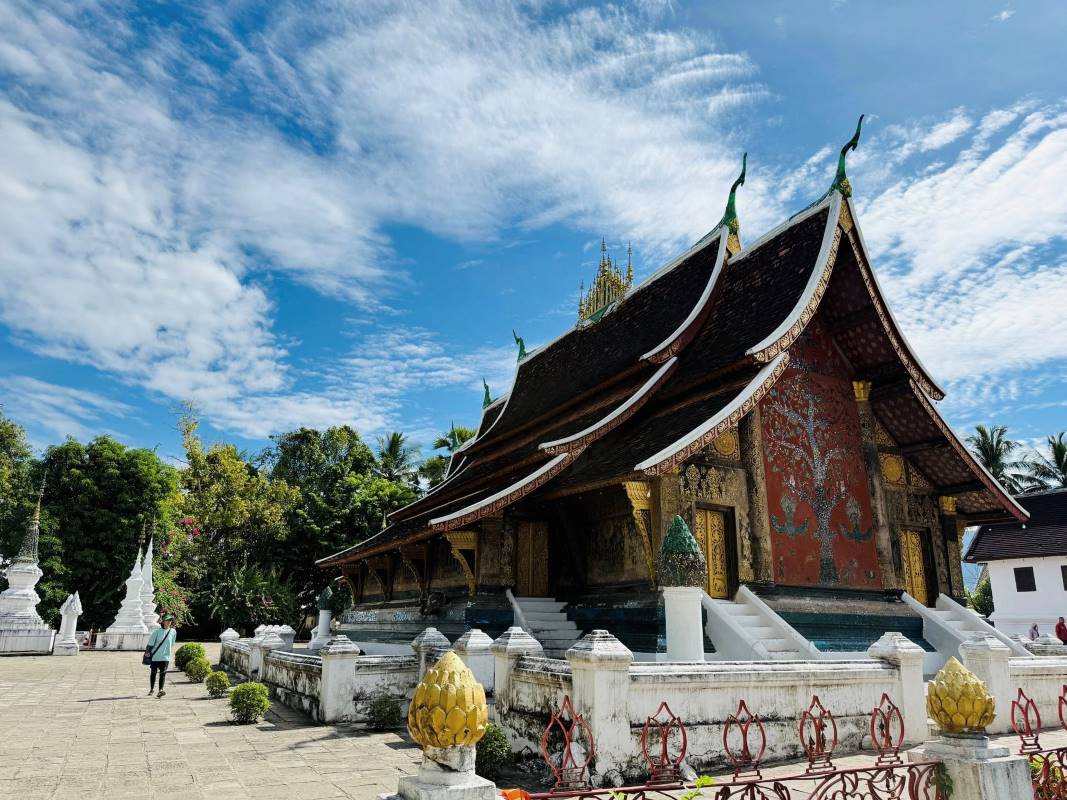
Northern Laos is more mountainous, so winter mornings and evenings can be considerably cooler than visitors expect. November to February is particularly good for Luang Prabang, Nong Khiaw and journeys into northern communities because cooler temperatures make walking, village visits and outdoor activities more comfortable.
March and April require more thought because the weather becomes hotter and seasonal haze can affect northern Laos. For travellers whose priorities include mountain photography or clear views, this matters. From our experience planning northern routes, we would rather make travellers aware of this before they book than simply describe March as a “dry month”, because dry weather does not always mean the best visibility.
During the rainy season, the scenery becomes much greener, but mountain roads and trekking trails can also take longer. For private itineraries, we normally leave more time between stops and avoid making important connections immediately after a long rural transfer.
Vientiane, Vang Vieng and Central Laos
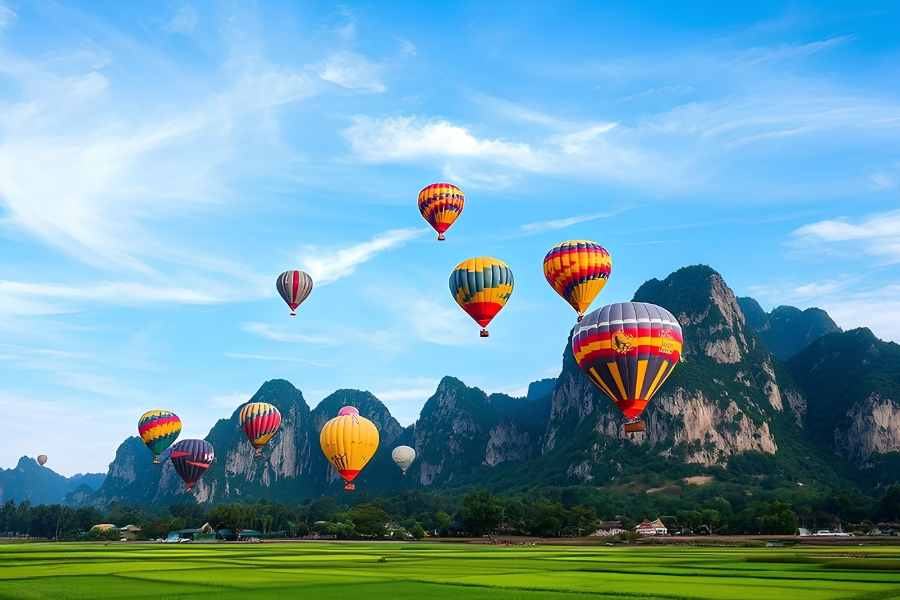
Central Laos generally feels warmer than the northern highlands. November to February is comfortable for exploring Vientiane and works particularly well for outdoor activities around Vang Vieng.
The rainy season changes the scenery considerably, with greener limestone mountains and more lush countryside. However, hiking trails can become slippery and outdoor activities may need to move according to the weather. For private trips, that flexibility is useful because we can adjust the day rather than forcing every activity to take place at a fixed hour.
Pakse, the Bolaven Plateau and Southern Laos

Southern Laos tends to remain warmer, particularly around Pakse and the Mekong lowlands. The Bolaven Plateau is an exception because its higher elevation brings cooler conditions and creates a welcome contrast to the heat in lower areas.
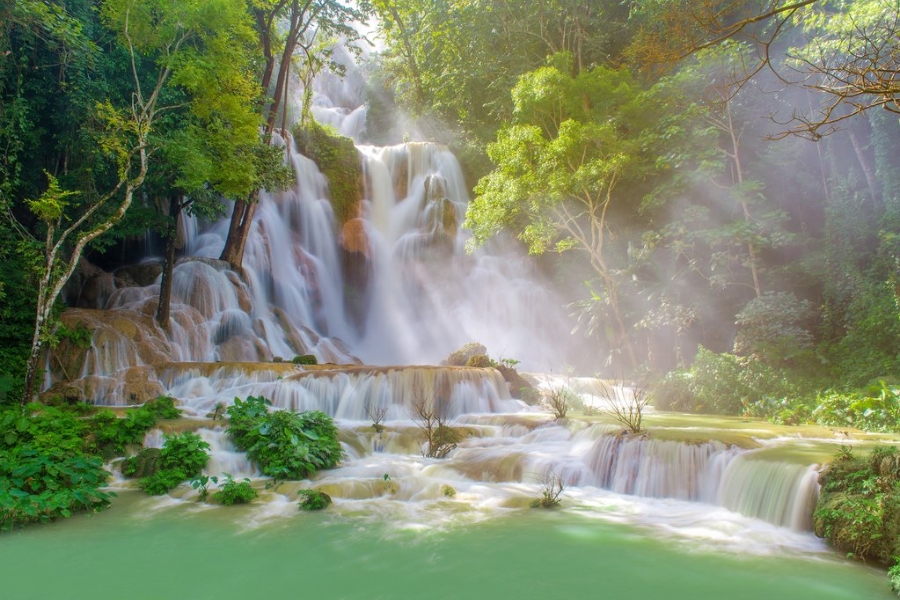
It is also one of the regions where the rainy season can add to the experience rather than reduce it. Waterfalls become more powerful and the surrounding landscape is greener, so travellers who place waterfalls and nature high on their list should not automatically assume the dry season is best.
For a journey combining Pakse, the Bolaven Plateau and the 4,000 Islands, we normally look at the overall balance between rain, river conditions and the type of activities planned rather than choosing dates based on temperature alone.
Is the Rainy Season a Good Time to Visit Laos?

Yes, provided the itinerary suits the season. We would not describe the rainy season in Laos as a period that travellers should automatically avoid, because it brings some real advantages.
The countryside is greener, waterfalls are generally stronger, rice-growing areas are more scenic and popular destinations can feel quieter. Photography can also be particularly rewarding when clouds and mist gather around the mountains.
The trade-off is flexibility. Heavy rain can slow rural travel, affect trekking conditions or require an outdoor visit to move to another part of the day. Humidity is also higher, and a tightly scheduled itinerary becomes less practical.
One lesson from planning private journeys is that the number of destinations matters more during the rainy season. A relaxed trip spending three nights in Luang Prabang is much easier to manage than an itinerary changing hotels almost every night, so we tend to reduce unnecessary long transfers and leave more breathing room in wet-season programmes.
For travellers who enjoy slow travel and do not need blue skies every day, the green season can be a very rewarding time to see Laos.
Practical Travel Tips for Visiting Laos in Any Season
Choosing the right dates is only the beginning. These are some of the practical points we consider when planning a Laos itinerary.
- Start early in the hotter months: From March to April, visit temples, markets and viewpoints in the morning where possible. We normally leave the hottest part of the afternoon for lunch, the hotel or a shorter indoor visit.
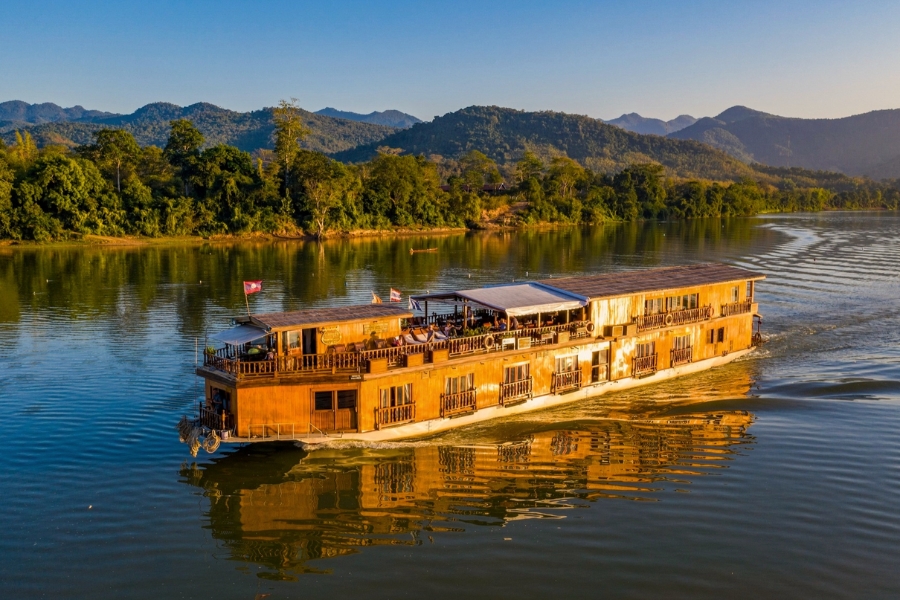
- Pack a light warm layer for northern Laos: December and January can feel cooler than many Southeast Asia travellers expect, particularly in the early morning, on river boats and at higher elevations.
- Do not assume the rainy season means rain all day: There can still be long dry periods, but avoid scheduling every outdoor activity with no alternative. A little flexibility makes a substantial difference.
- Allow extra time for rural journeys in the wet season: Mountain and secondary roads can be slower after sustained rain. We avoid planning important flight or border connections immediately after a long rural transfer.
- Choose practical footwear: Shoes with good grip are useful for waterfall paths, village walks, viewpoints and wet surfaces. They are often more useful than bringing several pairs of formal shoes.
- Check air quality for northern Laos in March and April: Seasonal burning can affect visibility and outdoor comfort. This is particularly relevant for travellers interested in photography, mountain views or extended outdoor activities.
- Choose waterfall timing according to what you want to see: If Kuang Si or the Bolaven Plateau is central to the trip, consider the wet or early post-monsoon period rather than automatically choosing the driest month.
- Book preferred hotels early from November to February: Good boutique properties and preferred room categories in Luang Prabang can be more limited during popular travel periods. For a private or higher-end trip, we prefer securing the right stay rather than choosing from what remains later.
- Keep river journeys season-sensitive: Mekong conditions change through the year. Check the actual route and local operating conditions rather than relying on a generic “best season” rule.
- Match the pace to the weather: A schedule that feels comfortable in January can be tiring in April. Likewise, a wet-season journey benefits from fewer unnecessary hotel changes and more flexibility.
Private Laos Tours Designed Around the Season
Good timing is only part of planning Laos well. Road conditions, river levels, temperatures, hotel locations and the pace of the journey can all affect how comfortable a trip feels.
With our Laos private tours, we can adapt the route around your dates, interests and preferred pace rather than using exactly the same itinerary in every month of the year. Our Laos tours can focus on Luang Prabang and the north, continue through Vang Vieng and Vientiane, explore southern Laos, or connect with Vietnam, Cambodia and Thailand.
For travellers considering Laos luxury tours, our approach to luxury is practical. It means good local guides, private transport, carefully chosen stays, sensible travel times and enough flexibility to experience a place without feeling rushed.
Sometimes the most valuable change is not upgrading a hotel. It is adding an extra night, starting a tour an hour earlier or removing an unnecessary long drive so the journey feels better from day to day.
Frequently Asked Questions About the Best Time to Visit Laos
- What is the best time to visit Laos?
For most first-time travellers, the best time to visit Laos is from November to February. Conditions are generally cooler and drier, making it easier to combine temples, outdoor activities and longer journeys. October and early November are also excellent options for travellers who prefer greener landscapes. - What is the best month to visit Laos?
November is one of our preferred all-round choices because rainfall has usually reduced, temperatures are comfortable and much of the countryside can still be green. January and February tend to offer drier conditions, while October is attractive for travellers who prioritise waterfalls and scenery. - When is the rainy season in Laos?
The rainy or monsoon season in Laos generally runs from May to around mid-October. Rainfall is higher and humidity increases, although conditions vary by region and altitude. - What is the hottest month in Laos?
April is typically one of the hottest periods of the year, with March and May also feeling very warm in many lowland areas. Travellers visiting at this time should plan more outdoor sightseeing in the morning and allow for a slower afternoon. - Is Laos worth visiting during the monsoon season?
Yes. The monsoon season brings greener countryside, stronger waterfalls and generally fewer visitors. It works particularly well for travellers who enjoy a slower pace and are comfortable with occasional changes to outdoor plans. - How many days do you need in Laos?
For a first visit, around seven to ten days gives enough time to enjoy Laos without rushing. A wider journey incorporating northern Laos, the Bolaven Plateau or the 4,000 Islands is better with around 10 to 14 days.
From our experience, adding an extra night in the right place is usually more valuable than trying to fit another destination into an already busy itinerary.
Finding the Right Time for Your Laos Journey
There is no single perfect month for every traveller. November to February is the easiest period for most first-time visitors, while October and early November offer an appealing combination of green scenery and improving weather. The rainy season brings stronger waterfalls, lush landscapes and a quieter style of travel.
After planning trips in Laos and across Southeast Asia, our view is simple: the best itinerary is not the one that ignores the season, but the one that works with it. Sometimes that means starting earlier because of the heat, spending three nights rather than two in Luang Prabang, or reducing long road journeys during the rains.
If you are unsure when to travel, tell our local team which places you would like to see, how long you have and what matters most to you. We can recommend the season, route and pace that make the most sense for your journey through Laos.
Tags: best month to visit Laos, best time to go to Laos, Best time to visit Laos, climate in laos, Laos, laos luxury tours, laos private tours, laos tours, Laos weather, laos weather by month, monsoon season in laos, rainy season laos, weather in Laos