Siem Reap
Siem Reap is the gateway to Angkor, but the experience here reaches well beyond its most famous temple. The Angkor Archaeological Park contains centuries of Khmer history, from the vast towers of Angkor Wat and the carved faces of Bayon to forest covered Ta Prohm, smaller temples and ancient reservoirs spread across the countryside. Outside the archaeological park, village roads, rice fields, local markets, traditional crafts and the communities around Tonle Sap offer another view of life in northwest Cambodia. With good hotels, a growing food scene and plenty to explore at an unhurried pace, Siem Reap deserves at least three days rather than a rushed visit to Angkor alone.
The Character of Siem Reap
More than a gateway to Angkor
Angkor is the reason most travelers first come to Siem Reap, and rightly so. The scale of the ancient Khmer capital is difficult to understand until you begin travelling between its temples, reservoirs, forests and old roads.
Angkor Wat may be the best known monument, but it represents only one part of the story.
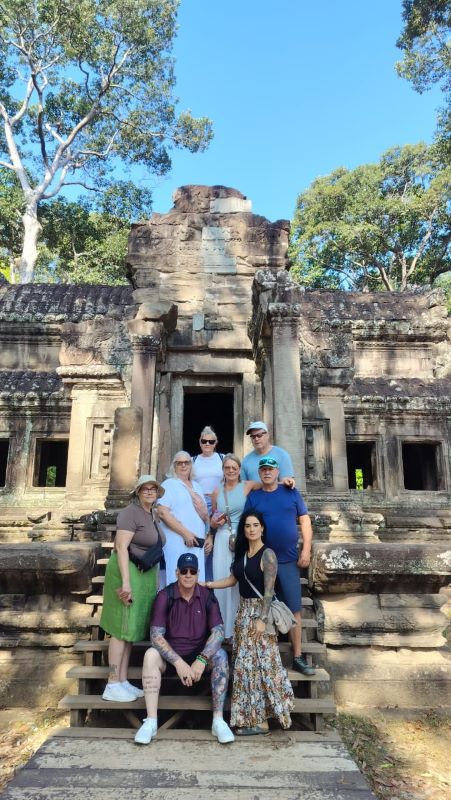
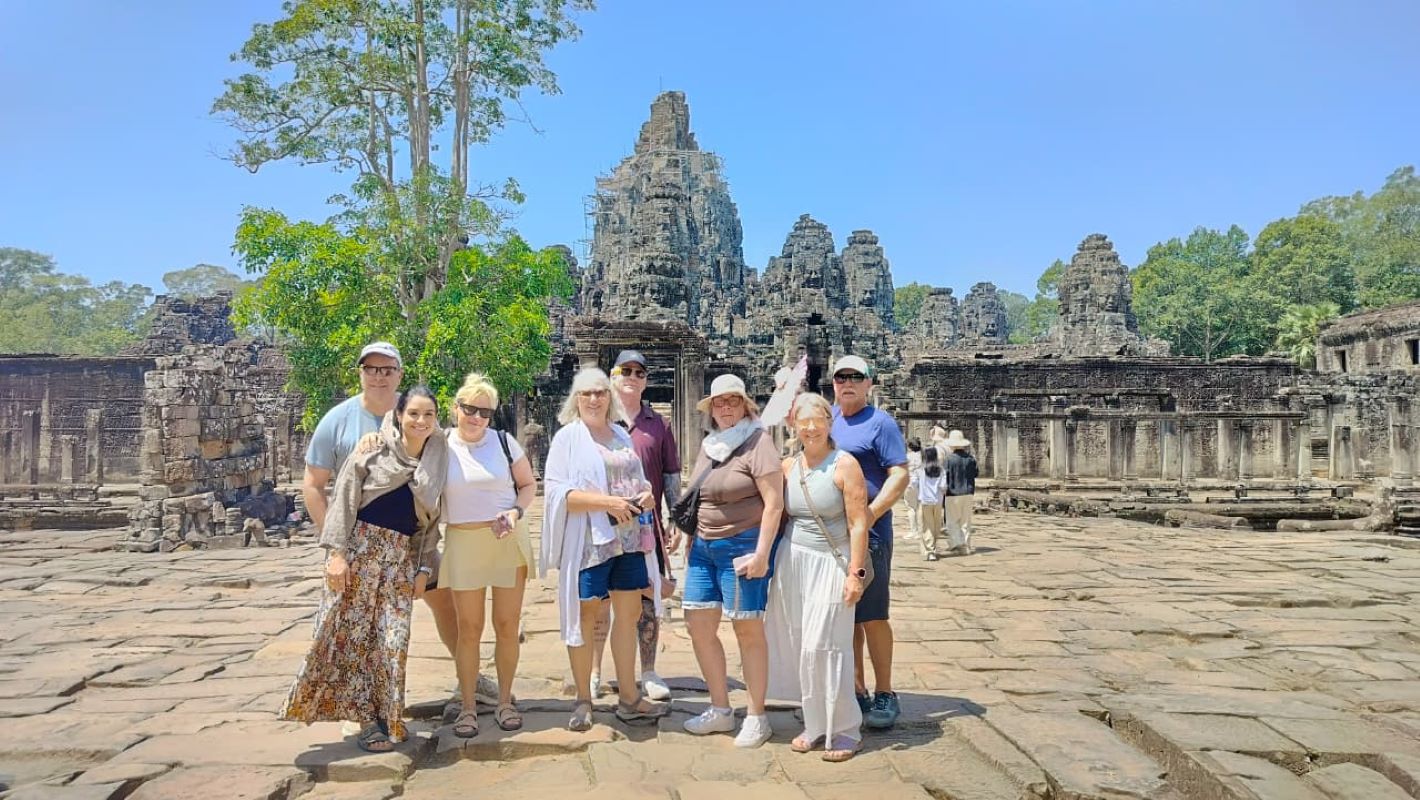
Inside Angkor Thom, the faces of Bayon look out across the former royal city, while the Terrace of the Elephants and nearby ruins reveal the scale of what once stood here. At Ta Prohm, tree roots grow through stone walls and courtyards, showing a very different relationship between the temples and the surrounding forest.
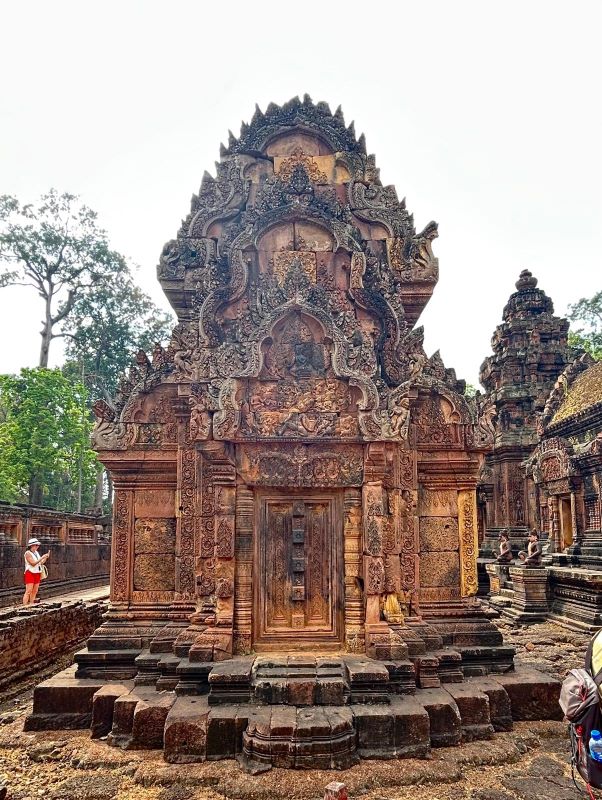
Travel further and the atmosphere changes again. Banteay Srei is smaller and more detailed, with intricate carvings in warm colored sandstone. Preah Khan has long corridors and quieter corners to explore, while temples further from the central circuit reward travelers who are willing to spend more time on the road.
The temples are extraordinary, but seeing too many in one day can quickly reduce them to a sequence of stones and photographs. We prefer to choose carefully, begin at the right time and leave enough space between visits.
Siem Reap itself provides an easy contrast. Cafés, restaurants, markets and small hotels give the town a relaxed atmosphere, while only a short drive beyond the center brings you into rice fields and rural communities.
For us, the best Siem Reap journeys balance Angkor with the Cambodia that exists around it today.
Why Visit Siem Reap
Explore one of Southeast Asia’s great historic sites
Angkor was the centre of the Khmer Empire for centuries, and its surviving temples offer an extraordinary record of Cambodian architecture, religion and history.
Discover more than Angkor Wat
Bayon, Ta Prohm, Banteay Srei, Preah Khan and many smaller temples each offer a very different experience.
Travel into the Cambodian countryside
Rice fields, villages, farms and local roads begin only a short distance outside Siem Reap, making it easy to see another side of the region.
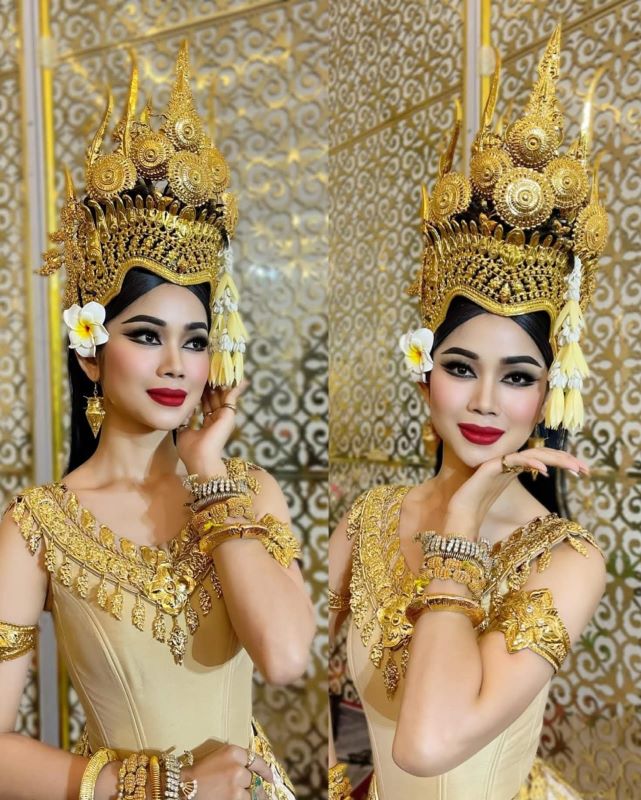
Experience Khmer culture today
Traditional crafts, food, markets, contemporary art and local social enterprises show that Siem Reap is not defined only by its ancient past.
Visit Tonle Sap
The great lake plays an important role in Cambodian life and provides an opportunity to learn about communities whose livelihoods remain closely connected to water and fishing.
Stay long enough to slow down
Siem Reap is one of those destinations where an extra day improves the experience. Temples can be explored in the cooler hours, with time left for the hotel, countryside, food or simply a quiet afternoon.
Experiences We Love in Siem Reap
• Enter Angkor Wat early in the morning before exploring its galleries, courtyards and upper levels.
• Walk beneath the stone faces of Bayon inside Angkor Thom.
• Explore Ta Prohm while tree roots still weave through the temple walls.
• Travel further into the countryside to see the detailed carvings of Banteay Srei.
• Visit one or two smaller temples away from the busiest central circuit.
• Cycle or travel by private vehicle through villages and rice fields outside Siem Reap.
• Meet local artisans working with traditional Cambodian crafts.
• Discover Khmer food through markets, local restaurants and a thoughtfully planned dinner.
• Spend an afternoon at your hotel between temple days rather than sightseeing continuously.
• Travel towards Tonle Sap with a responsible local operator to understand life around the lake.
Exploring Angkor
Angkor is not a single temple.
The archaeological area covers a vast landscape that once contained cities, reservoirs, roads, temples and communities connected with the Khmer Empire.
Trying to see everything is neither possible nor necessary.
A better approach is to understand the character of the main temples and choose a route that gives each visit enough time.
Angkor Wat
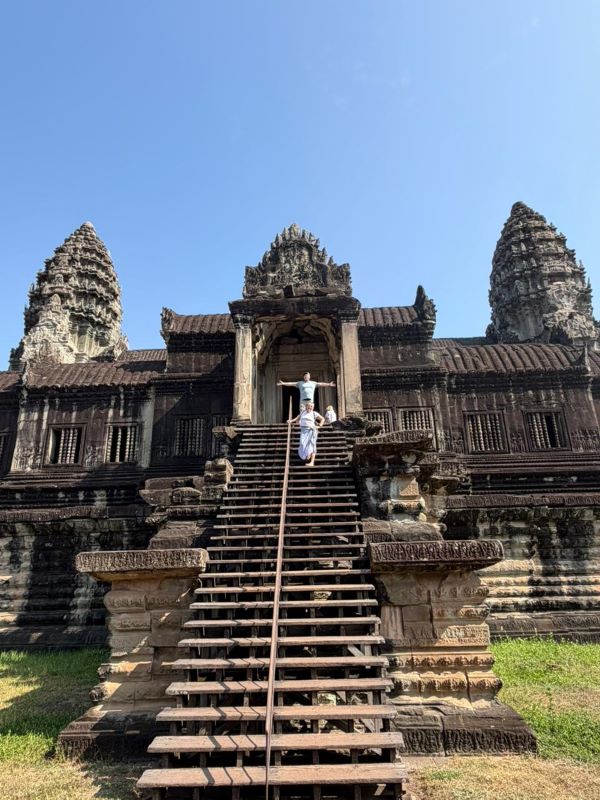
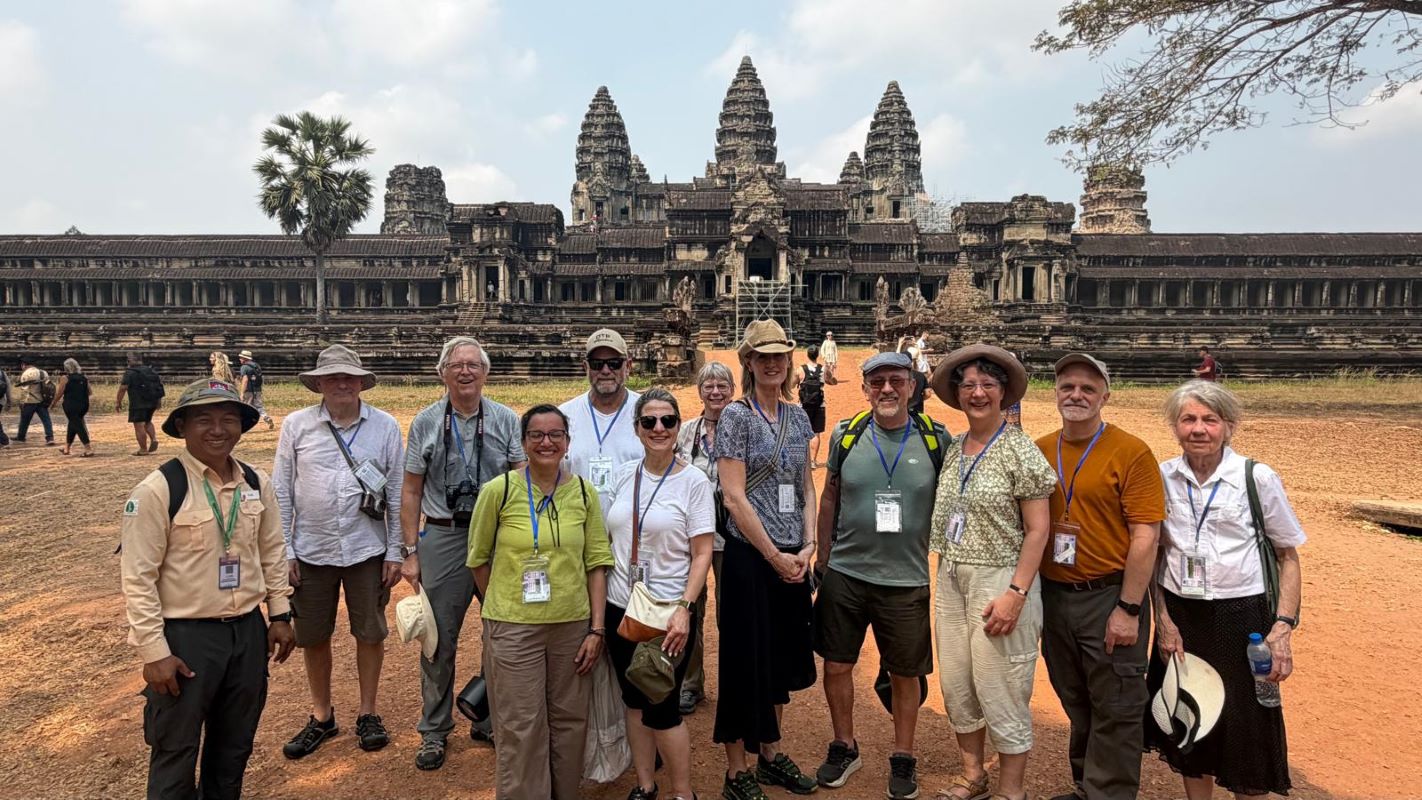
Angkor Wat is Cambodia’s most recognizable monument and one of the finest surviving examples of Khmer architecture.
Originally built in the early twelfth century under King Suryavarman II, the temple is surrounded by a broad moat and approached along a long causeway before the central towers gradually come into view.
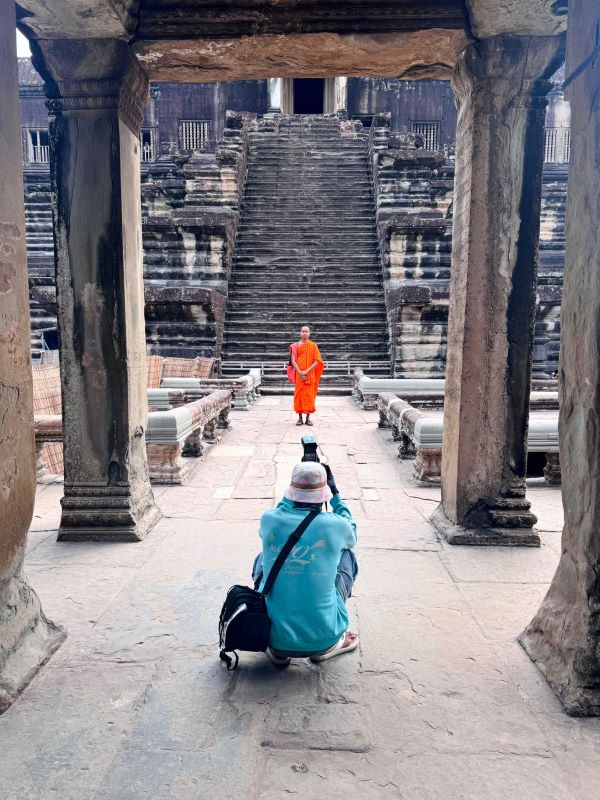
Inside, galleries contain extensive bas reliefs depicting mythology, royal processions and scenes of conflict.
Most visitors come for sunrise, but sunrise is not automatically the best experience for everyone. It requires a very early start and can be busy around the main reflecting pools.
For some travelers, visiting slightly later or returning in softer afternoon light can be equally rewarding.
We prefer to plan the timing around your interests rather than treating sunrise as compulsory.
Angkor Thom and Bayon
Angkor Thom was the great walled city established under King Jayavarman VII.
Entering through one of its monumental gates gives a sense of the scale of the former capital before reaching Bayon at its center.
Bayon is completely different from Angkor Wat. Its towers are decorated with large stone faces, while galleries below contain detailed carvings showing battles, ceremonies and scenes of daily life.
Nearby, the Terrace of the Elephants and Terrace of the Leper King reveal further parts of the former royal complex.
This area deserves time to walk rather than simply stopping beside Bayon for photographs.
Ta Prohm
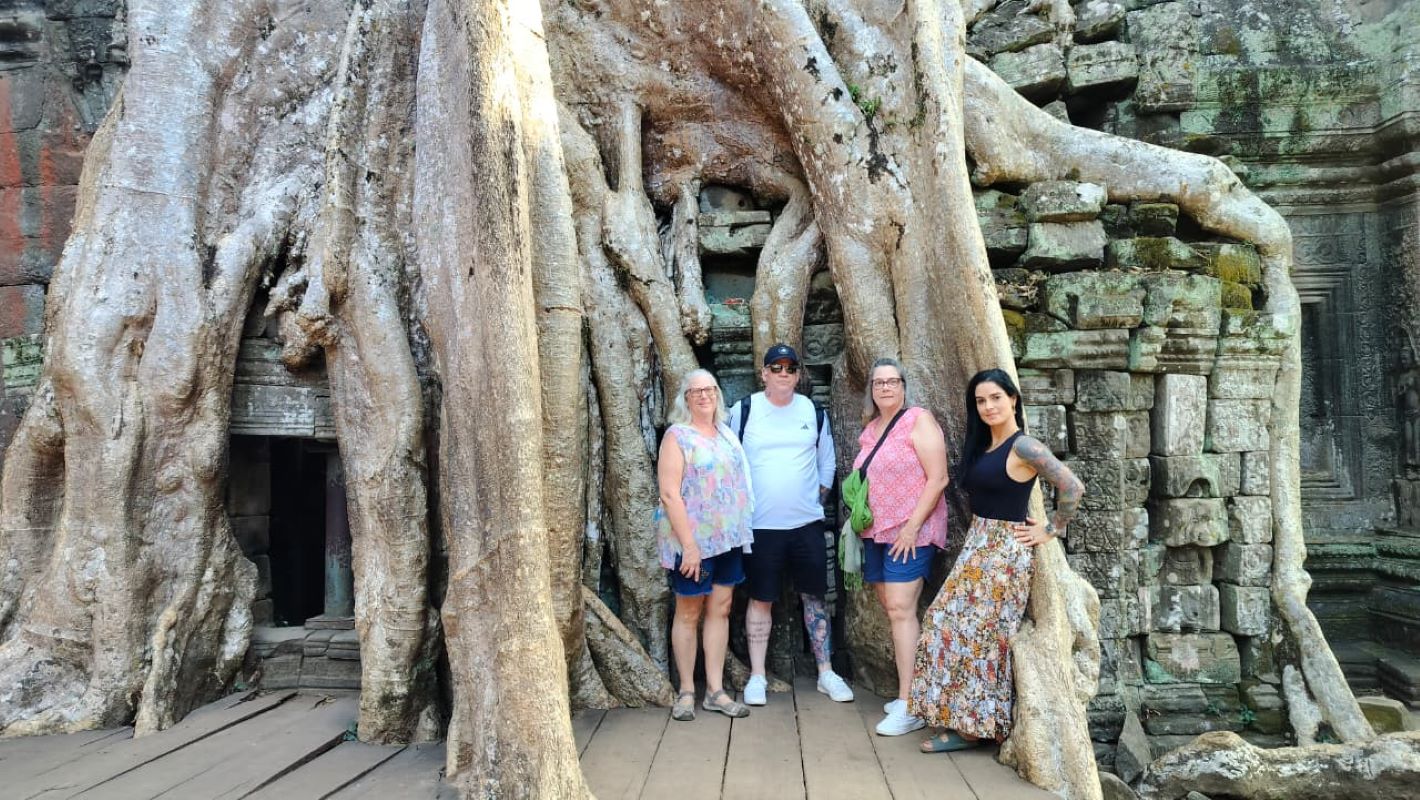
Ta Prohm is known for the enormous trees growing among its walls.
Unlike many temples that were extensively cleared during restoration, parts of Ta Prohm were deliberately left with the forest closely intertwined with the ruins.
Roots pass across doorways and stone blocks, while narrow corridors and collapsed sections make the temple feel very different from the open scale of Angkor Wat.
It is one of Angkor’s most popular temples, so timing the visit carefully can make a significant difference.
Banteay Srei
Banteay Srei lies further from central Angkor and is much smaller than the major temples.
Its appeal comes from the quality of its carvings. Built from reddish sandstone, doorways and walls are covered with remarkably detailed decorative work.
The drive also provides an opportunity to see more of the countryside outside the main archaeological area.
We often combine Banteay Srei with one or two rural stops rather than treating the journey simply as transportation to another temple.
Beyond the Main Temples
Once the essential temples have been seen, Angkor becomes much more flexible.
Preah Khan
Preah Khan is a large temple complex with long corridors, courtyards and areas where vegetation remains close to the ruins.
It receives fewer visitors than Angkor Wat or Ta Prohm at many times of day and can be particularly rewarding for travelers who enjoy exploring at a slower pace.
Neak Pean
Neak Pean is a small temple surrounded by water and reached via a walkway across the former reservoir of Jayatataka.
It works naturally with Preah Khan as part of the wider Grand Circuit.
Pre Rup
Pre Rup is a brick and laterite temple with upper levels overlooking the surrounding countryside.
It can be particularly attractive later in the day, although sunset locations around Angkor can become busy.
Roluos Group
The temples at Roluos predate Angkor Wat and provide useful context for the development of Khmer temple architecture.
They are worth considering for travelers particularly interested in history or those with an additional day.
There is no reason to include every temple simply because time allows. After several major sites, a countryside experience or free afternoon may add more to the journey than another ruin.
Sunrise at Angkor Wat
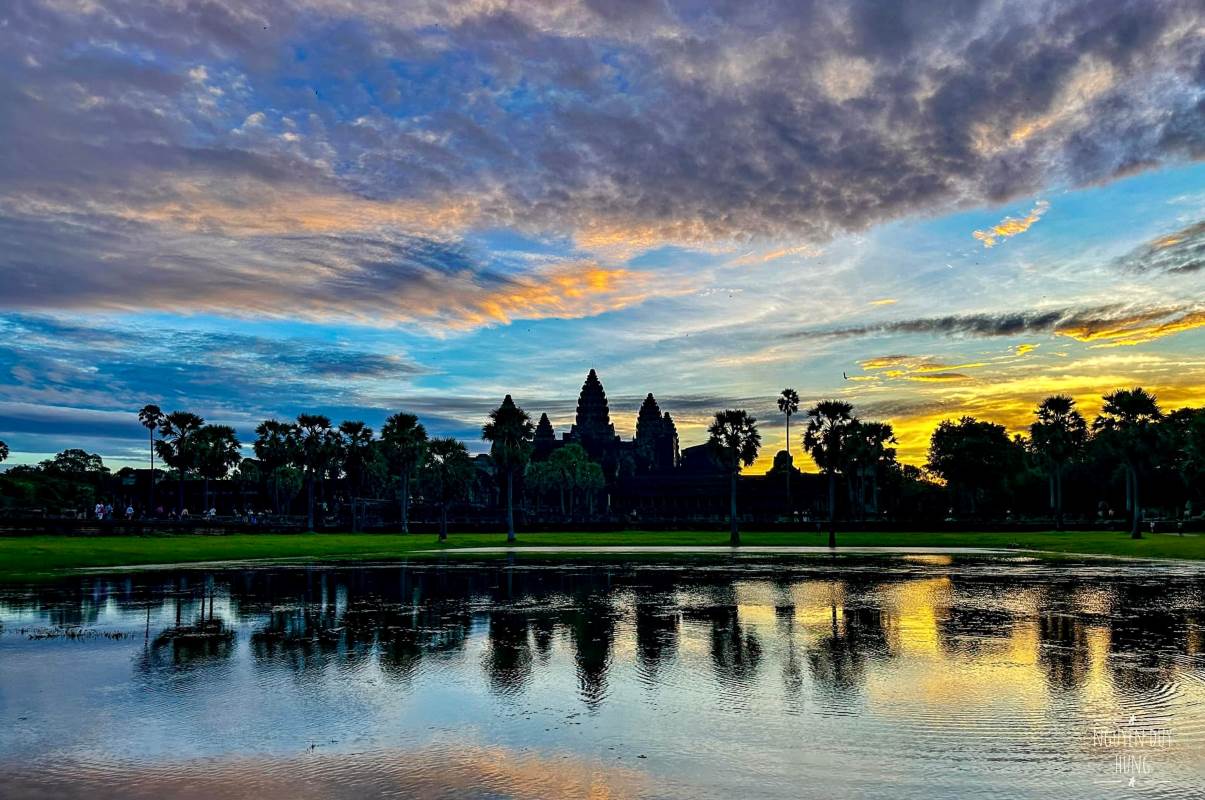
Sunrise at Angkor Wat has become one of Cambodia’s most familiar travel experiences.
On a clear morning, the towers appear gradually against the changing sky, often reflected in the pools in front of the temple.
It can be beautiful, but it is also popular.
A very early departure is required, and the main viewpoints may be crowded. Weather can also affect the sunrise considerably.
We therefore treat sunrise as a choice rather than an obligation.
Travelers interested in photography may find the early start worthwhile. Families with young children or guests who prefer slower mornings may enjoy Angkor more by arriving after breakfast and planning the day around quieter periods.
What matters most is not being at Angkor Wat at the same time as everyone else simply because that is what a standard itinerary says to do.
Beyond Angkor
Siem Reap becomes a more complete destination when some time is spent away from the temples.
Only a short distance from town, roads pass through rice fields, farms and villages where daily life feels far removed from the main archaeological circuit.
A private countryside journey might include a local market, village roads, a family workshop or time with people involved in farming and traditional crafts.
Cycling is another good option in suitable areas, particularly early in the morning or later afternoon when temperatures are more comfortable.
We prefer to keep these experiences simple. The purpose is not to create a performance of village life but to give travelers a better understanding of the region around Angkor.
Tonle Sap and Floating Communities
Tonle Sap is the largest freshwater lake in Southeast Asia and plays an important role in Cambodia’s ecology, agriculture and fishing economy.
Water levels change dramatically between the dry and wet seasons, which means the landscape and the way communities use the lake also change throughout the year.
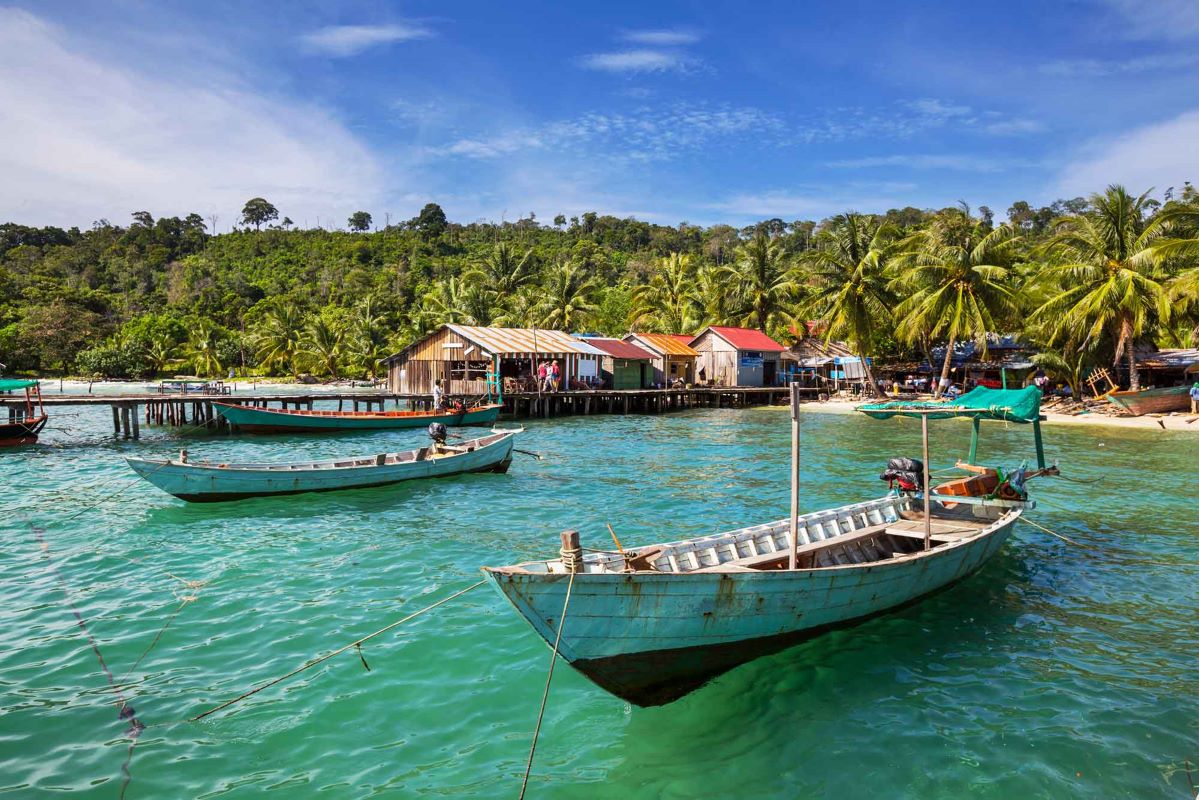
Several floating and stilted communities can be visited from Siem Reap.
Experiences vary greatly, and choosing where and how to visit matters.
Some areas receive large numbers of visitors and can feel commercial. Others offer a quieter introduction to communities whose lives remain closely tied to fishing and the seasonal movement of the lake.
We favor responsible visits with reputable local operators and avoid experiences that turn local residents, particularly children, into attractions.
A Tonle Sap journey should help visitors understand life around the lake rather than simply provide a boat ride past houses.
Phnom Kulen
Phnom Kulen lies northeast of Siem Reap and has both cultural and natural importance for Cambodians.
The mountain is associated with the early history of the Khmer Empire and remains an important pilgrimage area.
Visits can include temples, sacred sites, forest and waterfalls, depending on the route and season.
Kulen works best as a full day or as part of a carefully planned journey beyond central Angkor rather than being added to an already busy temple program.
For travelers spending four or more nights in Siem Reap, it can offer a welcome change from the main archaeological sites.
The Flavors of Siem Reap
Siem Reap is an excellent place to explore Cambodian food.
Traditional dishes include fish amok, Khmer curry, grilled meats, soups, fresh herbs and dishes using local river fish and vegetables.
The region also has links to ingredients and cooking traditions found around Tonle Sap and the countryside of northwest Cambodia.
Beyond traditional restaurants, Siem Reap now has a strong contemporary dining scene, with Cambodian chefs interpreting Khmer ingredients and recipes in new ways.
Markets and smaller local restaurants remain equally worthwhile.
We like to mix the two. One evening may be a refined Khmer dinner, while another could involve several simple local dishes in a much more casual setting.
Food should help reveal another side of Cambodia rather than becoming a separate performance within the itinerary.
Arts, Crafts and Contemporary Siem Reap
Siem Reap has developed an interesting creative community alongside its tourism industry.
Local workshops produce textiles, ceramics, lacquerware, stone carving and other crafts connected to Cambodian traditions.
Some organizations also provide vocational training and employment while helping preserve craft skills.
The quality of workshops varies, so we prefer places where travelers can understand the process, meet artisans when appropriate and see work that is genuinely produced locally.
Contemporary galleries and design spaces provide another perspective on Cambodia today.
These experiences can be particularly worthwhile after several days focused heavily on ancient history.
Best Time to Visit Siem Reap
Siem Reap can be visited throughout the year.
November to February generally brings cooler and drier weather and is one of the most comfortable periods for exploring Angkor.
This is also a popular travel season, so careful timing at the main temples becomes more important.
March to May is hotter, with temperatures particularly high around midday. Early temple visits followed by a long lunch or hotel break work well during this period.
June to October brings the wetter season. Rain is more frequent, but the countryside becomes greener and the moats and reservoirs around Angkor often hold more water.
Rain usually does not mean sightseeing is impossible all day, and the temples can be particularly atmospheric during this period.
We plan the daily schedule according to season rather than using the same temple timetable throughout the year.
How Long to Stay in Siem Reap
For most first time visitors, we recommend three nights at a minimum.
This allows two good days around Angkor without trying to see the main temples in a single rushed circuit.
Four nights is even better.
With the additional day, you can include Banteay Srei, countryside experiences, Tonle Sap or simply leave an afternoon free between temple visits.
Five nights works particularly well for travelers interested in archaeology, photography, food or slower travel.
Siem Reap rewards time. After the first day, the temples begin to make more sense, and the region beyond Angkor becomes easier to appreciate.
Where to Stay
Siem Reap has one of Cambodia’s widest selections of accommodation, from small boutique hotels to some of the country’s finest luxury resorts.
Central Siem Reap
Staying close to the center provides easy access to restaurants, cafés, markets and evening activity.
This works particularly well for travelers who enjoy being able to explore independently after touring.
Quieter Areas Outside the Centre
Properties slightly away from the busiest streets offer more space, gardens and a calmer atmosphere while remaining within easy reach of Angkor.
These are often particularly suitable for couples and travelers staying several nights.
Luxury Resorts
Several leading resorts combine high levels of service with large gardens, swimming pools, spas and a sense of privacy.
For longer Siem Reap stays, the hotel matters.
After an early morning at Angkor or several hours walking through temples in the heat, a comfortable place to return to can make a significant difference to the overall experience.
For LuxeTravel Asia journeys, we consider location, atmosphere, room type, service and how the property fits the pace of the itinerary rather than choosing purely by star rating.
Siem Reap With LuxeTravel Asia
Angkor is easy to make exhausting.
A standard itinerary can move from sunrise to temple after temple until everything begins to look similar.
We prefer a different approach.
For a first visit, we identify the temples that matter most, then arrange them according to timing, location and your interests. Angkor Wat, Bayon and Ta Prohm will often be included, but they do not necessarily need to be visited in the same order or on the same day as everyone else.
A private local guide gives context to what you are seeing, while private transportation makes it possible to return to the hotel for a break, adjust the route when a temple is particularly busy or stop somewhere unexpected along the way.
Families may visit fewer temples and combine them with cycling, crafts or pool time. Couples may prefer an early start followed by a long afternoon at their resort. Travelers interested in history can go deeper into smaller temples and the development of the Khmer Empire.
With four or five nights, we can move beyond Angkor altogether, adding Banteay Srei, countryside, Tonle Sap, Phnom Kulen or contemporary Cambodian experiences.
The aim is not to count how many temples you have visited.
It is to leave Siem Reap with a clearer sense of Angkor, Cambodia and the people who live around this extraordinary place today.
Continue Your Journey
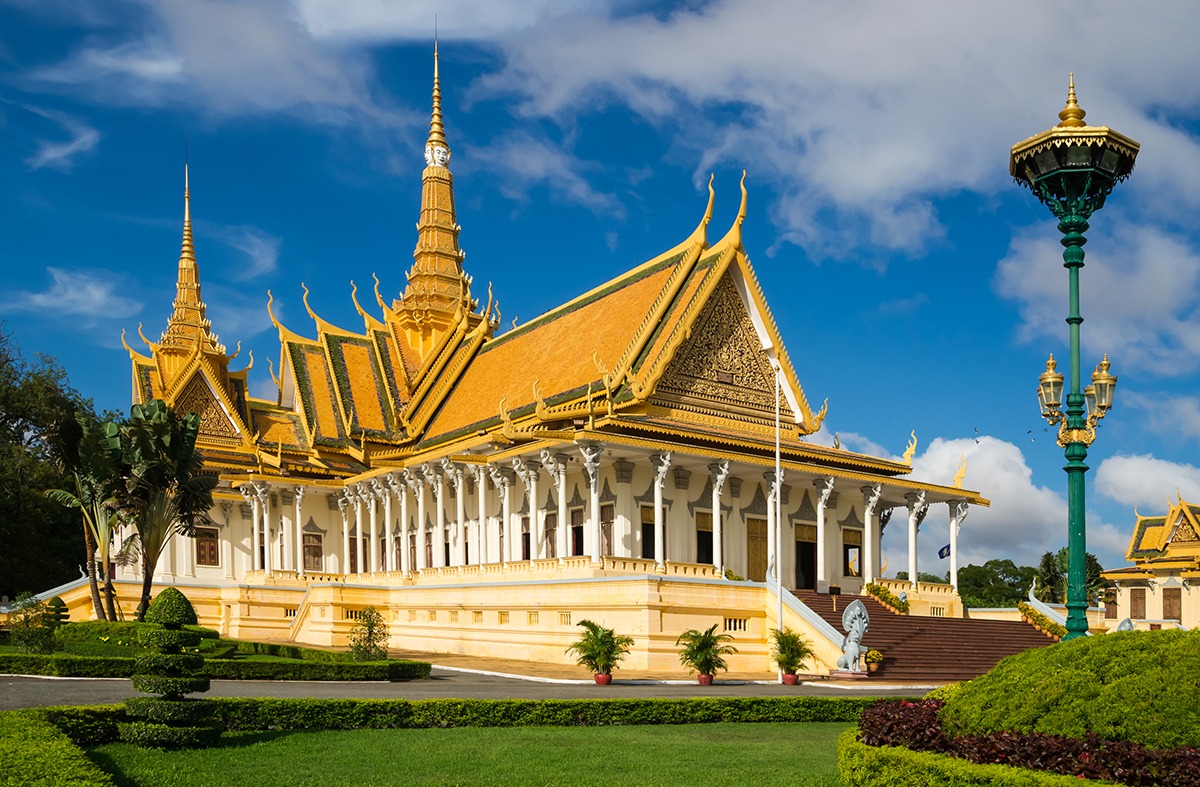
From Siem Reap, continue south towards Phnom Penh for Cambodia’s royal heritage, recent history and life along the Mekong.
Travelers looking for a quieter rural experience can continue towards Battambang, while longer journeys can head south to Kampot and Kep.
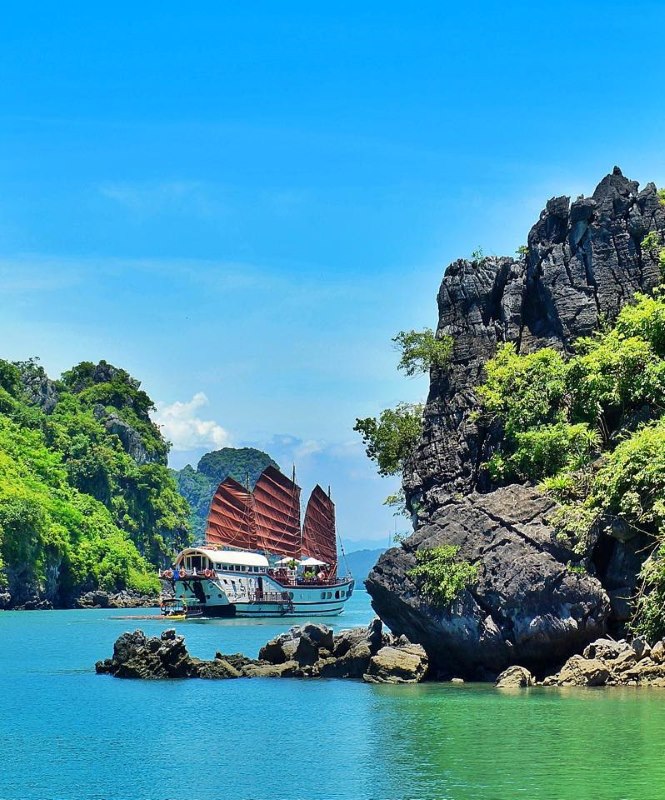
Siem Reap also combines naturally with Thailand, Laos and Vietnam, making it one of the key stops on a wider journey through Indochina.
Explore All Our Tours
Find the journey that suits your interests, pace and way of exploring Cambodia.