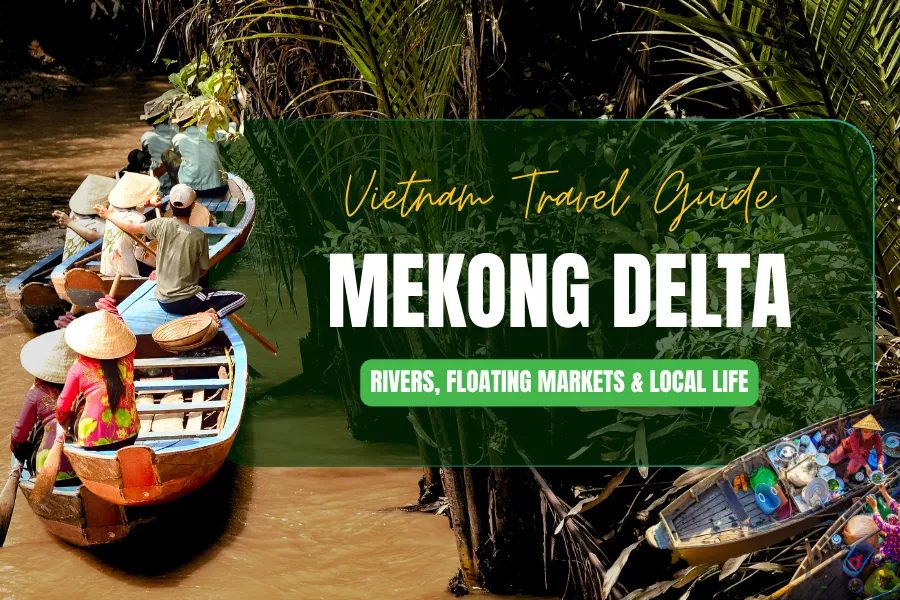
The Mekong Delta offers a very different side of Vietnam. Instead of historic capitals, mountain landscapes or beach resorts, this region is shaped by waterways, orchards, fishing villages and daily life along the river. It is where the Mekong spreads into a huge network of rivers and canals before reaching the sea, creating one of the most fertile and distinctive parts of the country.
For many travelers, the Mekong River Delta in Vietnam is an easy extension from Ho Chi Minh City. Some choose a Mekong Delta day trip, while others stay longer to experience floating markets, quiet back canals, fruit gardens and local food at a slower pace.
In this guide, we look at where to go, what to do, how long to stay and how to choose the right Mekong Delta tour for your journey.
What Is the Mekong Delta?
The Mekong River Delta lies in southern Vietnam, where the Mekong River completes its long journey through Southeast Asia and divides into countless waterways, canals and tributaries before emptying into the sea. This region has long been one of Vietnam’s most important agricultural areas. Rice fields, coconut groves, fruit orchards and fish farms shape both the landscape and daily life. Even today, although roads and bridges have made the Delta more accessible, the rivers remain central to the region’s identity.
What makes the Mekong Delta special is not one single attraction. It is the overall experience of moving through the countryside, passing boats loaded with fruit, gliding into small canals under nipa palms, stopping at village workshops and seeing how people continue to live closely with the river. For travelers who have already seen the energy of Ho Chi Minh City, the Delta often feels calmer, greener and more rooted in everyday local life.
Local Expert Tip: The best part of the Mekong is not always the biggest attraction. Often, the most memorable moments come from small canals, orchard paths and quiet village stops between the better-known places.
Mekong Delta Map: Where Should You Go?
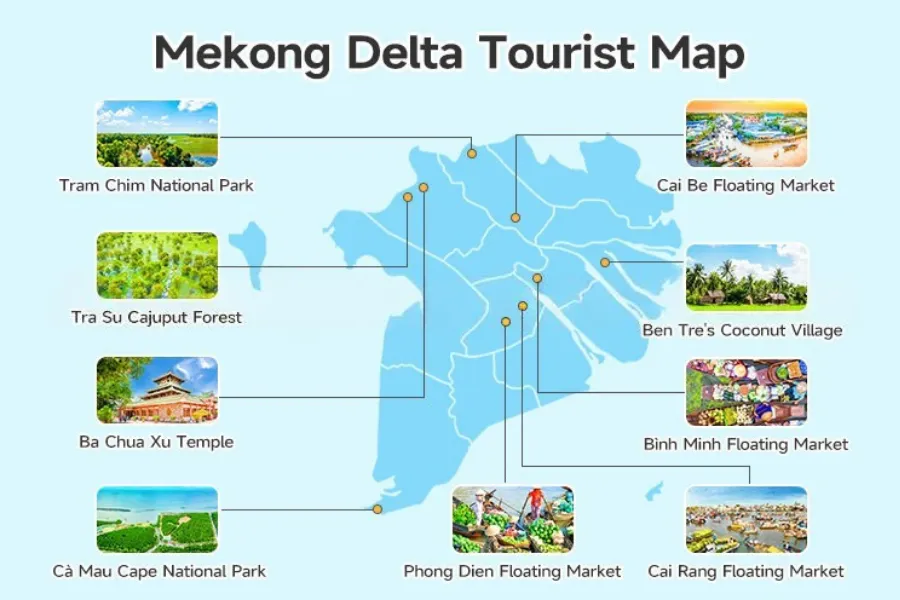
A Mekong Delta map can look overwhelming at first, especially for first-time visitors. For travel planning, it is easiest to think of the region in practical zones rather than trying to cover everything.
|
Area |
Main Destinations |
Main Experience |
Best For |
|
Near Ho Chi Minh City |
My Tho, Ben Tre |
Boat trips, canals, coconut groves |
Day trips |
|
Central Delta |
Can Tho |
Floating market, river life, food |
First overnight trip |
|
Eastern Delta |
Cai Be, Vinh Long |
Orchards, cycling, village stays |
Slower countryside travel |
|
Upper Delta |
Sa Dec |
Flower village, markets, heritage |
Culture and photography |
|
Western Delta |
Chau Doc, Tra Su |
Wetlands, culture, Cambodia route |
Multi day journeys |
|
Far South |
Ca Mau |
Mangroves, remote landscapes |
Longer trips |
If you only have one day, Ben Tre or My Tho usually makes the most sense. If you have two or three days, Can Tho becomes a stronger option, especially if you want to see a Mekong Delta floating market. travelers with more time can go deeper into places such as Chau Doc, Tra Su or Sa Dec.
Best Places to Visit in the Mekong Delta
The Mekong Delta is not a single-stop destination. Different areas offer different experiences, and choosing the right one depends on how much time you have and how you want to travel.
Ben Tre: Coconut Groves and Narrow Canals
- Best for: First-time visitors, couples, families and travelers with limited time
- Highlights: Coconut groves, small canals, sampan rides, local workshops and village roads
- What makes it different: Ben Tre feels close to Ho Chi Minh City but still offers a strong countryside atmosphere
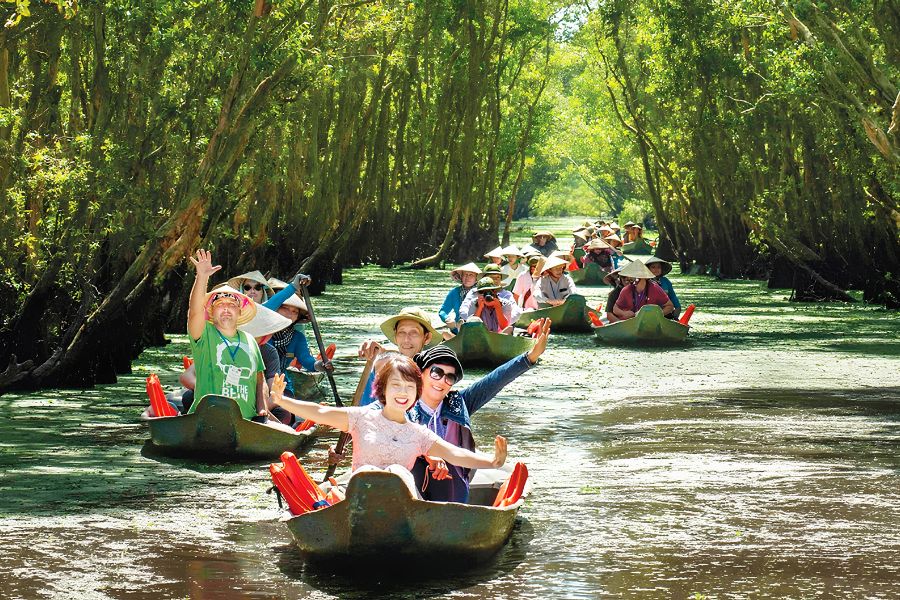
Ben Tre is one of the easiest and most rewarding places to visit for a first-time introduction to the Delta. Located within the comfortable reach of Ho Chi Minh City, it is known for coconut plantations, quiet waterways and a more rural atmosphere than some of the busier day trip routes.
A typical visit includes a boat ride on the river, a smaller sampan through narrow canals, local workshops and some time in the countryside by bike. The scenery feels green, peaceful and very accessible.
Can Tho: Floating Markets and River Life
- Best for: First overnight stays, floating market visits, food lovers and families
- Highlights: Cai Rang Floating Market, Ninh Kieu waterfront, boat trips and local food
- What makes it different: Can Tho offers the strongest combination of comfort, local life and access to classic Delta experiences
Can Tho is the main urban center of the Mekong Delta and one of the best bases for a deeper Delta experience. It combines the convenience of a city with access to river-based activities, making it especially useful for travelers who want to stay overnight.
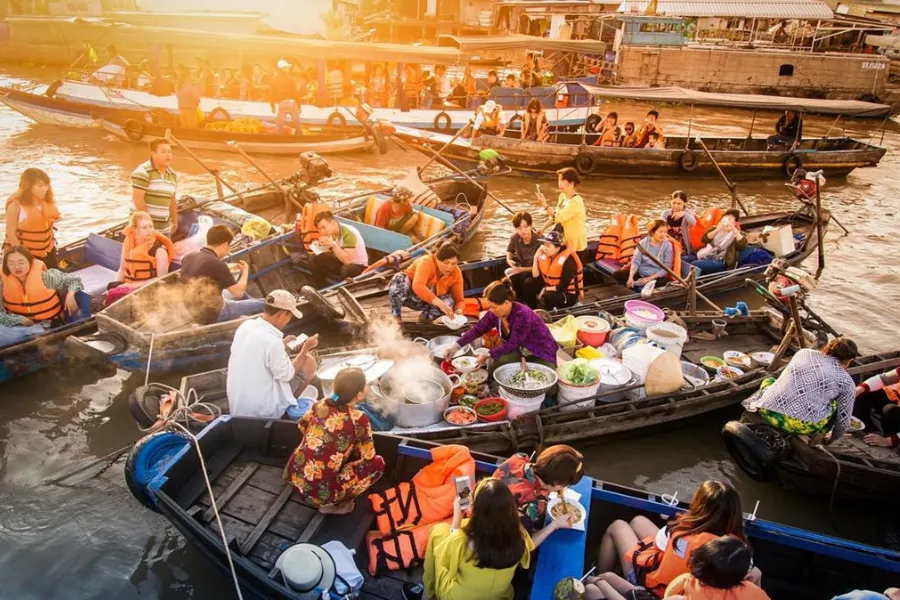
The biggest draw is Cai Rang Floating Market, which is best visited early in the morning. Beyond the market, Can Tho also offers riverside life, local food, nearby orchards and easy access to surrounding waterways.
Cai Be and Vinh Long: Orchards, Cycling and Quiet Countryside
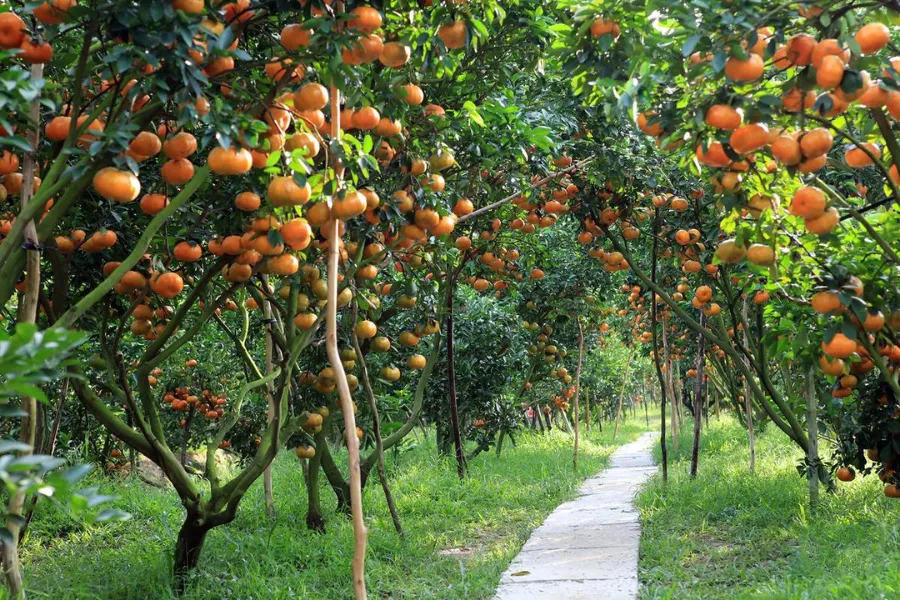
- Best for: Couples, photographers, slow travelers and countryside stays
- Highlights: Fruit orchards, cycling, small canals, village paths and old houses
- What makes it different: Cai Be and Vinh Long feel quieter and more intimate than the standard day trip routes
For travelers looking for a calmer and less rushed side of the Delta, Cai Be and Vinh Long are excellent choices. This part of the region is known for fruit orchards, narrow village lanes, small waterways and local houses with a long cultural history.
It is a good area for cycling, staying overnight in a riverside lodge or exploring at a slower pace. Cai Be was once better known for its floating market, but today the area is far more rewarding for orchards, canals and village life than for market activity.
Sa Dec: Flowers, Markets and Heritage
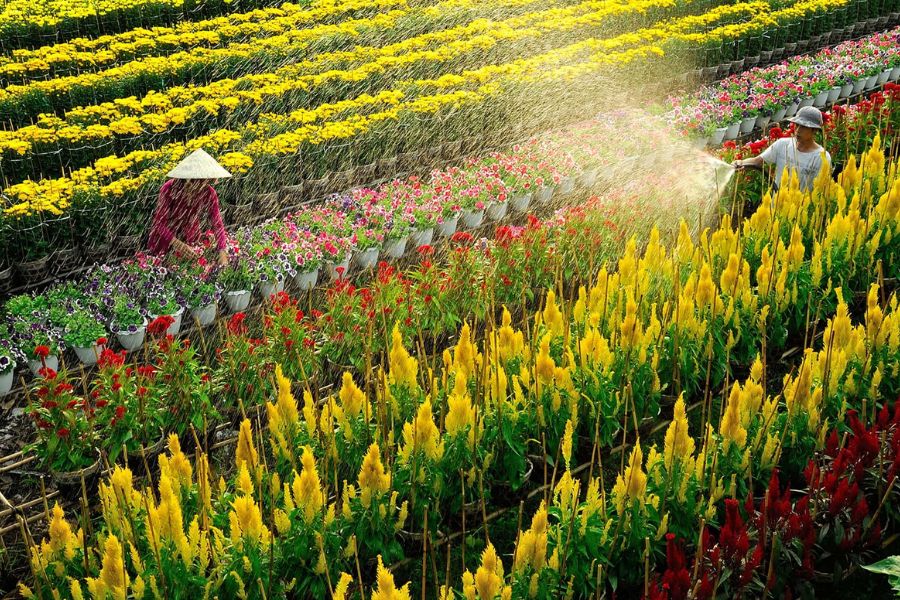
- Best for: Culture lovers, photographers and repeat visitors
- Highlights: Sa Dec Flower Village, local markets, historic houses and seasonal flowers
- What makes it different: Sa Dec adds heritage and floral landscapes that feel quite different from the canal-focused parts of the Delta
Sa Dec is often overlooked, but it adds a more cultural and visual dimension to a Mekong journey. The town is known for its flower village, local markets and the historic Huynh Thuy Le Ancient House, which brings together Vietnamese and colonial influences.
Around Tet, Sa Dec becomes especially attractive as flower production increases and the area feels particularly colorful. It suits travelers who enjoy local culture, architecture and photography more than classic sightseeing.
Chau Doc and Tra Su: Wetlands, Culture and the Cambodia Route
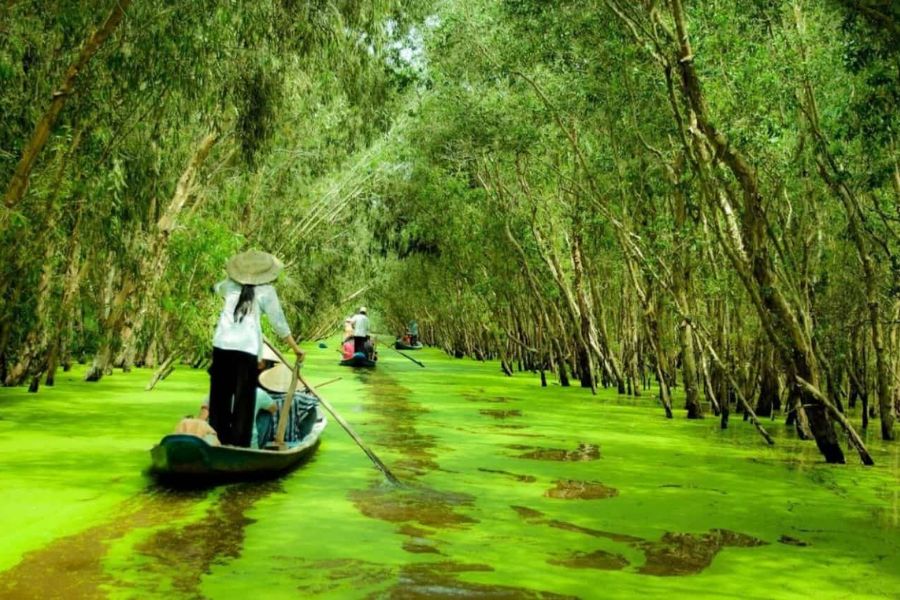
- Best for: Nature lovers, culture-focused travelers and Vietnam to Cambodia journeys
- Highlights: Tra Su Cajuput Forest, Cham communities, Sam Mountain and riverside life
- What makes it different: This is one of the best parts of the Delta for combining nature, culture and onward travel towards Cambodia
Chau Doc offers a different side of the Mekong Delta, shaped by borderland culture, religious diversity and wetland landscapes. It is one of the best places to explore beyond the more familiar boat-and-orchard route.
Tra Su Cajuput Forest is the area’s main natural highlight, with peaceful boat trips through flooded forest and good birdlife at the right time of year. Chau Doc is also one of the most practical places for travelers continuing towards Cambodia.
Ca Mau: Going Deeper into the Delta
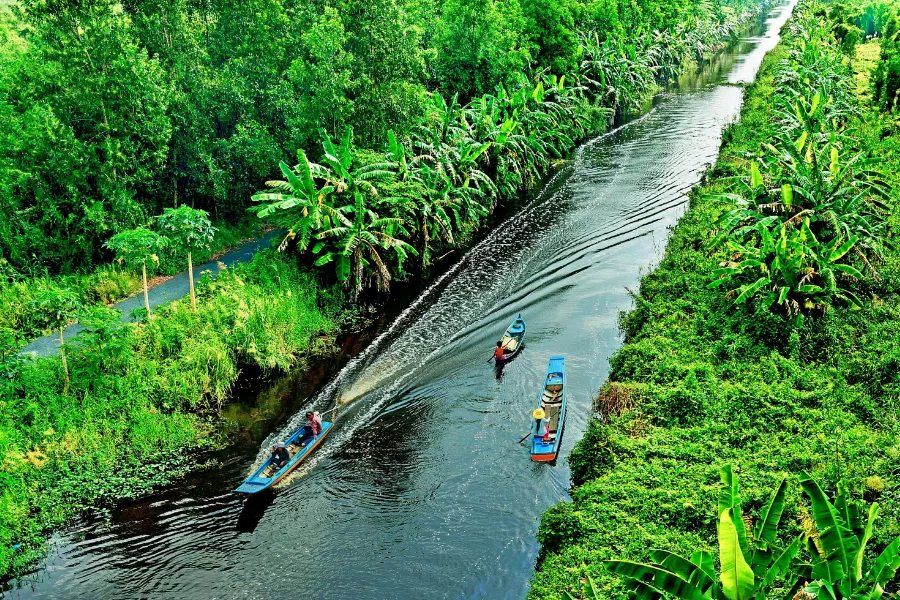
- Best for: Repeat visitors, nature-focused trips and longer southern Vietnam journeys
- Highlights: Mangrove forests, remote waterways and southernmost landscapes
- What makes it different: Ca Mau feels more remote and less convenient, but that is exactly why it appeals to travelers looking for something deeper
Ca Mau lies much further south and is better suited to travelers with more time. It is not usually the first stop for a classic Mekong Delta tour from Ho Chi Minh, but it can be rewarding for those who want to go beyond the standard route. The landscape here becomes more remote, with mangrove ecosystems, coastal wetlands and a stronger sense of distance from the main tourist circuit.
> > > If you want to experience the Mekong Delta as part of a broader journey, our Highlights of Vietnam – 12 Days combines the south with some of Vietnam’s most important cultural and scenic destinations.
Best Things to Do in the Mekong Delta
The best experiences in the Mekong Delta are usually simple. They are not about rushing between major attractions, but about seeing how river life, farming and local communities shape the region.
Take a Sampan Through Small Canals
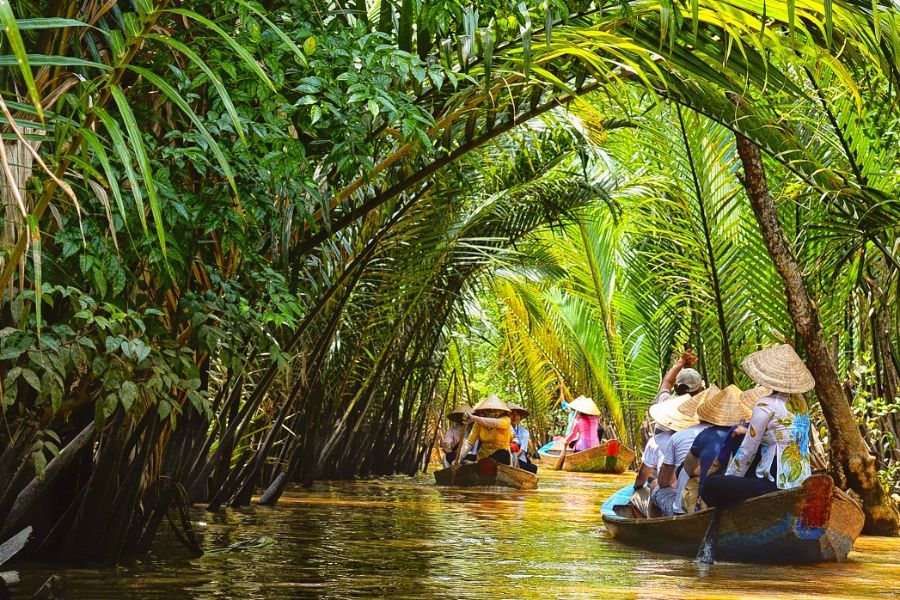
One of the most classic Mekong experiences is moving from a larger riverboat into a smaller sampan and gliding into the narrow back canals. These quieter waterways often feel far more atmospheric than the main river itself. Ben Tre, My Tho and Cai Be are all good places for this kind of experience. The canals are shaded by coconut or nipa palms, and the pace is slow enough to take in the surrounding life.
> > > Families looking to explore more of the country can also see how the Delta fits into our Best Vietnam Family Tour – 15 Days, with a comfortable pace and experiences suited to different ages.
Visit Cai Rang Floating Market
For many travelers, visiting a Mekong Delta floating market is one of the main reasons for coming to the region. Today, Cai Rang Floating Market in Can Tho is still the best choice. It is important to set expectations correctly. Floating markets are no longer as large or as central to trade as they once were, because road transport has expanded across the region. Even so, Cai Rang remains worthwhile if you go early, ideally just after sunrise, and see it as part of a wider river experience rather than a standalone spectacle.
Cai Be is no longer the best place to go if your main goal is to see a floating market. Trading activity has reduced significantly, so it is better approached as a destination for orchards, canals and village life rather than for market scenes.
Cycle Through Villages and Orchards
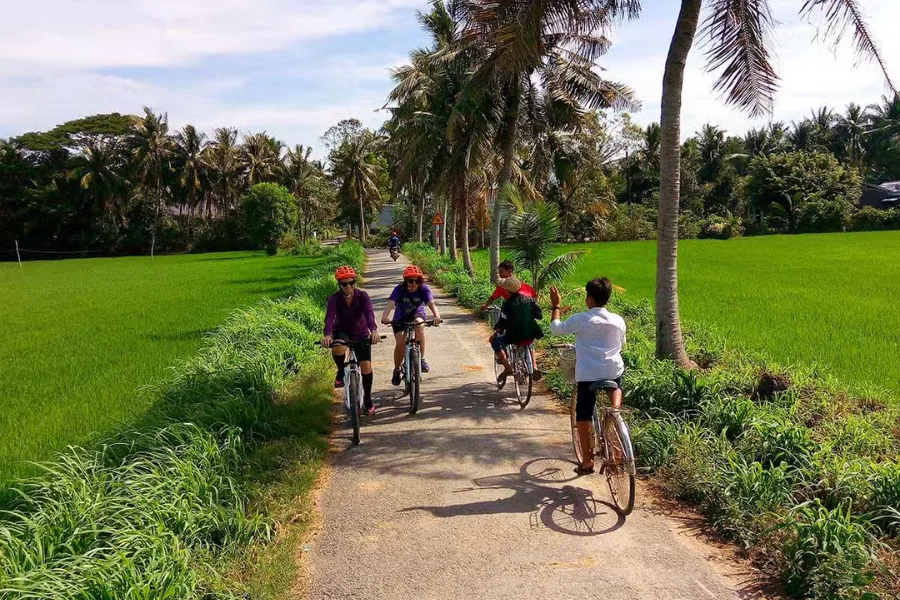
Cycling is one of the most rewarding ways to explore the Delta. Many routes are relatively flat, and small roads through orchards, hamlets and canal-side villages reveal more of daily life than a simple drive between stops. Cai Be, Vinh Long and Ben Tre are especially well suited to this kind of slow exploration.
Visit a Tropical Fruit Orchard
The Mekong Delta is famous for its fruit. Depending on the season, travelers may see or taste rambutan, longan, pomelo, mango, durian and many other tropical varieties. Fruit orchards are particularly appealing because they connect food, farming and landscape in one experience. Some visits are simple tasting stops, while others are integrated into a broader countryside program.
Visit Local Workshops and Family Businesses
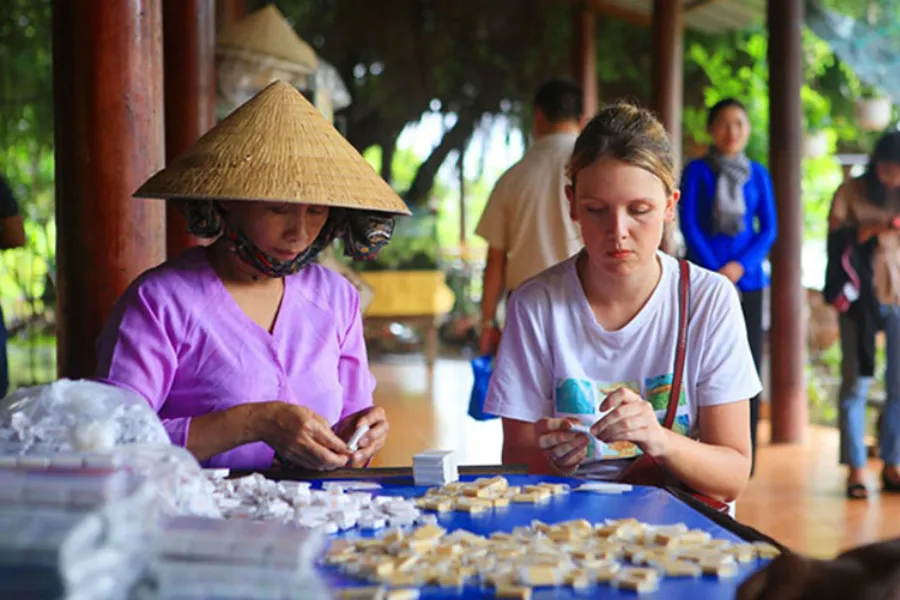
Many Mekong itineraries include small local workshops, where travelers can see products such as coconut candy, rice paper, rice noodles or handicrafts being made. The best visits are those that still feel connected to everyday life rather than being just another shopping stop. When included thoughtfully, they add context to the region’s economy and culture.
Explore Tra Su Cajuput Forest
Tra Su is one of the best nature-focused experiences in the Delta. Boat journeys through the flooded cajuput forest can be peaceful, scenic and very different from the orchard and canal landscapes found elsewhere. This experience works best as part of a route through Chau Doc rather than as a separate day excursion from Ho Chi Minh City.
Try Mekong Delta Food
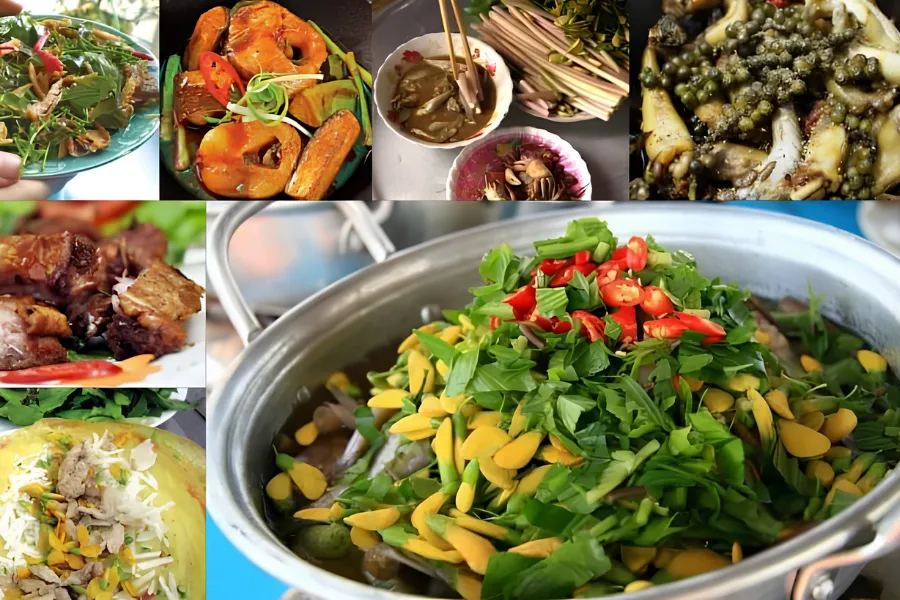
Food is a major part of the region’s appeal. Fresh herbs, fish, tropical fruits, coconut-based dishes and noodle soups all play a strong role in local cuisine. Can Tho is one of the best bases for sampling Mekong food, but some of the most memorable meals can also be found in orchard houses, riverside lodges and small local restaurants.
Spend a Night by the River
Many travelers discover that their favorite part of the Delta comes after the day trippers leave. Staying overnight allows you to slow down, enjoy early morning river life, try more local food and avoid treating the region as a quick excursion from the city. If your schedule allows, an overnight stay is often more rewarding than a simple in-and-out day trip.
Mekong Delta Tour from Ho Chi Minh City: Day Trip or Overnight?
Mekong Delta Day Trip from Ho Chi Minh City
A Mekong Delta day trip is best suited to Ben Tre or My Tho. These areas are close enough to Ho Chi Minh City to make a full day practical without spending too much time on the road.
A typical route may include a morning drive, a larger boat trip, a small sampan ride, a local lunch and perhaps some cycling or a village visit before returning to the city. This works well for travelers with a short itinerary, but it only offers a brief introduction to the Delta.
2 Days / 1 Night: The Best First Mekong Experience
One day gives you a taste; an overnight stay lets you slow down
Traveling from Ho Chi Minh City into the Mekong Delta
For many travelers, this is the most balanced option. It allows you to experience both the countryside and at least one of the region’s more iconic early-morning river activities.
Two common route ideas are:
- Ben Tre and Can Tho
- Cai Be or Vinh Long and Can Tho
This kind of itinerary makes it possible to visit Cai Rang Floating Market properly, rather than trying to force too much into a single day.
3 Days / 2 Nights: A Slower Mekong Journey
Within three days, the region feels much more relaxed. You can include places such as Sa Dec or Chau Doc, spend more time on food and local culture, and avoid rushing from one stop to another. This suits couples, photographers and travelers who want more than a standard sightseeing route.
4 Days or More: Continue Towards Cambodia
Longer Mekong journeys become especially interesting when they continue towards Cambodia. A route through Can Tho and Chau Doc can connect naturally with onward travel to Phnom Penh, either by road or by river depending on the itinerary. This is one of the strongest options for travelers considering a broader Vietnam and Cambodia trip.
> > > For a more complete north-to-south journey, our Inside Vietnam Tour Package – 14 Days shows how the Mekong Delta can fit naturally into a longer Vietnam itinerary.
Mekong Delta Cruise: Is It Right for Your Trip?
A Mekong Delta cruise offers a very different experience from a standard road-based tour. Instead of using a car as the main way to move between destinations, the river becomes part of the journey itself.
This can work particularly well for travelers who enjoy slower travel, want more time to watch life along the waterways or prefer to avoid frequent hotel changes. However, a cruise is not automatically the best way to see the Mekong Delta. If your priority is cycling, local food, orchards or exploring several places in a short time, a private land-based itinerary may give you more flexibility.
The first step is to understand what type of boat experience you are actually looking for.
Local Boat Trip vs Mekong Delta Cruise
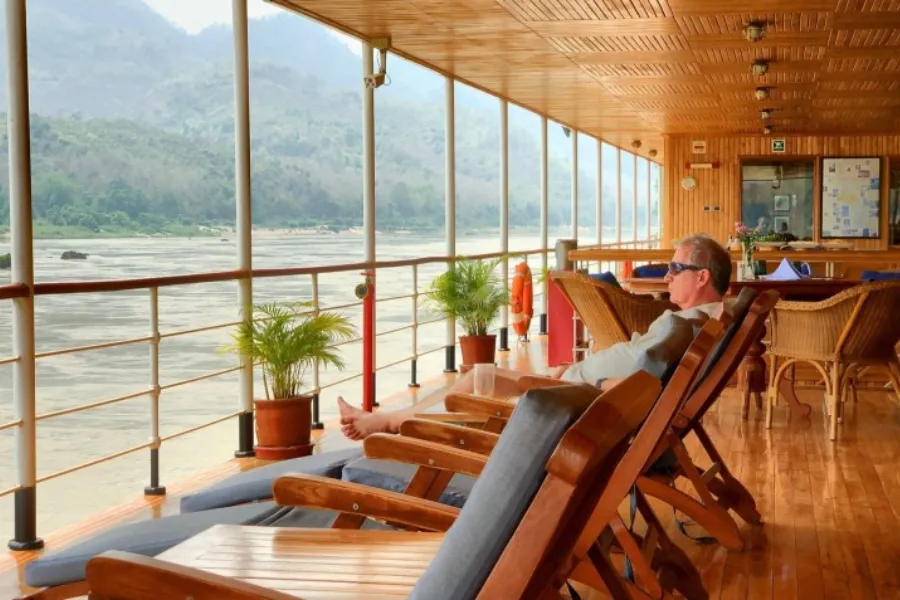
These experiences are often grouped together online, but they are quite different.
A local boat trip usually lasts from less than an hour to half a day. You may travel by motorboat along a main river before transferring to a small sampan for narrow canals. This is typical in Ben Tre, My Tho and Cai Be and can easily be included in a day trip.
An overnight Mekong cruise is closer to a small river journey. You stay in a cabin, eat onboard and travel between different parts of the Delta while stopping for village visits, cycling, markets or local workshops.
Longer Lower Mekong cruises can continue beyond Vietnam into Cambodia, turning the journey itself into part of a multi-country itinerary. If you simply want to experience the canals, you do not need an overnight cruise. If you enjoy watching the landscape change from the water and prefer a slower pace, staying onboard can be much more rewarding.
Overnight Cruises Within the Mekong Delta
An overnight cruise allows you to see the river at times that day visitors often miss. Late afternoon is quieter, while early morning brings fishing boats, local ferries and riverside communities beginning their day. Instead of returning to Ho Chi Minh City after an afternoon excursion, you remain in the Delta and wake up surrounded by the landscape. Cruise programs vary, but many combine sailing with short excursions such as cycling through villages, walking through orchards, visiting markets or seeing small family-run workshops.
This style of travel is particularly suitable for: Couples looking for a relaxed journey, senior travelers who prefer less packing and unpacking, repeat visitors who have already seen the main cities, and travelers who enjoy the journey as much as the destination. It may be less suitable if you want maximum flexibility or prefer to spend most of your time exploring on land.
Local Expert Tip: Check how much actual cruising time is included. Some products described as a “Mekong cruise” are mainly land tours with short boat journeys, while others involve staying onboard and traveling significant distances by river.
Mekong River Cruises from Vietnam to Cambodia
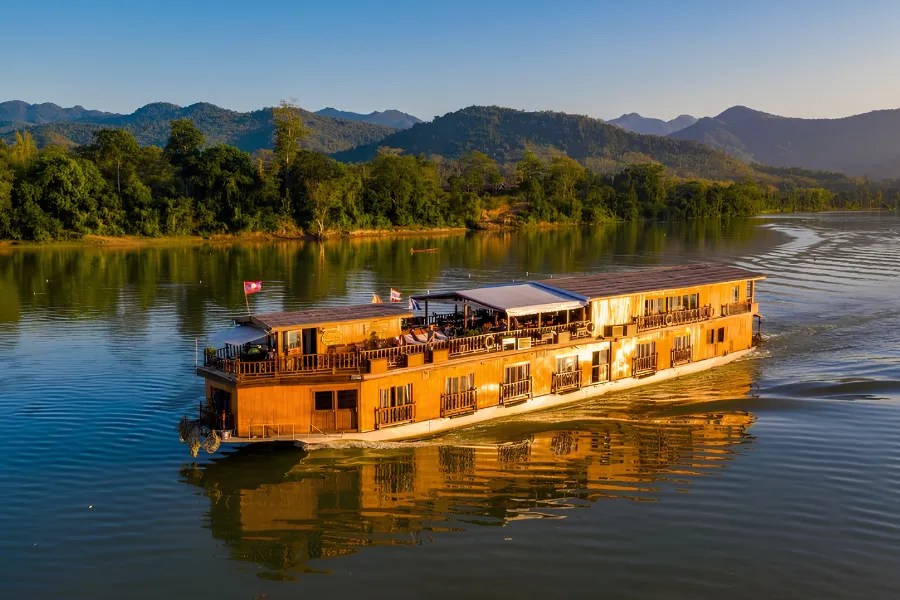
One of the most interesting ways to experience the Lower Mekong is to continue from Vietnam into Cambodia. Current cruise programs on the Lower Mekong include routes linking Saigon with Phnom Penh, as well as longer journeys connecting Saigon and Siem Reap. For example, some operators currently offer three-night Saigon to Phnom Penh programs and seven-night Saigon to Siem Reap journeys.
These longer cruises usually combine river travel with excursions into towns, villages, markets and cultural sites along both sides of the border. Water levels can affect some Cambodian sections of longer journeys, particularly routes involving Tonle Sap and Siem Reap. During lower water periods, part of the route may be completed by road instead of directly by ship. The Vietnam section is generally less affected.
For travelers already considering a Vietnam and Cambodia trip, this can be an attractive alternative to flying directly between the two countries. The journey becomes part of the experience rather than simply a transfer.
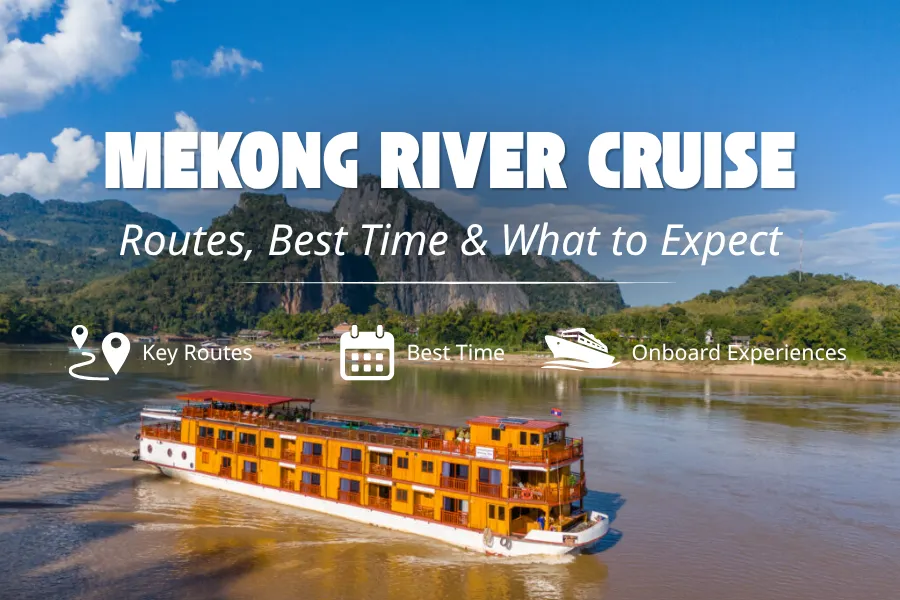
If you are considering spending more time on the water, read our Mekong River Cruise: Routes, Best Time & What to Expect guide for a closer look at cruise routes, seasons and what the journey is really like.
How to Get to the Mekong Delta from Ho Chi Minh City
Ho Chi Minh City is the main starting point for most journeys into the Delta. However, the Mekong Delta from Saigon can mean anything from a short drive to My Tho to a much longer journey towards Chau Doc or Ca Mau. Choosing your destination first is therefore more useful than simply asking how far the Mekong Delta is from Ho Chi Minh City.
|
Destination |
Approximate Travel Time |
Best For |
|
My Tho |
1.5 to 2 hours |
Easy day trip |
|
Ben Tre |
Around 2 hours |
Day trip or relaxed overnight |
|
Cai Be |
Around 2 to 2.5 hours |
Countryside and overnight stays |
|
Can Tho |
Around 3 hours |
Floating market and 1 to 2 nights |
|
Chau Doc |
Around 5 to 6 hours |
Multi day journey or Cambodia route |
Actual driving times depend on traffic, departure point and road conditions. Can Tho is about 165 kilometers from Ho Chi Minh City and typically takes around three hours by road.
By Private Car
For couples, families and tailor-made journeys, a private car is usually the easiest option. You can leave directly from your hotel, stop along the way if needed and continue between different Delta destinations without having to return to a bus station. This is particularly useful for routes such as:
Ho Chi Minh City → Ben Tre → Can Tho
or
Ho Chi Minh City → Cai Be → Can Tho → Chau Doc
Private transport also makes it easier to adjust the day around children, senior travelers or changing weather conditions.
By Bus
Public and limousine buses connect Ho Chi Minh City with major Delta destinations including Can Tho, Ben Tre and Chau Doc. This can work well for independent travelers who are comfortable arranging their own accommodation, local transport and boat trips.
The main limitation is that reaching the town is only the first step. Many of the most interesting experiences are outside the urban center, so you may still need taxis, local transfers, bicycles or boats once you arrive.
By Organized Tour
A Mekong Delta tour from Ho Chi Minh City is the simplest option for first-time visitors because road transport, boat arrangements, entrance fees and guide services can all be organized together.
Day tours generally concentrate on the areas closest to Ho Chi Minh City, while overnight programs can travel deeper into Can Tho, Vinh Long or Chau Doc. When comparing tours, look beyond the number of stops. A program with fewer places and more time in each one often gives a better sense of the Delta than an itinerary that moves quickly between workshops, boats and attractions.
Before heading into the Delta, spend some time exploring the city itself with our guide to the Things to Do in Ho Chi Minh City, from historic landmarks to local food and neighborhood experiences.
Best Time to Visit the Mekong Delta
The Mekong Delta is warm throughout the year, so there is no single month when the region suddenly becomes unsuitable for travel. Instead, the experience changes with rainfall, river levels, fruit seasons and local agriculture.
December to April: Drier and Easier for General Travel
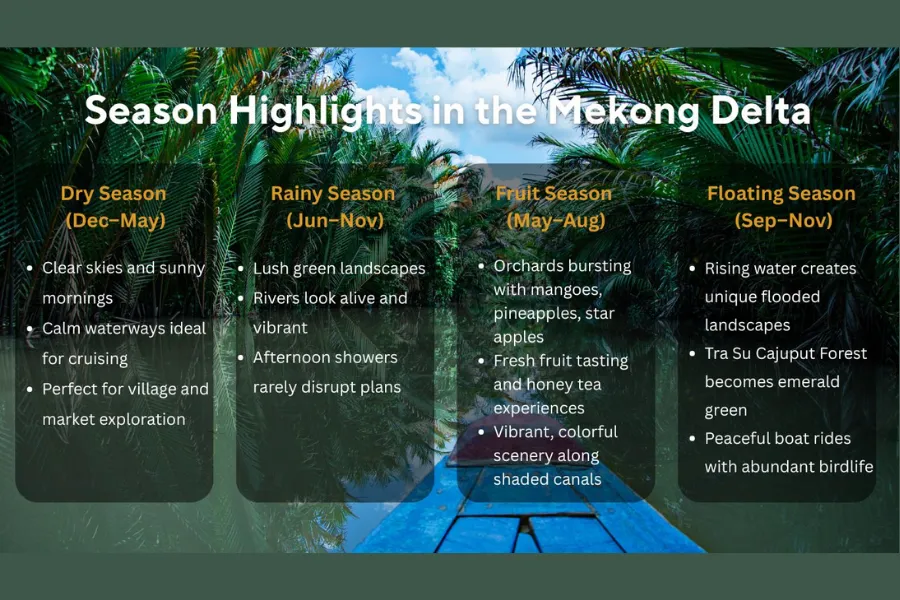
December to April is generally the driest period and one of the easiest times for first-time visitors. There is less rain, road travel is straightforward and mornings are well suited to boat trips, cycling and floating markets. Vietnam Tourism also identifies December to April as a favorable period for Can Tho and river activities.
This is particularly good for travelers combining the Mekong Delta with Ho Chi Minh City, Central Vietnam or a longer north-to-south journey. The main trade-off is that this is also a popular travel period, especially around Christmas, New Year and Tet.
May to August: Green Landscapes and Fruit Season
Rain increases from around May, but this does not mean continuous rain throughout the day. Tropical showers are often concentrated in certain periods, while mornings can still be suitable for outdoor activities. The countryside becomes greener, and this is one of the most interesting periods for visiting fruit orchards.
Around Can Tho, fruit orchards are particularly productive from roughly May to August. Depending on location and timing, travelers may encounter rambutan, longan, mango, mangosteen, durian and other tropical fruits. If food and orchards are important to your trip, the wetter months can actually be more interesting than the dry season.
September to November: Higher Water and Wetland Experiences
Water levels are generally higher during this period, especially in western areas of the Delta. This can be a good time for wetland landscapes, boat travel and places such as Tra Su Cajuput Forest near Chau Doc.
Higher water also changes the appearance of fields, canals and floodplain areas, creating a very different landscape from the dry season. However, rainfall can be heavier, so itineraries should allow some flexibility rather than relying on a tightly fixed outdoor programme.
What to Eat in the Mekong Delta

The Mekong Delta is one of Vietnam’s richest food-producing regions. Rice, tropical fruits, vegetables, freshwater fish and shrimp all feature heavily in the local diet.
here often feels less formal than in major cities. Some of the most memorable meals are served in small local restaurants, markets, orchard houses or simple riverside settings.
- Hu Tieu: Hu tieu is one of southern Vietnam’s classic noodle dishes and is particularly associated with the Mekong region. It can be served with broth or dry, with pork, seafood, herbs and bean sprouts depending on the local version. Can Tho is a good place to try it, and one of the most memorable versions is breakfast on or near Cai Rang Floating Market, where small boats still serve noodles and drinks in the morning.
- Banh Xeo: Southern banh xeo tends to be larger than versions found in Central Vietnam. The crisp rice pancake is usually filled with pork, shrimp and bean sprouts, then wrapped in fresh herbs and lettuce before being dipped in sauce. It is especially enjoyable in the countryside, where many of the herbs may come directly from nearby gardens.
- Elephant Ear Fish: Elephant ear fish is one of the dishes travelers often encounter during countryside lunches in the Delta. The fish is usually fried whole and served upright, then pieces of fish are wrapped with rice paper, herbs and vegetables. It is visually distinctive and works well as part of a shared family-style meal rather than as a dish eaten alone.
- Lau Mam: For travelers who enjoy stronger local flavours, lau mam is worth trying. This hotpot uses fermented fish as the base of the broth and is usually served with fish, seafood, vegetables and a large selection of herbs. The flavor is more intense than many dishes familiar to first-time visitors, but it is deeply connected to the food traditions of the Delta. Chau Doc is particularly known for fermented fish products and is one of the best places to explore this side of Mekong cuisine.
- Coconut Based Dishes in Ben Tre: Coconut is central to Ben Tre’s identity. Travelers often encounter coconut water, coconut candy and sweets, but coconut milk and coconut flesh also appear in savoury dishes. Visiting Ben Tre gives you a better sense of how one agricultural product can influence food, farming and small family businesses across an entire area.
- Tropical Fruits: Fruit is part of the everyday landscape of the Delta rather than simply a dessert. Depending on the season, you may find mango, rambutan, longan, pomelo, mangosteen, jackfruit, durian and pineapple. Instead of trying to find every fruit on a list, visit an orchard and taste what is actually in season. The experience is usually better, and the fruit will be fresher.
Local Expert Tip: If food is important to your trip, spend at least one night in the Delta. A day tour often includes a pre-arranged lunch, while staying overnight gives you more opportunities to visit local markets and eat where residents actually eat.
Things to Know Before Traveling to the Mekong Delta
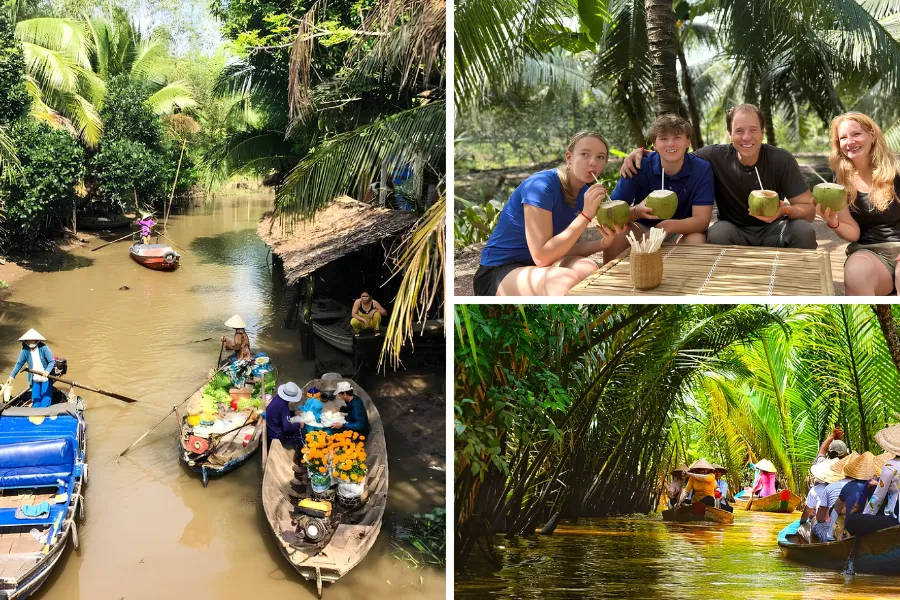
- Start Early for Floating Markets: If Cai Rang Floating Market is a priority, stay overnight in Can Tho. The market begins early, and Vietnam Tourism recommends being on the water around 5:00 to 5:30 in the morning to catch the livelier part of the market before activity decreases later in the morning.
- Do Not Try to See the Whole Delta: The Mekong Delta is a region, not one attraction. Ben Tre, Can Tho, Chau Doc and Ca Mau are separated by substantial driving distances. Trying to cover too many places often results in spending more time in the vehicle than experiencing the waterways and villages. For most first-time visitors, one day should focus on one area, while two or three days are enough to combine two or three complementary destinations.
- Choose the Experience, Not Just the Destination Name: Two tours in Ben Tre can feel completely different. One might move through a series of busy tourist stops, while another could include quiet cycling, a small canal and lunch with more time in the countryside. When choosing a Mekong Delta tour, look at how the day is structured, how long you spend traveling and whether there is time to experience the place rather than simply stop for photographs.
- Expect Heat and Humidity: The Delta has a tropical climate and remains warm throughout the year. Wear lightweight clothing, carry water and use sun protection. A hat is particularly useful on open boats. For cycling or village walking, breathable clothing and comfortable shoes are usually sufficient. Heavy trekking equipment is unnecessary.
- Be Prepared for Rain: From May to November, showers become more frequent. A light rain jacket or compact umbrella is useful, but rain does not normally mean an entire day has to be cancelled. Boat trips and transfers may sometimes be adjusted if weather conditions become unsuitable, so keeping the programme slightly flexible is helpful.
- Carry Some Cash: Hotels and larger restaurants increasingly accept cards, but small local businesses, market vendors and family-run stops may still prefer cash. Small denominations are particularly useful for drinks, snacks and market purchases.
- Boat Experiences Vary: A large motorboat on the Mekong River, a hand-rowed sampan in a narrow canal and an overnight river cruise are three very different experiences. If being on the water is important to you, check exactly what kind of boat is included and how long you will actually spend on it.
- Keep Expectations Realistic About Floating Markets: Floating markets remain part of the Delta’s cultural identity, but road networks and modern logistics have changed the way goods are traded. Cai Rang is still worth seeing, especially in the early morning, but do not expect an endless river packed with hundreds of boats like some older promotional photographs suggest. Seeing the market as part of a wider morning on the river gives a much better experience.
- Respect Local Homes and Working Spaces: Many places visited in the Delta are not staged attractions. They may be working orchards, family homes or small businesses. Ask before taking close-up photographs of people, avoid entering private areas without invitation and remember that local workshops are workplaces as well as visitor stops.
FAQs About the Mekong Delta
- How far is the Mekong Delta from Ho Chi Minh City?
It depends on which part of the Delta you want to visit. My Tho and Ben Tre are among the closest areas and can normally be reached in around 1.5 to 2 hours. Can Tho is farther away and takes around three hours by road, while Chau Doc normally requires a much longer transfer. This is why choosing the right destination matters more than simply searching for the nearest point on a map. - Can You Visit the Mekong Delta in One Day?
Yes. A Mekong Delta day trip works well if your Vietnam itinerary is short. Ben Tre or My Tho are the most practical choices because they allow time for waterways, countryside and lunch without spending most of the day driving. However, one day only gives you an introduction. - How Many Days Do You Need in the Mekong Delta?
For most first-time visitors, two days and one night is a good balance. Three days gives you more flexibility and makes it easier to combine places such as Ben Tre, Can Tho, Sa Dec or Chau Doc without rushing. Four days or more becomes worthwhile if the Delta is a major focus of the trip or if you are continuing towards Cambodia. - Which Mekong Delta Floating Market Should I Visit?
For most international travelers, Cai Rang Floating Market in Can Tho is the most practical choice. Stay in Can Tho the night before and leave early in the morning. Cai Be should not be chosen specifically for its floating market today. The area is better for orchards, cycling, canals and historic houses. - Is a Mekong Delta Cruise Worth It?
It can be, but it depends on your travel style. Choose an overnight cruise if you enjoy slow travel, want to spend more time on the river and prefer a journey with fewer hotel changes. Choose a land-based private itinerary if cycling, food, orchards and flexibility are more important. A local boat or sampan trip is sufficient if you simply want to experience Mekong waterways without committing to an overnight cruise. - Is the Mekong Delta Suitable for Families?
Yes. The Delta can be very enjoyable for families because many activities are gentle and interactive rather than focused on monuments. Boat trips, fruit orchards, short cycling routes and local food experiences can work particularly well with children. One or two nights with comfortable accommodation and private transfers is usually enough to introduce children to the region without making the itinerary tiring. - Is the Mekong Delta Suitable for Senior travelers?
Yes, with sensible planning. Private transport, shorter boat trips and comfortable accommodation make the region relatively easy to explore. Travelers with limited mobility should check boat access carefully because some small sampans require stepping down into a low boat and getting on or off from simple local jetties. - Can You Travel from the Mekong Delta to Cambodia?
Yes. Chau Doc is a useful gateway for travelers continuing towards Phnom Penh, while longer Lower Mekong cruises can link Vietnam and Cambodia by river. For travelers already planning a Vietnam and Cambodia trip, traveling through the Delta can create a more natural transition between the two countries than returning to Ho Chi Minh City simply to fly onward.
Planning a Private Mekong Delta Journey
There is no single way to experience the Mekong Delta. For most first-time visitors, we recommend focusing on quality of experience rather than number of stops. Allow enough time for a small canal, a walk or cycle through the countryside, a good local meal and some unplanned moments along the river.
For travelers continuing across the border, a route through Chau Doc or a Lower Mekong cruise can connect naturally with a Vietnam and Cambodia trip. Contact LuxeTravel Asia, we can adjust the route, accommodation, boat experiences and travel pace to suit your dates and interests, whether you have one day from Ho Chi Minh City or several days to travel deeper into the Delta.
Tags: Mekong Delta, mekong delta cruise, mekong delta day trip, mekong delta floating market, mekong delta from saigon, mekong delta map, mekong delta tour, mekong delta tour from ho chi minh, mekong delta tours, Mekong river delta, mekong river delta vietnam