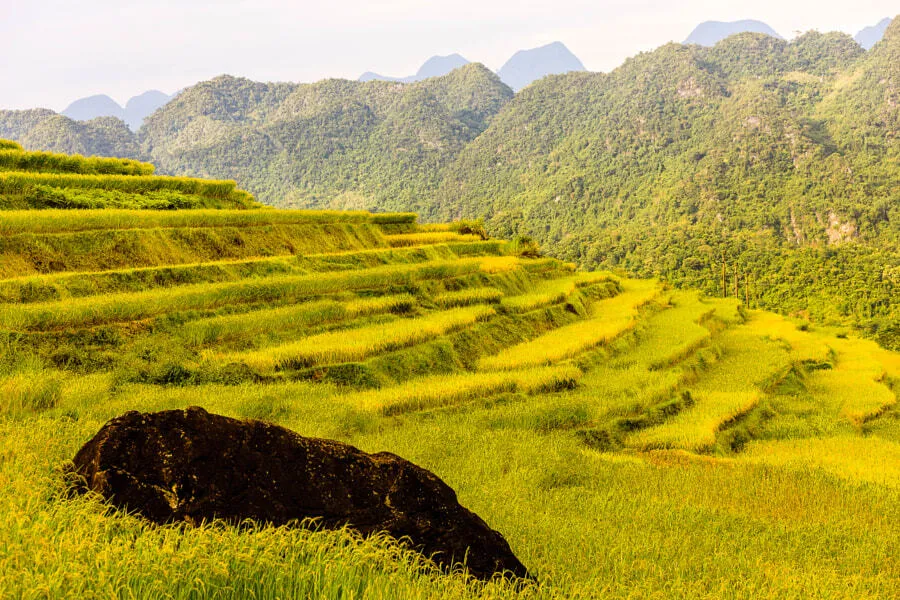
The best destinations to travel in winter Vietnam depend largely on which part of the country you plan to visit. From December to February, northern Vietnam can be cool and misty, Central Vietnam may still see variable conditions, while the south is generally warmer and drier.
Because Vietnam stretches a long way from north to south, winter is not a single weather season across the whole country. Hanoi, Sapa, Hoi An and Phu Quoc can feel completely different at the same time of year, which makes route planning especially important.
This guide covers the best destinations to travel in winter Vietnam, with regional weather insights, seasonal experiences and practical tips to help you choose the places that best match the kind of trip you want.
Decoding Vietnam Weather in Winter: North, Center & South Dynamics
Planning a seamless winter journey requires understanding how regional microclimates diverge:
|
Region |
Temperature Range |
Weather Characteristics |
What to Pack |
|
Northern Vietnam (Hanoi, Sapa, Halong Bay) |
9°C – 19°C (High mountain passes can dip to 0°C-5°C) |
Crisp, dry cold, rolling valley mist, occasional highland frost |
Thermal base layers, fleece jacket, cashmere scarf, windbreaker |
|
Central Vietnam (Hue, Hoi An, Da Nang) |
19°C – 25°C |
Mild, pleasant, shifting from early winter showers to dry, balmy days |
Light knits, denim jacket, breathable linen trousers |
|
Southern Vietnam (Saigon, Mekong Delta, Phu Quoc) |
25°C – 32°C |
Peak dry season, bright blue skies, calm seas, low humidity |
Resort wear, linen shirts, swimwear, UV-protective sunglasses |
The North (Atmospheric & Chilly): The Northeast Monsoon ushers in brisk, dry conditions. While overcast mornings are common, daytime skies often clear to reveal crisp mountain views. This season creates an ideal setting for street-side dining, hot broth noodles, and mountain trekking without the summer heat.
The Center (Mild & Cultural): December occasionally sees lingering autumn drizzle, but by January and February, the central coast transitions into comfortable warmth. Exploring heritage alleyways and imperial grounds is far more pleasant than during the intense heat of July.
The South (Guaranteed Tropical Sunshine): Southern Vietnam enters its golden dry season. With minimal rainfall, calm turquoise seas, and manageable humidity, it serves as an effortless warm-weather retreat.
Top 8 Best Destinations to Travel in Winter Vietnam
Sapa (Lao Cai) – The Misty Mountain Wonderland
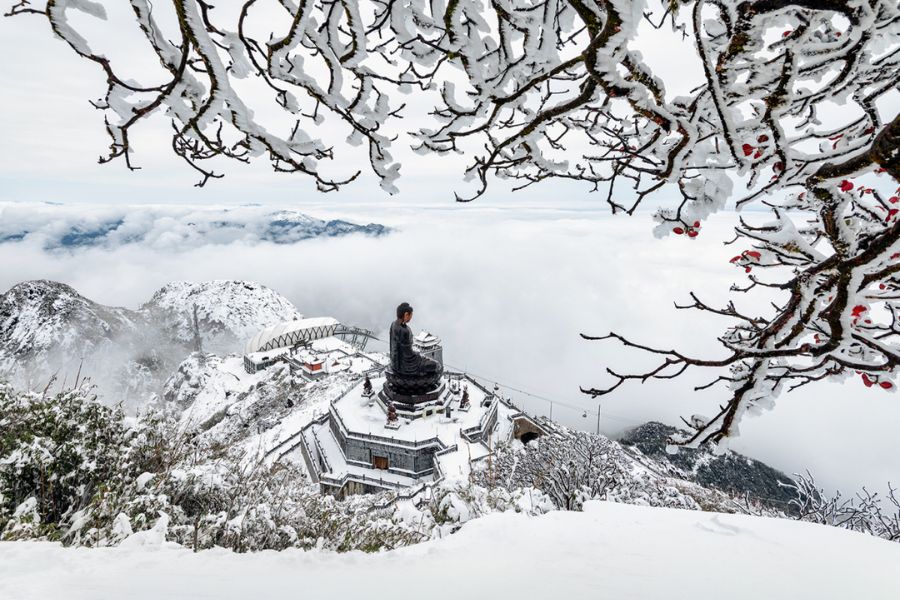
Set high in the Hoang Lien Son range, sapa vietnam takes on a quiet, almost Alpine character during the winter months. Terraced rice fields rest beneath morning frost, while dense valley mist rolls over local hill-tribe hamlets before parting to reveal soaring granite summits.
- Winter Temperatures: 5°C – 12°C (Nighttime temperatures occasionally drop near freezing; light snow or frost can appear on Fansipan Peak).
- Best Time to Visit: December to February (Early blooming cherry blossoms across the O Quy Ho tea hills and prime valley cloud-hunting season).
- Ideal Stay: 2 to 3 nights.
Where to Stay in Style:
- Hotel de la Coupole – MGallery (Town center): High-fashion French architectural design blended with vibrant tribal textile motifs.
- Topas Ecolodge (Muong Hoa Valley): Secluded hillside bungalows featuring heated outdoor infinity pools overlooking the clouds.
We spent an early January morning on the private balcony at Topas Ecolodge watching thick valley fog gradually sink into the valley floor as the sun broke through, unveiling scattered H’mong hamlets below. Ending the afternoon soaking in a steaming cedar tub infused with wild Dao herbal leaves while the outdoor temperature hovered at 7°C was pure mountain bliss.
From scenic cable car rides above sea-of-clouds inversions to private treks through secluded tribal hamlets and restorative herbal baths, the mountain highlands offer endless winter wonder. For a curated roadmap to the region’s finest activities, explore our in-depth Sapa Travel Guide: Best Things to Do.
Hanoi – French Colonial Nostalgia & Cozy Street Flavors
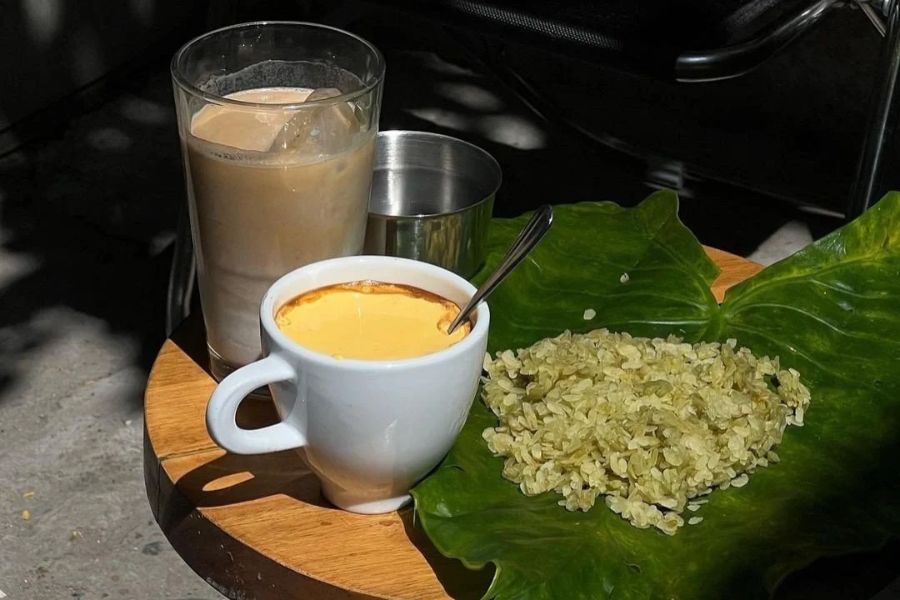
Winter brings out Hanoi’s most atmospheric side. The historic Old Quarter feels grounded and nostalgic as locals don tailored trench coats and woolen scarves, while yellow-ochre French villas stand out against soft morning haze.
- Winter Temperatures: 12°C – 18°C (Crisp breezes with dry, cool air).
- Best Time to Visit: December through early February (Pre-Tet excitement brings pink peach blossoms to local markets).
- Ideal Stay: 2 to 3 nights.
Where to Stay in Style:
- Sofitel Legend Metropole Hanoi (French Quarter): A storied grand hotel offering historic suites and century-old colonial charm.
- Capella Hanoi (Hoan Kiem): A boutique retreat celebrating the theatrical glamour of the 1920s Opera era.
We took an early 7:00 AM stroll through the quiet alleys of the Old Quarter, watching our breath mist up in the brisk breeze. Tucking into a historic corner cafe on Nguyen Huu Huan Street for a hot egg coffee, served nestled inside a bowl of warm water to retain its heat, the velvety sweet foam and bold Robusta roast provided an instant, comforting thaw.
Halong Bay & Lan Ha Bay – Mystical Limestone Dreamscape
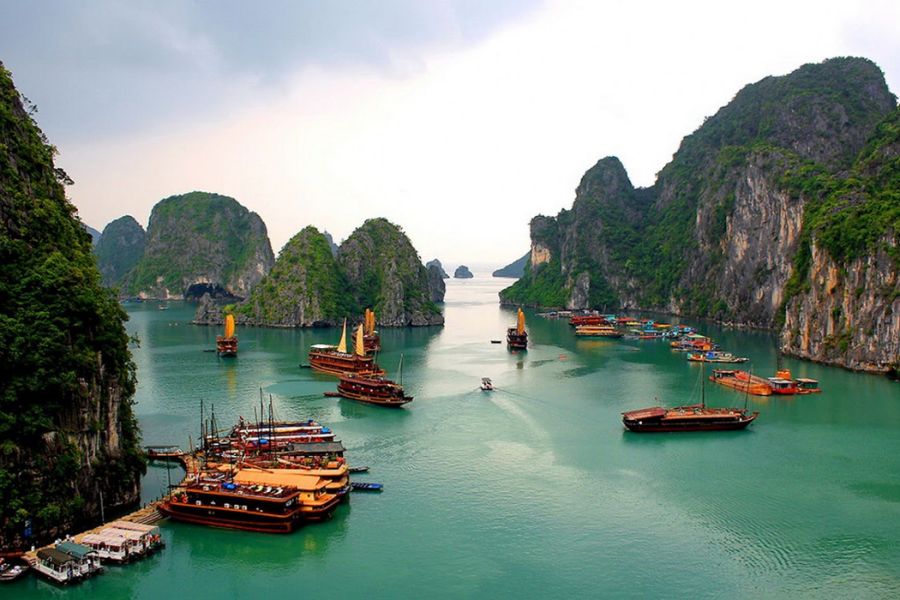
While summer brings vivid blue waters, winter casts an ethereal, ink-wash painting aura across Halong and Lan Ha bays. Low-hanging mists drift between prehistoric karst towers, offering a quiet, contemplative seascape rarely experienced in warmer months.
- Winter Temperatures: 14°C – 20°C (Calm waters, minimal rainfall, and cool maritime breezes).
- Best Time to Visit: November through February (Clear sailing conditions free from tropical summer squalls).
- Ideal Stay: 2 days / 1 night or 3 days / 2 nights on a luxury boutique cruise.
Where to Stay in Style:
- Heritage Line – Ylang Cruise (Lan Ha Bay): An artful Indochine-style vessel with wellness suites and private sea-facing balconies.
- Capella Cruise (Lan Ha Bay): Contemporary maritime design featuring heated jacuzzis and spacious private cabins.
Stepping onto the teak sundeck at 6:30 AM with a cup of hot lotus tea, the bay was completely still, with soft mist hanging across the limestone peaks. As the winter sun emerged as a pale pink disc through the fog, we kayaked into a quiet sea lagoon without another boat in sight, a stillness impossible to find during peak summer.
Ha Giang – Buckwheat Blossoms & Dramatic Mountain Passes
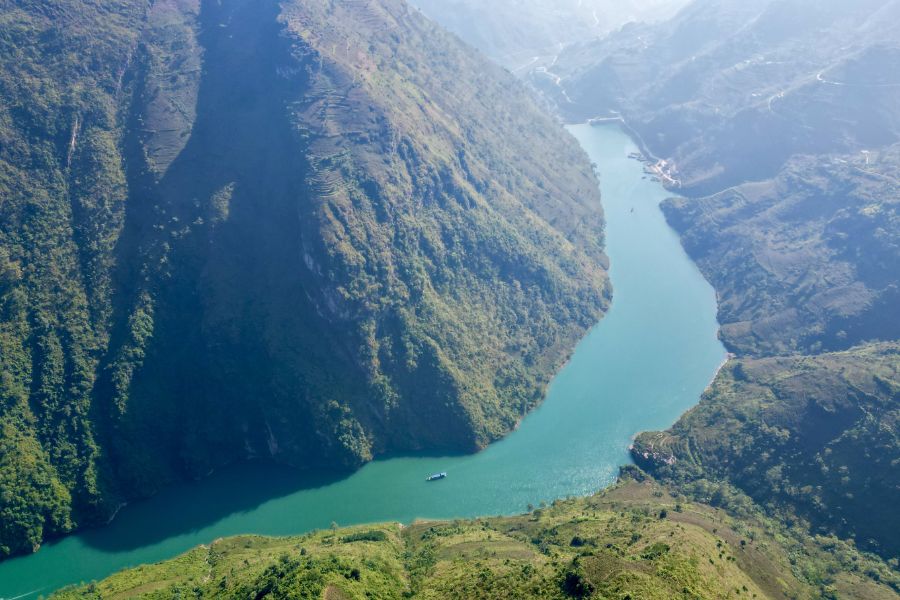
For lovers of dramatic landscapes, winter transforms the Dong Van Karst Plateau into a striking panorama of dark limestone formations accented by delicate seasonal blooms. The winding mountain roads offer some of the most spectacular panoramas in all of Asia.
- Winter Temperatures: 7°C – 15°C (Crisp mountain air requiring warm outer layers).
- Best Time to Visit: November to January (The height of pink buckwheat flowers followed by golden mustard blossoms along traditional stone walls).
- Ideal Stay: 3 to 4 days across a privately chauffeured mountain loop.
Where to Stay in Style:
- P’apiu Resort (Bac Me): An exclusive, couples-only hideaway nestled in virgin forest featuring handcrafted timber architecture.
- H’mong Village Resort (Quan Ba): Unique hillside suites inspired by traditional woven basket forms.
We pulled over at the crest of Ma Pi Leng Pass just before noon. The winter air was sharp and cold, but the sky was crystal clear. Looking straight down into the Tu San Gorge, the Nho Que River flowed below like a ribbon of turquoise silk, an exhilarating and quiet mountain vantage point.
> > > For explorers yearning to witness dramatic cloud inversions over Mount Fansipan before conquering the sheer limestone cliffs of the Dong Van Karst Plateau with a private local mountain guide, our Ha Giang & Sapa – Northern Vietnam Adventure delivers an exclusive, high-altitude winter expedition in comfort and style.
Hoi An & Da Nang – Lantern-Lit Evenings & Mild Coastal Charm
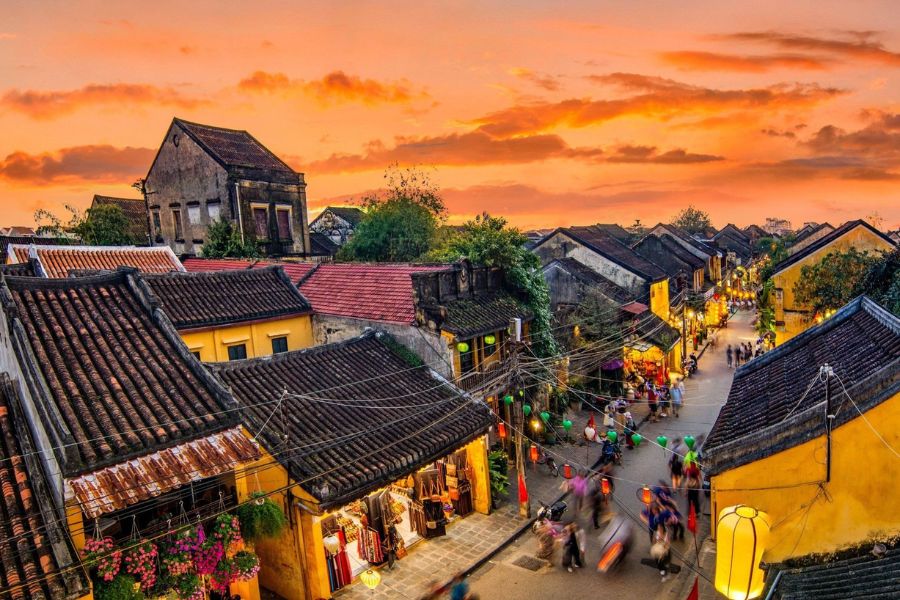
Free from the intense heat of July, winter offers a comfortable climate for exploring Hoi An’s UNESCO-listed ancient town on foot or by bicycle. Da Nang’s coastal resorts provide an uncrowded sanctuary for relaxed beachfront dining.
- Winter Temperatures: 20°C – 25°C (Mild days and pleasantly cool evenings).
- Best Time to Visit: January through February (Rainfall subsides, leaving dry, mild days).
- Ideal Stay: 3 to 4 nights.
Where to Stay in Style:
- Four Seasons Resort The Nam Hai (Hoi An) – Refined beachfront villas celebrating Feng Shui principles and expansive ocean views.
- InterContinental Danang Sun Peninsula Resort – A hillside property set within the lush greenery of Son Tra Peninsula.
We wandered the ancient lanes of Hoi An on a 21°C evening in late January, taking a private wooden sampan along the Hoai River to release paper lantern floats. The night air was comfortably cool, and the reflections of hundreds of silk lanterns on the water created an effortlessly romantic setting.
Hue – Imperial Serenity & Royal Winter Gastronomy
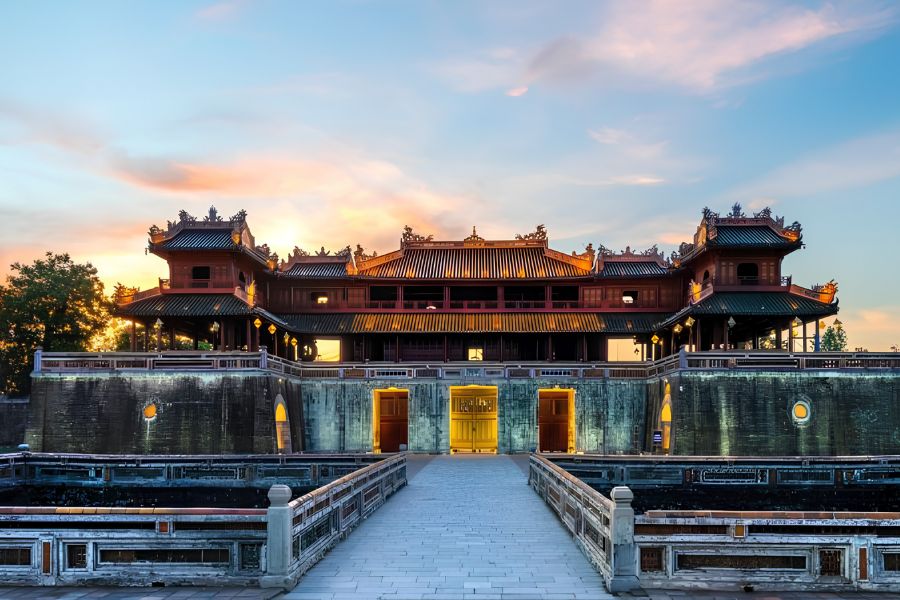
The former imperial capital of the Nguyen Dynasty carries a dignified, contemplative ambiance in the cooler months. Light winter mists along the Perfume River complement the weathered stone walls of the Imperial Citadel and royal mausoleums.
- Winter Temperatures: 18°C – 23°C (Cool breezes with occasional light rain).
- Best Time to Visit: January to February (Crisp, pleasant weather as gardens begin to bud).
- Ideal Stay: 2 nights.
Where to Stay in Style:
- Azerai La Residence, Hue: A classic Art Deco mansion set along the banks of the Perfume River.
- Ancient Hue Garden Houses (Kim Long Village): Restored timber garden residences reflecting traditional royal architectural heritage.
We explored the shaded stone courtyards of Tu Duc Tomb under a light winter mist, where the weathered pavilions felt extraordinarily quiet. Later that evening, ducking into a traditional garden house for steaming bowls of spicy Bun Bo Hue, the rich lemongrass broth and chili warmth chased away every trace of the river chill.
Phu Quoc Island – The Sun-Drenched Tropical Paradise
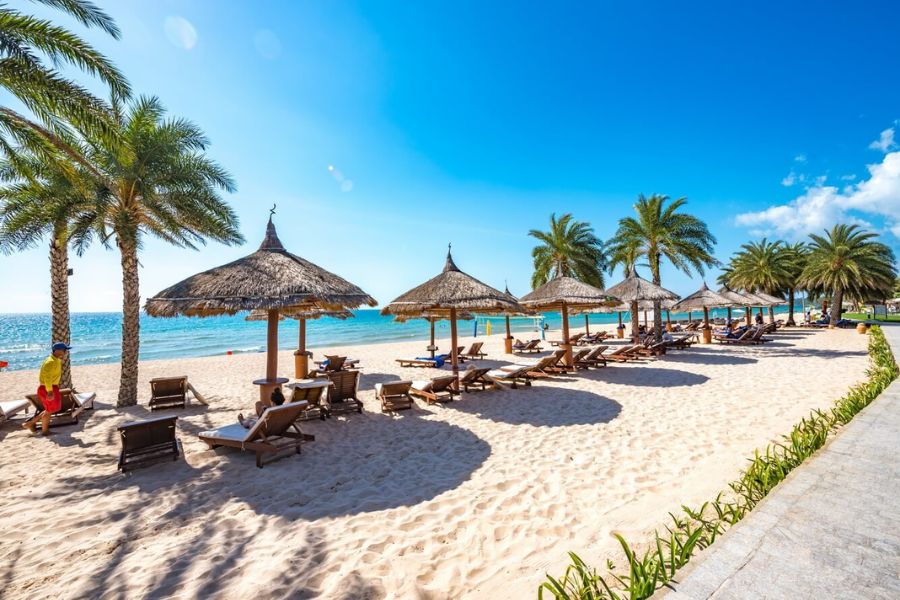
If northern peaks offer cozy winter romance, Phu Quoc represents the ultimate warm-weather escape. Situated in the Gulf of Thailand, the island’s southern shores feature powdery white sands and gentle turquoise waters.
- Winter Temperatures: 26°C – 30°C (Dry, sunny, and calm sea conditions).
- Best Time to Visit: November through March (The island’s optimal season for beach living, sailing, and snorkeling).
- Ideal Stay: 3 to 5 nights.
Where to Stay in Style:
- Regent Phu Quoc (Bai Truong): Understated suites and beachfront villas with private infinity pools.
- JW Marriott Phu Quoc Emerald Bay Resort & Spa (Khem Beach): Whimsical, university-themed design along a white-sand crescent bay.
Arriving in Phu Quoc just two hours after leaving a brisk 15°C Hanoi morning, we were barefoot on the soft white sands of Khem Beach by midday. Lounging under coconut palms with chilled fresh fruit while gentle turquoise waves rolled in under clear blue skies was the quintessential winter reset.
> > > If your ideal winter escape means swapping chilly winds for powdery white sands, private catamaran sails around turquoise archipelagos, and barefoot luxury pool villas, explore our tailored Paradise Vietnam Beach Holiday, crafted for seamless warm-weather relaxation.
The Mekong Delta – River Rhythms & Pre-Tet Floral Harvest
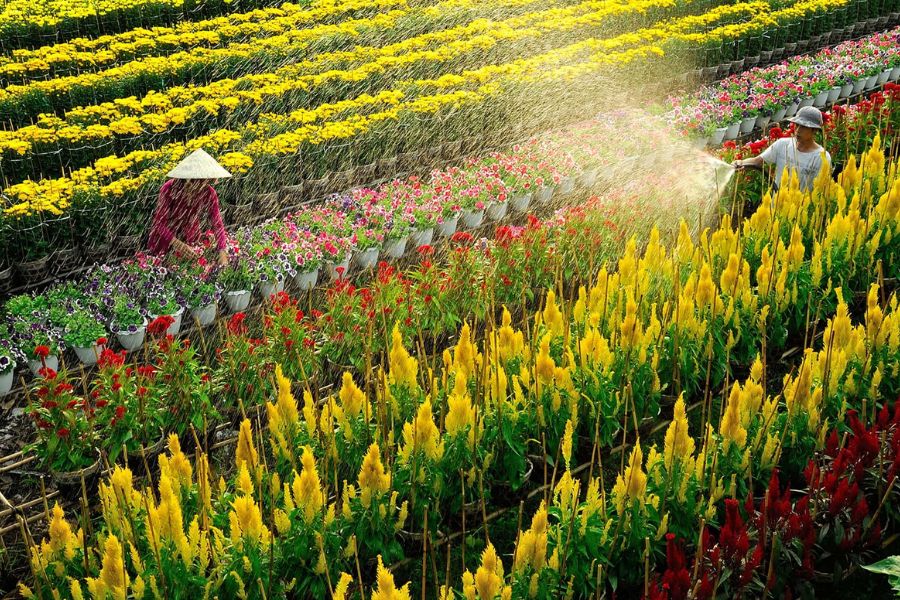
Winter marks the beginning of the dry season across the southern waterways. Water levels settle, mornings bring cool river breezes, and the region gears up for Lunar New Year preparations with vivid seasonal harvests.
- Winter Temperatures: 25°C – 31°C (Clear, dry days with gentle afternoon breezes).
- Best Time to Visit: December through February (Sa Dec’s floating flower gardens peak ahead of the Lunar New Year).
- Ideal Stay: 1 to 2 nights, or incorporated into a luxury cross-border river cruise toward Cambodia.
Where to Stay in Style:
- Victoria Can Tho Resort: A colonial-inspired retreat on the quiet banks of the Hau River.
- The Jahan / Aqua Mekong: Five-star boutique cruisers connecting the southern delta to Phnom Penh and Siem Reap.
We boarded a small wooden skiff through the Sa Dec flower canals in early January, threading between elevated bamboo platforms loaded with blooming yellow chrysanthemums ready for Tet. The gentle river breeze and warm hospitality of the farmers gave us a colorful, joyful look at river life.
Spending late December wrapped in the festive colonial charm of Hanoi or beneath the palm trees of Phu Quoc turns the holiday season into an exotic, memory-filled getaway. To discover how the country decks its cathedral squares, heritage hotels, and night markets in lights, browse our festive feature on Christmas in Vietnam.
Essential Practical Guide for Traveling to Vietnam in Winter
- Pack for two very different climates: If your trip covers both northern and southern Vietnam, layers are more useful than a heavy winter coat. A light sweater, thin thermal layer and wind-resistant jacket are usually practical for Hanoi and the northern mountains, while lightweight clothing, sandals and swimwear will be more suitable once you reach the south.
- Expect noticeable temperature changes between regions: It is possible to leave a cool morning in Hanoi and arrive in much warmer Ho Chi Minh City or Phu Quoc later the same day. Keep a lighter change of clothes in your hand luggage if you are flying between north and south.
- Bring warmer clothing for Sapa and Ha Giang: Mountain temperatures can drop considerably, especially in the early morning, evening and during cold spells. Fog, wind and damp conditions can make it feel colder than the temperature suggests, so an extra warm layer is useful.
- Allow flexibility on mountain roads: Fog can reduce visibility around high passes such as O Quy Ho near Sapa and Ma Pi Leng in Ha Giang. If you are not experienced with mountain riding, private transport with a local driver is a safer and more comfortable option than renting a motorbike in poor conditions.
- Prepare for cooler mornings on Halong Bay: Winter cruises can be misty and noticeably cooler on deck, particularly around sunrise and after sunset. Pack a light jacket or windbreaker if you plan to join outdoor activities such as Tai Chi, kayaking or morning sightseeing.
- Check heating when booking mountain hotels: Central heating is not standard in every hotel in northern Vietnam. If you are travelling to Sapa, Ha Giang or other highland destinations during colder months, check whether the room has effective heating before booking.
- Do not expect beach weather everywhere: Central Vietnam and the north can be cool or unsettled in winter. For travellers prioritising warmer beach weather, southern destinations such as Phu Quoc are generally a more reliable choice during this period.
- Leave some flexibility around domestic flights: Winter fog and seasonal weather can occasionally affect transport schedules, particularly in northern Vietnam. Avoid very tight connections between a cruise, mountain journey and an international flight.
- Plan carefully around Tet: Vietnam’s Lunar New Year usually falls between late January and mid-February, although the exact dates change each year. The period before Tet is lively with flower markets, decorations and holiday shopping, while some family-run restaurants, shops and services may close during the main holiday days. Hotels, trains and domestic flights can also become busier, so book important arrangements early.
- Book popular winter stays in advance: December through February is a busy season for many destinations, especially Hanoi, Halong Bay, Phu Quoc and southern beach resorts. If you have a particular hotel, cruise or room category in mind, early booking gives you more choice.
- Check the forecast by destination, not just “Vietnam”: Winter conditions in Hanoi, Sapa, Hoi An and Phu Quoc can be completely different on the same day. Look at regional forecasts shortly before each stage of the trip rather than relying on one national weather forecast.
> > > To experience the complete winter spectrum, moving effortlessly from Hanoi’s crisp colonial avenues and a mystical overnight cruise on Lan Ha Bay down through lantern-lit Hoi An to sun-kissed southern shores, our Inside Vietnam: 14-Day Private Vietnam Tour Package provides the ultimate privately chauffeured cross-country journey.
Frequently Asked Questions (FAQs)
- Can you swim in Halong Bay during winter?
Sea surface temperatures in Halong Bay dip to 16°C-20°C in winter, which most travelers find brisk for leisurely ocean swimming. However, sea kayaking remains comfortable, and luxury cruise vessels offer heated outdoor jacuzzis on their sundecks so you can enjoy the limestone views in comfort. - Does it snow in Sapa, and when can I see it?
Snow is an occasional occurrence rather than a daily event, typically appearing during cold snaps between late December and mid-January atop Fansipan Peak (3,143m) or the high ridges of O Quy Ho Pass. Thick frost and dramatic “cloud inversions” across the valley floors are far more common and visually striking. - Is winter a good time for a luxury beach holiday in Vietnam?
Yes, provided you choose southern coastlines. While central beaches (Da Nang and Hoi An) can be breezy with cooler water temperatures in December, southern islands like Phu Quoc and Con Dao enjoy calm seas, minimal rain, and daily sunshine throughout the winter months. - How does Tet (Lunar New Year) affect private luxury travel in Vietnam?
Five-star hotels, luxury cruises, international airports, and private tour services operate continuously through the Tet holiday. Traveling with a private guide during this festive period offers a unique cultural perspective on holiday rituals and temple gatherings without logistical friction.
Planning a Winter Journey Through Vietnam
Winter in Vietnam looks very different from one region to another. Northern destinations can be cool and misty, Central Vietnam may still see variable conditions, while much of the south is warmer and drier. That contrast is part of what makes winter travel interesting, but it also means the route should be planned carefully.
A private itinerary can help with:
- Seasonal route planning: Spend more time in the regions that suit the weather and experiences you want, rather than trying to cover the whole country in one fixed route.
- Flexible daily timing: Adjust sightseeing around cooler mornings, coastal fog, rain or changing local conditions when needed.
- Private transport between regions: Connect cities, mountains, bays and beach destinations with realistic travel times and fewer unnecessary transfers.
- A better balance of climates: Combine cooler northern experiences with warmer southern destinations if you want variety within the same trip.
The best destinations to travel in winter Vietnam depend on the kind of holiday you want. Hanoi, Sapa and Halong Bay offer cooler weather and a very different atmosphere from the warmer beaches and islands further south.
If you are planning a winter trip, LuxeTravel Asia can help build a private Vietnam itinerary around your dates, preferred climate, travel pace and the regions you most want to experience.
Plan Your Journey with our local team and make the most of Vietnam’s regional differences rather than trying to follow one route for every season.
Tags: best destinations to travel in winter Vietnam, Best time to visit Vietnam, sapa vietnam, vietnam, Vietnam in winter, vietnam luxury tours, vietnam private tours, Vietnam weather in winter, winter in Vietnam