Luang Prabang
Set between the Mekong and Nam Khan rivers, Luang Prabang is a small city of Buddhist temples, traditional houses, old streets and forested hills. The historic centre is easy to explore on foot, with monasteries, markets, cafés and the former Royal Palace all within a compact area. Beyond town, waterfalls, villages and the Mekong open up another side of northern Laos. Days here are best kept unhurried, with time for an early morning walk, a temple visit, lunch beside the river and an afternoon exploring the countryside. Luang Prabang is not a place that needs a long sightseeing list. Much of its appeal comes from simply having enough time to enjoy where you are.

General Information
A city that still moves at its own pace
Luang Prabang has a calmness that is increasingly rare in Southeast Asia.
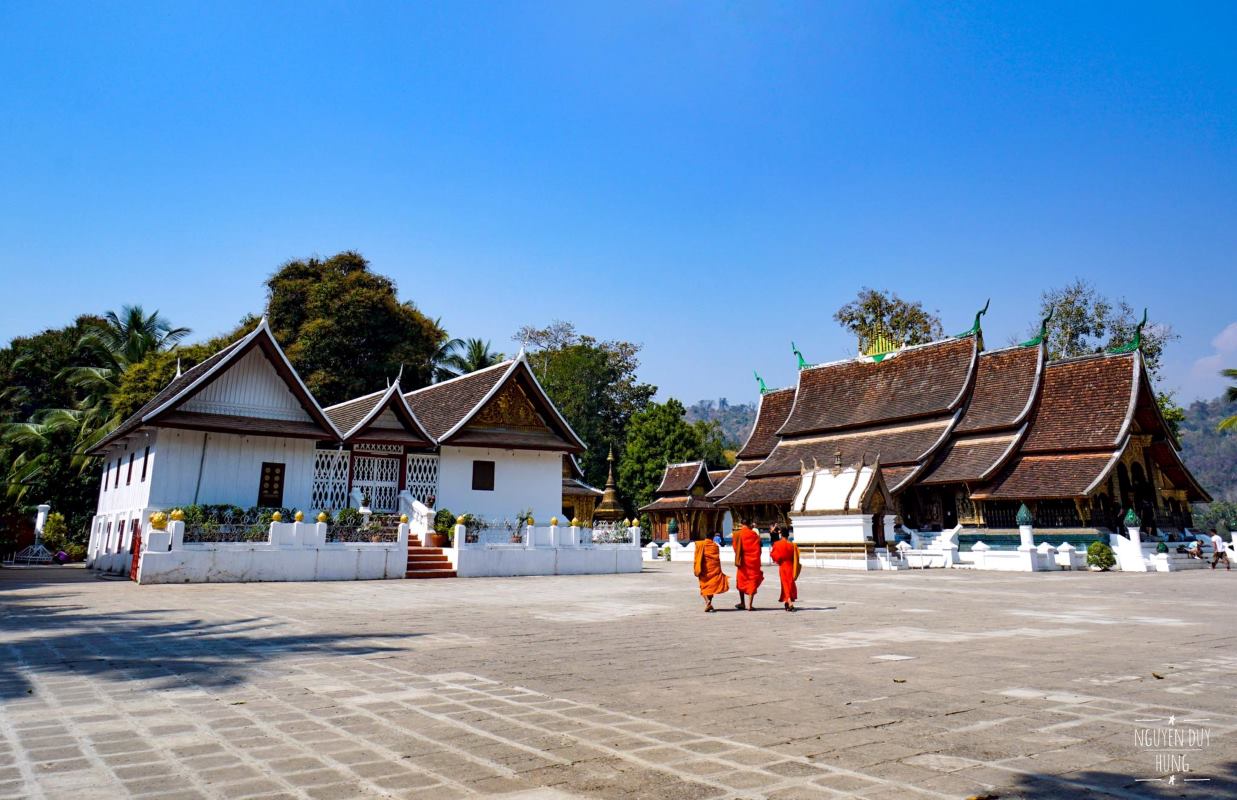
The old town sits on a narrow peninsula between two rivers, with temple roofs appearing above trees and small streets lined with traditional Lao houses, former colonial buildings and family businesses. Monks move between monasteries, markets begin early in the morning, and the Mekong remains part of everyday life.
Buddhism is central to the city. Wat Xieng Thong is one of Luang Prabang’s most important temples, but smaller monasteries throughout the old town are equally worth noticing. Rather than trying to visit every temple, we prefer to choose a few and leave time to understand their role in local life.
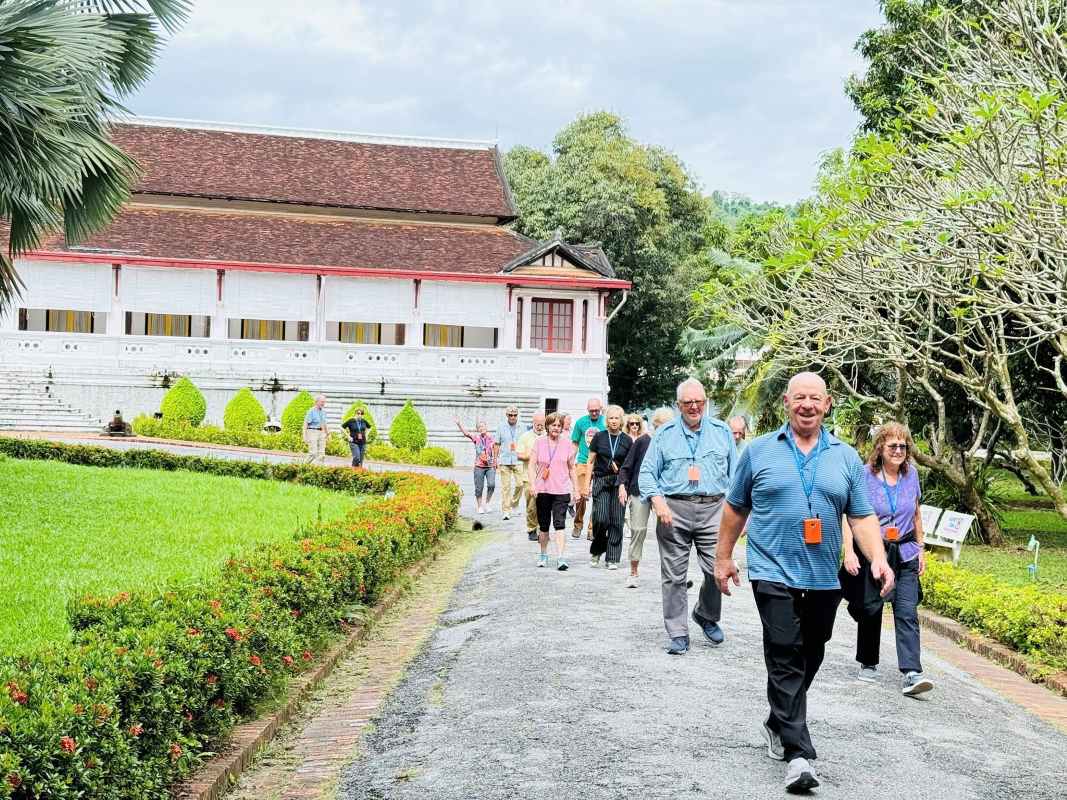
The city also carries the legacy of the former Lao monarchy. The Royal Palace, now a museum, provides context for the country’s more recent history, while Mount Phousi rises above the center with views across the town and surrounding mountains.
Beyond Luang Prabang, the landscape quickly becomes rural. The Mekong leads towards small riverside communities, while roads pass through villages and forest towards Kuang Si Falls.
What makes Luang Prabang special is not one particular attraction. It is the combination of temples, rivers, food, countryside and a pace that encourages you to stay a little longer.
Why Visit Luang Prabang
Explore one of Laos’ most important cultural centers
Buddhist temples, traditional architecture and the former Royal Palace offer an introduction to the history and culture of northern Laos.
Experience the city on foot
Luang Prabang’s compact center makes it easy to explore slowly, moving between temples, markets, cafés and the river without spending much time in a vehicle.
Spend time along the Mekong
The river remains closely connected to life in Luang Prabang and provides a different perspective on the city and surrounding countryside.
Discover the landscapes beyond town
Kuang Si Falls, forested hills and rural communities are all within easy reach.
Enjoy Lao food
Markets, family restaurants and contemporary Lao kitchens make Luang Prabang one of the best places in the country to explore local cuisine.
Slow the journey down
Luang Prabang works particularly well for travelers who prefer fewer activities and more time to experience each place properly.
Experiences We Love in Luang Prabang
• Explore the old town early in the morning before the streets become busier.
• Visit Wat Xieng Thong with a local guide and learn more about Lao Buddhist traditions.
• Walk through the morning market as local families shop for produce, herbs and everyday ingredients.
• Spend time at Kuang Si Falls and walk through the surrounding forest.
• Cruise along the Mekong in the softer light of late afternoon.
• Visit a village outside town to learn more about local crafts and rural life.
• Try traditional Lao dishes at a carefully chosen local restaurant.
• Climb Mount Phousi for views across Luang Prabang and the surrounding countryside.
• Leave an afternoon free for cafés, the riverfront or simply wandering through the old town.
Temples and Buddhist Life
Temples are part of everyday Luang Prabang rather than simply historic monuments.
Wat Xieng Thong
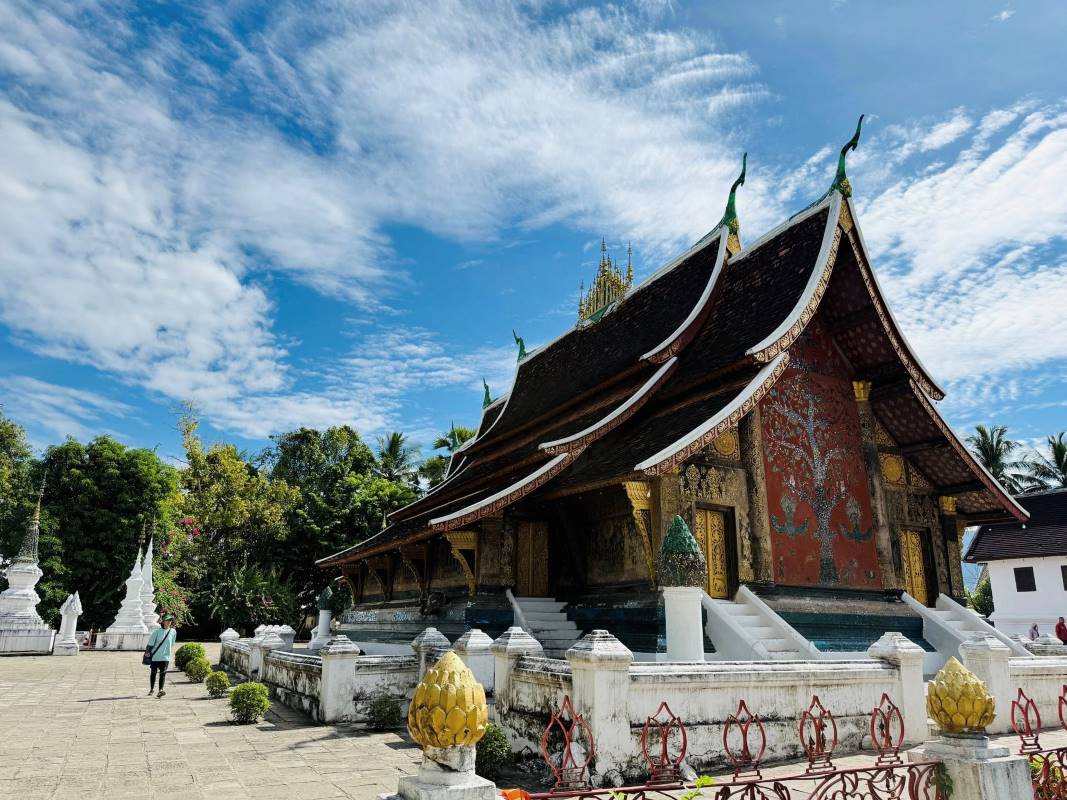
Wat Xieng Thong is one of the finest examples of traditional Lao religious architecture.
Its low sweeping roofs, decorative mosaics and smaller chapels make it an important place to understand the artistic traditions of Luang Prabang.
The Temples of the Old Town
Smaller monasteries are scattered throughout the historic center, often only a few minutes apart on foot.
Many remain active religious communities, so visiting respectfully and with an understanding of local customs is important.
We generally prefer a small number of meaningful temple visits rather than moving rapidly between every monastery in town.
Morning Alms Giving
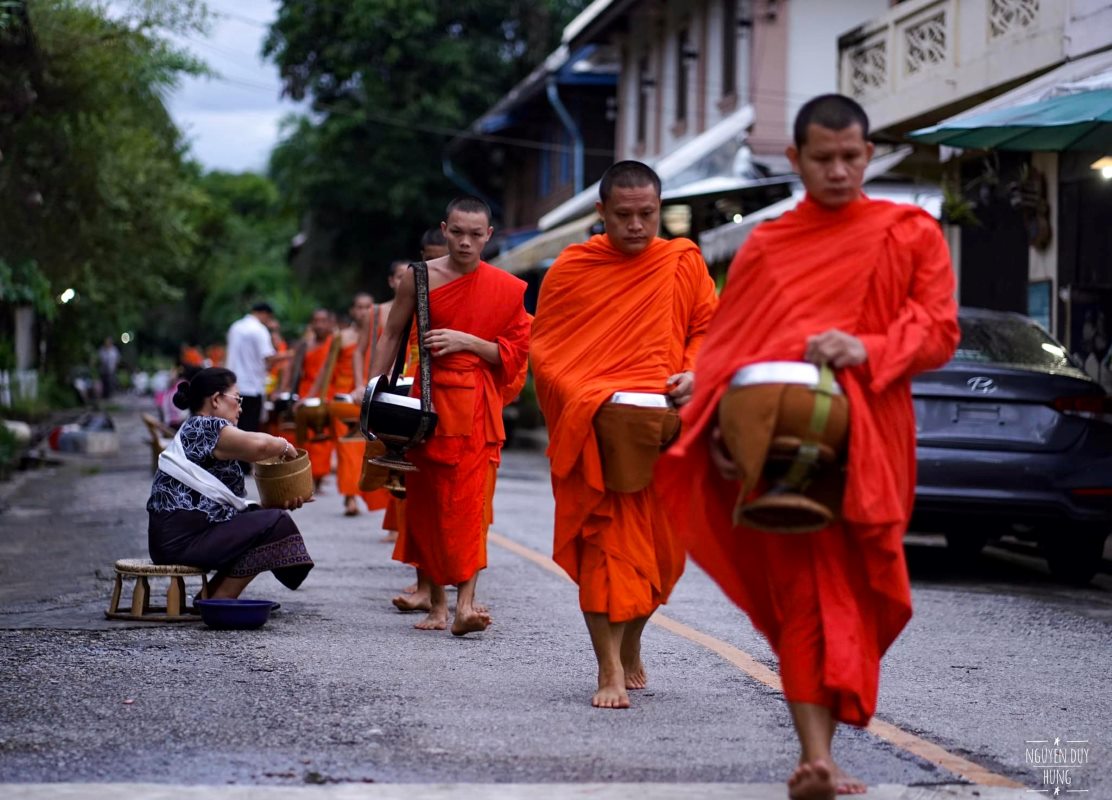
The morning alms giving ceremony is one of Luang Prabang’s best known traditions.
At dawn, monks from local monasteries walk through the streets to receive food offered by residents as part of a long standing Buddhist practice.
Visitors are welcome to observe, but the ceremony is first and foremost a religious tradition rather than a tourist performance.
We encourage guests to watch quietly from an appropriate distance unless they have been properly guided on how to participate.
Respectful dress, silence and avoiding intrusive photography make a significant difference.
Kuang Si Falls
Kuang Si is one of the most popular excursions from Luang Prabang.
Water descends through a series of limestone pools surrounded by forest before reaching the larger main waterfall.
The pools are known for their clear blue green water, although color and water levels vary with the season.
Some areas allow swimming when local conditions permit, while walking paths continue through the forest around the falls.
We prefer visiting earlier in the day when possible, leaving time to enjoy the area rather than treating it as a quick photo stop.
Life Along the Mekong
The Mekong has long connected Luang Prabang with communities further north and south.
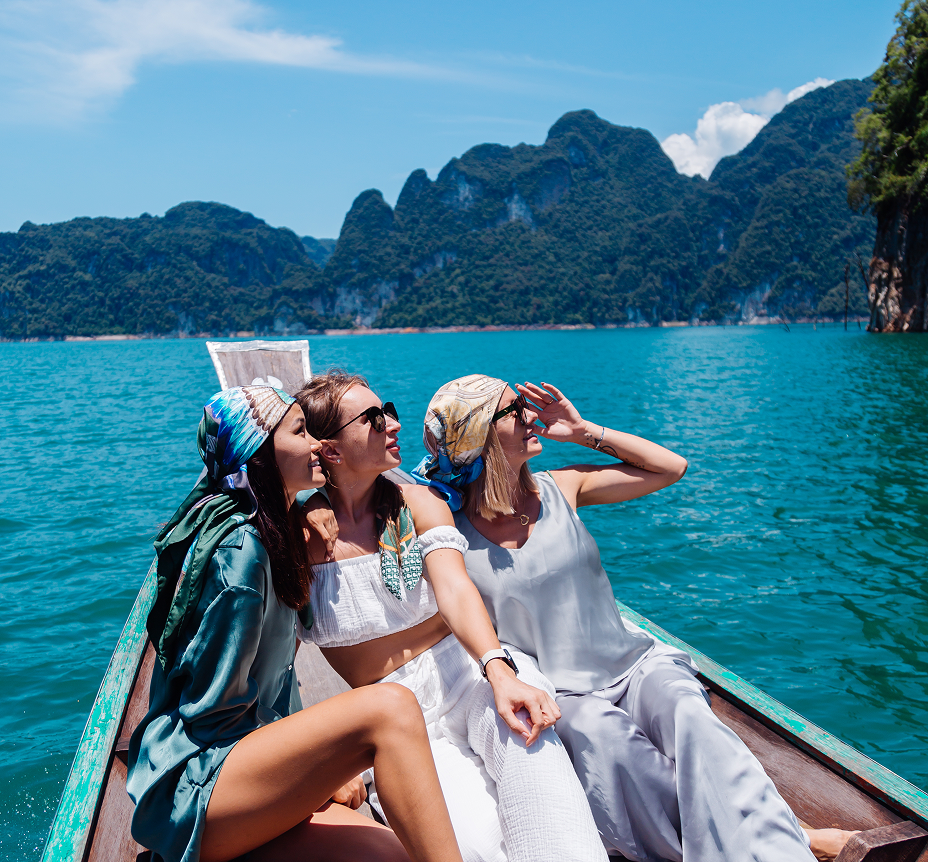
A boat journey offers a slower way to see the surrounding landscape, passing forested hills, cultivated land and small settlements along the riverbanks.
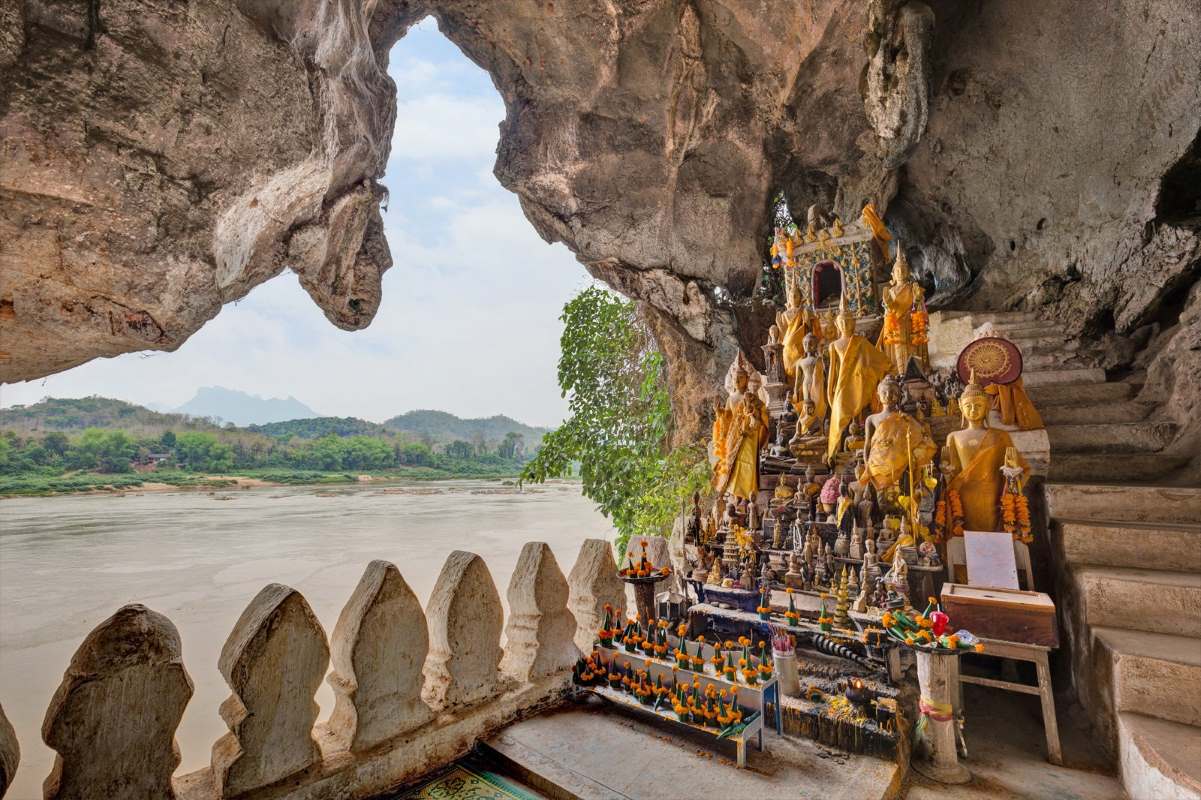
Short sunset cruises work well for travelers with limited time, while longer journeys can continue towards villages and the Pak Ou Caves.
For us, the pleasure of travelling on the Mekong often comes from the journey itself rather than the number of stops included along the way.
The Flavors of Luang Prabang
Luang Prabang has a food culture distinct from neighboring Thailand and Vietnam.
Traditional dishes include laap, minced meat or fish mixed with herbs, or lam, a slow cooked local stew, and khao niaw, sticky rice that accompanies many Lao meals.
River fish, herbs, vegetables and grilled dishes are also common.
The morning market is a good introduction to local ingredients, while restaurants range from simple family run places to more contemporary interpretations of Lao cooking.
We like to combine local food with the rhythm of the day rather than scheduling every meal as a formal experience.
Beyond the Old Town
The countryside around Luang Prabang is easy to reach.
Small villages, farms and river communities offer a different view of northern Laos, particularly for travelers who want to spend some time away from the main visitor areas.
Traditional weaving, rice farming and other crafts remain part of everyday life in several communities.
Village visits are most rewarding when they are small scale and respectful. We prefer experiences that provide genuine context and avoid turning local life into a performance.
For more active travelers, the surrounding hills also offer opportunities for walking and cycling.
Best Time to Visit Luang Prabang
Luang Prabang can be visited throughout the year.
November to February generally brings cooler and drier weather and is one of the most comfortable periods for walking and outdoor sightseeing.
March to May becomes hotter, particularly in the middle of the day.
June to October is the wetter season. The countryside becomes greener and waterfalls generally carry more water, although rain can affect some outdoor activities.
Mornings and evenings are often the best times to explore the old town, particularly during warmer months.
How Long to Stay
For most travelers, three nights is a good starting point.
This allows time for the old town, temples, Kuang Si Falls and a Mekong experience without making every day busy.
Four nights is even better for travelers who enjoy slow travel, food, photography or countryside experiences.
Luang Prabang is one of those destinations where an additional free afternoon usually adds more than another organized excursion.
Where to Stay
Luang Prabang offers a good selection of boutique hotels, restored heritage properties and small luxury resorts.
The Old Town
Staying within or close to the historic center gives easy access to temples, markets, restaurants and the river.
It suits travellers who enjoy exploring independently on foot.
Riverside
Properties near the Mekong or Nam Khan provide a quieter atmosphere while remaining close to the old town.
Outside the Centre
Several resorts sit slightly beyond the historic area and offer larger gardens, swimming pools and more privacy.
These can work particularly well for couples and travelers staying several nights.
For LuxeTravel Asia journeys, we consider location, character, service and the overall atmosphere of the property rather than choosing by star rating alone.
Luang Prabang With LuxeTravel Asia
Luang Prabang is one of those places where we prefer to plan less, not more.
A morning might begin quietly in the old town, followed by a few carefully chosen temples and lunch at a local restaurant. Another day could take you to Kuang Si Falls and nearby countryside before returning early enough to enjoy the hotel or riverfront.
We also pay close attention to how cultural experiences are handled. Buddhist ceremonies, village visits and local traditions should be approached with respect rather than included simply because they make good photographs.
Private guiding allows us to adjust the pace around the weather, your interests and how much you want to see.
Luang Prabang does not need to be rushed. The quieter moments are often the reason people remember it.
Continue Your Journey
From Luang Prabang, travel north towards Nong Khiaw for mountains, river scenery and village walks.
High speed rail also connects Luang Prabang with Vang Vieng and Vientiane, making it easier to combine the main destinations of Laos within one journey.
For longer regional trips, Luang Prabang can also connect naturally with Northern Thailand, Vietnam and Cambodia.
Explore All Our Tours
Find the Laos journey that suits your interests, pace and way of travelling.
No tours found.